Best Madgicx Alternatives for Effective Ad Optimization
Exploring solid Madgicx alternatives? Discover reliable ad optimization tools that help automate campaigns, boost ROI, and simplify Meta advertising without the usual headaches.
Apr 12, 2026



Expanding beyond your home market is exciting, but international shipping is where many Shopify stores hesitate. Not because it’s impossible, but because the details feel scattered. Rates, zones, customs forms, duties, delivery times. Miss one piece, and customers feel it immediately.
The good news is that Shopify gives you solid tools to handle international shipping without turning it into a logistics nightmare. You don’t need to know everything on day one. You just need a setup that’s clear, honest, and flexible enough to grow with you. This guide walks through the setup process the way it actually works in practice, not the idealized version.
Domestic shipping is mostly predictable. International shipping is not. The moment a package crosses a border, new variables appear.
Shipping distances increase, which means higher costs and longer delivery windows. Customs documentation becomes mandatory. Duties and taxes may apply depending on destination, product type, and declared value. Multiple carriers may handle the same package before final delivery.
From a customer perspective, expectations also change. International buyers are usually more patient, but far less tolerant of unclear pricing. A surprise customs fee at delivery often leads to refunds, chargebacks, or bad reviews. This is why setup matters more than speed.
Before touching Shopify settings, it helps to understand that international shipping is not a single feature you turn on. It is a system you design.
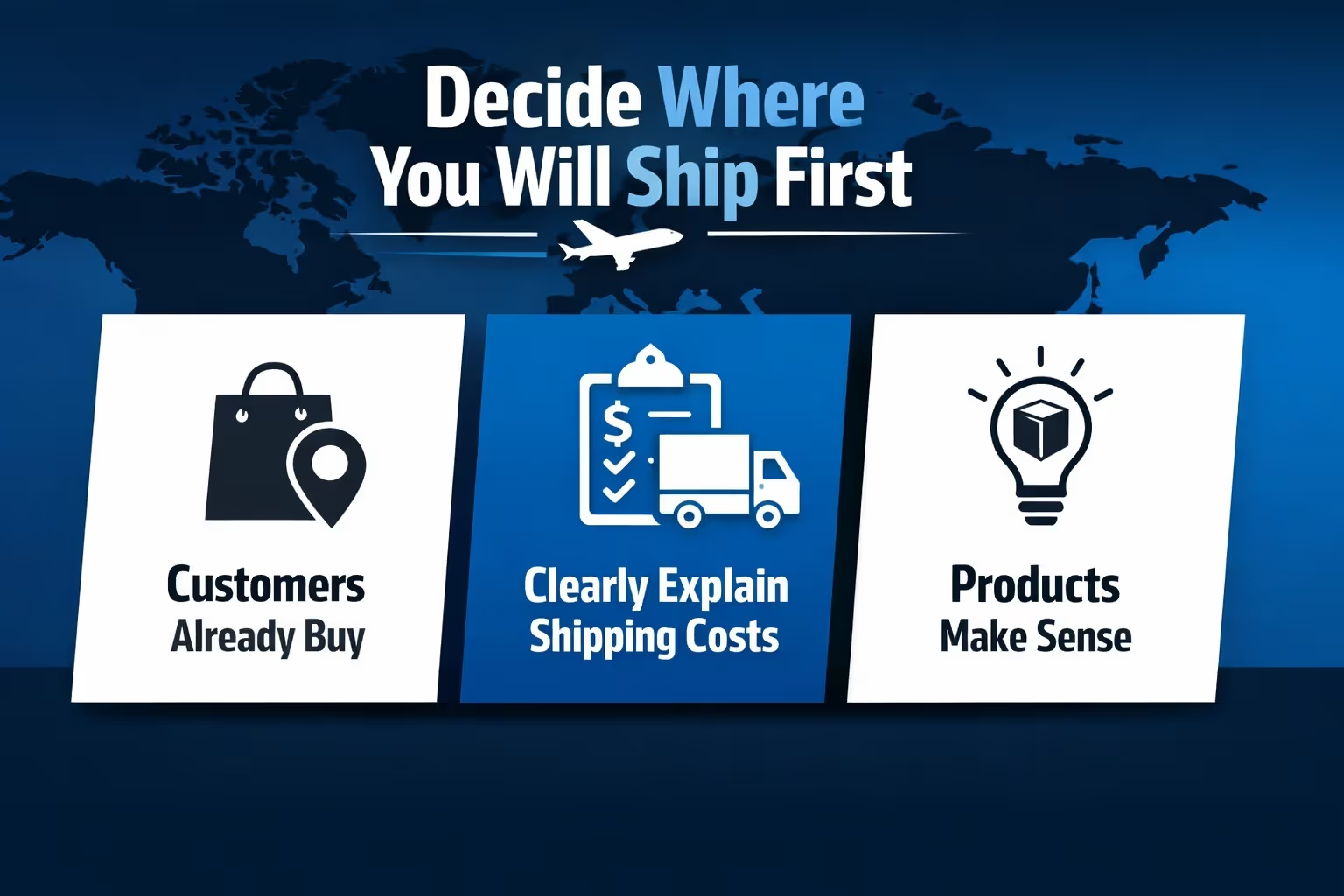
One of the most common mistakes growing brands make is opening international shipping everywhere at once. Technically, Shopify allows this. Practically, it creates chaos.
A better approach is to choose a small number of markets and do them well. Start with countries that already show interest in your store. Shopify analytics often reveals this quietly. Look at traffic sources, abandoned carts, and customer emails. Demand usually appears before shipping is enabled.
Geography also matters. Shipping to nearby countries is usually cheaper and faster. Cultural and language familiarity helps reduce support issues. Regulatory environments vary widely, so simpler markets reduce friction early on.
Ask yourself three practical questions:
If the answer is unclear, wait. Expansion works best when it follows demand, not curiosity.
Not every product deserves to travel across borders.
Heavier items drive up shipping costs quickly. Fragile products increase the risk of damage and returns. Items with batteries, liquids, or restricted materials may face customs issues or outright bans in certain countries.
Many brands start international shipping with a limited catalog. Lightweight, durable, and high margin products are ideal. This reduces financial risk while you learn how international fulfillment behaves in the real world.
Packaging also matters more than most expect. International shipments pass through more handling points. A box that survives domestic shipping may fail internationally. Factor packaging quality into your product costs early, not after the first broken delivery.

Choosing which products to ship internationally is not just a logistics call. It is a demand decision. Before committing inventory, packaging, and fulfillment resources to a new market, we need confidence that a product will actually resonate there. That is where we use Extuitive.
At Extuitive, we help brands reduce guesswork before international expansion by testing ads, messaging, pricing signals, and creative variations across different consumer contexts. Instead of assuming that domestic ads or positioning will perform the same way abroad, we pressure-test creative and copy using AI consumer agents trained on real behavioral data. This surfaces early signals around interest, perceived value, and price sensitivity before shipping costs ever enter the equation.
For growing Shopify brands, this is especially useful at the moment when product selection meets market reality. International shipping amplifies weak demand. A product that looks promising on paper but fails to connect through ads creates downstream problems, from unsold inventory to higher fulfillment costs and support friction. By validating creative performance first, we help teams focus international shipping on products that already show traction through messaging.
Our evolutionary approach generates multiple ad and creative directions, then applies selective pressure to identify what performs best under current market conditions. The result is cleaner launches, fewer misaligned expansions, and international shipping decisions that are backed by real demand signals rather than assumptions.
Shipping zones are the backbone of international shipping in Shopify. They define where you ship and what customers pay.
A shipping zone is simply a group of countries that share the same shipping rates and rules. You can create as many zones as needed. Growing brands often start with broad zones, then refine them over time.
For example, you might create:
The key is control. Zones let you adjust rates without affecting your entire store. They also allow you to test markets quietly before committing fully.
Inside your Shopify admin, shipping zones live under Settings and Shipping and delivery. This is where most international shipping decisions actually take shape.
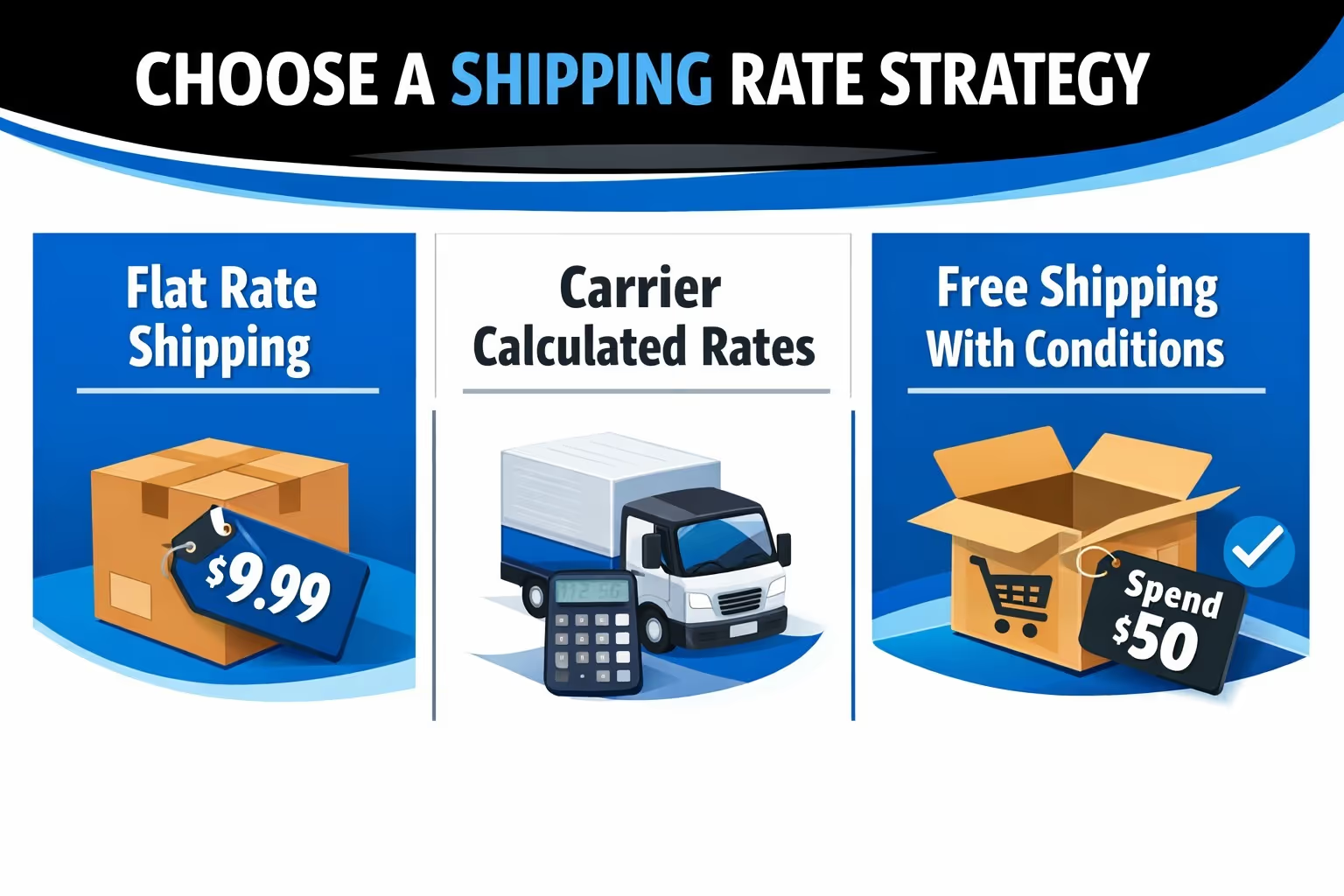
There is no universal best pricing strategy for international shipping. There is only what fits your margins and customer expectations.
Most growing brands choose one of three approaches.
Flat rates are predictable and easy to understand. Customers see one number and decide quickly. This works well when your products are similar in size and weight.
The downside is variability. Some orders cost more to ship than others. Over time, this averages out if your pricing is set carefully.
Carrier rates reflect real shipping costs at checkout. Shopify integrates with major carriers in many regions. This option reduces risk but can introduce sticker shock for customers.
It works best for brands with diverse product sizes or when margins are tight.
Free international shipping can increase conversion, but it is rarely truly free. Brands usually absorb the cost through higher product pricing or order minimums.
This approach works best when average order values are high enough to cover shipping reliably.
Many brands mix strategies across zones. For example, flat rates in nearby regions and carrier rates elsewhere.
Nothing erodes trust faster than unexpected fees at delivery.
When shipping internationally, someone must pay import duties and taxes. By default, this responsibility falls on the customer. This is called Delivered Duty Unpaid.
The problem is not the fee itself. The problem is surprise.
If customers do not expect additional charges, they often refuse delivery. That leads to returns, lost shipping fees, and unhappy support conversations.
Some brands choose Delivered Duty Paid instead. This means duties and taxes are collected upfront at checkout. Customers receive their orders without surprises.
Shopify supports both approaches depending on setup and services used. What matters most is clarity. Your shipping policy should state exactly who pays what. Product pages should reinforce this. Checkout messaging should not hide it. Transparency does more for international conversion than fast shipping ever will.
Once your strategy is clear, setup becomes straightforward.
Inside your Shopify admin:
Testing matters. Place test orders using international addresses. Review checkout messaging. Confirm shipping rates behave as expected.
This is also the moment to review your store policies. Shipping policy, returns, and delivery timelines should reflect international reality, not domestic assumptions.
Customs documentation is not optional for international shipping.
HS codes classify products for customs authorities. Incorrect or missing codes can delay shipments or trigger additional inspections.
Shopify allows you to add HS codes at the product level. While this takes time, it reduces risk significantly. It also improves accuracy when calculating duties and taxes.
Alongside HS codes, ensure product descriptions are accurate. Declared values should match reality. Underdeclaring to save customers money often backfires and can lead to fines or seized shipments.
International shipping rewards accuracy more than shortcuts.
Cheapest is rarely best in international shipping.
Postal services are often affordable but slower and less predictable. Express carriers cost more but offer better tracking and faster delivery. Regional carriers sometimes handle last mile delivery more effectively.
Most growing brands use more than one carrier. This provides flexibility and reduces dependency on a single service.
Inside Shopify, carrier integrations simplify label purchasing and documentation. Using Shopify Shipping also unlocks discounted rates in certain regions.
The goal is not perfection. The goal is consistency. Customers forgive longer delivery times if expectations are set correctly and tracking works.
International shipping costs add up quickly, but there are smart ways to manage them.
Small optimizations compound over time. The brands that struggle internationally are usually not the ones with high rates, but the ones that never revisit them.
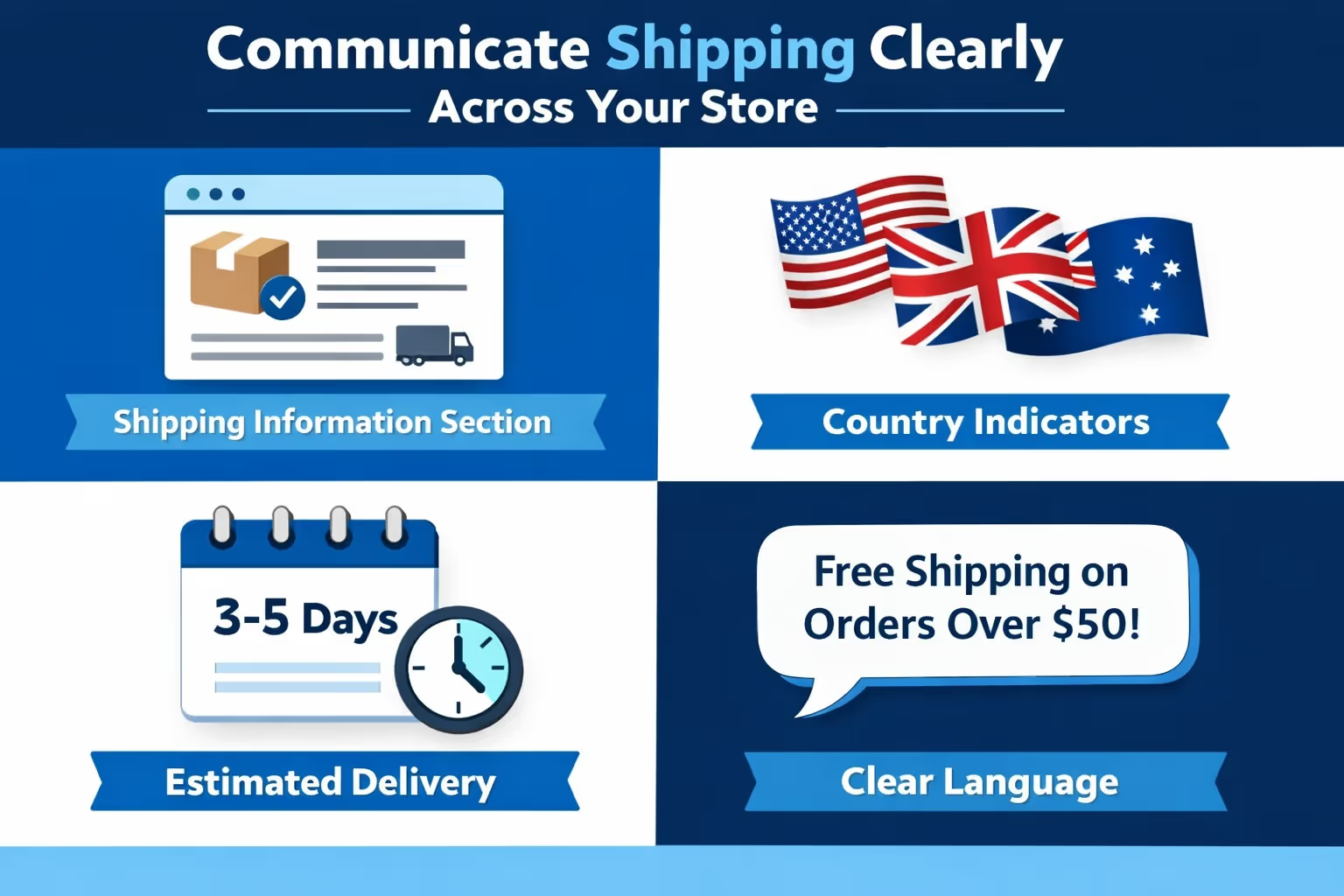
Shipping information should not live in one hidden policy page.
International customers scan product pages, cart pages, and checkout for reassurance. They want to know where you ship, how long it takes, and what it costs.
Consider adding:
This reduces support tickets and abandoned carts. It also builds confidence with first time international buyers.
As international orders increase, manual processes become fragile.
Shopify offers automation tools that help manage fulfillment rules, tagging, and notifications. For larger volumes, fulfillment partners and managed services reduce operational load.
Automation is not about speed. It is about consistency. When rules are applied automatically, fewer mistakes reach the customer.
Growing brands often delay automation until something breaks. A better approach is to add automation as soon as patterns emerge.
International shipping is not a set once system.
Rates change. Carriers adjust policies. Customer expectations evolve. A shipping setup that worked six months ago may quietly hurt conversions today.
Schedule regular reviews:
Growth happens in cycles. Shipping should evolve with them.
A few patterns show up again and again once brands start shipping internationally. They are easy to fall into, especially when growth feels exciting and momentum is high.
Avoiding these mistakes usually saves more money and time than any shipping discount or carrier promotion ever will.
International shipping is less about logistics and more about trust. Customers want to feel informed, respected, and confident that their order will arrive as promised.
Shopify gives you the tools, but the strategy is yours to design. Start small. Be transparent. Price realistically. Review often.
When done well, international shipping stops being a risk and becomes one of the most reliable growth channels a brand can build.


