Dynamic Creative Testing Facebook Ads (2026 Guide)
Master dynamic creative testing on Facebook Ads. Learn when to use automation vs. manual testing, best practices, and how Meta's 2026 updates change the game.
Mar 24, 2026



Getting a Shopify store to rank for keywords is less about tricks and more about alignment. Alignment between what people are actually searching for, what your pages clearly communicate, and how cleanly your store is set up under the hood. Most stores struggle not because SEO is complicated, but because the basics are scattered or half-finished.
This guide keeps things grounded. No buzzwords, no theory spirals. Just a clear look at what helps Shopify pages earn rankings, and where store owners usually lose momentum without realizing it.
A Shopify store can rank for hundreds of keywords and still struggle to make sales. That is not unusual. It usually happens when SEO decisions are made around volume instead of intent.
Search engines do not reward pages just because they contain keywords. They reward pages that solve the problem implied by a search. If someone is researching options and lands on a product page, the experience feels abrupt. If someone is ready to buy and lands on a vague article, it feels like a dead end.
This mismatch creates a quiet kind of failure. Rankings appear. Traffic increases. Conversions stay flat.
The solution is not more content. It is better alignment.
Not all keywords deserve the same attention. Some are useful early in the buying journey. Others matter only when a decision is close.
A keyword that converts usually has one or more of these signals:
Informational keywords still have value, but they tend to convert indirectly. They educate, build trust, and guide users forward. Transactional and commercial keywords are the ones that turn interest into revenue.
The mistake many Shopify stores make is treating all keywords the same and hoping conversion happens later. Conversion needs to be designed into the structure from the beginning.

Keywords shape how a Shopify store is discovered and how people find it in the first place. But for most growing brands, organic reach only goes so far. At some point, ads become the lever that turns visibility into scale.
At Extuitive, we help Shopify stores approach ads with the same discipline they apply to keywords and content. Instead of launching campaigns based on assumptions, we focus on creating, validating, and then launching ad creatives that are grounded in real consumer response. Using AI agents modeled after more than 150,000 real consumer personas, we test messaging, visuals, and product angles before a dollar is spent on media.
This process changes how Shopify ads perform. Campaigns start with clearer signals, creative aligns better with audience expectations, and scaling feels more predictable. Keywords and traffic get people to the store. Validated ads help turn that attention into consistent growth.

Shopify does not offer unlimited page types, and that is actually an advantage. Each page type has a clear role, and search engines understand those roles well.
Product pages are built for commitment. They work best when the search already implies buying or at least serious evaluation. Trying to rank them for broad learning queries usually leads to poor engagement.
A product page should feel like the right answer to a specific need. If it does not, the keyword is probably wrong for that page.
Collection pages are often underdeveloped, yet they are ideal for keywords where people are comparing options or browsing within a category. These pages can rank well because they balance breadth with purchase proximity.
Search engines like collection pages when they are clear, structured, and helpful. Users do too.
Blog posts belong earlier in the journey. They should answer questions, clarify choices, and remove uncertainty. Their job is not to sell directly, but to make the next step obvious.
Problems arise when blogs try to rank for product keywords or when they exist without any meaningful connection to products.
Many Shopify stores rely heavily on product pages and blogs, leaving collections thin or generic. This is a missed opportunity.
A well-built collection page does more than group products. It explains what the category is, who it is for, and how the products differ. That context helps both users and search engines understand relevance.
Collection descriptions do not need to be long. They need to be clear. A short introduction that explains the purpose of the collection and highlights key differences is usually enough.
Avoid filler text. Avoid repeating the same keyword in slightly different ways. Focus on explaining the category as a human would.
Collections often act as the strongest internal linking hubs on a Shopify store. Blog posts can link into them. Product pages can link back to them. Navigation can reinforce them.
When done right, collections become central ranking assets instead of afterthoughts.
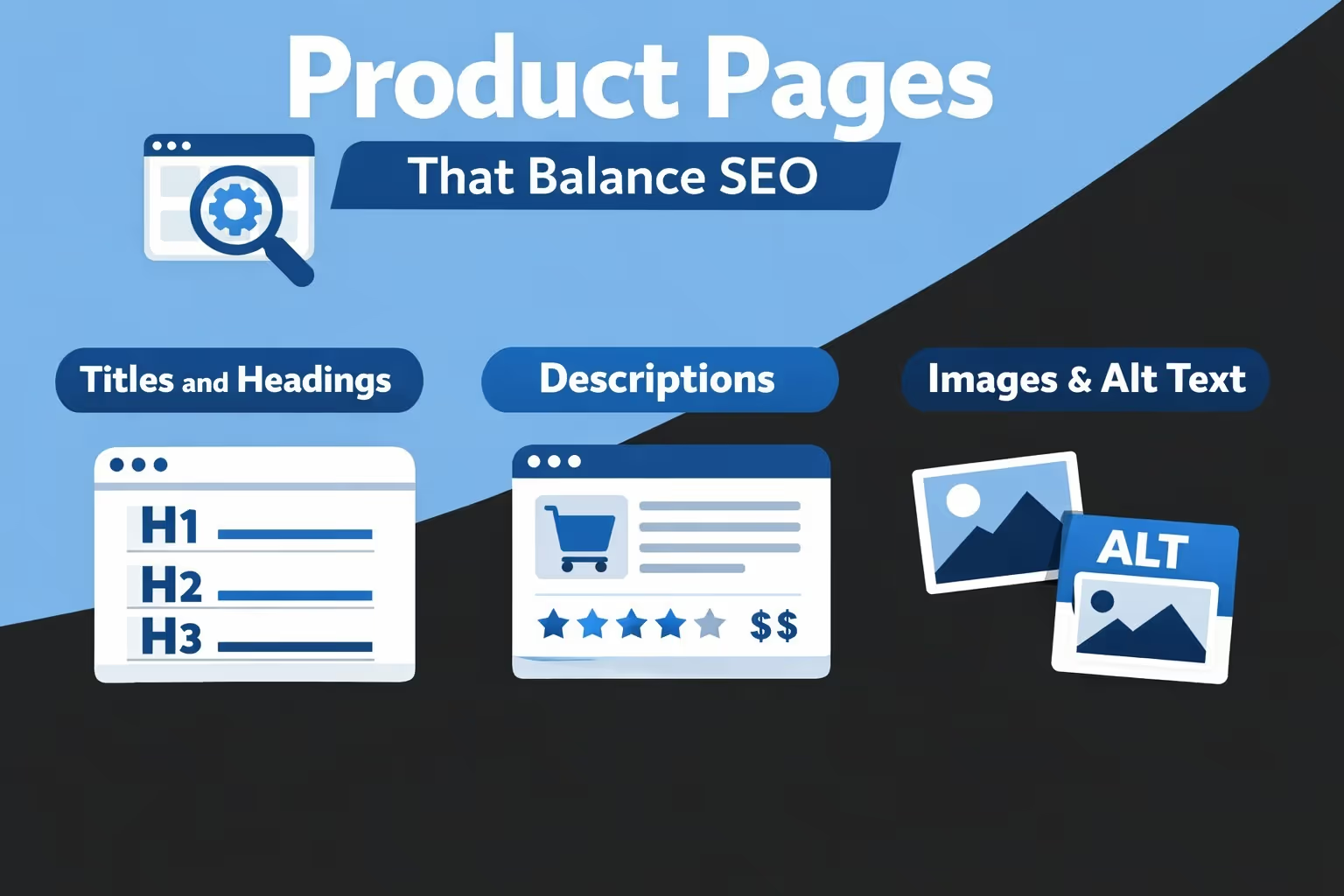
Product pages are where SEO meets persuasion. When one side dominates, the other suffers.
Product titles should reflect how people search, not internal naming conventions. This does not mean stuffing keywords. It means choosing words buyers actually use.
Headings should guide the reader through the page. They are not just for search engines. They help users scan and decide whether to keep reading.
A good product description answers questions before they are asked. It explains what the product does, who it is for, and why it is different. Technical details matter, but context matters more.
Keyword usage should feel natural. If removing the keyword breaks the sentence, it was probably forced.
Images help conversion. Alt text helps accessibility and context. Together, they reinforce relevance.
Alt text should describe what is visible and important, not repeat keywords for the sake of it. Search engines have become very good at recognizing spammy patterns here.
Shopify makes it easy to edit SEO fields, which sometimes leads to careless optimization.
Each field has a specific job:
Treating all of them as keyword containers weakens their impact. Each should add something unique and useful.
A Shopify blog should not exist just to capture traffic. It should support decisions.
The most effective blog posts usually sit just before purchase. They help people choose, compare, or avoid mistakes.
Good Shopify blog content often comes from real customer questions. Size guides, material comparisons, use case explanations, and common misconceptions all work well.
These posts should connect naturally to collections or products without sounding promotional. The goal is clarity, not pressure.
Products change. Collections change. Blog content should keep up.
Updating existing posts often produces better results than publishing new ones. Search engines reward freshness when it improves relevance.
Internal links play a bigger role than many Shopify store owners realize. They do not just help search engines understand which pages matter. They also shape how real people move through the store. A blog post should not feel like a dead end. A collection page should offer paths to more specific detail. A product page should still connect back to broader context so buyers do not feel boxed into a single option.
When internal linking mirrors how someone would naturally explore a store, both rankings and conversions tend to improve. The structure feels intuitive instead of engineered. Visitors move forward because the next step makes sense, not because they are being pushed.
Problems usually appear when links are added purely for SEO. Random links dropped into content without a clear reason often confuse users and weaken trust. Every internal link should answer a likely next question. If it does not help someone decide, compare, or understand something better, it probably does not belong.
Keyword cannibalization usually does not happen on purpose. It is a side effect of growth. As Shopify stores add more products, collections, and content, overlap becomes easy to miss. Similar product names, slightly different collection pages, and blog posts that circle the same topic can end up competing for the same keywords without anyone noticing.
The safest way to avoid this is to decide ownership early. Each important keyword theme should have one clear primary page. Other pages can support it through internal links instead of trying to rank for the same term. Fixing cannibalization after rankings start to fluctuate is possible, but it is far more time-consuming than planning for it upfront.

Rankings matter, but they are not the final result.
Better indicators of success include:
A page that ranks lower but converts better is often more valuable than a top-ranking page that leads nowhere.
SEO on Shopify takes time, but time alone does not create results. Waiting for rankings to improve without making adjustments often leads to frustration, not progress. Search engines respond to signals of improvement, not to static pages left untouched for months. Patience matters, but it needs to be paired with attention.
The stores that see steady gains tend to work in small, deliberate cycles. They revisit pages that are close to ranking and look for ways to make them clearer or more useful. Sometimes that means tightening the focus of a page. Other times it means updating content to reflect how people actually search or strengthening internal links so important pages are easier to find. These changes rarely feel dramatic on their own, but when they are applied consistently, the effect compounds over time.
Getting a Shopify store to rank for keywords that actually convert is less about chasing trends and more about respecting intent. When pages exist for clear reasons, serve real needs, and connect logically, search engines tend to follow.
SEO becomes easier when it stops trying to impress algorithms and starts trying to help people decide. That is when rankings turn into revenue, and traffic starts to matter for the right reasons.


