How to Dropship on Shopify Without Making It Harder Than It Is
Learn how to dropship on Shopify step by step, from choosing suppliers to launching your store without inventory or guesswork.
Jan 6, 2026



Getting sales on Shopify is rarely about one missing feature or a single “secret” tactic. Most stores don’t fail because the platform is broken. They fail because too many small things are slightly off at the same time.
You can have a clean design, decent products, and even traffic, yet still watch visitors leave without buying. That’s frustrating, especially when advice online jumps straight to ads, apps, or automation before the basics are in place.
This article focuses on how sales actually start happening on Shopify. Not in theory. In practice. We’ll look at what usually blocks early sales, what matters most when traffic shows up, and how to turn attention into real orders without overcomplicating the process.
Every Shopify store that struggles with sales has a reason. Sometimes it is obvious. Often it is not.
The mistake many store owners make is trying to fix everything at once. That usually leads to confusion and wasted effort. A better approach is to identify the main blocker right now.
If there is no traffic at all, conversion tweaks will not help. If traffic exists but nobody trusts the store, ads will only make that problem louder. If carts are abandoned, the issue is likely price clarity, shipping, or checkout friction.
Sales problems are rarely mysterious. They are just layered. Pulling on the right thread first makes everything else easier.
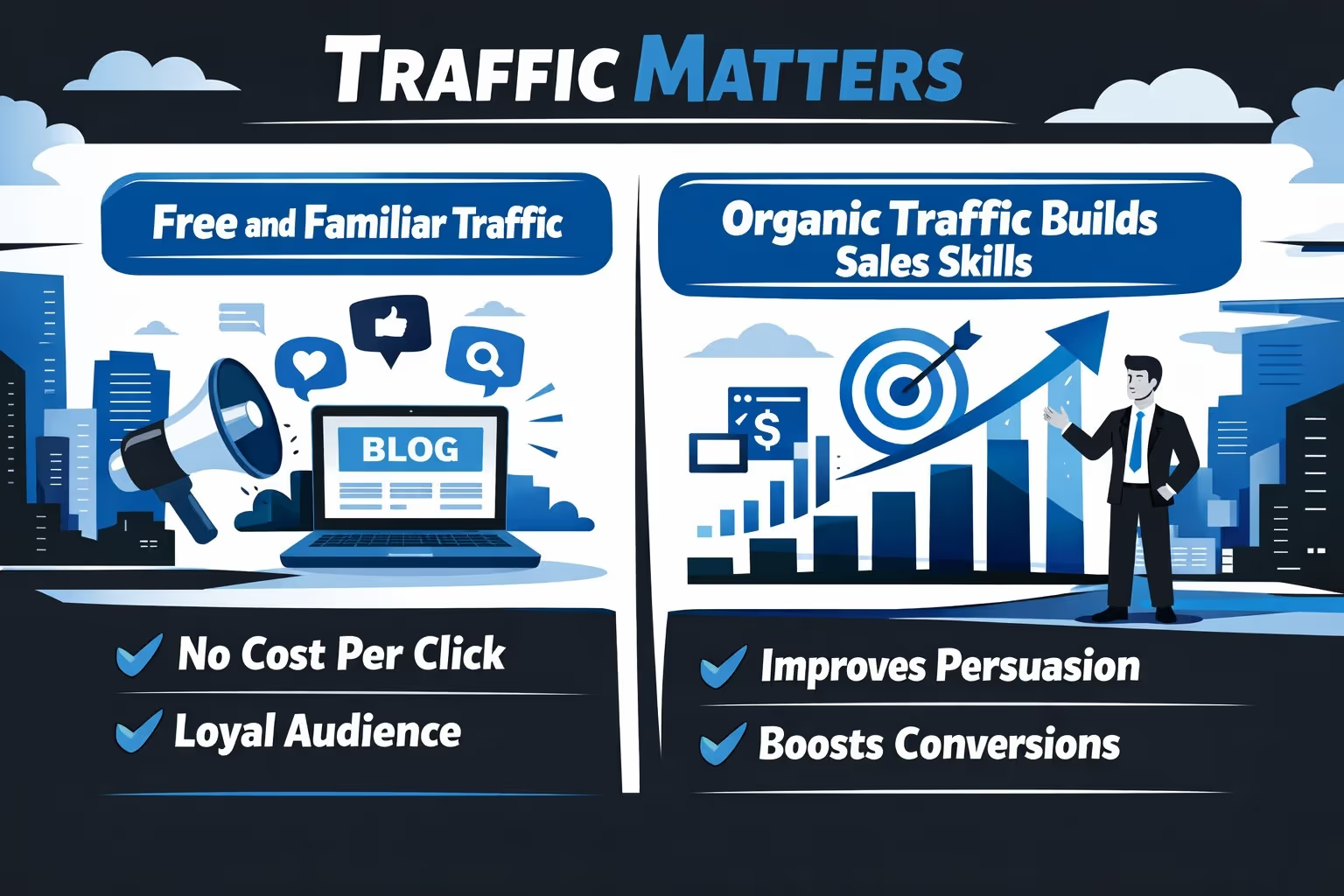
You cannot get sales without visitors. That part is obvious. What is less obvious is how often stores focus on volume instead of relevance.
A hundred people who are curious but mismatched will convert worse than ten people who came looking for exactly what you sell.
Early sales often come from people who already trust you in some way. Friends, colleagues, followers, community members. That is not a weakness. It is a normal launch pattern.
Sharing your store in personal networks, niche groups, or relevant communities does two important things. It brings visitors who are more forgiving, and it gives you honest feedback fast. You will hear objections, confusion, and hesitation in real words, not just numbers.
That information is worth more than any analytics tool at this stage.
Organic traffic from search or content forces clarity. People arrive with specific questions or problems, and your store either answers them or it does not.
Creating content that targets real questions around your product category helps you understand buying intent. Even one or two focused pages can attract visitors who are closer to purchasing than most paid traffic.
Organic growth is slower, but it teaches you what actually convinces people.
Ads are often treated as the solution to low sales. In reality, they are an amplifier.
If your store already converts a small percentage of visitors, ads can scale that. If your store leaks trust or clarity, ads will simply bring more people to notice those problems.
Before spending seriously on ads, make sure the basics are solid. Your homepage should explain what you sell in seconds. Product pages should feel complete. Pricing and shipping should not surprise people at checkout.
When those pieces are in place, ads stop feeling like gambling and start feeling predictable.
Different platforms catch people in different mindsets. Search ads meet intent. Social ads interrupt attention. Visual platforms rely heavily on emotion and context.
There is no universal best channel. The right one depends on how people discover and evaluate your kind of product. Matching that behavior matters more than following trends.

At Extuitive, we help Shopify brands remove guesswork from advertising. Most stores do not struggle because they lack ideas. They struggle because they do not know which ideas will actually drive sales before spending money on ads.
Our platform is built around one simple flow: create, validate, and launch high performing ads. We connect directly to your Shopify store, generate ad concepts and messaging, and test them using AI agents modeled on real consumer behavior. This lets us predict purchase intent early, before budget is committed and momentum is lost.
Instead of launching ads blindly and fixing them after they fail, teams can see which creatives and angles resonate upfront. That means faster launches, fewer wasted experiments, and clearer decisions around what to scale.
We are not here to replace creative instinct. We are here to sharpen it. By validating ads before they go live, Shopify stores can move with confidence, launch smarter campaigns, and focus on what actually converts instead of chasing tactics that look good but do not sell.
Most first-time visitors arrive skeptical. They do not know your brand. They do not know if the product is real. Their default position is caution.
Trust is what moves them forward.
Trust is built through small, clear signals. Not flashy design. Not big claims.
A trustworthy Shopify store shows real product images, clear contact details, visible policies, and familiar payment options. It feels transparent, not defensive.
Even simple things like an address, a real email, or a clear returns page reduce anxiety. People want to know there is a human behind the store.
Many new stores delay launches because they lack reviews. That often backfires.
Early trust can come from testimonials, quotes from early customers, or even honest explanations of why the brand exists. People respond to transparency more than polish.
Social proof does not need to be perfect. It needs to be real.
Most sales decisions happen on the product page. That is where interest either turns into confidence or quietly fades. Small improvements here often have a bigger impact than adding new traffic sources or tools.
Strong product pages do not sound like marketing copy. They sound like someone explaining the product clearly and honestly. Instead of listing features, it helps to focus on what ownership actually feels like. Who is this product for. When does it get used. Why does it exist in the first place. Answering those questions directly removes hesitation. Short paragraphs and simple language work better than clever wording. People are not looking to be impressed. They are looking for reassurance that the product fits their situation.
Images do most of the heavy lifting before any text is read. Visitors scan visuals first to understand what the product is, how big it is, and how it looks in real life. Clear photos, close-ups, and images showing the product in use reduce uncertainty fast. Even a short, simple video can help bridge the gap between curiosity and trust. Words help refine the decision, but images are often what unlock it in the first place.
Many stores lose sales not because prices are too high, but because the final cost feels unclear or unfair.
Shipping, taxes, and delivery time are part of the mental price. When those appear late or unexpectedly, hesitation kicks in.
Being upfront about costs builds confidence. Even when shipping is not free, clarity keeps people moving.
Discounts can help trigger first purchases, but relying on them too heavily creates hesitation later. Use them as a nudge, not a foundation.
The best checkout experiences are the ones people barely notice. They feel routine, predictable, and easy to finish. Nothing unexpected pops up, nothing feels unclear, and nothing makes the buyer stop and reconsider. That sense of familiarity is exactly what helps people complete a purchase with confidence.
Every extra field, question, or step introduces a small moment of doubt. The longer checkout takes, the more time there is to hesitate. Simplifying the process, reducing required information, and offering fast payment options help keep momentum going. Clear pricing, visible security cues, and familiar payment methods quietly reassure customers that they are making a safe decision.
Checkout is not the place to test creative ideas or unique layouts. It is the final step, and its job is simple: get out of the way. When checkout feels boring and familiar, it converts better, often without needing changes anywhere else.
Not every visitor is ready to buy the first time they land on your store. That is completely normal, even for brands that convert well. People compare options, get interrupted, or need more time to feel comfortable spending money with a store they just discovered. A visitor leaving without purchasing does not mean the session failed.
What matters is whether you gave them a reason to return. If the only option you offer is an immediate purchase, you are relying entirely on perfect timing. Most sales do not work that way. Giving visitors a low-pressure way to stay connected keeps the conversation open and turns a single visit into something more useful.
Email gives you a second chance when the customer is no longer rushing or distracted. It creates space to explain your product in more detail, answer common questions, and build familiarity over time. This is especially important for products that require a bit of consideration or trust before buying.
Simple signup forms, small incentives, or genuinely helpful content can be enough to turn a one-time visit into an ongoing relationship. From there, well-timed welcome emails, gentle reminders about viewed products, and short educational messages often lead to purchases that did not happen on the first visit.
The goal is not to collect as many email addresses as possible. It is to stay relevant to the reason someone was interested in the first place and give them a clear, comfortable path back when they are ready to buy.
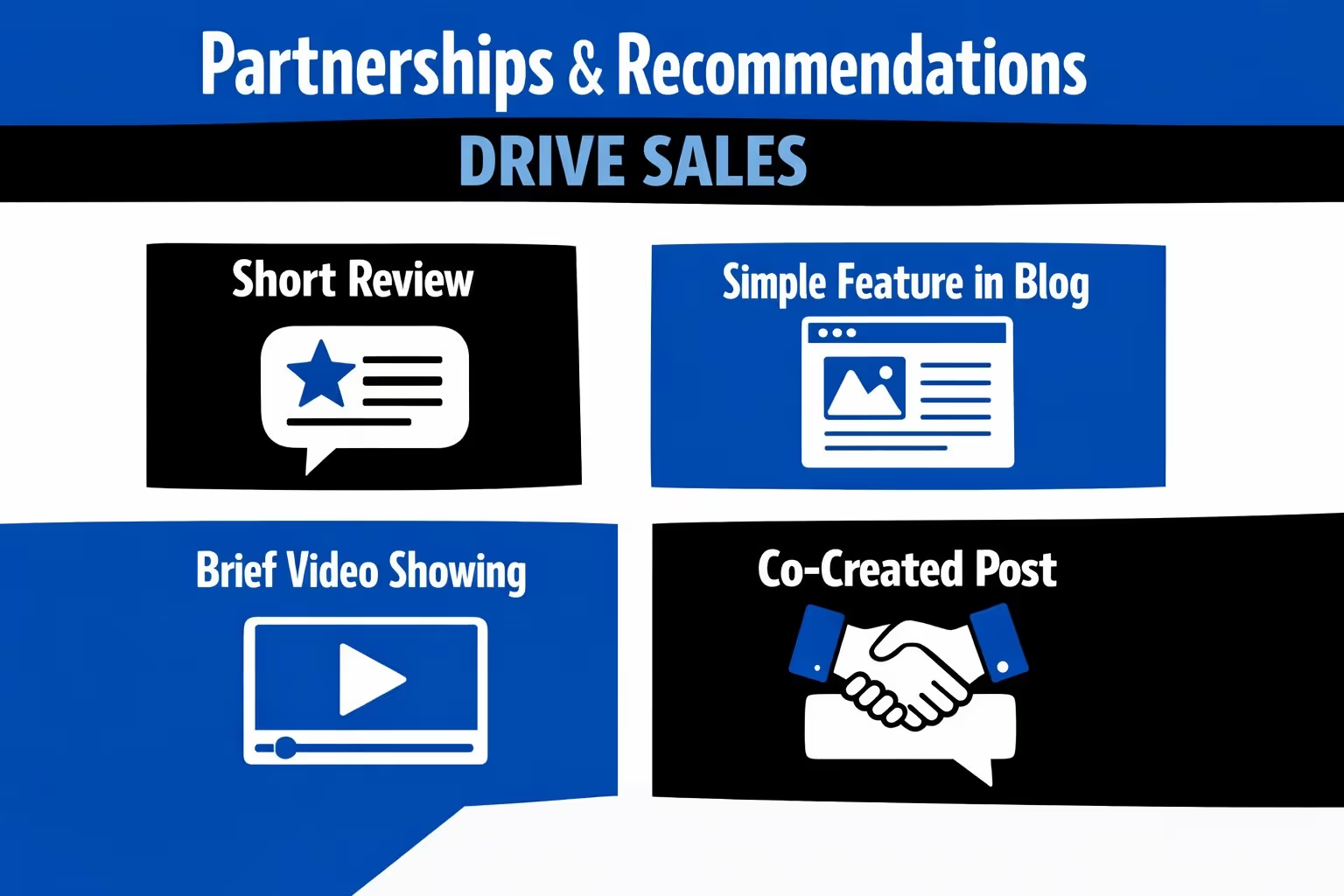
Not all growth happens through ads, and not all trust is built on your own site. Recommendations can move faster, especially early on, when your brand is still unknown and visitors are still cautious.
Small creators, bloggers, and niche voices often bring buyers who are already aligned with your product. Their audiences listen because the relationship feels personal and earned. Even with a smaller reach, intent is often much stronger than what you get from broad campaigns. One honest mention from the right person can outperform a week of paid traffic that is slightly off-target.
The key is fit. You want partners who already speak to the kind of customer you are trying to reach, using a tone that naturally matches how your product should be discussed. Collaborations do not need to be complex to work. Some of the most effective ones are simple and authentic, such as:
Offline recommendations matter too, even in ecommerce. Pop-ups, local events, markets, and small community meetups can lead to early sales and, just as importantly, real conversations. Word-of-mouth still carries weight. These interactions often surface objections you will never see in analytics. People will tell you what felt confusing, what seemed expensive, what they expected to see, and why they hesitated. That kind of clarity is rare and incredibly useful when refining your store.
Analytics become truly useful once you have enough traffic and a few sales to learn from. Until then, numbers can be noisy and misleading. A day with ten visitors is not a trend. It is just a day.
When you do look at data, treat it as a map, not a verdict. The most helpful questions are usually simple. Where do people drop off. Which pages do they visit most. Which products get attention but not purchases. What traffic sources bring buyers instead of just clicks.
Look for obvious friction first. If people land on product pages and bounce quickly, the match between traffic and offer may be off, or the page may not answer key questions. If carts get created but checkout completion is low, pricing clarity, shipping, or checkout flow may be the issue. If one channel drives a lot of traffic but almost no sales, that might not be a failure. It might just be the wrong audience for your product at that moment.
The biggest mistake is trying to optimize everything at once. Use data to guide one or two focused changes, then watch what happens. Small improvements compound. Constant reinvention usually just creates more noise.
Most Shopify stores that succeed do not have a dramatic turning point where everything suddenly clicks. Growth usually comes from steady, almost unremarkable improvements made over time. The kind that do not look exciting from the outside, but quietly change how the store performs.
What successful stores tend to do consistently looks simple on paper:
These habits compound. Each small improvement makes the next one easier to spot. Over time, patterns start to emerge. Certain traffic sources convert better. Certain messages resonate more. Certain offers perform consistently.
When that happens, sales stop feeling random or fragile. They become more predictable, more controllable, and much easier to scale without stress.
Getting sales on Shopify is not about doing more. It is about doing the right things in the right order.
When these pieces align, sales follow naturally. Not overnight. Not magically. But consistently.
And that is what actually builds a Shopify business.


