Marketing Ideas for Dentists That Drive Results in 2026
Discover proven marketing ideas for dentists to attract new patients, boost visibility, and grow your practice in 2026. Actionable strategies inside.
May 15, 2026



Advertising a Shopify store is easy to start and hard to get right. Anyone can launch ads in a few clicks. The real challenge is knowing what to say, who to say it to, and how to avoid burning through your budget while you figure it out.
Most Shopify stores don’t struggle because their products are bad. They struggle because advertising decisions are made too quickly, often based on assumptions instead of evidence. Ads go live before messaging is tested, audiences are guessed instead of validated, and budgets are scaled before results are stable. This article is about fixing that. Not with hacks or shortcuts, but with a clear, practical approach to advertising your Shopify store in a way that’s sustainable, measurable, and built for growth.
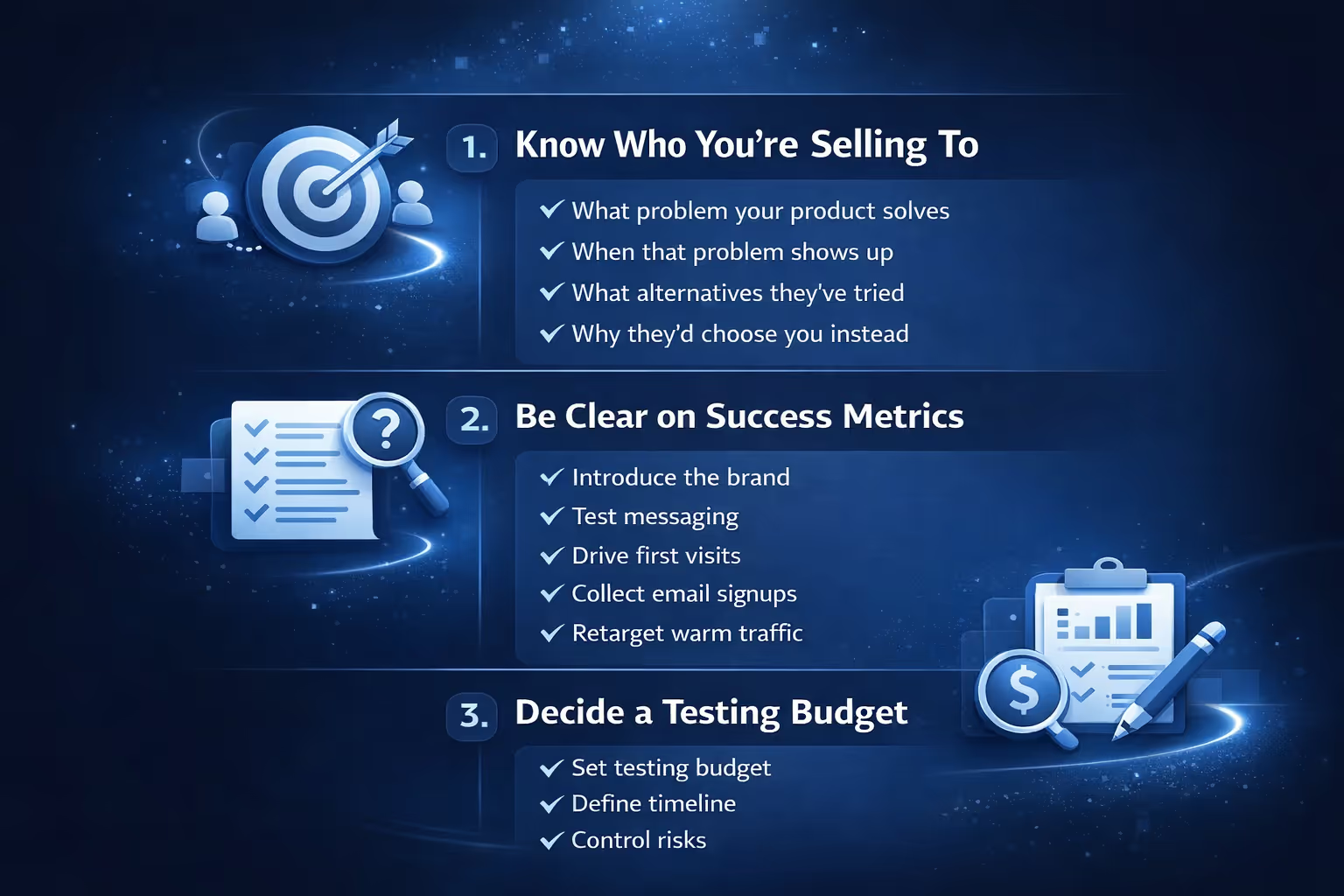
Before choosing channels or launching campaigns, you need clarity in three areas. Skip this step and every ad decision becomes more expensive than it needs to be.
“Everyone” is not an audience. Neither is “women 18-45” or “people who like fitness.” Those descriptions are too broad to guide creative decisions.
Instead, focus on:
Good ads feel specific because they are. When someone sees your ad and thinks, “That’s me,” you’re on the right track.
Not every ad needs to drive an immediate sale. Some ads are meant to:
If you treat every campaign like it must instantly convert, you’ll shut down ideas that might perform incredibly well with the right follow-up.
Advertising always involves testing. The mistake is testing blindly.
Set a clear testing budget and timeline. Know in advance how much you’re willing to spend to learn what works. That mindset alone changes how you evaluate performance and keeps emotion out of decisions.
There is no single “best” channel. What works depends on your product, price point, and audience behavior. That said, some channels consistently perform well for Shopify brands when used correctly.
Paid social is often the first stop for Shopify stores, and for good reason. Platforms like Facebook, Instagram, TikTok, and YouTube allow precise targeting and fast feedback.
Instead of launching one polished ad and hoping for the best, treat social ads like a testing environment.
Test variations of:
Small changes often lead to big performance differences. The goal early on is not perfection, it’s insight.
People scroll fast. Your ad has seconds to earn attention. Make them count.
Social ads are excellent for introducing your brand to new audiences, but Google Ads serve a different purpose. They capture existing demand. When someone actively searches for a product or a solution, they’re usually much closer to making a purchase than someone casually scrolling through a feed.
Google Ads are especially effective when your product solves a clear, specific problem and people are already searching for similar solutions online. They also work well if you can compete on price or offer a strong differentiator that makes your store stand out. In these cases, formats like search ads, shopping ads, and brand protection campaigns allow your Shopify store to appear exactly when intent is highest, placing your products in front of buyers who are ready to act rather than just browse.
Many Shopify stores lose money on Google Ads because they:
Google rewards relevance. The closer your ad, keyword, and landing page align, the better your performance and the lower your cost per click.
Most people don’t buy the first time they visit a store. That’s not a problem, it’s just how online shopping works. Retargeting exists for this exact reason. It gives you a second chance to reach people who were interested but not quite ready to commit.
What makes retargeting effective is how familiar it feels to the shopper. These ads remind people what they were looking at, help ease last-minute doubts, and build trust over time instead of forcing a quick decision. They’re also one of the easiest ways to recover abandoned carts, since you’re speaking to someone who was already close to buying. Because the audience already knows your brand, retargeting ads usually cost less and convert more reliably than ads shown to completely new visitors.
Discounts can help, but they’re often overused. Retargeting works just as well, and sometimes better, when it focuses on reassurance instead. Showing real customer reviews, explaining how the product is used, or highlighting specific benefits can answer the questions holding someone back. In many cases, people don’t need a lower price. They just need to feel confident they’re making the right choice.
.avif)
Influencer marketing has matured. It’s no longer about paying for exposure and hoping it works. The most effective brands treat creators as performance partners.
Follower count matters less than alignment.
Look for creators who:
Micro and mid-sized creators often outperform larger accounts because their audiences trust them more.
Instead of one-off posts, aim for:
The real value often comes from repurposing high-performing creator content into paid ads.
Email is not just a retention channel. It makes every paid campaign more profitable.
When you capture emails from ad traffic, you:
Even simple email flows can significantly increase conversion rates.
At a minimum, you should have:
Ads bring people in. Email helps close the loop.
SEO doesn’t deliver results as quickly as paid ads, but it pays off in a different way. Over time, it compounds. Once your pages start ranking, they can bring in steady traffic without you paying for every click, which makes everything else in your marketing more efficient.
SEO also supports your ads in ways that aren’t always obvious. A well-structured, content-rich site tends to convert better, and search engines reward that. As your store becomes more useful and trustworthy, both Google and your customers respond more positively. For Shopify stores especially, SEO works best when it’s paired with content that actually helps people, not filler written just to rank.
Instead of publishing generic blog posts, focus on content that reflects how your customers think. Answer the questions they ask before buying, compare options they’re already considering, explain how your product is used, and address common objections head-on. This kind of content warms up traffic, builds confidence, and makes your ads more effective by increasing the chances that visitors will convert once they arrive.
People trust other people more than they trust brands, and that trust often determines whether someone buys or leaves. Social proof helps remove doubt by showing that real customers have already chosen your product and had a positive experience.
Reviews, testimonials, user-generated content, before-and-after results, and short case studies all play different roles in building confidence. Together, they make your advertising feel more believable and less sales-driven. Social proof works best when it’s present throughout the entire journey, from ads and emails to product pages and even the checkout. When a shopper hesitates, seeing proof from others is often what pushes them to move forward.
Testing is essential, but it shouldn’t drain your budget. Many Shopify stores spend too much too early by treating tests like full launches. A smarter approach is to test with the goal of learning, not scaling.
Instead of launching full campaigns right away, focus on a few controlled experiments:
When reviewing early results, don’t judge success by sales alone. Look for signals that show whether an idea has potential:
Sales still matter, but at the testing stage, they’re only part of the picture.

Advertising a Shopify store works best when decisions are based on evidence, not assumptions. That’s exactly where Extuitive fits into the process. We use it to validate audiences, messages, and creative ideas before they’re turned into full ad campaigns, so we’re not guessing what might work.
Instead of spending weeks on traditional research or burning budget on trial and error, Shopify brands can test messaging angles, value propositions, and creative directions early and move forward with confidence.
This approach connects directly to everything discussed in this guide. Better ads start with clearer targeting, stronger messaging, and faster feedback. By validating ideas upfront, Extuitive helps make paid social, Google Ads, and retargeting more efficient, reduce wasted spend, and focus budget on campaigns that have a real chance to convert. It’s a practical way to advertise Shopify stores with intention, not hope.
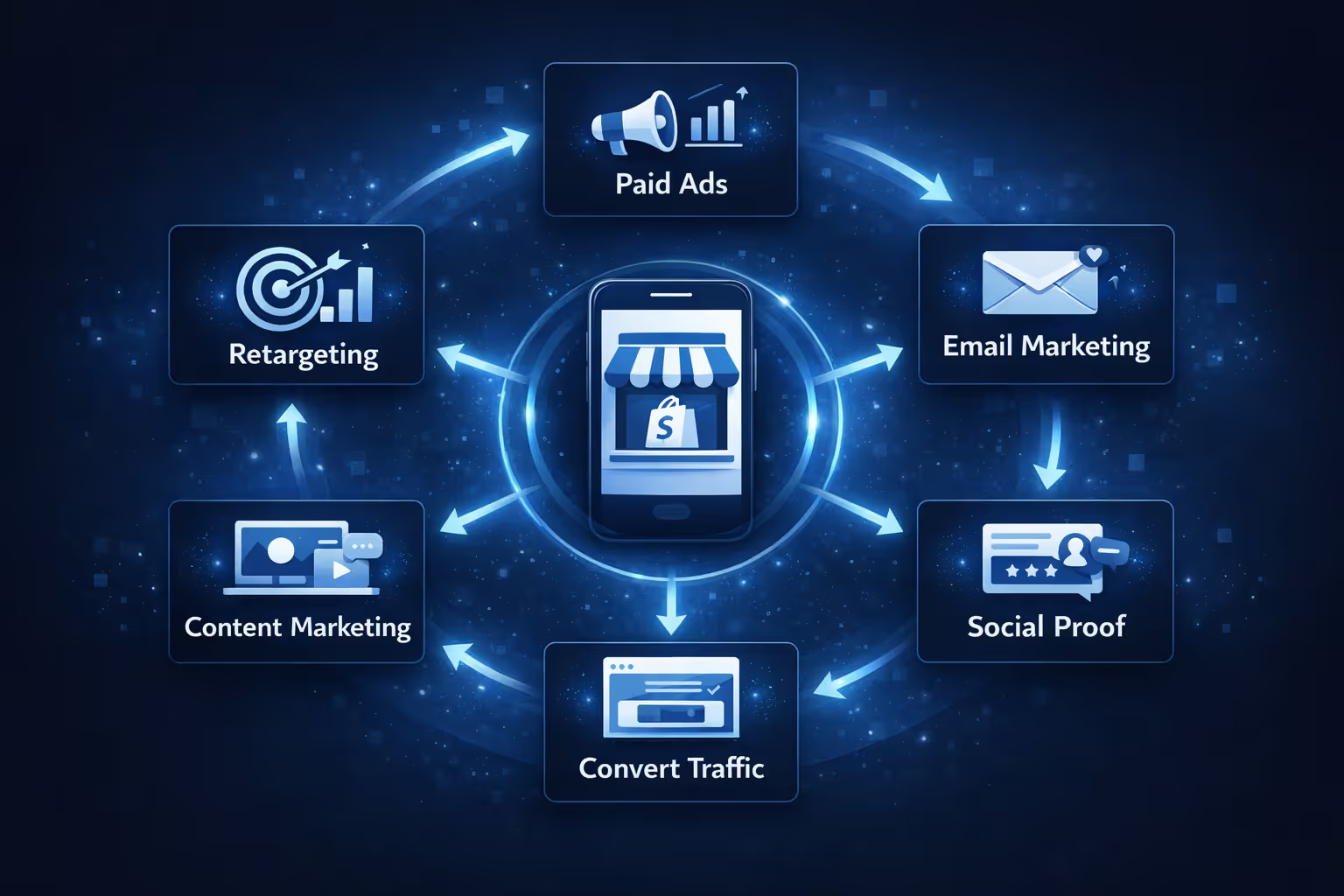
The strongest Shopify brands don’t rely on a single channel or a single campaign. They build connected systems where every part of their marketing supports the others. Multi-channel advertising isn’t about being everywhere at once. It’s about making sure each channel plays a clear role.
In a well-built setup:
When these elements work together, results compound. Traffic becomes more valuable, ads perform more consistently, and conversions feel less forced. At the same time, even a strong multi-channel setup can fall apart if a few common mistakes creep in.
Many Shopify stores lose momentum by launching ads without a clear understanding of their audience, scaling campaigns based on short-term spikes, or ignoring the quality of their landing pages. Others treat advertising as a one-time push instead of an ongoing process, or rely too heavily on discounts to compensate for weak messaging. Avoiding these mistakes won’t guarantee instant success, but it will prevent wasted spend, inconsistent results, and a lot of unnecessary frustration.
Advertising a Shopify store usually starts with excitement and ends with a lot of questions. You launch a few ads, watch the numbers move, and wonder if you’re doing it right. That’s normal. The stores that succeed aren’t the ones that magically get everything right from day one. They’re the ones that slow down just enough to understand what’s working, what isn’t, and why.
Good advertising isn’t about chasing every new channel or copying someone else’s setup. It’s about building a system you can improve over time. Testing ideas before scaling, paying attention to how real people respond, and connecting your ads with email, content, and retargeting makes the whole thing feel far less chaotic. When you treat advertising as an ongoing process instead of a one-time push, growth becomes a lot more predictable.


