OpenClaw Security Best Practices: 2026 Hardening Guide
Secure your OpenClaw deployment with proven best practices. Covers Gateway isolation, sandbox hardening, skill auditing, and defense against 2026 threats.
Apr 8, 2026



If you’re thinking about starting an online store, age is one of those details that’s easy to overlook until it suddenly matters. With Shopify, the rule is simple on paper, but the reality is a bit more nuanced.
Shopify requires the account owner to be at least 18 years old. That’s because opening a store isn’t just about building pages and uploading products. It involves legal agreements, payment processing, and tax responsibilities. All of those require someone who can legally sign contracts.
That said, being under 18 doesn’t mean you’re completely locked out of learning or even running a store in practice. Many young founders get started with help from a parent or guardian, handling the day-to-day work while an adult remains legally responsible. Understanding where the line is helps you avoid problems later and build something the right way from the start.
Shopify’s rule is clear: to create and legally own a Shopify account, you must be at least 18 years old. When you sign up, you agree to Shopify’s Terms of Service. Those terms form a legal contract between you and Shopify.
In most countries, minors cannot enter into binding legal contracts on their own. Because of that, Shopify does not allow minors to be the official account holder.
Shopify does not always ask for proof of age during the initial signup process. However, agreeing to the terms is a legal declaration that you meet the age requirement. Age and identity verification often come later, especially when payments, payouts, or compliance checks are involved.
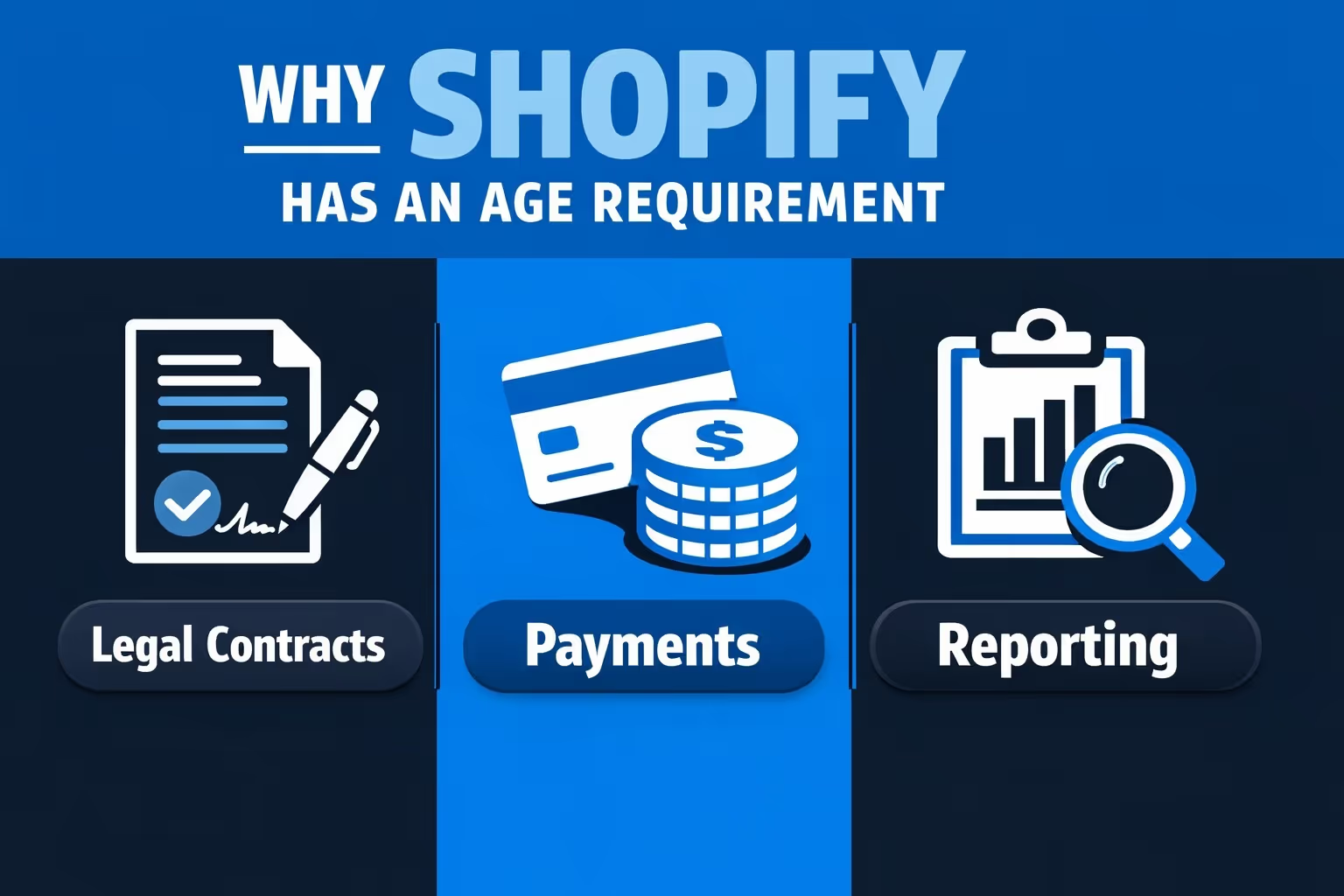
The age rule is not about limiting ambition. It exists because running an online store involves legal and financial responsibilities that require an adult account holder.
Opening a Shopify store means entering into multiple agreements. These include contracts with Shopify itself, payment processors, app developers, shipping providers, and sometimes suppliers.
If a dispute arises, Shopify needs a clearly identifiable, legally responsible party. Minors generally cannot fulfill that role on their own. The age requirement ensures that someone with legal capacity stands behind the store.
Every Shopify store that sells products handles money. That includes:
Most payment processors require users to be at least 18 years old. Shopify has to follow those rules as well. Allowing minors to own accounts would put Shopify in conflict with financial regulations.
Once a store earns money, taxes become part of the picture. Income reporting, sales tax or VAT, and local compliance obligations all fall on the account owner.
Shopify cannot assign these responsibilities to someone who is not legally allowed to carry them. The age requirement ensures that tax obligations are attached to a legally accountable individual.
Some people assume that if Shopify does not verify age immediately, the rule is easy to bypass. That assumption often leads to serious problems later.
If Shopify or a connected payment processor discovers that the account owner is under 18, the store can be suspended or permanently closed. This can happen weeks or even months after launch.
Once an account is closed, restoring it is rarely simple.
Payment processors may pause payouts if identity details do not meet legal requirements. In some cases, funds are held until the situation is resolved. In others, access to payouts is permanently lost.
This can be especially damaging if the store is already generating sales.
Beyond the technical consequences, there is a practical cost. A shutdown means losing customer trust, ad data, analytics history, and the momentum you worked to build. Starting again is harder than starting correctly the first time.
Yes, but not as the legal owner.
Shopify allows stores to operate under a parent or legal guardian’s name. This is the most common and safest option for minors who want real ecommerce experience.
In this setup:
This structure complies with Shopify’s rules and avoids future risk.
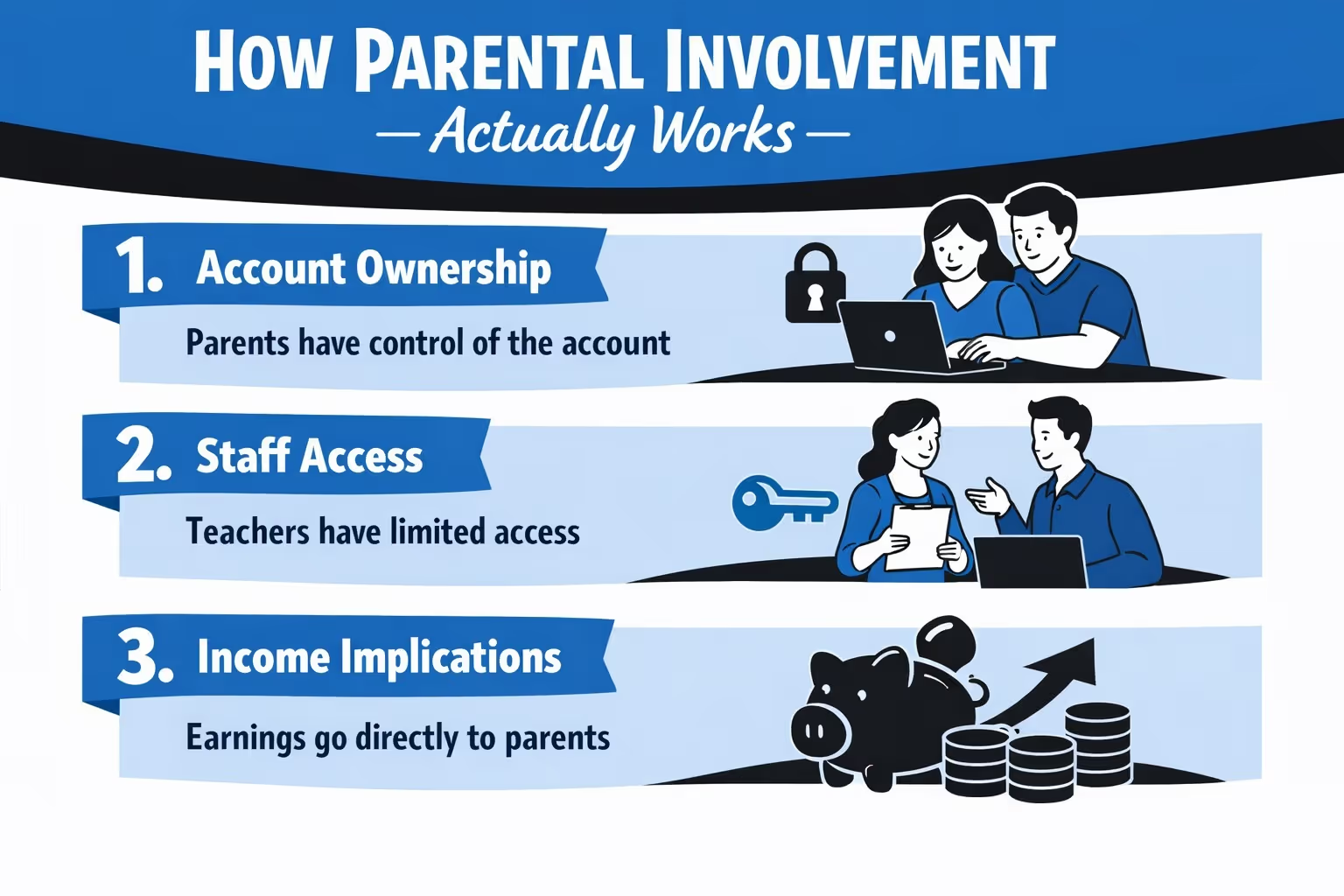
Parental involvement is not just a formality. It comes with real responsibility and should be approached with clarity from the start.
The adult is the official owner of the Shopify account. That means they:
Legally, the store belongs to them until ownership is transferred.
Shopify allows account owners to add staff members with specific permissions. A minor can handle:
This allows hands-on learning without legal exposure.
Income generated by the store is considered income of the account owner. That can affect the parent’s tax situation. This is often overlooked and should be discussed early.
Many families choose to consult a tax professional before launching to avoid surprises later.
Once the minor turns 18, ownership of the Shopify account can usually be transferred.
This typically involves:
The exact process depends on location and payment gateways, but Shopify support can guide you through it. Planning for this transition early makes it smoother.
Dropshipping often sounds like an easier entry point because you do not handle inventory or shipping yourself. That can make it feel more flexible or less formal than running a traditional online store. In reality, the business model does not change Shopify’s rules. A dropshipping store still requires contracts with the platform, agreements with payment processors, and responsibility for taxes and customer transactions. From Shopify’s perspective, it is no different from any other ecommerce store.
If you are under 18, you still need a parent or legal guardian to own the Shopify account. That adult becomes legally responsible for the store, including payments and compliance. It is also worth noting that some dropshipping suppliers set their own age requirements or require signed agreements. Before committing to a supplier, review their terms carefully so you do not run into restrictions later that could disrupt your store.
You may see advice suggesting alternative payment methods as a workaround. This is risky.
Most mainstream payment processors still require users to be 18 or older. Even if crypto payments appear more flexible, Shopify’s own account ownership rules still apply.
Trying to bypass the system creates long-term instability. Accounts get reviewed, rules evolve, and enforcement catches up.
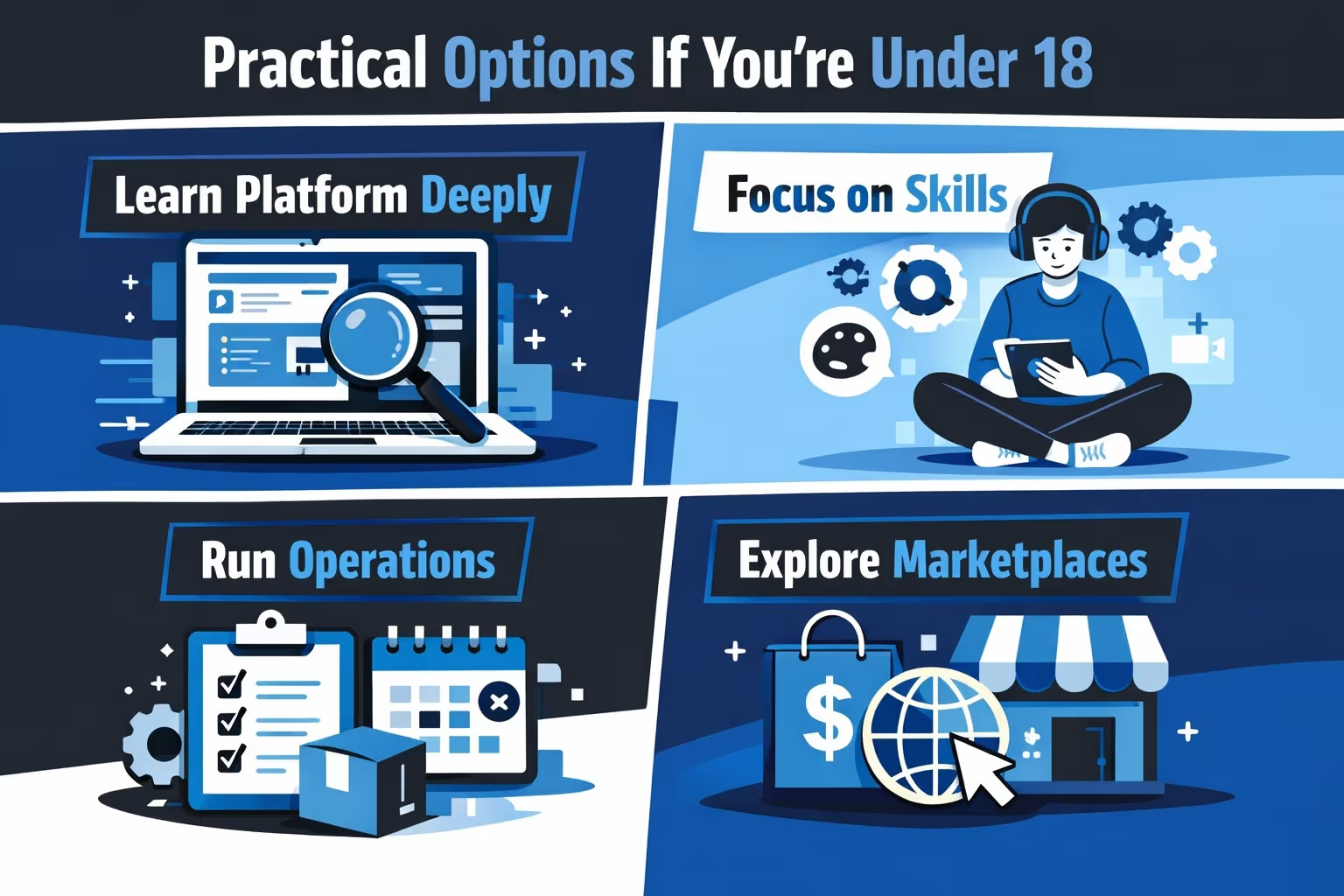
If you cannot legally own a Shopify account yet, there are still productive ways to move forward.
You can build test stores, explore themes, practice product research, and understand checkout flows. By the time you are eligible, you will be far ahead of most beginners.
Age matters far less than skill. Use this time to learn:
These skills transfer across platforms and business models.
With parental permission, you can run a real store under their account. Treat it seriously. Track results. Learn from mistakes.
That experience is far more valuable than rushing ownership.
Some marketplaces allow minors to sell under family accounts. This can provide early experience with customer service, pricing, and fulfillment before transitioning to Shopify later.
Many well-known young founders began experimenting with ecommerce long before they were legally allowed to own a Shopify account. What they had in common was not special treatment or shortcuts, but adult support behind the scenes. Parents or guardians handled the legal ownership, payments, and compliance, while the young entrepreneur focused on learning the business, building products, and understanding customers.
What truly set these founders apart was how seriously they approached the process. They did not treat ecommerce as a game or a temporary side project. They spent time preparing, learning from mistakes, and improving their skills while waiting for full ownership. By the time they were legally eligible to run everything in their own name, they already had the mindset and experience of someone who had been operating a real business for years.

At Extuitive, we work with founders at every stage, from first-time sellers mapping out their very first product to experienced teams scaling what already works. Age is not the thing that decides whether an idea is good. Time and clarity do.
Our platform helps you generate and validate ad concepts using AI agents modeled after real consumer segments. You can test product positioning, pricing angles, and creative directions before spending on ads. That is especially useful if you are building under a parent or guardian’s account, or you are still in the research phase and want proof before you commit to inventory, suppliers, or a full launch.
We are not an ad network, and we are not here to run campaigns for you. We reduce uncertainty at the creative and messaging level, so you are not guessing your way into the market. When you are ready to launch in your own name, you are not starting cold. You already know which ideas resonate, which messages land, and which audiences are worth targeting.
Shopify requires account owners to be at least 18 years old because ecommerce involves legal contracts, financial systems, and tax obligations. That rule is firm.
If you are under 18, the smart move is not to bend the rules but to work within them. With parental ownership, staff access, and clear planning, you can gain real experience without putting everything at risk.
Starting young can be a huge advantage when done responsibly. By the time you are legally ready to own your store, you can already think and operate like someone who has been running a business for years.


