Black Friday Marketing Ideas That Drive Sales in 2026
Discover proven Black Friday marketing ideas for 2026. From tiered discounts to omnichannel tactics, learn strategies that convert browsers into buyers.
May 15, 2026



Shopify Plus doesn’t come with a simple price tag you can glance at and move on. On paper, it looks straightforward. In practice, the number you pay depends on how your business is set up, how fast it’s growing, and how complex things get behind the scenes.
If you’re comparing Shopify Plus to standard Shopify plans, or trying to understand whether the jump actually makes sense, the pricing can feel a little opaque. This guide breaks down what Shopify Plus costs today, what’s included in that price, and where extra expenses tend to show up once you’re past the headline number.
Shopify Plus pricing officially starts at $2,300 USD per month when billed yearly on a three year term. This is the number most people see first, and it is not misleading, but it is incomplete.
For businesses that prefer shorter commitments, Shopify also offers one year terms. These typically start closer to $2,500 USD per month. The difference is not dramatic, but it reflects how Shopify rewards longer commitments.
This base fee gives you access to the Shopify Plus platform itself. It covers hosting, infrastructure, security, core features, and support. There are no limits on traffic, bandwidth, or product volume. From Shopify’s perspective, this is the cost of running a high scale commerce operation on their system.
What matters is that this number is a floor, not a ceiling.
Shopify Plus also offers a variable platform fee for businesses with more complex structures. This usually applies to very high volume merchants or brands operating multiple storefronts across regions, currencies, or business models.
Instead of a flat monthly rate, the fee is calculated as a percentage of monthly revenue, with a cap in place. Shopify does not publish exact percentages publicly, and the structure is negotiated during the sales process.
This approach is designed for enterprise merchants whose scale makes a fixed price less practical. For most companies evaluating Shopify Plus for the first time, the flat monthly fee is the more common path.
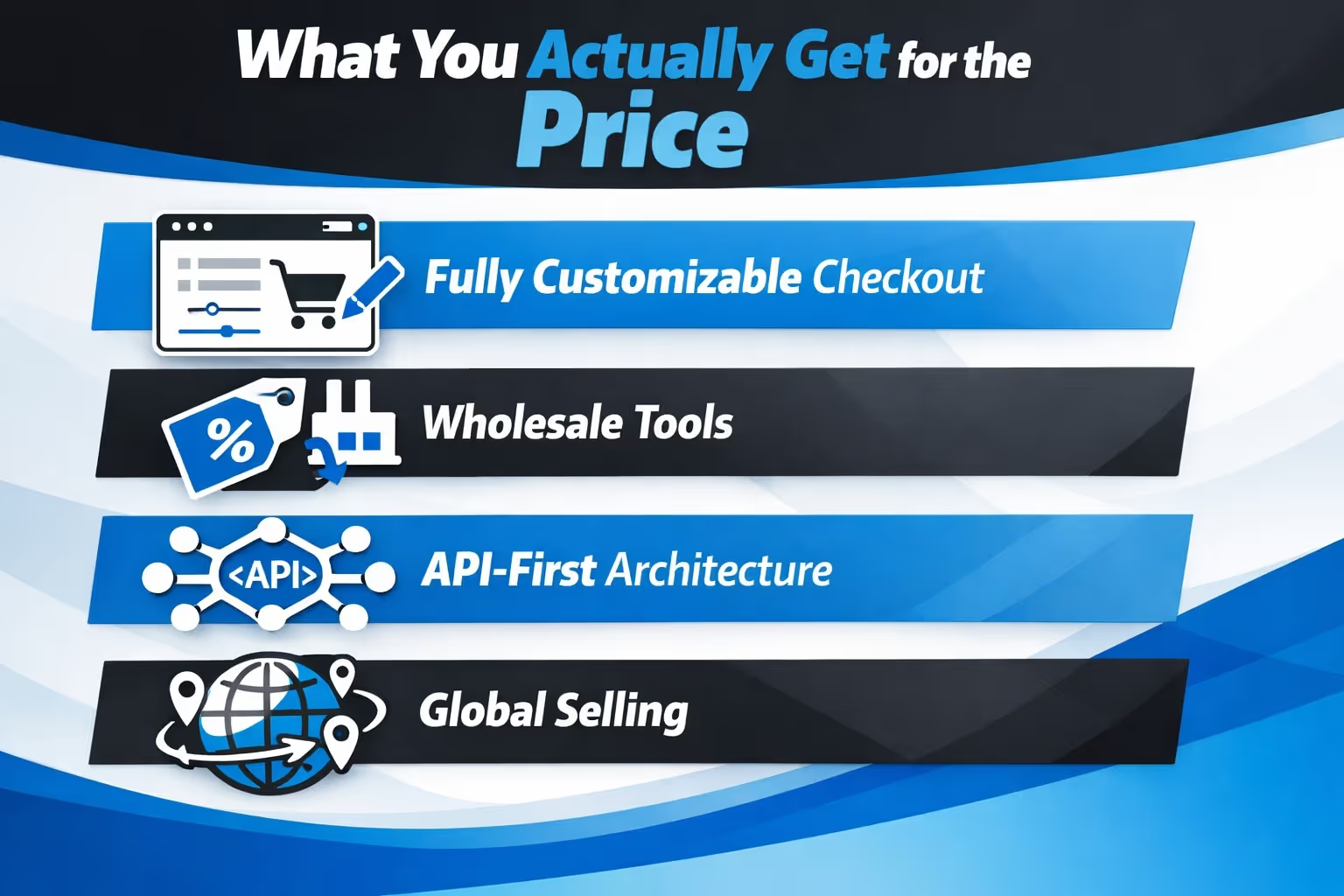
The Shopify Plus fee is not just about higher limits. It unlocks capabilities that are either restricted or unavailable on standard Shopify plans.
Shopify Plus allows deep checkout customization. This includes layout changes, logic-based discounts, payment flows, and integrations that go far beyond basic settings.
For large brands, checkout is not just a form. It is a conversion engine. Shopify Plus treats it that way.
Built-in B2B features allow brands to run wholesale and direct-to-consumer from the same backend. Pricing rules, payment terms, customer-specific catalogs, and bulk ordering are handled natively.
This removes the need for separate wholesale platforms or fragile custom builds.
Shopify Plus supports headless commerce out of the box. Businesses can use Shopify purely as a backend while building custom frontends with their own tech stack.
For development teams, this flexibility is often the deciding factor.
Shopify Plus supports up to 200 inventory locations, multiple storefronts by market, and advanced localization. Currency, language, tax, and regional pricing can all be managed centrally.
This is where Plus starts to feel less like a store builder and more like a commerce operating system.
One area that causes confusion is transaction fees. Shopify Plus does not eliminate them, but it does reduce them significantly for high volume merchants.
If you use Shopify Payments, card rates are competitive and tailored to volume. Exact percentages vary by region and are negotiated as part of your plan.
If you use external payment gateways, Shopify Plus applies lower transaction fees than standard plans. On Plus, these fees are substantially reduced compared to Advanced or Grow plans.
While these costs are not part of the base subscription, they have a real impact on total spend, especially for businesses processing large order volumes.
Shopify Plus gives you more built-in functionality, but it does not remove the need for apps. In fact, many Plus stores rely on a larger app ecosystem than smaller stores.
Apps for personalization, analytics, subscriptions, loyalty, reviews, or advanced promotions often come with monthly fees. Some are modest. Others can rival the Shopify Plus subscription itself.
The difference is that Plus stores usually treat apps as operational tools rather than quick fixes. They are chosen deliberately and budgeted accordingly.
This is where the biggest cost gap appears between expectations and reality.
Shopify Plus does not require a custom build, but most businesses migrating to Plus choose to invest in one. That can include:
These costs are not paid to Shopify directly, but they are part of the Shopify Plus decision. Many Plus merchants work with system integrators or certified partners to handle this phase.
Implementation costs vary widely. For some, it is a focused migration. For others, it is a full platform rethink.
Shopify Plus includes priority support with 24/7 access and faster response times. Phone support is available, which is not standard on lower plans.
There is also access to Shopify Plus Academy and specialized resources aimed at scaling teams. These do not show up as line items on an invoice, but they matter when things break or traffic spikes unexpectedly.
At first glance, the price jump from Advanced to Plus looks extreme. Advanced plans cost a few hundred dollars per month. Plus starts in the thousands.
The difference is not about features alone. It is about assumptions.
Standard plans assume growth within limits. Shopify Plus assumes sustained scale, high traffic events, global expansion, and operational complexity. The platform is priced accordingly.
For businesses processing millions in revenue, the Plus fee often becomes a small percentage of overall operating costs. For smaller businesses, it can feel overwhelming.
Here is a short comparison table below.
Shopify Plus usually makes sense when one or more of the following is true:
It makes less sense if you are simply growing steadily on a single storefront without complex needs. In those cases, standard Shopify plans often remain sufficient.
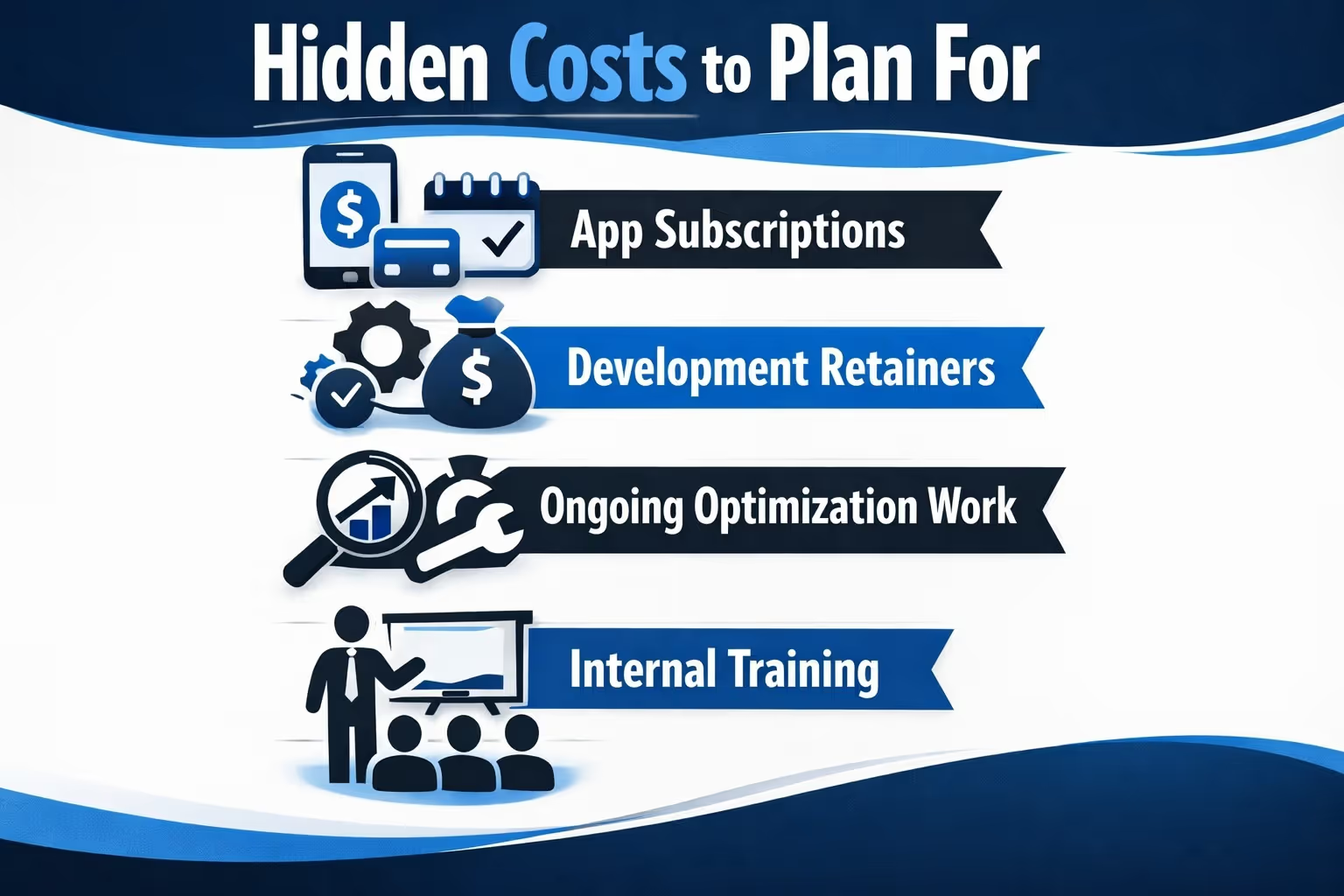
Shopify Plus is upfront about its base price, but some costs tend to get underestimated once a business starts scaling.
None of these are flaws in Shopify Plus. They are side effects of scale. The platform simply makes them easier to see.
Instead of asking whether Shopify Plus is expensive, it helps to ask what it replaces.
For many businesses, Plus removes the need to manage separate hosting, security, and core platform maintenance. Shopify handles infrastructure, compliance, and performance, even during heavy traffic spikes.
The tradeoff is a higher monthly fee in exchange for stability, speed, and fewer technical distractions. For teams focused on growth rather than infrastructure, that balance often makes sense.

When businesses move to Shopify Plus, the stakes change. Traffic gets more expensive, launches scale faster, and intuition alone stops being reliable. That’s where we come in.
At Extuitive, we help Shopify Plus brands reduce guesswork around ads, pricing, and creative before real budget is on the line. Instead of testing everything live, we simulate consumer response upfront.
Our platform uses an ecosystem of over 150,000 AI consumer agents trained on real behavioral data. These agents act as an always-on focus group, pressure-testing product concepts, creatives, price points, and reels to surface what is most likely to perform.
For Shopify Plus teams, this matters because scale amplifies mistakes. A weak message burns budget faster. A poorly tested offer hurts margins immediately. We built Extuitive to help teams iterate faster, launch with more confidence, and spend smarter as they grow.
Shopify Plus gives you the infrastructure to scale. We help make sure what you put on top of it actually works.
So how much is Shopify Plus, really?
The honest answer is that it starts around $2,300 per month, but the real cost depends on how you use it. For some businesses, that fee unlocks simplicity and focus. For others, it introduces complexity they are not ready to manage.
Shopify Plus is not priced for experimentation. It is priced for businesses that already know where they are going and need a platform that will not slow them down on the way.
If that sounds like your situation, the numbers tend to make sense quickly. If it does not, waiting is often the smarter move.


