Finding the Best Facebook PPC Agency to Scale Your Brand in 2026
Looking to scale? We’ve rounded up the best Facebook PPC agencies for 2026 to help you master Meta ads, nail your creative, and actually see a return on spend.
Mar 20, 2026



If you’ve just made a sale on Shopify and your bank balance hasn’t moved yet, you’re not alone. This is one of the first questions most store owners ask, especially after their first few orders. Shopify doesn’t pay out instantly, and that delay is normal.
The exact timing depends on a few factors: whether you’re using Shopify Payments or a third-party gateway, where your business is based, and whether this is your first payout. Once you understand how the payout flow works, it becomes much easier to predict when your money will actually land in your account. Let’s break it down in plain terms, without the guesswork.
For most stores using Shopify Payments, payouts follow a predictable pattern.
That is the simple version. The real answer depends on what happens between the moment a customer clicks Pay and the moment the money lands in your bank account.
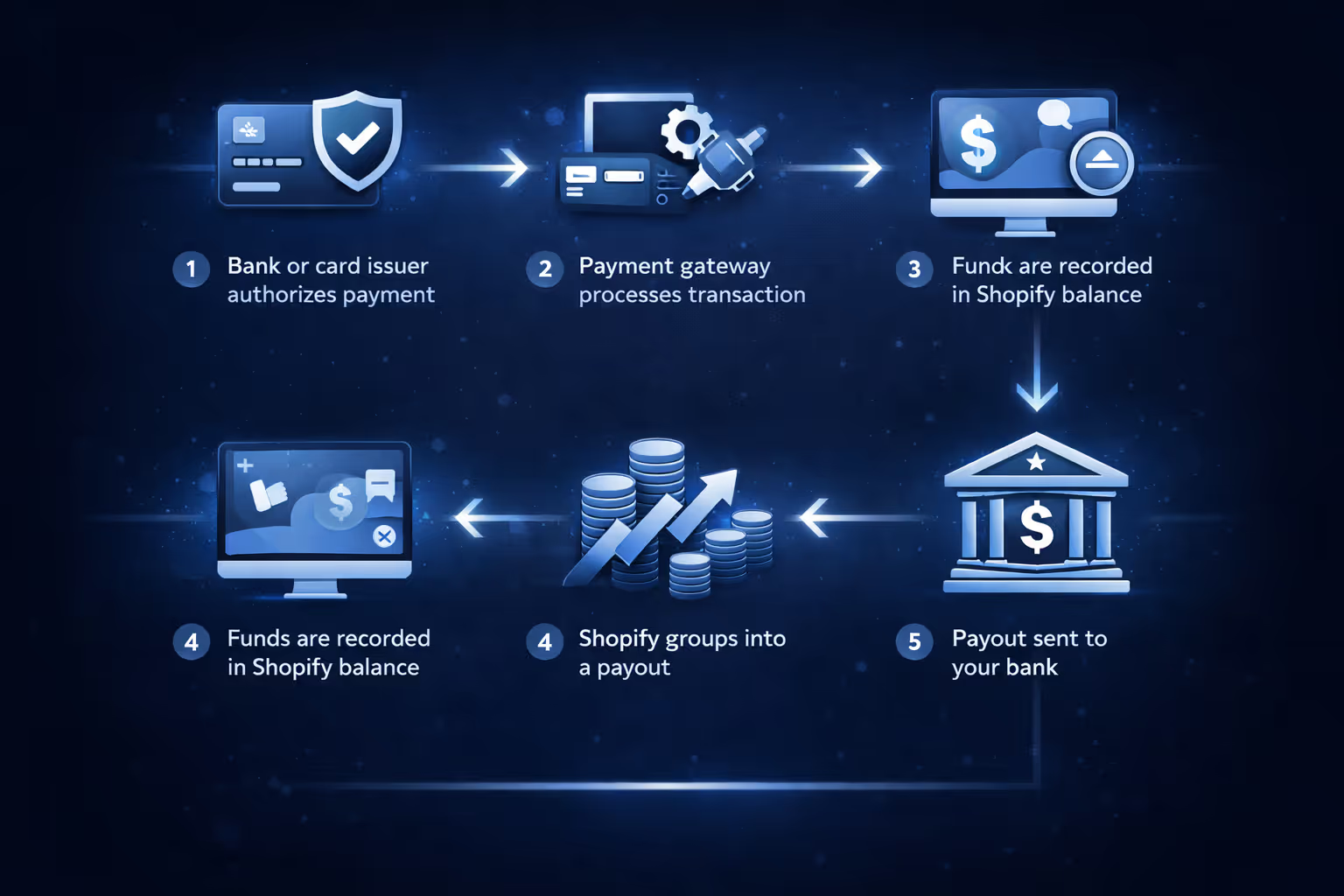
To understand payout timing, it helps to follow the money step by step.
When a customer completes checkout, several systems are involved:
None of these steps are instant. Even though the sale feels immediate, payment processing still happens in the background. This is true whether you use Shopify Payments or a third-party gateway.
The first payout almost always takes longer than the ones that follow. This is one of the most common surprises for new store owners.
When you launch a new Shopify store and make your first sale, Shopify runs additional checks behind the scenes. These checks help prevent fraud, verify your business details, and make sure everything complies with financial regulations.
During this initial review period:
Because of this, your first payout usually takes around a week. Once your account is established, future payouts move much faster.
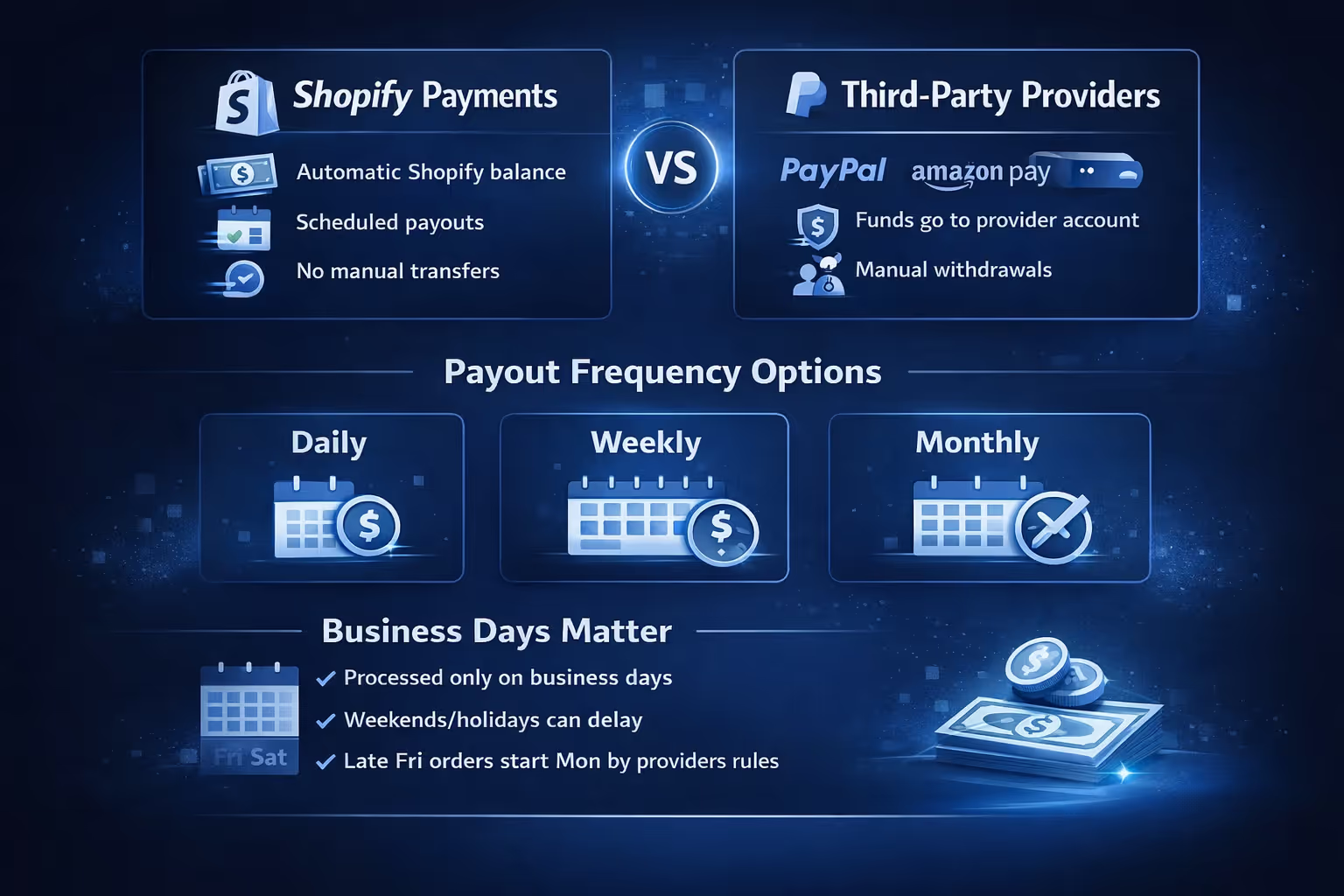
Your payout timeline depends heavily on which payment provider you use.
Shopify Payments is the built-in payment solution offered by Shopify. When you use it:
For most merchants, Shopify Payments offers the simplest and fastest payout experience.
If you use PayPal, Amazon Pay, or another external provider:
In this case, Shopify records the order, but it does not control when money reaches your bank. You must log in to each provider separately to manage withdrawals.
Shopify allows you to control how often your earnings are sent to your bank, giving you flexibility for accounting and cash flow management.
Most stores are set to daily payouts by default, meaning Shopify sends eligible funds every business day. However, you can choose from:
Changing the schedule affects how often transactions are grouped, not the actual processing speed.
A common source of confusion is the difference between calendar days and business days:
Understanding this distinction helps set realistic expectations for when funds will appear in your account.
Even after Shopify initiates a payout, your bank needs to process it.
Shopify Payments isn’t available everywhere, and local banking systems influence timing:
Accounting for local rules ensures better cash flow planning.
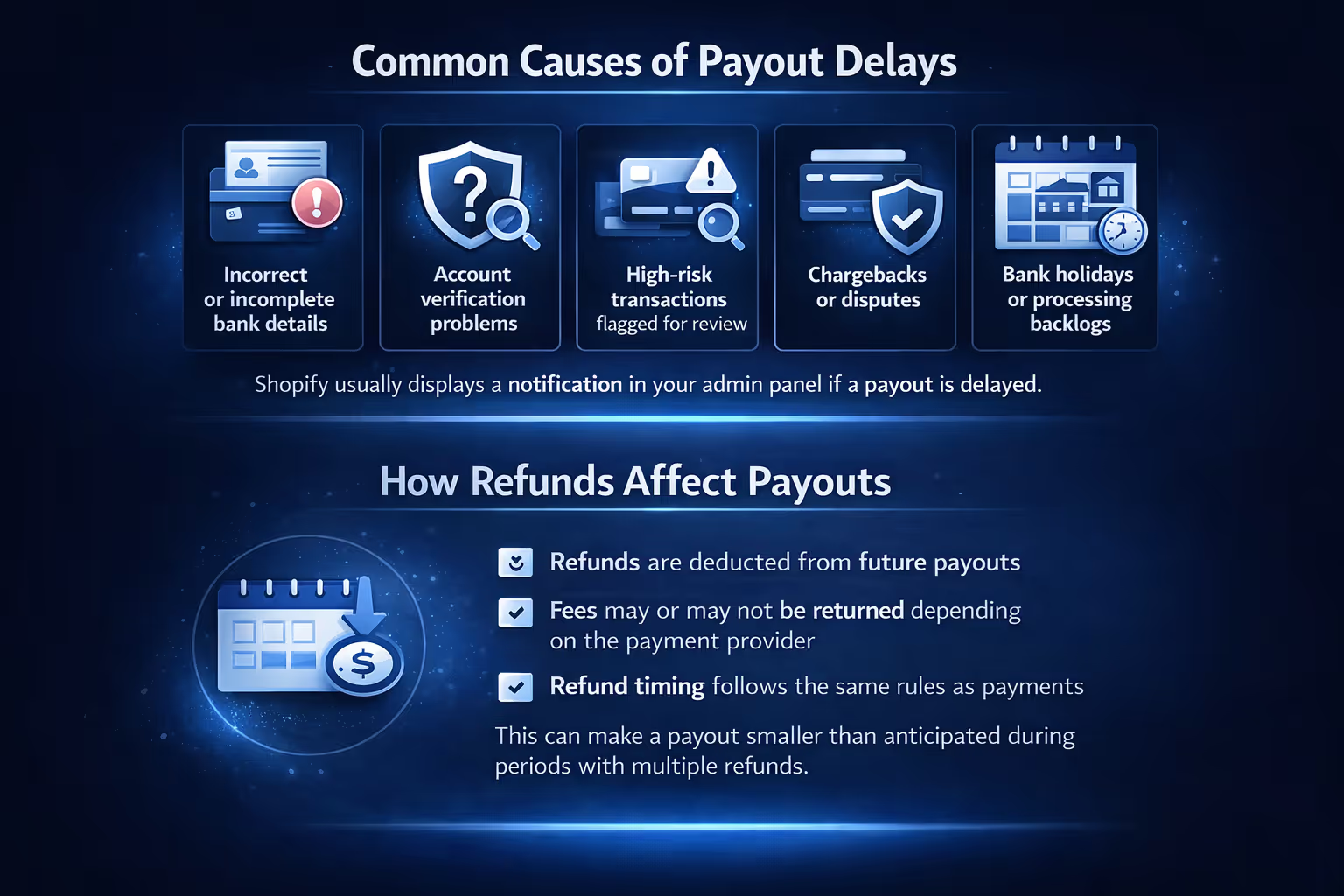
While most payouts are smooth, issues can arise. Common reasons include:
Shopify usually displays a notification in your admin panel if a payout is delayed.
Refunds can reduce your expected payouts:
This can make a payout smaller than anticipated during periods with multiple refunds.
Even short delays can affect operations, especially for small businesses.
Offering several payment options may increase sales but adds complexity:
While this doesn’t affect Shopify’s payout speed, it impacts how you track incoming funds.
Shopify makes it easy to monitor your payments. Navigate to: Settings > Payments > View payouts
Here, you can see:
This is the most reliable way to know the status of your funds.
Most payout questions resolve themselves, but reach out if:
Support can access internal details not visible in your admin, helping resolve issues efficiently.

At Extuitive, we work with Shopify merchants who want predictable growth, not surprises in their cash flow. Understanding how long Shopify takes to pay out is part of that picture, but it is only half of it. The real challenge is making sure the money you spend before a payout is backed by confidence, not hope. When payouts take a few business days, every ad dollar needs to work harder.
Our platform connects directly with Shopify and helps teams predict ad performance before campaigns go live. We generate and validate creatives using behavioral models built from over 150,000 real consumer profiles, so merchants can see what is likely to convert before committing a budget. That clarity makes it easier to plan around Shopify payout cycles, because spend is based on data, not trial and error.
The result is a healthier rhythm between ad spend and payouts. Shopify handles the movement of money. We help make sure that money is spent wisely in the first place. For brands that care about control, efficiency, and steady growth, that combination turns payout timing from a stress point into something you can plan around with confidence.
Shopify payouts are rarely the real problem. Uncertainty is. When you do not know when money will land, every expense feels heavier than it should. Once you understand how Shopify processes payments, why the first payout takes longer, and how banks factor into the timeline, that uncertainty fades. What looks like a delay is usually just a standard part of how online payments move.
The key takeaway is simple. Shopify is consistent, not instant. For most stores, payouts arrive within a few business days, and once your account is established, the rhythm becomes predictable. When you plan your spend, inventory, and advertising around that rhythm, payout timing stops being a source of stress and becomes just another operational detail you can manage with confidence.


