How to Speed Up Your Shopify Website the Right Way
Learn how to speed up your Shopify website with practical fixes that improve load time, user experience, and conversions.
Jan 27, 2026



At first glance, Shopify looks like a straightforward subscription product. You pay a monthly fee, open a store, and start selling. But that’s only part of the picture. Shopify’s business is built around what happens after a store goes live, when sales start coming in, ads start running, and operations get more complex.
What makes Shopify interesting is that its revenue grows alongside its merchants. The more a business sells, ships, promotes, or expands internationally, the more Shopify earns through services layered on top of the core platform. This article breaks down those revenue streams in plain terms, without finance jargon, so it’s easier to see how the model actually works in practice.
Shopify is built around a simple alignment. When merchants succeed, Shopify benefits. When merchants struggle, Shopify does not. That alignment shapes every major revenue stream the company has developed.
Instead of charging large upfront fees or locking users into rigid enterprise contracts early, Shopify lowers the barrier to entry. New merchants can start small. As their business becomes more complex, they naturally adopt additional Shopify services. Each service adds value for the merchant and incremental revenue for Shopify.
This approach avoids a common SaaS problem where revenue is capped by seat licenses or flat subscriptions. Shopify’s upside is tied to real commerce activity. More sales volume, more transactions, more logistics, more services used. The platform becomes more embedded over time, which increases retention and long-term revenue.

At Extuitive, we work with the same growth principle Shopify is built on: merchants scale when decisions get faster and less risky. Advertising is one of the most expensive places to guess, so we help Shopify stores create, test, and launch ads with confidence before real budget is on the line.
We connect directly to your Shopify store, generate ad creatives and messaging, and test them against AI agents modeled after more than 150,000 real consumer profiles. This lets us predict purchase intent and engagement before a campaign goes live, replacing weeks of manual testing with results in minutes.
For Shopify merchants, that means less wasted spend, faster launches, and clearer signals on what actually converts. Early-stage stores avoid costly mistakes, while growing brands scale proven ideas faster. It’s a simple fit with Shopify’s model: when merchants grow efficiently, everyone benefits.
The most visible way Shopify makes money is through subscription fees. Every merchant pays to access the platform, with pricing based on business size and needs.
Subscription plans serve two purposes. They provide predictable recurring revenue, and they segment merchants by complexity. Smaller stores pay less and get essential tools. Larger stores pay more and unlock advanced features.
Plans range from low-cost starter options for social selling to enterprise-level offerings designed for global brands. Higher-tier plans include better reporting, lower payment fees, more staff accounts, advanced automation, and priority support.
While subscription revenue is important, it is not Shopify’s main growth engine. Subscriptions create stability, but they do not scale as fast as transaction-based services. Shopify understands this and treats subscriptions as the foundation rather than the ceiling.
Payment processing is one of Shopify’s largest revenue drivers. When a customer buys something from a Shopify store, money has to move from the buyer to the merchant. Shopify sits directly in that flow.
Merchants who use Shopify’s native payment system pay processing fees on each transaction. These fees are competitive with other processors, but the real advantage is convenience. Payments are built into the platform, require no external setup, and reduce technical friction from day one.
For Shopify, this creates a revenue stream that grows naturally with merchant success. There’s no need to upsell or renegotiate contracts. Volume does the work.
Here’s how Shopify earns from payments in practice:
A store that processes ten orders a day generates modest payment revenue. A store processing ten thousand orders a day generates significantly more, using the same infrastructure.
Shopify also charges extra transaction fees when merchants choose third-party payment providers instead of the native system. This gently nudges merchants toward Shopify’s own payment solution, while still leaving room for flexibility when local regulations or business needs require alternatives.
Beyond subscriptions and payments, Shopify makes most of its money from what it calls merchant services. These are tools that help merchants operate, grow, and manage complexity.
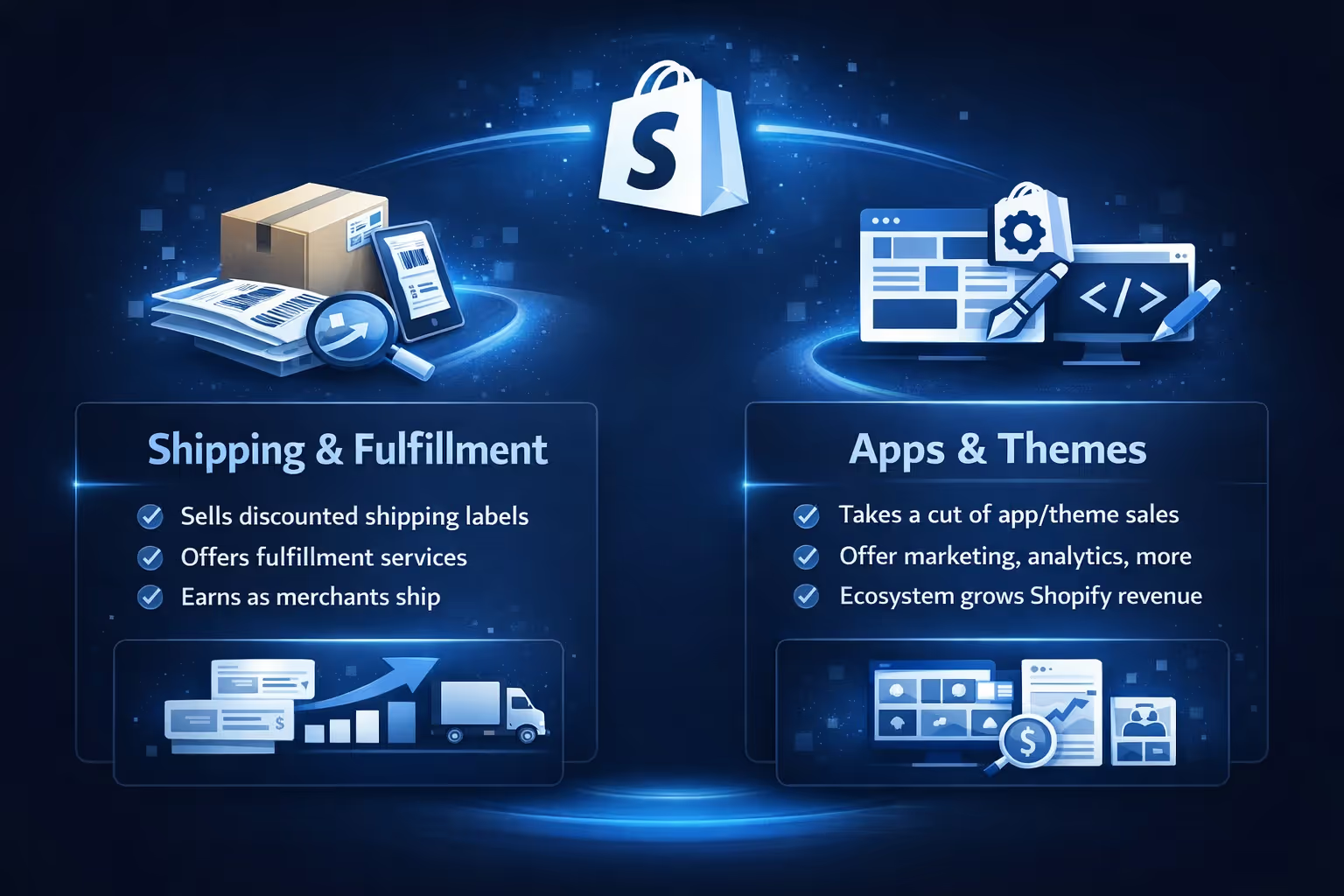
Shipping is a major pain point for online sellers. Shopify simplifies this by letting merchants buy shipping labels directly inside the platform. Shopify negotiates discounted rates with carriers and keeps a margin on each label sold.
As order volume increases, merchants can move into more advanced logistics options. Shopify’s fulfillment network offers storage, packing, shipping, and returns. Fees vary based on product size, volume, and destination, but the core idea remains the same. Shopify earns as merchants ship more.
This mirrors a familiar pattern. Merchants save time and operational stress. Shopify gains recurring, volume-based revenue tied directly to physical commerce.
Shopify’s app and theme marketplaces are another important revenue stream. Developers and designers build tools that extend Shopify’s functionality, from marketing automation to inventory management and analytics.
When merchants buy paid apps or premium themes, Shopify takes a percentage of the sale. This creates a self-sustaining ecosystem where third parties build value, merchants customize their stores, and Shopify earns without building every feature itself.
What makes this model effective is choice. Merchants only pay for what they need. As businesses grow, they often add more apps, upgrade plans, or switch to more advanced tools. Over time, app spending can rival or exceed subscription costs for larger stores.
Shopify is not limited to online stores. Its point-of-sale system allows merchants to sell in physical locations while keeping inventory, customer data, and reporting synced with their online store.
Revenue here comes from two sources. Merchants pay for POS software features, and they purchase or rent hardware like card readers, terminals, and scanners. Payment processing fees apply here as well.
This omnichannel approach makes Shopify attractive to retailers who operate both online and offline. Once integrated, switching platforms becomes costly and disruptive, which increases retention and lifetime value.
Access to capital is a constant challenge for growing businesses. Shopify addresses this by offering cash advances and loans based on merchant sales data.
Instead of traditional credit checks, Shopify uses real-time performance data to assess risk. Repayments are automatically deducted as a percentage of future sales. This aligns incentives. Shopify only earns when merchants continue selling.
Revenue comes from fees rather than interest in the traditional sense. While not every merchant uses financing, those who do often rely on it repeatedly as they scale, creating another recurring revenue stream tied to success.
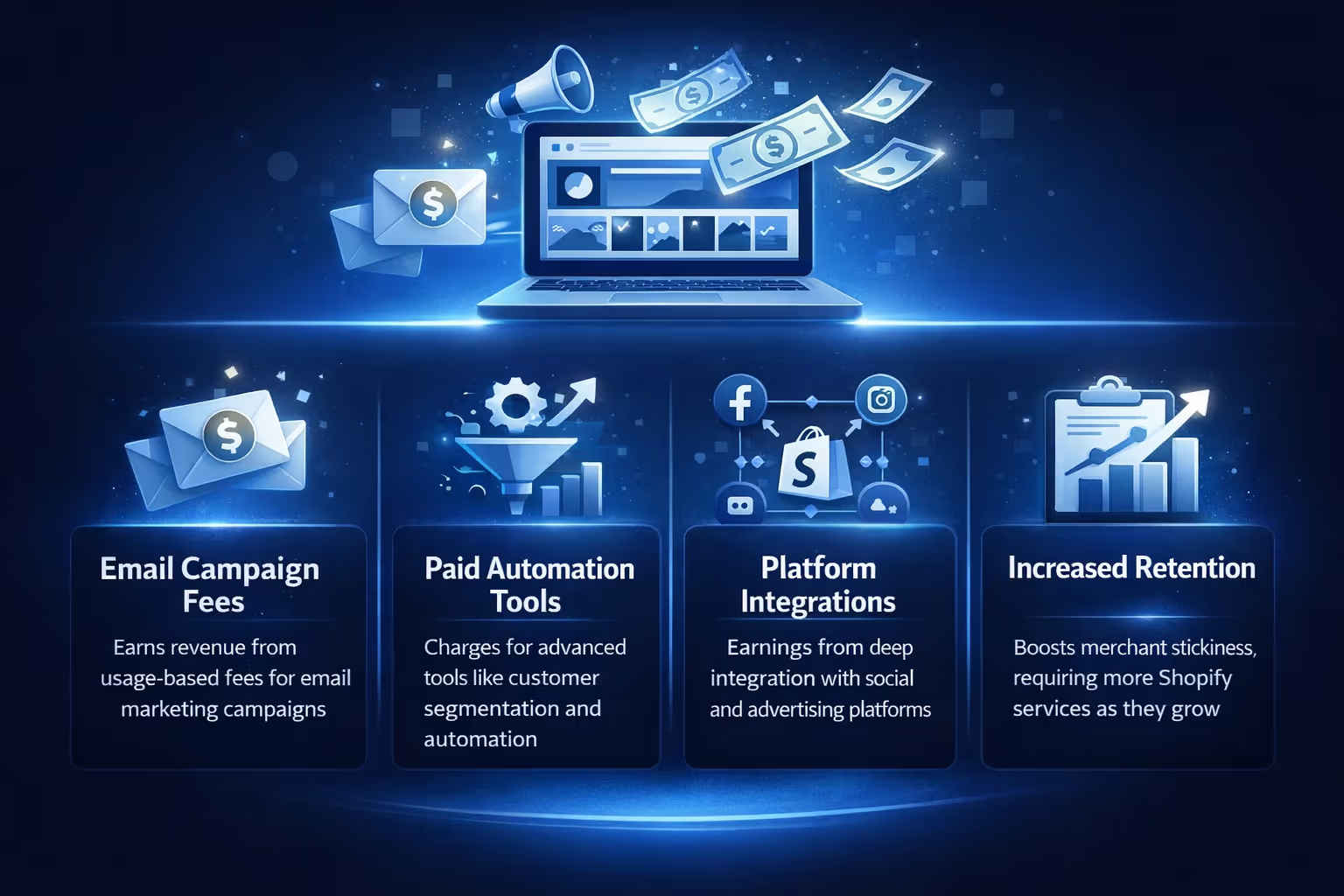
Marketing is another area where Shopify captures value. Tools like email marketing, audience targeting, and campaign automation are built directly into the platform, so merchants do not need to rely on separate systems just to stay in touch with customers.
Merchants can send a certain volume of emails for free, then pay based on usage. This usage-based pricing keeps entry costs low while ensuring that growing brands contribute more as their customer base expands.
Shopify’s marketing-related revenue comes from several places:
Shopify also integrates tightly with social commerce and advertising platforms. While it does not always take a direct percentage of ad spend, it benefits indirectly by positioning itself at the center of customer acquisition and retention. The more merchants rely on Shopify to reach and re-engage customers, the harder it becomes to separate marketing operations from the platform itself.
Some Shopify revenue streams are relatively small on their own but powerful at scale. Domain registration is one example. Merchants can buy and renew domains directly through Shopify, paying a markup for convenience.
Hosting is bundled into subscriptions, but the cost efficiency of Shopify’s infrastructure allows it to support millions of stores profitably. Other add-ons like premium reports, automation tools, and advanced analytics further increase average revenue per merchant over time.
These extras are rarely the deciding factor for a merchant, but they add up across millions of users.
Large brands operate differently from small sellers. Shopify’s enterprise offering is designed for businesses with high transaction volumes, international operations, and complex workflows.
Enterprise merchants pay higher base fees, but the real value comes from scale. These businesses generate enormous payment volume, shipping activity, and app usage. Shopify earns across multiple layers of their operation.
Even though enterprise clients represent a smaller portion of total merchants, they contribute a disproportionate share of revenue. This balances the long tail of small stores that may never grow beyond basic subscriptions.
Many platforms offer pieces of what Shopify provides. Few offer all of it in a unified system. The strength of Shopify’s revenue model comes from integration.
Payments connect to shipping. Shipping connects to fulfillment. Fulfillment connects to customer experience. Data flows across all of it. Each layer reinforces the others, making the platform more valuable as merchants grow.
This creates a compounding effect. The longer a merchant stays, the more embedded Shopify becomes. Replacing one tool might be possible. Replacing the entire stack is not.
So far, Shopify has navigated these trade-offs carefully by giving merchants choice, keeping fee structures visible, and letting adoption happen gradually. That balance is a big reason the model has scaled without triggering widespread pushback from its user base.
Calling Shopify an ecommerce platform undersells what it has become. It functions more like an operating system for commerce. It handles infrastructure, financial flows, logistics, data, and growth tools in one place.
From a business perspective, this allows Shopify to earn revenue from nearly every stage of a merchant’s lifecycle. From first sale to global expansion, Shopify is present and monetized.
This does not mean merchants are trapped. It means that staying often makes more sense than leaving.
Shopify makes money in many ways, but the pattern is consistent. It charges modestly to get merchants started, then grows alongside them by providing services that remove friction, save time, and enable scale.
Subscriptions keep the lights on. Payments, shipping, apps, and financing drive growth. The ecosystem reinforces itself. Each additional service strengthens Shopify’s role in the merchant’s business.
That alignment, more than any single revenue stream, explains why Shopify has become one of the most durable and scalable companies in modern commerce.


