Top Shopify Upsell Apps That Actually Boost Your Sales
Discover the top Shopify upsell apps that increase revenue, delight customers, and make adding extras to carts effortless.
Dec 29, 2025



Sales tax is one of those topics most Shopify store owners don’t think about until they have to. Usually that moment comes after a few solid months of sales, a notice from a state authority, or a late-night panic Google search. One of the most common questions sounds simple on the surface: does Shopify actually remit sales tax for you, or does it stop at collecting it?
The short answer is no, Shopify generally does not remit sales tax on your behalf. But the details matter, and there are a few important exceptions and nuances that can easily be missed. Let’s walk through it clearly, without legal fog or platform jargon.
In most cases, Shopify does not remit sales tax for sellers.
Shopify can calculate sales tax.
Shopify can collect sales tax from customers.
Shopify can generate reports to help you file.
But unless a specific exception applies, you are still responsible for filing and remitting sales tax to the appropriate tax authorities.
That single sentence explains a lot of confusion. The rest of this guide explains why it works that way, when it does not, and what you should actually do about it.
Part of the confusion comes from how Shopify positions itself.
Shopify is an ecommerce platform, not a marketplace. That distinction matters more than it sounds.
On platforms like Amazon or eBay, sellers operate inside a marketplace that owns the customer relationship, controls product listings, and often manages payments and fulfillment. Because of that structure, many governments require those platforms to act as marketplace facilitators and collect and remit sales tax on behalf of sellers.
Shopify works differently.
Your Shopify store is your own storefront. You control the products, pricing, branding, checkout flow, and traffic. Shopify provides the infrastructure, but it does not sell to customers in its own name.
That difference is the foundation for Shopify’s sales tax limitations.

Before sales tax, filing, and remittance become an issue, most Shopify problems start earlier with untested ideas and wasted ad spend. That uncertainty often leads to messy growth, unpredictable demand, and unnecessary complexity down the line.
At Extuitive, we help teams remove that guesswork before anything goes live. Our AI growth agent uses an ecosystem of 150,000 AI consumer agents trained on real behavioral data to validate product concepts, ads, pricing, and creative angles in minutes. Instead of hoping something works, you see what resonates first.
For Shopify brands, this means launching with more confidence and scaling with fewer surprises. Cleaner launches lead to steadier revenue, fewer refunds, and more predictable reporting. When growth is intentional, everything that follows, including tax compliance, becomes easier to manage.
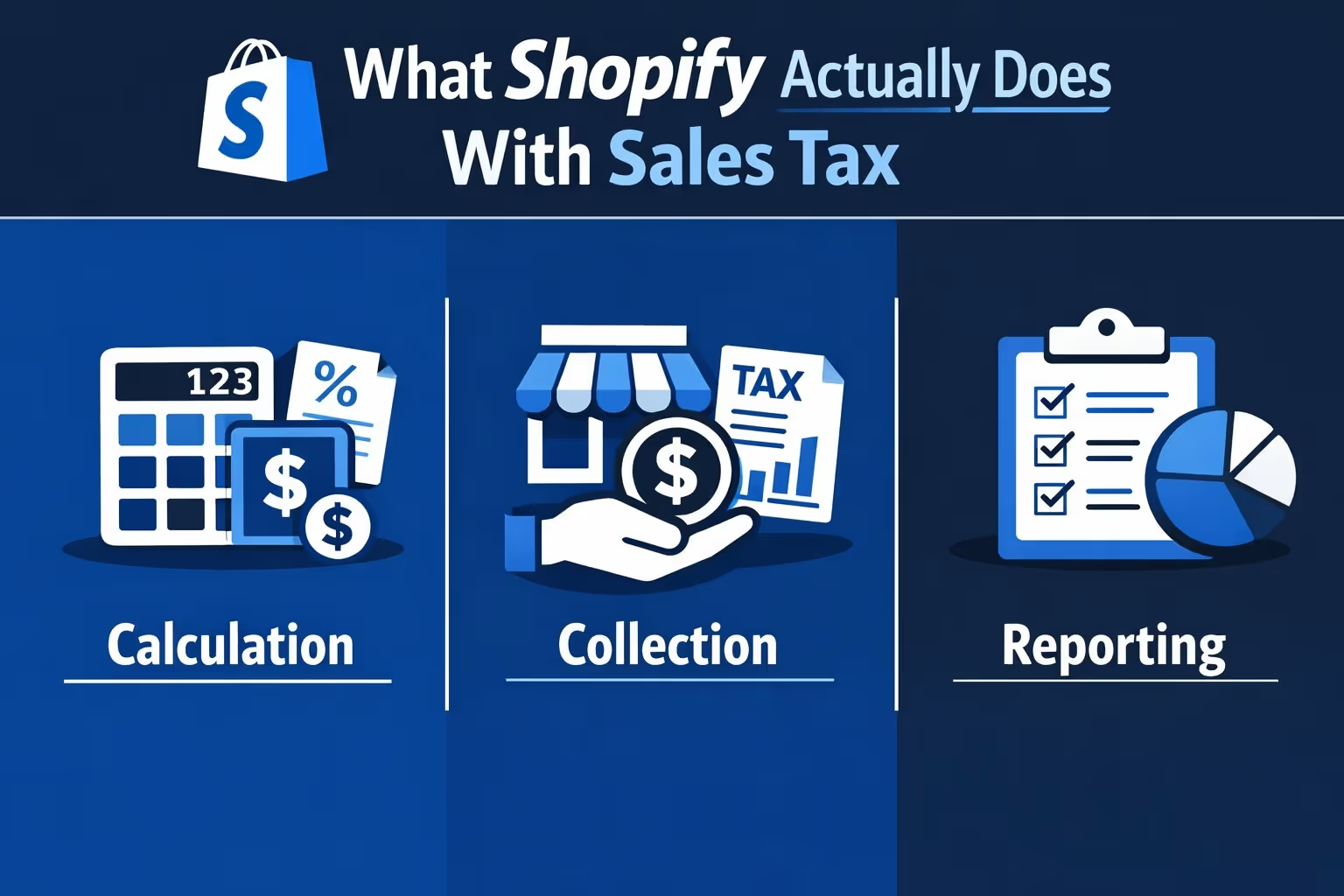
Before talking about what Shopify does not do, it helps to be clear about what it does well.
While Shopify provides tools for calculation, sellers must often manually configure tax settings for VAT or GST regions to ensure local compliance and proper rate application.
Tax rates are updated regularly, and Shopify uses product categories to apply the correct rates when possible.
Once tax collection is enabled for a region, Shopify adds the appropriate tax amount at checkout and collects it from the customer as part of the order.
From the customer’s perspective, this feels seamless. From your perspective, it means tax money is being collected correctly on each sale.
Shopify provides tax reports that summarize how much tax was collected over a given period. With Shopify Tax enabled in the United States, reports can be broken down by state, county, and jurisdiction.
These reports are designed to help with filing, not replace it.
This is the part that surprises many sellers, especially once their store starts scaling. Shopify does a good job of handling calculations and checkout, but it deliberately stops short of full tax compliance.
Before you can legally collect sales tax in any state or country, you must register with the appropriate tax authority and receive a tax ID or registration number. Shopify does not handle this step for you and does not initiate registrations on your behalf.
You are responsible for determining where registration is required, completing the registration process, and keeping your registration details up to date. Shopify simply provides a place to enter your tax ID once you have it.
Sales tax obligations are triggered by nexus, which can be physical or economic. Shopify does not make legal determinations about where your business has created taxable presence.
Shopify Tax can highlight potential nexus exposure based on your sales activity, but these are informational insights, not compliance actions. You must review that data, confirm whether a threshold has been crossed, and decide when to register and begin collecting tax.
This is the point where most assumptions fall apart.
Even if Shopify calculates and collects sales tax accurately on every order, it does not prepare or file sales tax returns with state, local, or international tax authorities. There is no automatic submission of reports or forms on your behalf.
You must take the tax data Shopify provides, prepare returns for each jurisdiction, and submit them according to monthly, quarterly, or annual filing schedules.
Filing and payment are inseparable, and Shopify does not handle either.
The tax amounts collected from customers remain part of your business funds. Shopify does not forward those payments to tax authorities or distribute them across jurisdictions.
Ensuring that the correct amounts are paid, on time, to the correct authorities is entirely the seller’s responsibility.
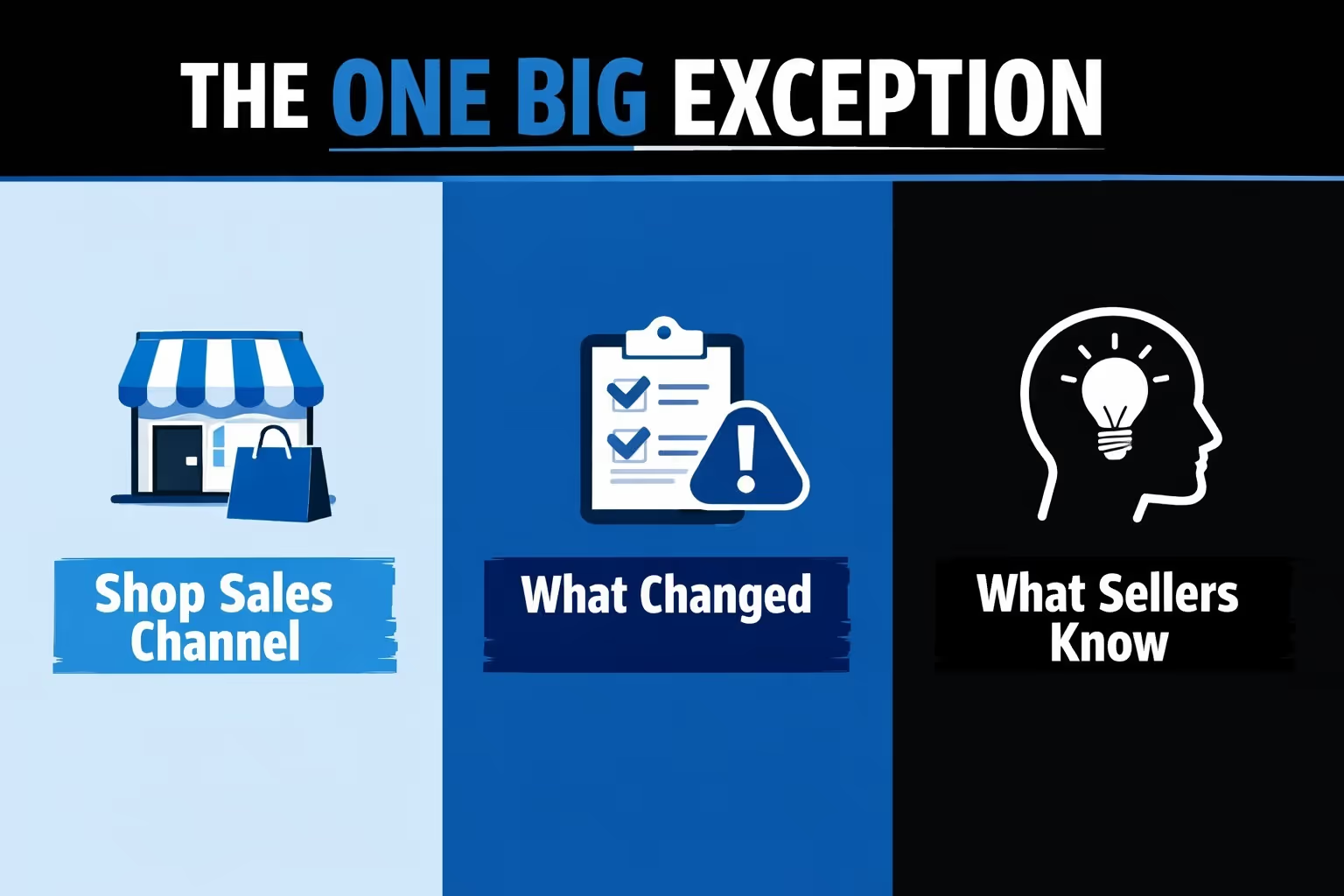
There is one important exception that sellers need to understand clearly.
The Shop app is Shopify’s consumer-facing shopping app. When customers place orders directly through the Shop app, Shopify plays a different role.
Starting January 1, 2025, the Shop sales channel automatically collects, files, and remits sales tax for US orders shipped to or within the United States.
In this case, Shopify acts as a marketplace facilitator.
For Shop app orders, sales tax is deducted from your Shopify Payments payouts and marked clearly in reports.
This exception is narrow but important. Many sellers assume it applies to all Shopify orders. It does not.
Shopify Tax is Shopify’s enhanced tax feature, available primarily in the United States. It improves accuracy and visibility, but it does not remove the seller’s responsibility for compliance.
Shopify Tax helps sellers calculate tax correctly and understand potential obligations. It does not turn Shopify into a full tax compliance or remittance service.
Sales tax responsibility begins with nexus. In simple terms, nexus is the connection between your business and a state that creates a legal obligation to collect and remit sales tax.
Physical nexus usually exists when your business has a tangible presence in a state. This can include having an office or warehouse located there, storing inventory in a fulfillment center, or employing workers or contractors who operate from that state. When any of these conditions apply, most states consider your business to have established a taxable presence, regardless of where your customers are located.
Economic nexus is triggered by sales volume or transaction count in a state. Thresholds vary, but common benchmarks include:
Once you cross a threshold, you are required to register, collect, file, and remit sales tax in that state.
Shopify does not automatically enforce this. If you miss it, the liability still exists.
This is a common question, and the answer is structural rather than technical. Shopify operates as a platform provider, not as a centralized marketplace.
Shopify does not control product listings across multiple sellers, own the customer relationship, or run a shared retail storefront where sellers compete for the same audience. Each Shopify store is an independent business with its own branding, products, pricing, and marketing efforts. Shopify also does not handle returns or fulfillment at scale, nor does it market products to a single, centralized customer base in the way large marketplaces do.
Because of this structure, Shopify is treated differently under marketplace facilitator laws. The regulations that require platforms like Amazon to collect and remit sales tax on behalf of sellers generally do not apply to Shopify in the same way.
Refunds introduce another layer of complexity, especially when it comes to keeping tax records accurate.
When you refund an order or specific items through Shopify, the platform adjusts the associated sales tax amounts automatically. This is important because sales tax can only be refunded if the refunded item is clearly identified in Shopify. Whether you refund a full order or individual line items, the refund needs to happen inside the platform for the tax adjustment to be reflected correctly in your reports.
Accurate item-level refunds help ensure that your collected tax aligns with what you actually owe when it is time to file returns.
Problems usually arise when refunds are processed outside Shopify or issued as general refunds without specifying the items involved. In those cases, Shopify may not recognize the transaction as a taxable refund, and the associated sales tax may not be reversed.
This can lead to discrepancies between the tax you collected from customers and the tax you are expected to remit. Over time, these mismatches can complicate reporting and increase the risk of overpaying or underpaying sales tax, which is especially relevant for sellers with frequent returns or exchanges.
Even when Shopify collects sales tax, many states still require sellers to include those transactions in their sales tax reports. This applies in particular to marketplace transactions or orders placed through the Shop app, where tax may have already been collected and remitted by a facilitator.
In some states, marketplace sales are still counted toward nexus thresholds, meaning they can influence whether you are required to register and file in that jurisdiction. Other states require sellers to report these sales for informational purposes, even when no additional tax payment is due because the facilitator has already handled remittance.
This is where assumptions can create problems. The fact that tax was collected or remitted does not always eliminate reporting obligations. Requirements vary by state and locality, and the only way to stay compliant is to review each jurisdiction’s rules rather than relying on a one-size-fits-all approach.
As sales grow, manual compliance becomes difficult to manage.
Third-party tools step in where Shopify stops.
These tools do not replace Shopify. They sit alongside it.
Shopify handles the storefront and checkout. The tax tool handles compliance.
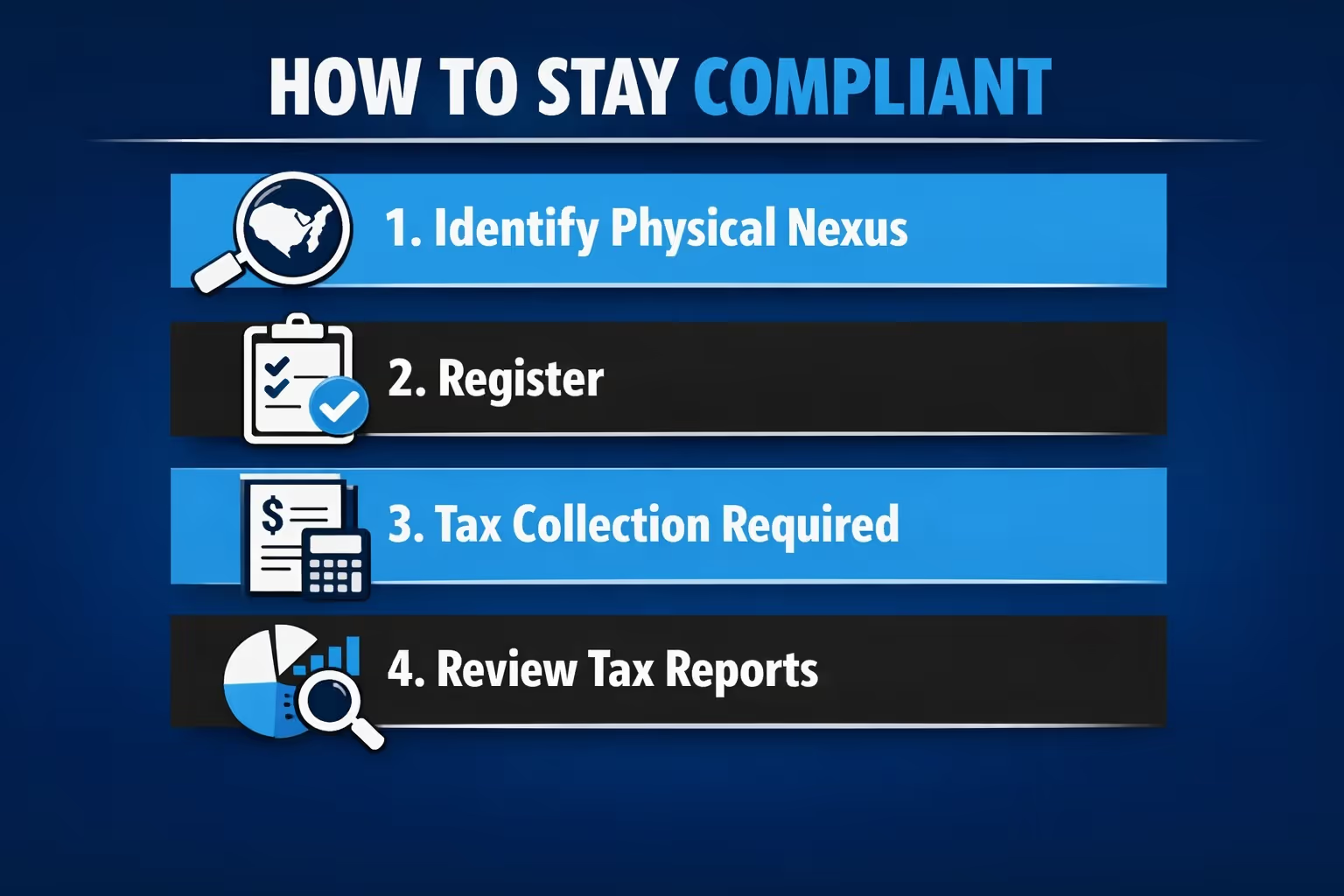
Sales tax compliance does not need to dominate your business, but it does require a clear and consistent structure. Problems usually arise when tax obligations are handled reactively instead of proactively.
Ignoring sales tax obligations rarely saves money in the long run. Addressing them early is usually far less expensive and far less stressful.
So, does Shopify remit sales tax?
In almost all cases, no.
Shopify helps with calculation, collection, and reporting. It does not file or remit sales tax for your store, except for limited cases like the US Shop sales channel.
Sales tax responsibility remains with the seller. That is not a flaw in Shopify. It is a reflection of how ecommerce platforms are regulated.
If you understand that early, you can build the right systems before tax compliance becomes a problem instead of a process.
And that, more than any feature or app, is what keeps a growing Shopify business stable.


