How to Get Into Dropshipping: Complete Guide
Learn how to get into dropshipping with this step-by-step guide. Find suppliers, choose products, set up your store, and start selling online profitably.
Apr 15, 2026



When someone asks what companies use Shopify, they are usually not looking for trivia. They are trying to understand whether Shopify is a serious platform or just a convenient starting point. Is it something global brands actually rely on, or does it mostly serve small online shops that eventually move on?
In 2026, Shopify’s position is no longer ambiguous. It sits at the center of modern ecommerce, used by businesses at almost every stage of growth. Some rely on it as their main storefront. Others use it more selectively, for direct-to-consumer sales, international markets, or high-volume campaigns. What matters is not how famous the company is, but how Shopify fits into its operations.
To understand who uses Shopify today, it helps to look at patterns rather than individual brand names.
Shopify has long been seen as the platform for beginners - an easy starting point that you eventually move on from. But in practice, that’s no longer true. While many Shopify stores are indeed run by small businesses and solo founders, the platform has proven itself at scale.
In fact, Shopify is now the engine behind:
This mix of scrappy startups and $1B+ enterprises is what makes Shopify unique. You’ll find stores with one product and no team alongside multinational companies running full DTC operations. What unites them is the platform’s flexibility, speed, and resilience.
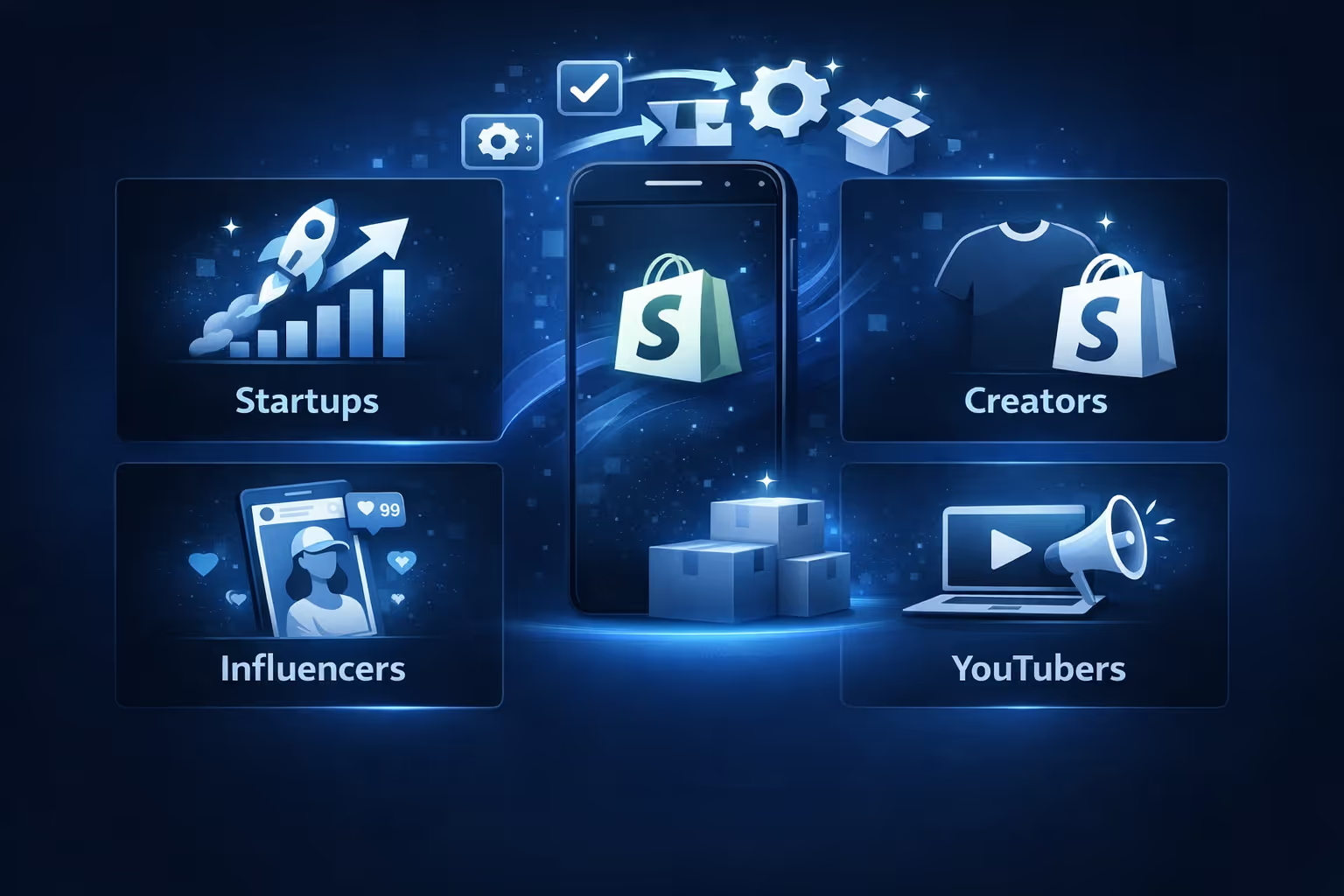
Shopify is still the go-to platform for first-time sellers and bootstrapped founders, and for good reason. You don’t need to hire a developer, configure a bunch of plugins, or wrestle with hosting. You can launch, test, iterate, and get feedback fast.
But what’s changed in 2026 is how long people stay. Many early-stage stores don’t leave anymore. They build full businesses on Shopify, layering in automation, apps, fulfillment solutions, and integrations as they grow. Shopify becomes the backbone, not just a stepping stone.
This also applies to creator-led brands. Influencers, musicians, athletes, and YouTubers use Shopify to sell merch, launch drops, and connect directly with their fans. It’s not just ecommerce, it’s part of their brand infrastructure.
No platform has played a bigger role in the rise of DTC brands than Shopify. From 2016 to 2026, brands like Kylie Cosmetics, Skims, Bombas, and ColourPop built massive audiences and product ecosystems, often starting with nothing more than a Shopify store and a smart marketing strategy.
These brands value speed, design flexibility, and control over the customer journey. Shopify gives them all three - along with a fast checkout experience and reliable infrastructure when traffic surges.
Even as they grow, most don’t abandon the platform. They upgrade to Shopify Plus, customize their storefronts, and continue scaling. It’s no longer rare to see DTC brands cross $100M+ in revenue while staying on Shopify the whole time.
Beyond solo creators and household DTC names lies a large, often-overlooked group: mid-sized ecommerce businesses. These are the brands doing $5M to $50M per year, often with small teams and efficient operations.
For them, Shopify is a stability choice. They’ve outgrown the experimental phase but still need to move fast, sell globally, and keep infrastructure costs under control. Many of them migrate from platforms like Magento or WooCommerce after running into scaling or maintenance issues.
They use Shopify to:
This segment is also where Shopify’s value as a long-term operating system becomes clearest. It's not just about launching anymore, it’s about reducing tech debt and focusing on growth.
The biggest surprise for many people is just how many large companies now use Shopify. These are not startups or DTC disruptors, they’re legacy giants with complex operations and big stakes.
But instead of rebuilding everything from scratch, they use Shopify in focused, strategic ways.
Common use cases include:
These brands usually operate on Shopify Plus and often integrate it with backend systems like SAP, NetSuite, or Salesforce. What they value is speed. Shopify lets them go live in weeks, not months, with an infrastructure that scales during demand spikes.
Whether you're just getting started with Shopify or already running at enterprise scale, your ability to launch fast doesn’t always guarantee performance. At Extuitive, we've seen how quickly Shopify brands can go from concept to campaign, but what happens after launch still catches many teams by surprise. Creatives flop, budgets get wasted, and results come too late to fix what didn’t work.
That’s where our platform comes in. Extuitive uses AI trained on your real campaign data to forecast ad performance before a single dollar is spent. We predict click-through rates, ROAS, and audience fit before launch, not after. For teams running drops, flash sales, or DTC tests on Shopify, this means fewer blind bets and more reliable outcomes.
Whether you're launching five creatives or 500, Extuitive instantly scores and ranks them, recommends ideal segments, and gives you the kind of clarity that turns guesswork into strategy. No endless A/B testing loops. No post-mortem regrets. Just smarter campaigns from day one - built for the pace of modern ecommerce.

Shopify may be known as a general-purpose ecommerce platform, but in practice, it has become a go-to solution for specific types of businesses, especially those where branding, speed, and direct customer relationships are essential. Let’s break down the industries where Shopify's presence is strongest in 2026.
Fashion is arguably Shopify’s most visible category. From streetwear to luxury to fast fashion, brands of all sizes use Shopify to launch collections, run flash sales, and build loyal customer bases.
Take Gymshark, for example, a brand that started in a garage and scaled into a global fitness apparel powerhouse while remaining on Shopify. Fashion Nova, another Shopify success story, moves massive volumes by leaning into influencer marketing and ultra-fast restocks. Even high-end designers like Victoria Beckham have adopted Shopify for their DTC operations.
The fashion world demands agility. Product trends shift fast, seasons change, and customer expectations around mobile shopping are high. Shopify gives fashion brands the flexibility to keep up without rebuilding their infrastructure every six months.
Beauty brands thrive on social engagement and personalized experiences - both of which align perfectly with what Shopify enables.
Kylie Cosmetics helped put Shopify on the map when it handled one of the largest ecommerce drops in history. Since then, brands like ColourPop and Rare Beauty (founded by Selena Gomez) have joined the platform, combining influencer reach with fast-moving product lines and high repeat purchases.
These brands rely heavily on email marketing, loyalty programs, and limited-edition drops, all of which can be handled directly within the Shopify ecosystem. From custom storefronts to subscription add-ons, Shopify offers beauty brands the tools to control how their products are discovered and sold.
Fitness and wellness products, from supplements and activewear to wellness tech, often come with repeat-purchase potential and loyal communities. Shopify’s infrastructure is a good match for that kind of customer behavior.
Alo Yoga, Good American, and Fitbit have all used Shopify to sell directly to their audiences. These brands lean into curated product bundles, mobile-first experiences, and strong visual branding - areas where Shopify performs well.
Many also combine physical retail or event-based activations with online sales, using Shopify’s POS system and omnichannel features to tie everything together.
While food and beverage used to be slower to adopt ecommerce, that’s no longer the case, especially post-2020. Shopify now powers everything from pantry staples to energy drinks to beverage subscriptions.
Big names like Kraft Heinz and PepsiCo have used Shopify to launch direct-to-consumer experiences that bypass traditional retail. Heinz To Home is a great example: launched during the pandemic, it became a permanent DTC channel for bundled products. Red Bull also sells branded merchandise through a Shopify-powered storefront.
The food space benefits from Shopify’s built-in support for subscriptions, flexible shipping setups, and mobile-optimized design - all important for a category where convenience often drives conversion.
Shopify has quietly become the ecommerce layer for some of the world’s largest entertainment and media brands.
Netflix sells official show merch on its Shopify store (Netflix.shop), while The New York Times runs a store for books, art, and branded goods. Musicians like Taylor Swift use Shopify to sell exclusive releases and collector items tied to album launches or tour dates.
What sets this category apart is its integration with content. Fans often land on these stores after engaging with shows, artists, or media, not through typical product search. Shopify’s ability to handle sudden traffic spikes, mobile checkouts, and fast inventory turnarounds makes it ideal for this kind of behavior.
What these industries have in common is the need to engage directly with their audiences, launch new products frequently, and own the shopping experience end to end. Shopify supports that without forcing a full rebuild every time the business changes direction.
One underrated use of Shopify is for temporary or campaign-specific stores. You’ll often see big brands spin up Shopify sites for:
Because Shopify doesn’t require long development cycles, marketing and ecommerce teams can move quickly. They can launch, promote, and shut down a campaign without involving six different departments or burning through agency hours.
This is especially common in media, sports, and CPG, where time-sensitive promotions are a regular part of the calendar.
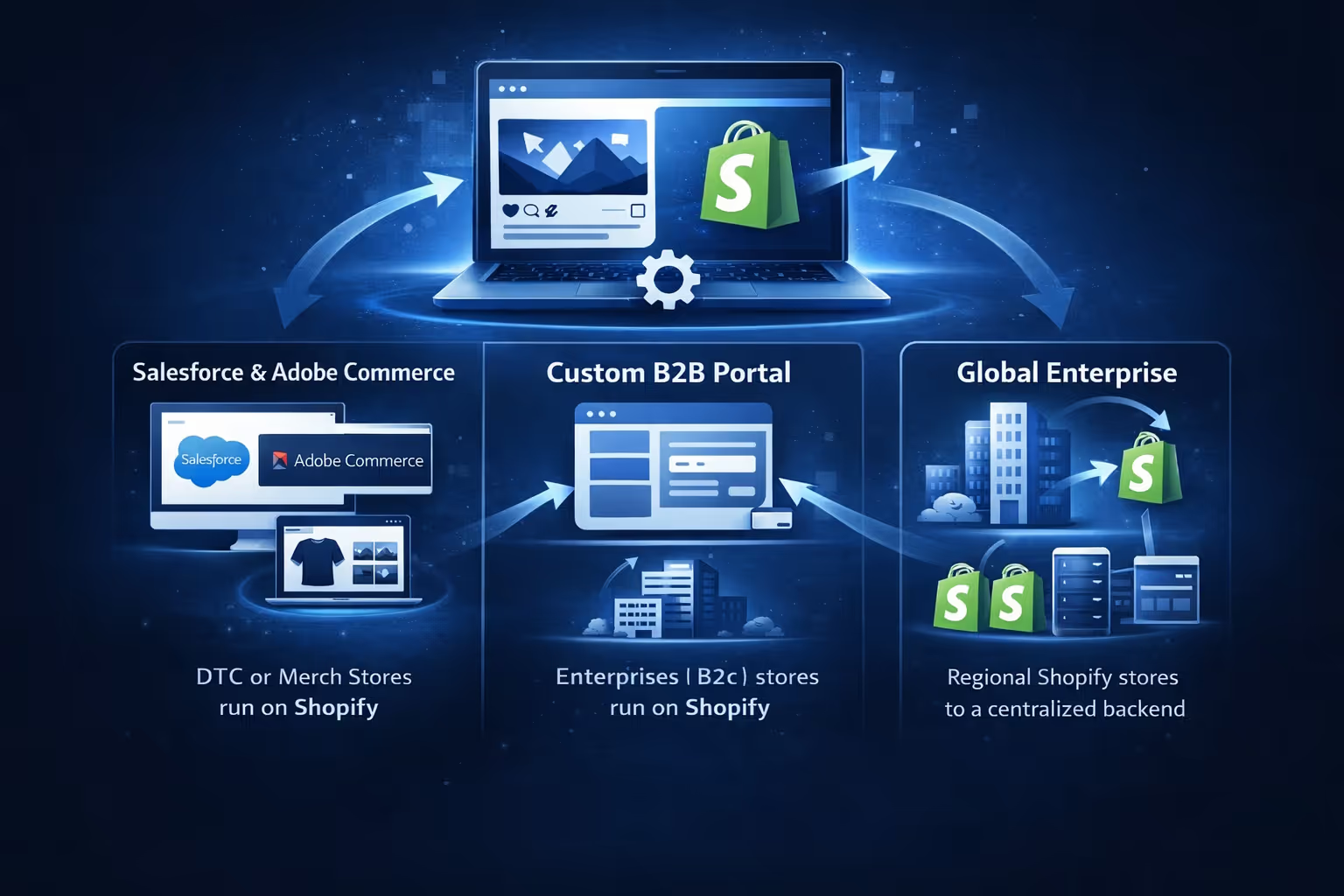
Here’s something most people don’t realize: a lot of companies don’t use Shopify exclusively. Instead, they use it as part of a hybrid setup.Startups, Creators, and First-Time Sellers
Some examples:
This isn’t a sign of weakness - it’s often a practical decision. Shopify is used where speed, flexibility, and user experience matter most. In complex organizations, that’s often a subset of the business.
Shopify’s role in international ecommerce has expanded rapidly. By 2026, many companies use it to manage sales across multiple countries, currencies, and languages.
Some brands operate separate storefronts per market, tailoring not just language but product offerings, pricing, and fulfillment. Others stick to a single Shopify instance with smart localization tools layered in.
The platform’s flexibility with payments, taxes, and shipping zones has made it easier for mid-sized and large brands to scale internationally without maintaining entirely separate stacks for every region.
If you see a company using Shopify, it doesn’t necessarily tell you how big they are, but it tells you something about how they operate.
It usually means they:
This is true across a wide range of companies, from lean startups to billion-dollar global retailers. Shopify has positioned itself not as a beginner’s tool, but as a commerce engine that removes friction for teams that want to move fast and sell smarter.
So, what companies use Shopify in 2026?
A better question might be: what kinds of companies don’t? From solo creators and mid-sized DTC brands to global enterprises and entertainment giants, Shopify powers a huge and growing share of ecommerce across industries.
It’s no longer just a platform for small businesses. It’s a foundation for companies that care about speed, control, and customer connection, whether they’re just starting or scaling into new markets.
Shopify’s continued presence across such a diverse range of brands says something simple, but important: it works.


