Best Shopify Conferences in the USA to Attend in 2026
Explore the best Shopify conferences in the USA. A curated list of events for ecommerce founders, marketers, and developers.
Apr 16, 2026



Shopify store optimization covers every layer that influences revenue: technical performance, user experience, search visibility, checkout efficiency, and data usage. The goal remains consistent - reduce friction, increase average order value, and improve organic reach without relying solely on paid channels.
A modern Shopify store operates across multiple touchpoints: desktop browsers, mobile devices, physical POS systems, and increasingly AI-driven search interfaces. Isolated improvements in one area rarely produce sustainable gains. Stores that treat optimization as a connected system - where site speed supports SEO, SEO supports traffic quality, and traffic quality supports conversion rate - consistently outperform those making fragmented changes.

We can make the store lightning-fast, build perfect checkouts, and collect all the first-party data in the world, but none of it matters if the traffic coming in doesn’t convert. The harsh truth we see every day: most Shopify owners spend months polishing speed scores and CRO, then pour money into Meta or Google ads that look pretty but sell nothing because the creative was never tested on real humans.
That’s why you can run every major optimization project through our Extuitive platform before flipping the traffic switch. Our app connects the store, lets AI agents (built on behavioral data from hundreds of thousands of real shoppers) generate dozens of ad variants in minutes, and instantly see which headlines, images, and offers trigger the highest predicted purchase intent. The ones that survive the simulation round go straight into small-budget validation, so by the time we scale the campaigns we already know the ROAS instead of praying for it.
The result is simple: the same optimization effort that used to give us 20-30 % revenue lift now regularly pushes past 80-100 % because the traffic finally matches the improved on-site experience.
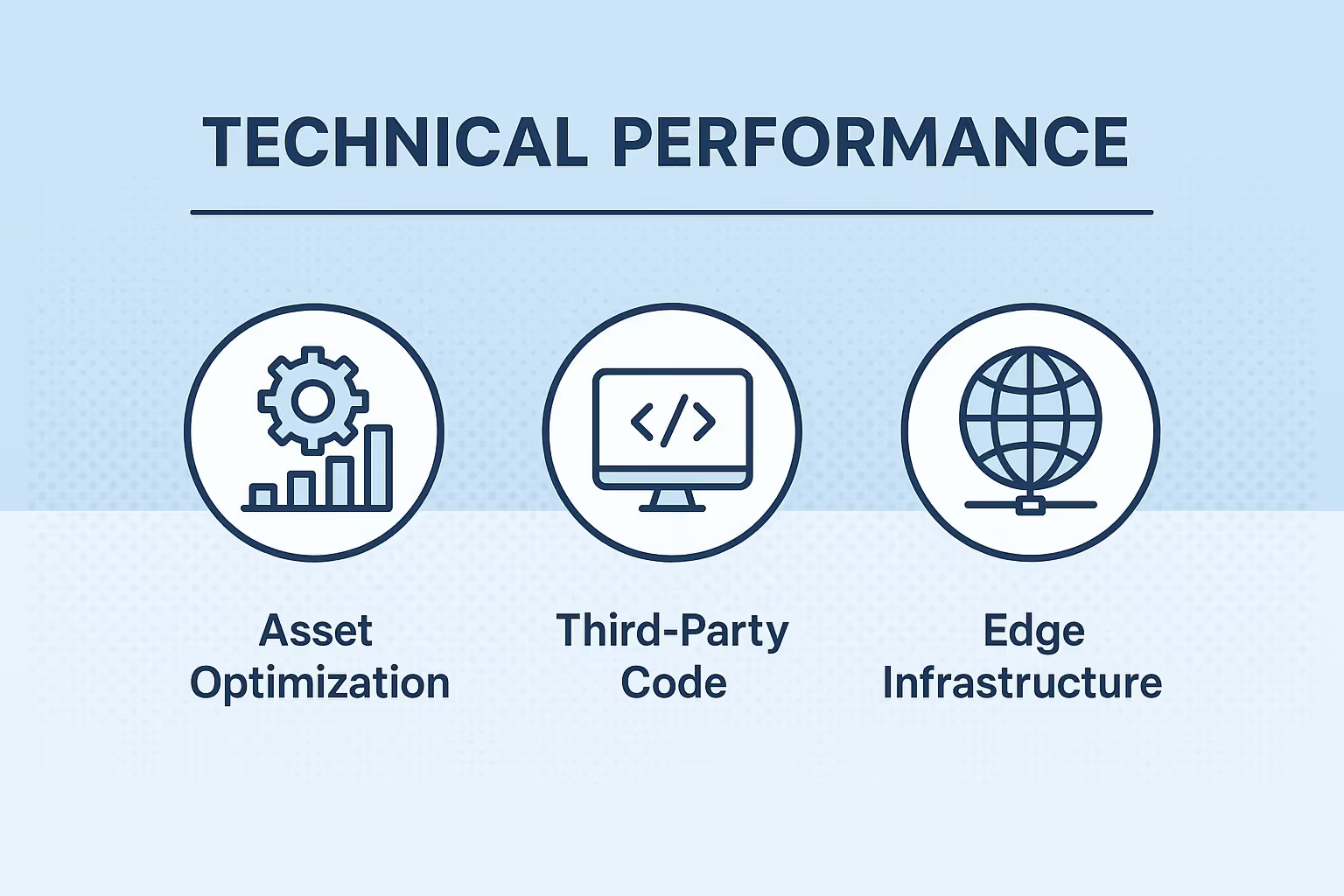
Site speed is no longer just a nice-to-have ranking factor; it is the first gatekeeper for both traditional search engines and AI-driven discovery systems. If the page takes too long to become interactive, the crawler (or the large language model pulling data for an AI overview) will downgrade the entire domain’s authority long before it even reads the content. Every millisecond counts, especially on mobile connections and in regions with slower networks.
Images typically account for the majority of bytes downloaded on most Shopify stores. The performance gap between a poorly optimized store and a properly tuned one often comes down to how images are handled.
Each external script – whether it is an app embed, analytics pixel, chatbot, or review widget – adds render-blocking or execution-blocking work. The cumulative effect quickly destroys performance scores.
Shopify already runs one of the fastest commerce CDNs globally, but there are still several levers available to high-volume or Plus merchants.
When all three layers – images, scripts, and server/edge configuration – are optimized together, stores routinely achieve Largest Contentful Paint under 1.5 seconds and Cumulative Layout Shift scores close to zero, even on mid-range mobile devices. That level of performance directly translates into higher rankings, better AI visibility, and, most importantly, higher conversion rates across every traffic source.
The checkout is where all previous optimization work either pays off or goes to waste. A technically perfect store with strong SEO and personalized recommendations still loses money if buyers drop off during payment. Modern checkout optimization focuses on removing psychological and technical barriers while extracting additional revenue without creating resentment.
Every additional field, click, or page load exponentially increases abandonment risk. The most effective checkouts minimize cognitive load while maintaining trust.
Payment failures and surprise costs are the leading causes of last-second abandonment in cross-border stores.
Done correctly, checkout upsells increase average order value without damaging trust or completion rates.
When these elements work together – minimal fields, maximum payment flexibility smart non-intrusive upsells – checkout conversion rates typically improve significantly while average order value rises. The key is constant measurement of drop-off points and revenue per visitor at each stage so changes can be validated against actual business outcomes rather than assumptions.
Conversion rate optimization on Shopify is a disciplined process that combines qualitative user behavior with quantitative testing. Success depends on identifying real friction points, forming testable hypotheses, and validating changes through controlled experiments rather than following generic best practices.
Aggregate data from Shopify Analytics shows what converts but rarely explains why users abandon. Qualitative tools fill this gap.
Most meaningful CRO gains come from systematic testing of high-leverage elements rather than complete redesigns.
Mobile devices generate the majority of sessions yet typically convert at lower rates. Separate mobile optimization is mandatory.
Well-executed CRO programs on Shopify routinely achieve sustained lifts by focusing testing velocity on the 20 % of page elements that drive 80 % of revenue impact. The framework stays effective when insights from behavioral tools directly inform test hypotheses, and every deployed change is measured against control for actual revenue difference rather than intermediate metrics.
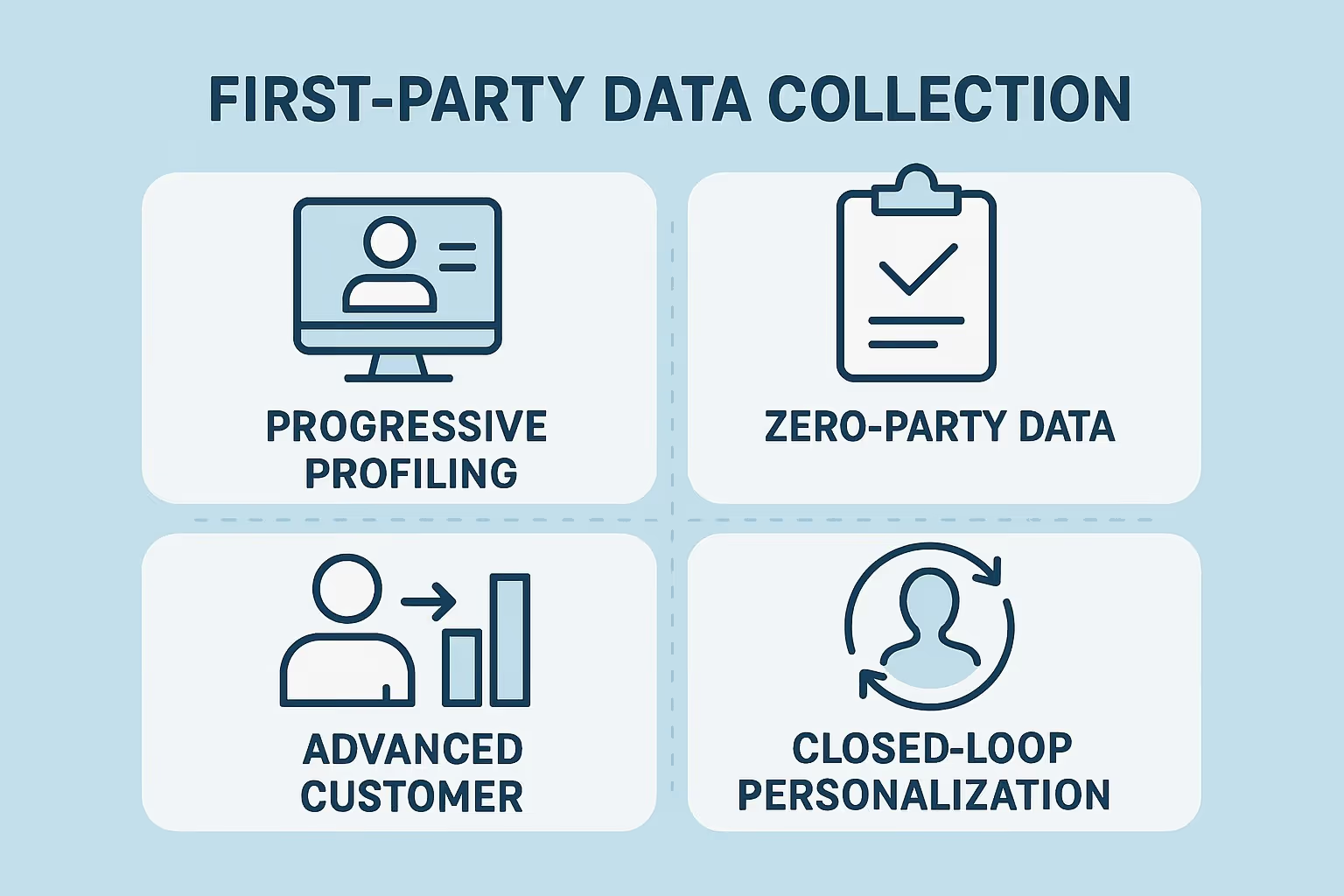
Third-party cookies are effectively gone, and the stores that win tomorrow are the ones that already own direct relationships with their customers today. First-party data has become the most reliable signal for personalization, retention, and profitable advertising.
Instead of demanding full customer details on the first visit, leading stores use progressive profiling. They offer small, immediate benefits in exchange for incremental information: account creation unlocks order history and one-click reordering, email verification saves wishlists across devices, phone number enables SMS updates, and birthday entry triggers exclusive offers. Each additional piece of data feels like a fair trade rather than forced compliance.
Zero-party data goes beyond observed behavior by letting customers declare preferences directly. Style quizzes, “What are you shopping for today?” selectors, post-purchase feedback forms, and preference centers built into the account dashboard generate intent signals of unmatched accuracy. This voluntarily shared information carries higher predictive value than any inferred patterns from clicks or time-on-page.
Basic new-versus-returning segmentation is no longer sufficient. Modern segmentation combines recency, frequency, monetary value, category affinity, average order value trajectory, and margin contribution. The result is actionable cohorts: the 45-day skincare replenisher, the seasonal high-ticket buyer, cross-category explorer, or discount-driven opportunist. Each segment receives tailored messaging, offers, and site experiences.
Collected data must flow back into every customer touchpoint. Homepage hero sections, collection sorting, related-product modules, search results weighting, and even checkout upsell logic adjust in real time based on the individual profile. Abandoned-cart sequences split by segment, loyalty communications reflect actual purchase behavior, and content recommendations surface relevant guides or new arrivals. When the loop is truly closed, personalization stops feeling algorithmic and starts feeling helpful.
The same customer records that power on-site experience become the seed for off-site acquisition. Clean, consented first-party lists uploaded as hashed customer files create lookalike audiences of dramatically higher quality than interest-based targeting. Combined with server-side conversion tracking, this approach delivers lower customer acquisition costs and significantly better return on ad spend in a cookieless environment.
The compounding effect is clear: richer first-party data improves on-site conversion, higher conversion generates even richer data, and the cycle continuously strengthens personalization, retention, and paid-media efficiency. Stores that treat direct customer data as a core strategic asset rather than a compliance checkbox build defenses that competitors cannot easily replicate.
Search optimization in 2026 splits into two parallel disciplines: satisfying classic crawlers (Google, Bing) and being understood by large language models that power AI overviews, chat interfaces, and voice assistants. Both systems still need the same technical foundation, but they judge content quality and relevance very differently.
Traditional crawling rules have not disappeared. Search bots continue to rely on discoverability signals that many stores still get wrong.
Clean, descriptive URL structures without parameters or session IDs remain mandatory. Internal linking must distribute authority logically from homepage through categories to individual products. XML sitemaps should include all indexable URLs with correct priority and last-mod values. Robots.txt must allow crawling of important assets (CSS, JavaScript, images) while blocking duplicate or private paths. A properly configured canonical tag strategy prevents self-inflicted duplicate content penalties.
Schema markup is no longer optional – it is the translation layer between your store and both Google rich results and AI systems.
Product schema with accurate price, availability, GTIN, and aggregate rating is table stakes. Review schema with individual rating markup feeds star display in search results and gives AI models direct access to sentiment. FAQPage and HowTo schema on collection and blog pages increase chances of featured snippets and direct answers. Organization and BreadcrumbList markup clarify site hierarchy. Speakable schema on key articles improves eligibility for voice and audio results. When implemented store-wide through the theme liquid files or a reliable apps, structured data dramatically raises the probability that an AI system will confidently cite your store instead of a competitor.
AI search engines do not rank pages the same way Google does. They look for comprehensive, question-answering content that demonstrates expertise and helpfulness.
Product descriptions must move beyond bullet lists of features. They should address unspoken customer concerns: how the product fits into daily life, what problems it solves, comparison to alternatives, and post-purchase care. Long-form collection pages that function as buying guides perform particularly well. Supporting blog content targeting category-level and problem-solving queries (“how to choose”, “best for”, “differences between”) builds topical authority that AI systems recognize and reward with citations in overviews. The writing style should be direct, scannable, and structured with clear subheadings so large language models can extract accurate answers without hallucination.
Site structure directly affects crawl budget and duplicate-content risk, especially on stores with thousands of filtered collection views.
Category hierarchy should be shallow (ideally no deeper than three levels) and based on customer mental models rather than internal warehouse logic. Filter-based navigation using URL parameters is acceptable if canonical tags point to the unfiltered parent collection and pagination must carry rel=next/prev or be fully canonicalized. Search engines and AI systems treat heavily filtered pages as thin duplicates unless proper controls exist. Collection sorting options (price, best-selling, newest) should not create new URLs – they must be handled client-side. A logical, scalable architecture ensures that every important product and category pages receive crawl attention while preventing budget waste on low-value filter combinations.
When technical SEO, structured data, AI-friendly content, and clean architecture work together, stores gain visibility in both traditional results and the new generation of AI-driven answers. The overlap is large enough that optimizing for one usually strengthens the other, creating a reinforcing cycle of organic traffic growth.
Personalization today goes far beyond basic product recommendations. Homepage layouts, featured collections, and hero content now shift in real time based on referral source, past behavior, geography, and device. Returning visitors see relevant categories pushed to the top, international shoppers get automatic currency and tax-inclusive pricing, and estimated delivery dates reflect their actual location. These contextual adjustments reduce bounce rates and remove early friction before the customer even reaches a product page.
Loyalty status, search weighting, filter memory, abandoned-cart messaging, and checkout offers all pull from the same unified profile. High-value customers receive faster, incentive-free recovery emails, while price-sensitive segments see timed discounts. Points and tier benefits work seamlessly between online and physical stores. When every touchpoint recognizes the individual and adapts accordingly, the store feels attentive rather than algorithmic, driving measurable lifts in conversion rate, average order value, and long-term retention.
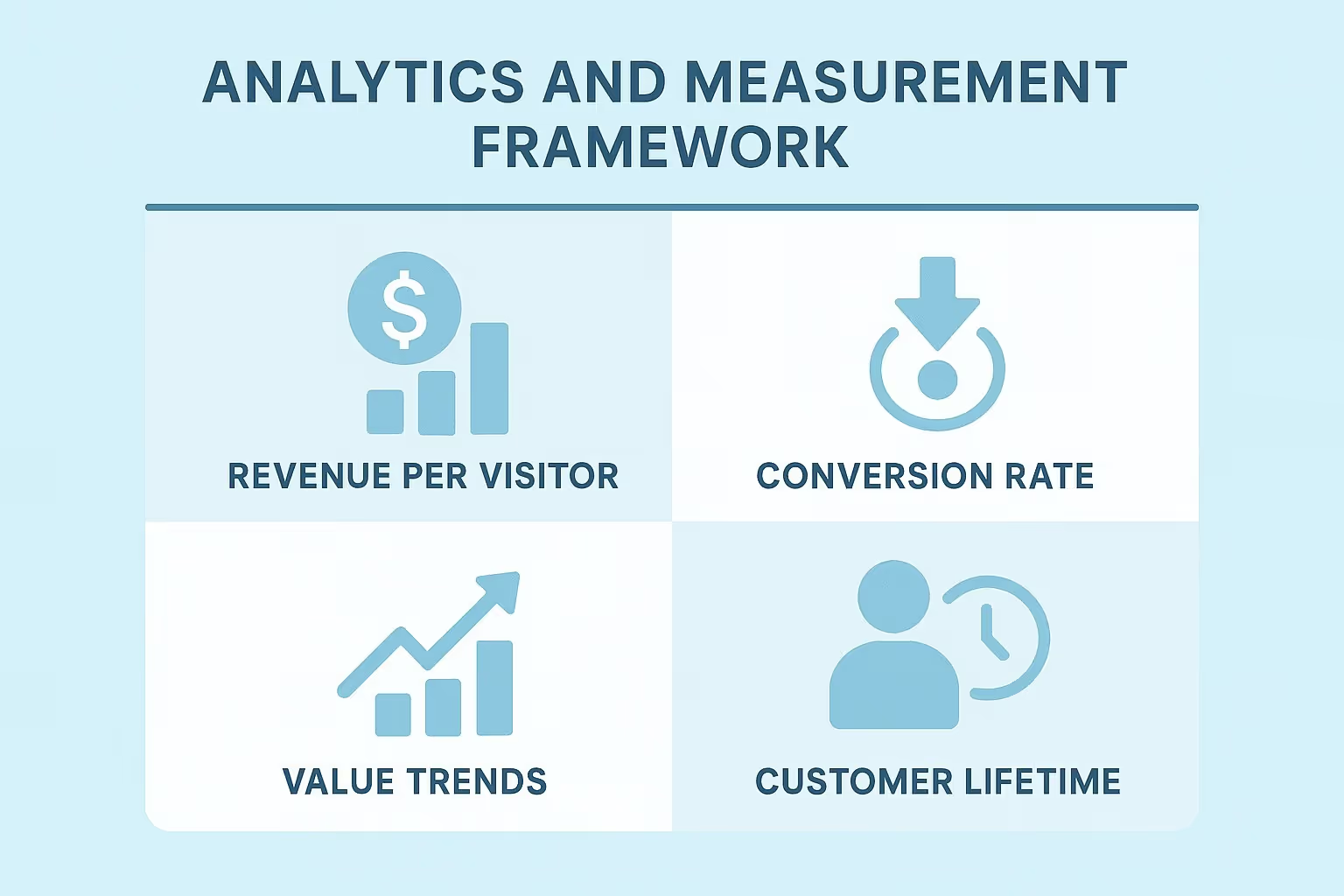
Optimization without accurate measurement is just expensive guesswork. The stores that consistently improve are the ones that track the right metrics in the right context and act on what the data actually says, not on hunches or vanity numbers.
The core numbers that determine whether your work is moving the needle are surprisingly few:
Last-click attribution systematically overvalues branded search and direct traffic while undervaluing top-of-funnel channels. Moving to data-driven or time-decay models inside Shopify’s reports or via external platforms immediately shows the real contribution of paid social, SEO, email, and affiliates. The result is smarter budget allocation and less risk of killing channels that actually feed profitable customers.
Shopify’s native analytics are strong but fragmented. Building a single source of truth requires pulling data from multiple places into one view. Most high-performing merchants combine Shopify reports with Google Analytics 4, server-side tracking (via Shopify’s Customer Events or a tool like Elevar), first-party data from Klaviyo or equivalent, and ad platform exports. The unified dashboard then shows revenue impact, margin-adjusted ROAS, site speed correlation with conversion rate, and segment-level LTV trends on one screen. Once this exists, optimization decisions become data-led instead of opinion-led, and the entire team works from the same numbers.
When these measurement layers are in place, every test, redesign, or campaign can be judged against real business outcomes instead of intermediate metrics. That discipline is what separates stores that improve steadily from those that stay stuck in random experiments.
Most Shopify stores carry 10–30 apps, and nearly every performance problem can be traced back to one of them. Unused or poorly coded apps keep loading heavy scripts, breaking after theme updates, and creating hidden security risks. The fix is simple but requires discipline: audit the full app list every quarter, check actual usage in analytics or staff activity, and remove anything that hasn’t done real work in 90 days.
When replacing or adding apps, always choose server-side, Shopify Functions, or lightweight extensions over traditional client-side blocks. Consolidate overlapping tools-one solid reviews app instead of three, one search solution, one loyalty platform that works online and in-store. Fewer apps mean faster pages, fewer update conflicts, and dramatically lower long-term maintenance overhead.
High-growth stores are increasingly going headless: they keep Shopify as the commerce backend (checkout, inventory, orders, payments) while building a completely custom storefront using Hydrogen, Next.js, or similar frameworks. This separation removes the speed and design limits of Liquid themes and delivers sub-second load times and native-grade interactions.
The commerce layer stays untouched and fully featured, while the front-end can be redesigned, animated, or extended to new channels (mobile apps, in-store displays) without touching checkout or backend logic. Many merchants start gradually-moving only product and collection pages to headless while keeping the native checkout-capturing most of the performance gain with minimal risk.
The move is not mandatory for every store, but once brand differentiation or extreme performance becomes a competitive requirement, staying on traditional themes turns into a bottleneck. Planning for headless early avoids painful re-platforming later and gives technical teams the freedom to iterate at modern web speed.
Shopify store optimization is not a one-time project but an ongoing process of measurement, testing, and refinement. The most effective approaches combine technical excellence with deep understanding of customer behavior across channels. Stores that systematically address performance, conversion friction, search visibility, and data utilization create compounding advantages that become increasingly difficult for competitors to overcome.
Monthly reviews catch regression early, with immediate attention required when Largest Contentful Paint exceeds acceptable thresholds.
Plus offers checkout customization, higher API limits, and advanced scripting capabilities that directly impact conversion rate and personalization depth.
Many drag-and-drop builders inject heavy code. Native theme sections or lightweight custom solutions typically deliver better speed scores.
Comprehensive Product and Review schema should be implemented store-wide. Additional FAQ and HowTo schema can be applied selectively to high-traffic pages.
Properly timed, personalized recovery sequences continue to be among the highest-ROI email campaigns for most stores.
Custom apps that replace multiple third-party solutions often reduce costs and improve performance over time, particularly for high-volume merchants.


