Creative Testing in Meta Ads: Smarter Ad Decisions
Learn how Meta’s creative testing tool helps you compare ad performance before spending your full budget.
Feb 4, 2026



Running a Shopify store today rarely means selling from just one place. Customers scroll, search, compare, and buy across platforms, often without even realizing they’re switching channels. Shopify sales channels exist to make that mess manageable.
At their best, sales channels help you meet customers where they already are, without turning your business into a juggling act. At their worst, they can add noise, complexity, and extra work with little payoff. This guide focuses on the practical side of Shopify sales channels: what they are, how they work, and how to think about them without chasing every new platform that pops up.
The goal isn’t to be everywhere. It’s to be present in the places that actually move products and make sense for how you run your store.
At a technical level, a Shopify sales channel is any platform where your products can be sold while inventory, orders, and reporting remain connected to Shopify. That includes your online store, social platforms, marketplaces, in-person selling, and B2B tools.
In practice, sales channels shape much more than order flow. They influence how customers first encounter your brand, how pricing is perceived, and how much ownership you retain over customer relationships. A strong channel feels like a natural extension of your store. A weak one feels like a separate business you now have to babysit.
This difference usually shows up slowly. Channels that do not fit rarely fail loudly. They just consume time.
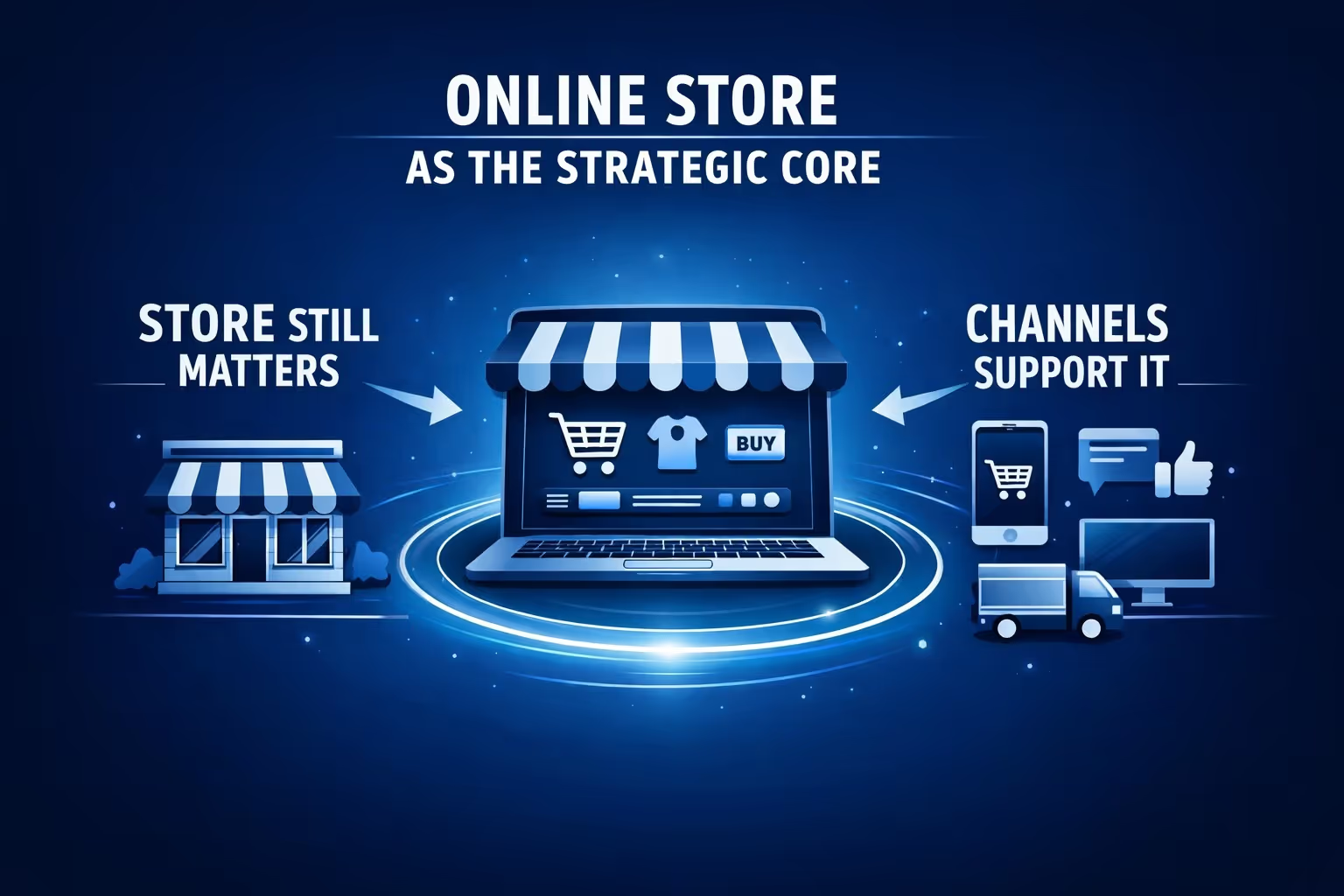
Even when customers discover products on TikTok or Amazon, many still visit your site before buying. They check shipping policies, return rules, brand credibility, and product depth. This is where trust is confirmed or lost.
Your Shopify store is the only channel where you control the entire experience, from layout and messaging to pricing and checkout behavior. No third-party platform offers that level of control.
Other sales channels work best when they reinforce the store rather than compete with it. Social platforms introduce products. Marketplaces capture high-intent buyers. In-person selling builds loyalty. The store remains the place where everything connects.
If the store experience is weak, expanding into new channels usually spreads that weakness instead of fixing it.

Expanding beyond your Shopify store raises one critical question: will your ads and messaging actually convert once they hit new channels?
At Extuitive, we help Shopify merchants answer that before spend goes live. Instead of learning through slow, expensive campaigns, we validate creative, positioning, and audience fit upfront, so scaling into social, search, or marketplace channels feels intentional rather than risky.
We connect directly to your Shopify store and test ads using AI agents modeled after more than 150,000 real consumer personas. In minutes, you can see what is likely to work before launching across multiple platforms.
Extuitive helps teams:
As you add channels, mistakes get more expensive. Different platforms bring different behaviors and expectations. Validating early shortens feedback loops and keeps expansion controlled.
Our focus is simple. Give teams clarity before scale, so growing through Shopify sales channels stays efficient, confident, and grounded in real signal.
Shopify supports a wide range of sales channels, but not all of them play the same role. Some help customers discover products. Others capture high-intent buyers or increase conversion at the final step. The sections below focus on the channels that matter most in real Shopify stores and explain how each one fits into a balanced, controlled growth strategy.
Social platforms have shifted from promotion tools into transaction environments. Customers now discover, evaluate, and sometimes purchase products without leaving the app.
Social sales behave differently from traditional ecommerce:
Shopify integrations make it possible to sync product catalogs with platforms like Instagram, Facebook, TikTok, Pinterest, and YouTube. Inventory stays updated, and orders flow back into Shopify. That technical convenience helps, but success still depends on understanding how people behave on each platform.
Social commerce rewards consistency and experimentation, not one-off wins.
Marketplaces like Amazon, Walmart, eBay, and Etsy bring buyers who already intend to purchase. That built-in intent shortens decision cycles and can drive volume quickly for the right products.
Shopify integrations allow merchants to manage listings, inventory, and fulfillment centrally, which reduces operational friction.
Marketplaces limit branding, compress margins through fees, and increase price competition. Customer relationships are harder to own, and differentiation is often reduced to reviews and pricing.
For most businesses, marketplaces work best as focused extensions, not as the foundation of the brand.
Physical selling still plays a role, especially when paired with Shopify POS. Pop-ups, retail locations, and events allow brands to sell face to face while keeping systems unified.
In-person selling is especially useful because it:
For many stores, POS is not about matching online sales volume. It is about learning, testing, and strengthening customer relationships.
While direct-to-consumer sales dominate ecommerce conversations, B2B and wholesale sales offer a different kind of stability. Shopify supports this model through customer segmentation, pricing controls, and wholesale-friendly features.
B2B sales move at a different pace. Orders are larger, decisions take longer, and relationships matter more than impulse. When structured correctly, wholesale can reduce reliance on constant advertising and smooth revenue fluctuations.
This channel works best when inventory planning and fulfillment are aligned early. Without that, operational strain grows quickly.
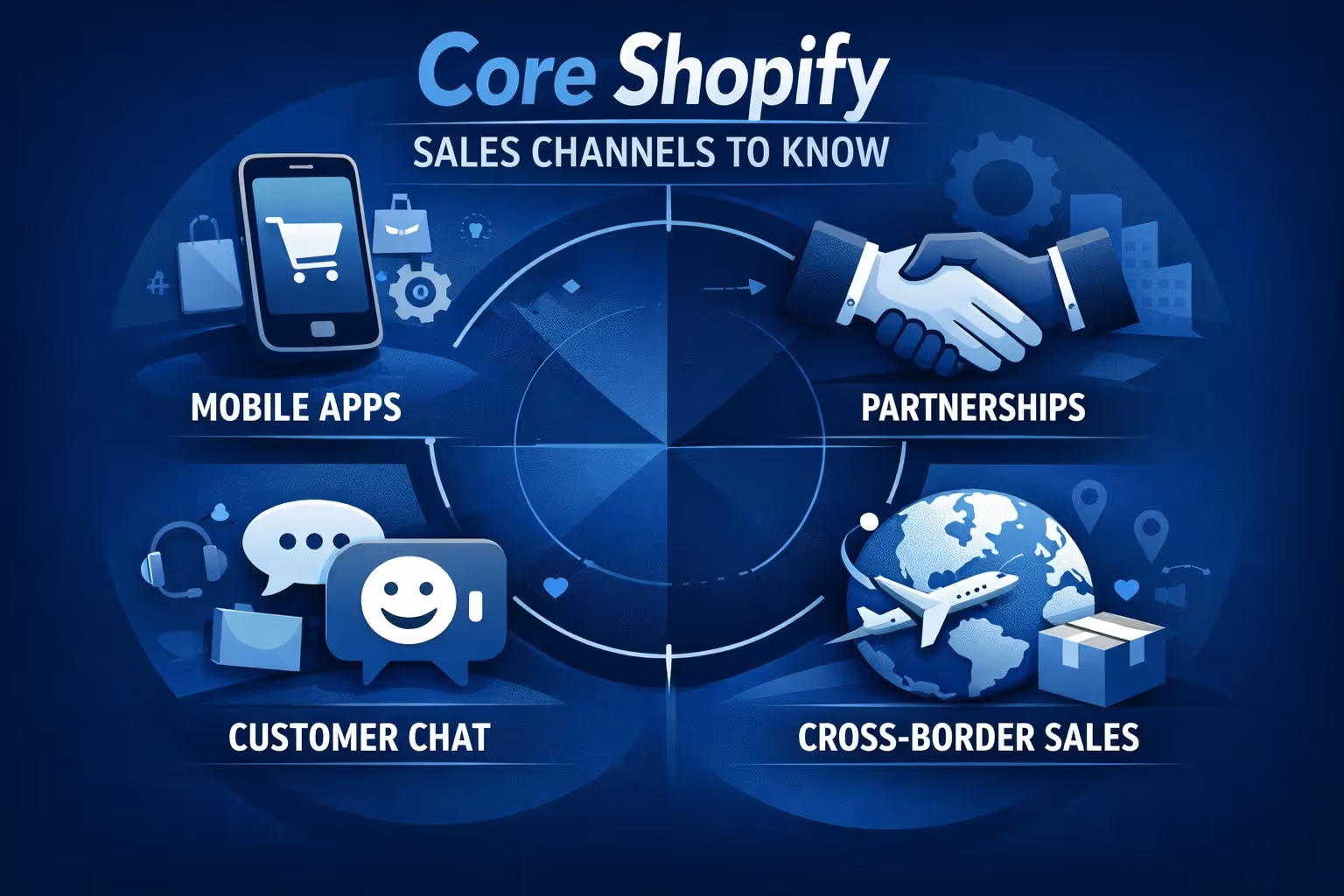
A branded mobile app creates a controlled environment for repeat customers. Faster checkout, saved preferences, and targeted notifications can increase retention when used carefully.
Apps tend to work best for brands with frequent repeat purchases and a loyal customer base.
Apps require ongoing maintenance and active engagement. For early-stage stores or businesses with infrequent repeat buying, the effort often outweighs the return.
An app should solve a clear problem, not exist because it feels expected.
Some of the most effective sales channels are built on trust rather than platforms. Creator partnerships and affiliate programs introduce products through voices customers already follow.
This channel works best when:
Shopify supports these relationships through tracking and payout tools, but alignment matters more than volume.
Email and customer chat are often treated as support tools or retention tactics, but on Shopify they function as full sales channels when used deliberately.
Email remains one of the few places where you fully own the audience. There are no algorithms deciding reach, no bidding wars, and no sudden policy changes. When connected properly to your Shopify store, email becomes a direct path back to checkout, especially for repeat buyers.
Customer chat works differently, but with similar impact. Tools like Shopify Inbox allow you to talk to shoppers while intent is still high. Many conversations happen when customers are actively considering a purchase, not after the fact. Answering a question at the right moment often removes the final bit of friction.
Used together, email and chat support the sales journey quietly. They do not introduce new audiences, but they increase conversion and order value among people already close to buying. That makes them especially valuable as you add more top-of-funnel channels elsewhere.
Selling internationally is no longer limited to large brands with complex logistics. Shopify’s built-in global selling tools allow merchants to reach customers across regions while keeping operations centralized.
Cross-border selling works as a sales channel because it opens access to new demand without changing the core product offering. Local currencies, translated storefronts, regional pricing, and international shipping options reduce friction for buyers who would otherwise hesitate.
That said, international expansion requires restraint. Taxes, duties, delivery times, and returns behave differently across regions. The channel works best when introduced gradually, starting with markets that already show organic interest in your products.
When managed carefully, global sales channels extend the life of existing products and diversify revenue without requiring a completely new go-to-market strategy.
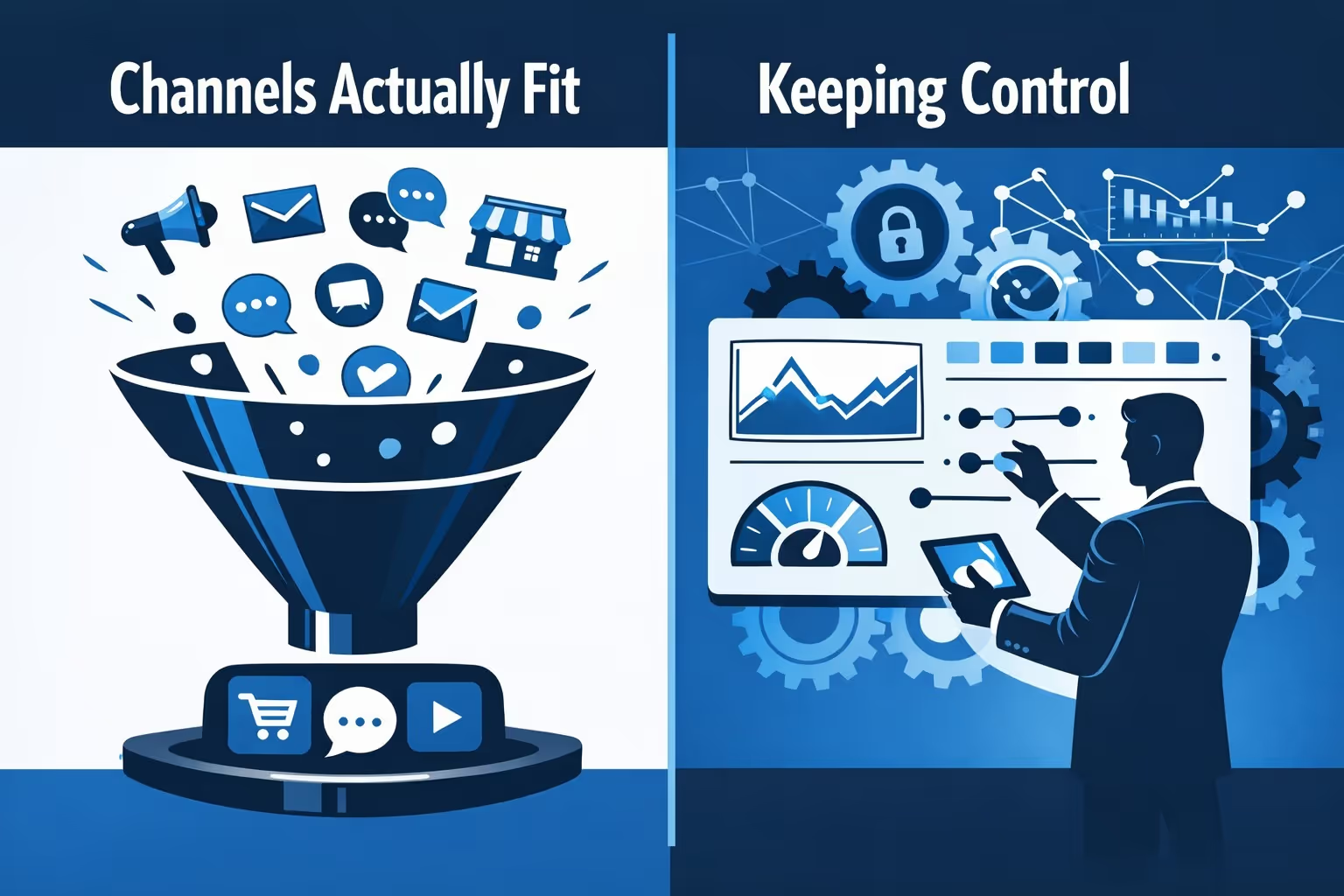
Shopify makes it easy to add new sales channels. A few clicks, an app install, and you are live. That convenience is useful, but it also creates a common problem: overextension.
Each new channel adds invisible weight to the business. Inventory has to stay accurate. Customer expectations shift depending on where the sale happens. Support questions increase. When too many channels are added at once, results often flatten instead of growing. Stores that perform best usually focus deeply on a small number of channels rather than maintaining a shallow presence everywhere.
Growth works better when it is incremental and deliberate. Channels should be added with a clear purpose, not as a reaction to trends or fear of missing out.
The right Shopify sales channels depend on how customers discover, evaluate, and buy your products. Some businesses thrive on social discovery and impulse-driven purchases. Others depend on search, comparison, or repeat buying over time.
There is no universal setup that works for every store. The strongest channel strategies are built around observed customer behavior, not assumptions. If customers already find you through social content, lean into that. If they compare options carefully, marketplaces or search-driven channels may make more sense.
Fit matters more than coverage.
The promise of Shopify sales channels is centralized control. Inventory, orders, and reporting remain connected even as you sell in more places. That promise only holds when channels are actively managed.
Pricing needs consistency. Fulfillment rules must be clear. Customer communication has to stay aligned across platforms. Without that discipline, visibility fades and decision-making becomes harder.
Well-managed growth feels intentional. Poorly managed growth feels overwhelming. The difference usually comes down to how carefully channels are added and maintained over time.
Selling in more places is not inherently good or bad. It is a multiplier. Shopify sales channels amplify whatever foundation already exists.
When strategy is clear and operations are solid, channels extend reach and resilience. When decisions are reactive, complexity grows faster than revenue.
The goal is not to be everywhere. It is to be present where it makes sense, in a way that strengthens the business rather than stretching it thin.


