How Long Do Shopify Refunds Take: A Complete Guide
Wondering how long Shopify refunds take? Get a clear timeline and what you should expect for refund processing.
Apr 14, 2026



Pricing on Shopify is one of the few levers that directly affects profit margins, conversion rates, and long-term positioning. Get it wrong and either customers leave or margins disappear. Get it right and the same product can generate significantly higher revenue without extra traffic.
This guide pulls together the core strategies used by successful Shopify merchants right now, based on current platform capabilities and real-world implementations.
Cost-plus is still the go-to method for most beginners because it’s basically impossible to lose money on a sale - every unit sold at least covers what you spent to get it in the customer’s hands. It gives new store owners peace of mind while they figure out everything else.
For physical goods, most healthy Shopify stores eventually settle around 2.2-2.8x markup on total cost, which typically delivers 50-65% Gross Margin (or Contribution Margin when variable overheads are included) after platform and payment fees. Digital products and print-on-demand can comfortably run 6-15x because the variable cost per additional sale is basically zero.
When cost-plus makes sense:
The big downside, of course, is that it completely ignores what the market is actually willing to pay and what your competitors are charging right now. That’s why almost everyone eventually layers in other strategies on top.
In categories flooded with near-identical products (phone cases, pet supplies, basic tees, charging cables, you name it), customers compare prices in seconds. If you’re noticeably higher with no clear reason, you simply don’t show up in their consideration set. Competitor-based pricing keeps you visible and relevant.
Execution steps:
A growing number of Shopify apps now scrape competitor sites daily (or even hourly) and reprice your products automatically based on rules you set. Common rules we see working well: “stay within 3% of the lowest visible competitor”, “never drop below 38% gross margin”, “match Amazon’s price on our hero products”, or “beat Brand X by exactly $2 on bundles”.
The obvious danger is getting dragged into margin-killing price wars, especially around Black Friday. Smart merchants always combine dynamic competitor rules with rock-solid floor pricing and occasional manual overrides so a race to the bottom doesn’t wipe out profitability in one weekend.
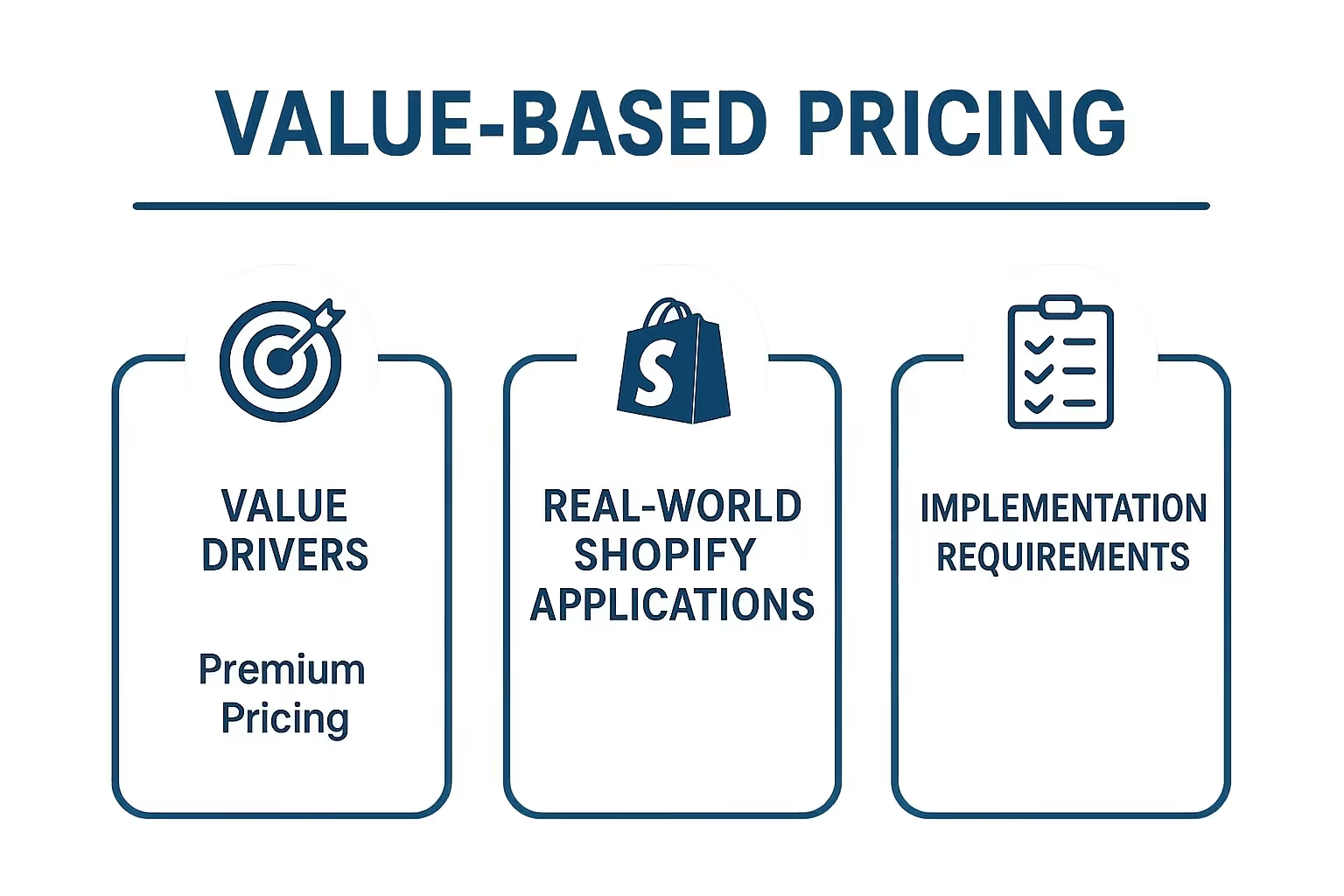
Value-based pricing sets the price according to the specific value the customer perceives in the product, rather than production cost or competitor benchmarks. This approach works only when the store can demonstrate clear, measurable advantages that a defined customer segment actively seeks and is willing to pay for.
Natural/fluoride-free oral care brands routinely sell at 2.5-4x the price of mainstream toothpaste because their audience prioritizes avoiding certain chemicals over low cost. Premium pet food and accessory stores command 60-100% higher prices by emphasizing human-grade ingredients and transparent supply chains. Eco-friendly apparel lines charge 30-70% premiums when they provide third-party sustainability certifications and detailed impact metrics.
Strong implementation demands more than just raising the price. Successful value-based stores consistently deliver:
Most stores do not switch overnight. They typically start by identifying one hero product or collection with the strongest differentiation, raise the price in controlled 15-25% increments while monitoring conversion rate and customer feedback, then reinvest the additional margin into better photography, copy, and social proof. Once the higher price holds without significant volume loss, the process repeats across additional SKUs.
When executed properly, value-based pricing delivers the highest margins of any strategy because the ceiling is defined by customer perception rather than competitor prices or internal costs. The trade-off is that it requires continuous reinforcement of the value story and performs poorly on undifferentiated or commodity items. Value-based pricing does not work without premium branding and packaging – customers will refuse to pay the higher price if the visual identity, photography, and physical unboxing experience do not immediately signal superior quality from the first second of contact.

At Extuitive, we’re a bit obsessed with one simple truth: the fastest-growing Shopify stores don’t win by guessing - they win by knowing exactly what makes their audience stop scrolling and pull out their wallet. That’s why we built a system that turns weeks of expensive testing into minutes of ruthless, data-backed validation.
Connect your store, and our army of over 100,000 AI consumer agents - trained on real behavioral data - instantly generates dozens of ad creatives, copy variations, pricing angles, and reels. Then they battle it out in simulated focus groups until only the absolute strongest survive. We’re talking scroll-stopping visuals, copy that actually converts, and ideas that feel like they were custom-written by your ideal customer. No more launching blind and praying. You see predicted purchase intent before spending a single dollar on ads. A lot of our clients end up using the winning copy on their product pages too - yeah, it’s that good.
Dynamic pricing automatically shifts your prices based on real-time signals like demand spikes, inventory levels, time factors, or whatever your competitors are doing at that exact moment. It’s the same concept that powers airline tickets and Uber surge pricing - just adapted for e-commerce.
Common triggers on Shopify:
This approach shines for seasonal products, flash-sale brands, limited drops, and anyone using repricing apps aggressively. One thing to keep in mind: regulations like the EU Omnibus Directive (and similar rules popping up elsewhere) now force you to display the lowest price from the last 30 days whenever you advertise a discount. This means dynamic pricing models that rely on promotional price cuts must now be more transparent about the true discount depth.
Bundling is still one of the simplest, most reliable ways to push average order value higher without feeling salesy.
Effective bundle types:
Shopify’s native discount codes and draft orders cover basic needs, but practically everyone serious about bundling ends up adding a third-party app for dynamic builders, “frequently bought together” sections, and mix-and-match functionality that actually converts.
Tiny pricing tweaks can move the needle way more than merchants expect - often without changing a single product photo or bullet point.
Proven patterns:
Large-scale A/B tests across thousands of Shopify stores consistently show 9-ending prices beating round numbers by 1-4% in most consumer categories. That’s small per order, but it compounds beautifully when you’re doing real volume.
What started as a SaaS trick has quietly become mainstream for physical and digital goods alike - give different customer groups different prices without them ever noticing.
Common applications:
Shopify Plus stores lean heavily on customer tags, hidden collections2, and private apps to make tiered pricing completely automatic and invisible to the wrong segment.
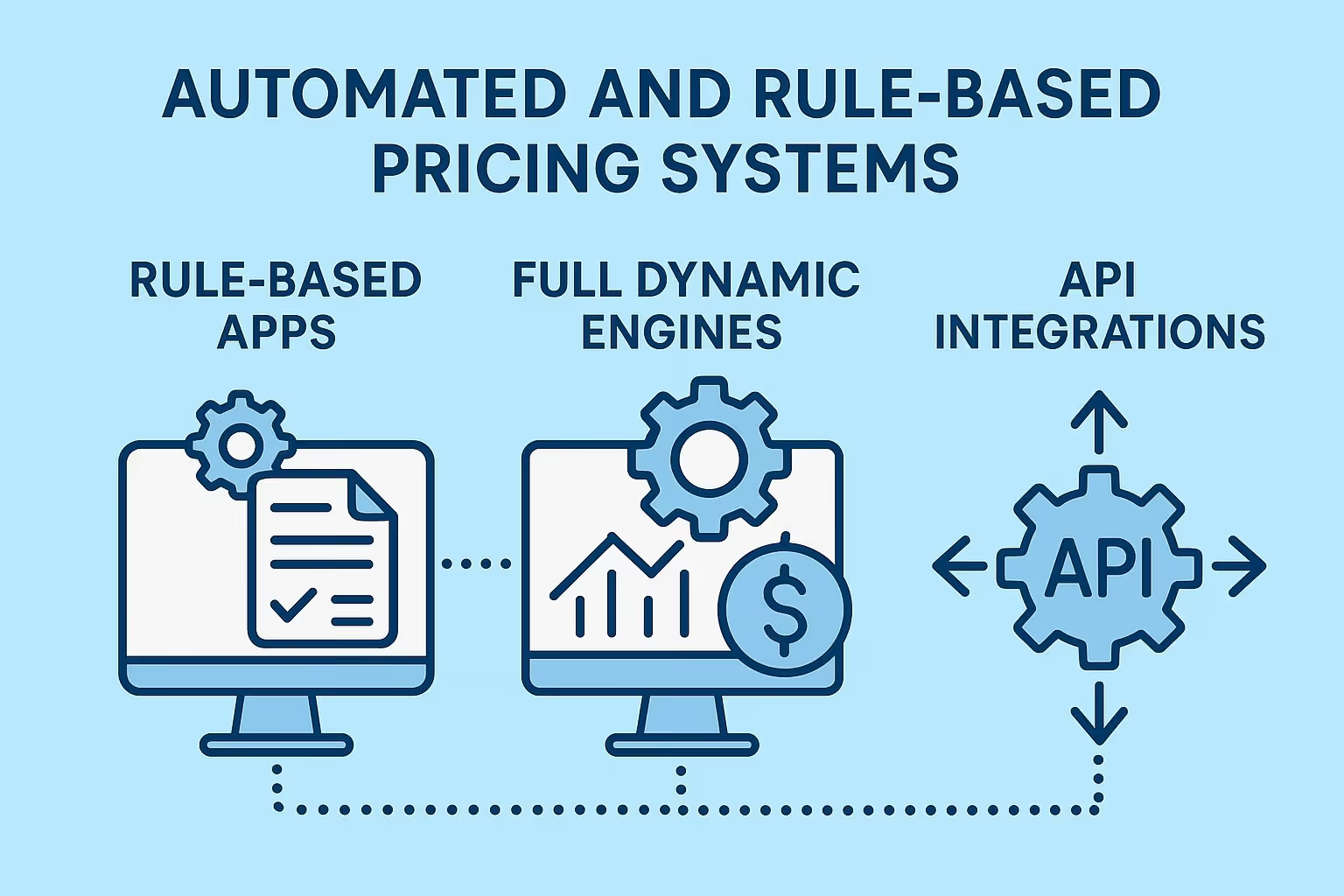
Once you pass a few hundred SKUs, changing prices manually turns into a full-time job nobody wants.
Current automation options:
Most growing brands start with lightweight rule-based apps that pay for themselves in the first month, then graduate to proper dynamic or AI-driven systems when catalog complexity or competitive pressure demands it.
Whatever strategy you pick today won’t be perfect forever - markets shift, costs move, competitors get aggressive.
Core metrics to track:
Shopify Analytics + GA4 give you the raw numbers, but scheduled A/B tests (whether through apps, manual compare-at pricing, or full experimentation platforms) are still the only reliable way to keep finding new local optima before someone else does.
Pricing on Shopify remains an ongoing process, not a one-time setup. Costs fluctuate, competitors reposition, and customer behavior evolves, so the highest-performing stores treat pricing as a core operational discipline with regular reviews and data-driven adjustments.
In practice, the strongest results come from layering strategies: cost-plus as the unbreakable margin floor, competitor monitoring for relevance, value-based pricing where genuine differentiation exists, and targeted automation or dynamic rules as the store scales. Add bundles, psychological pricing, and tiers as finishers. Start with the simplest combination that protects profit, measure relentlessly, and refine every few weeks. Consistent small improvements in pricing compound faster than almost any other optimization on the platform.
Most new stores start with cost-plus to ensure survival, then layer competitor monitoring and gradual shifts toward value-based as they learn customer willingness to pay.
Yes, but since the Omnibus Directive you must display the lowest price from the previous 30 days whenever you show a discount.
Matching Amazon rarely works profitably because of their fee structure and shipping advantages. Merchants typically stay 5-15% above Amazon on identical items and compete on speed, bundling, or niche appeal instead.
Fast-moving categories need weekly competitor checks. Stable private-label goods can be reviewed quarterly unless significant cost changes occur.
Yes. Multiple large-scale tests on Shopify stores continue to show 3-8% higher conversion rates versus round numbers in consumer goods.
When your product has clear differentiators that a meaningful segment values highly (materials, ethics, speed, warranty, design). Without differentiation, value-based quickly collapses into competitor pricing.
Almost every successful mid-size store does. Example: base price from value-based calculation, floor from cost-plus, ceiling from competitor monitoring, final price rounded to 99 with occasional dynamic surges during peak hours.


