Marketing Ideas for Roofing Companies That Drive Growth
Discover proven marketing ideas for roofing companies including local SEO, referral programs, social media, and digital strategies to generate leads and grow.
May 18, 2026



If you’re dealing with Shopify no sales, you’re not alone. This is one of the most common situations store owners face, especially in the first months. Traffic may be low. Or traffic may exist, but nothing turns into orders. Either way, the silence feels the same.
What makes this frustrating is that the store often looks fine on the surface. Products are live. Checkout works. Payments are connected. Yet nothing happens.
In most cases, the problem isn’t one big mistake. It’s a combination of small issues that quietly add friction and give shoppers reasons to hesitate. This article looks at why Shopify no sales happens so often, and how to think about it in a clear, practical way before jumping into fixes, ads, or expensive tools.
Before fixing anything, you need to know which problem you are solving.
A store with almost no visitors cannot convert, no matter how good it is. A store with steady traffic and no sales is dealing with friction, not visibility. This distinction matters because the solutions are completely different.
If your store gets very little traffic, the issue is reach. SEO, ads, partnerships, or content need attention. If your store gets visitors who browse but never buy, the problem lives inside the store itself. Without this clarity, it is easy to waste time optimizing the wrong thing.

When Shopify no sales becomes a pattern, the issue often starts before visitors ever reach the store. Many brands send traffic based on assumptions, not validation. Ads go live, budgets get spent, and only then does it become clear that the message, audience, or offer did not resonate.
At Extuitive, we remove that guesswork. We use AI consumer agents modeled on real behavioral data to test and validate ads before they launch. This allows Shopify brands to understand which messages trigger purchase intent, which audiences respond, and which ideas are likely to fall flat, all before spending real ad budget.
With Extuitive, we help Shopify brands:
Our approach helps Shopify stores align messaging, audience, and expectations before traffic hits the homepage. When visitors arrive already primed for the product, conversion optimization becomes easier, faster, and far more predictable.
That is why many of our customers tell us the same thing: ads come together faster, messaging feels clearer, and results improve without burning budget. When traffic quality improves, Shopify no sales stops being a mystery and starts becoming a solvable problem.
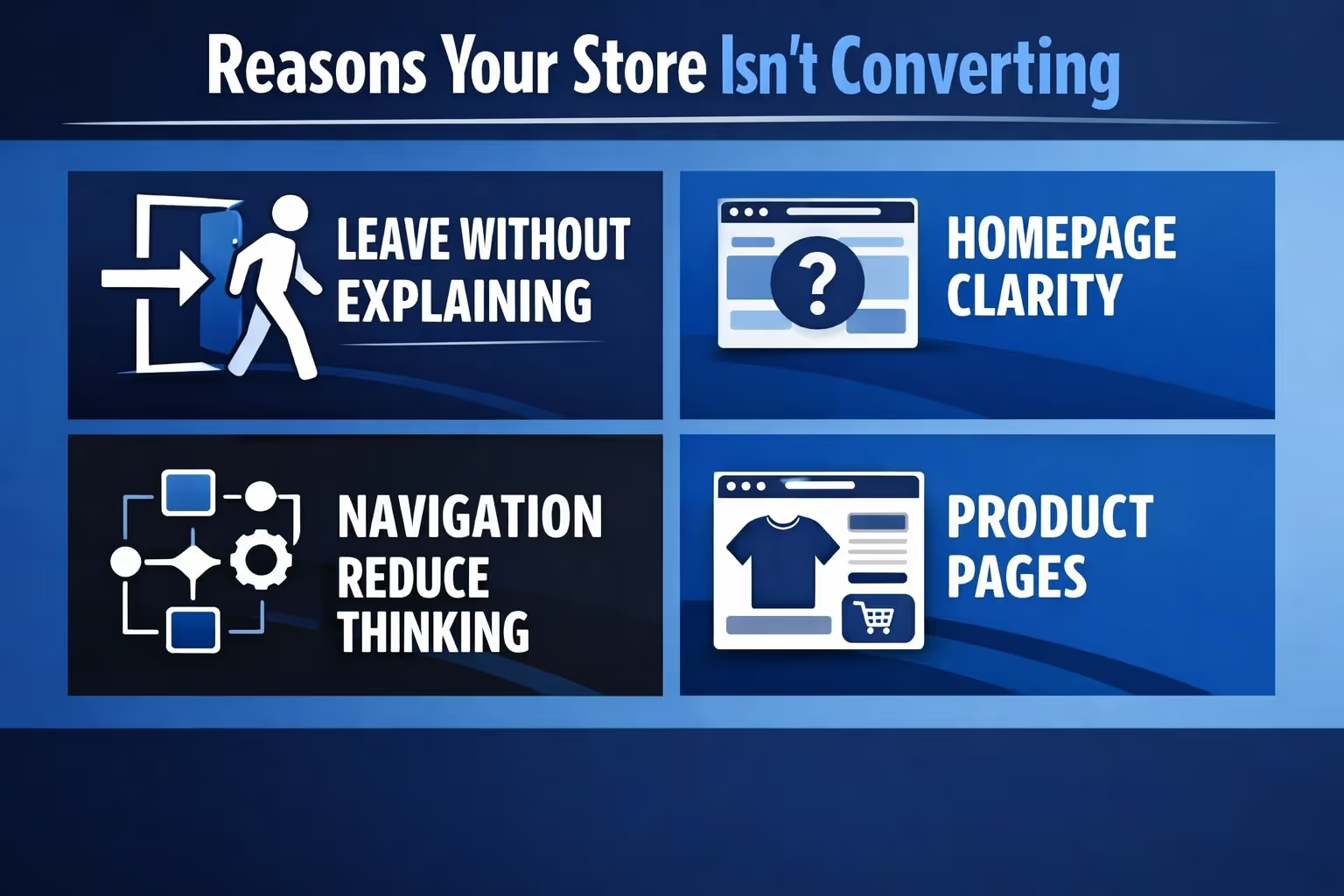
Online shoppers do not announce why they leave. They simply close the tab.
That silence is not random. It usually comes from a feeling of uncertainty. People hesitate when they are unsure about the product, the brand, the price, or the process. When hesitation appears, momentum disappears.
Most Shopify no sales situations come down to one core issue: the store asks for trust faster than it earns it.
Trust is built gradually through clarity, consistency, and familiarity. When those are missing, even interested visitors pause and move on.
The homepage sets the tone for everything that follows. It is not a place to explain everything you do. It is a place to guide the next step.
Many stores struggle because their homepage either overwhelms visitors or gives them nothing to grab onto. Too many messages compete for attention. Or the message is so vague that it could belong to any store.
A strong homepage answers three questions almost immediately:
When those answers are not obvious, visitors hesitate. Hesitation at the entrance almost always leads to Shopify no sales down the line.
Navigation is one of the most underestimated conversion factors. Visitors rely on it to orient themselves quickly. If it feels unfamiliar or confusing, confidence drops.
Problems often appear when stores try to be clever with category names or overload menus with too many options. Shoppers are not looking to explore. They are looking to find.
A well-structured navigation feels boring in the best possible way. It follows patterns people already know and trust. When users do not have to think about how to move through the store, they focus on products instead.
Product pages do the heavy lifting. This is where visitors decide whether the product makes sense for them.
Many Shopify stores lose sales here because product pages describe the product but do not support the decision. Features are listed, but context is missing. Images exist, but they do not answer practical questions.
Shoppers are not just asking what the product is. They are asking whether it fits their needs, expectations, and risk tolerance. When product pages fail to address those silent questions, visitors back out.
Product pages that struggle with conversions often share similar weaknesses:
Each of these creates small moments of uncertainty. Enough of them combined lead directly to Shopify no sales.
Images are one of the strongest trust signals in ecommerce. They show effort, seriousness, and attention to detail. Poor images do not just look bad. They suggest risk. Shoppers wonder whether the product will look different in person or whether the brand cuts corners elsewhere too. Good images do not need to be fancy. They need to be clear, consistent, and honest. Showing scale, texture, and usage often matters more than perfect lighting.
Most visitors arrive on mobile devices. Yet many stores are still designed as if desktop comes first.
On mobile, patience is lower. Screens are smaller. Taps need to be easy. If something feels awkward, people leave faster than they would on desktop.
Common mobile issues include slow loading, oversized banners, intrusive popups, and buttons that require precision tapping. These problems rarely show up in desktop previews but cause real damage in practice.
If a store feels uncomfortable to use on a phone, Shopify no sales becomes almost inevitable.
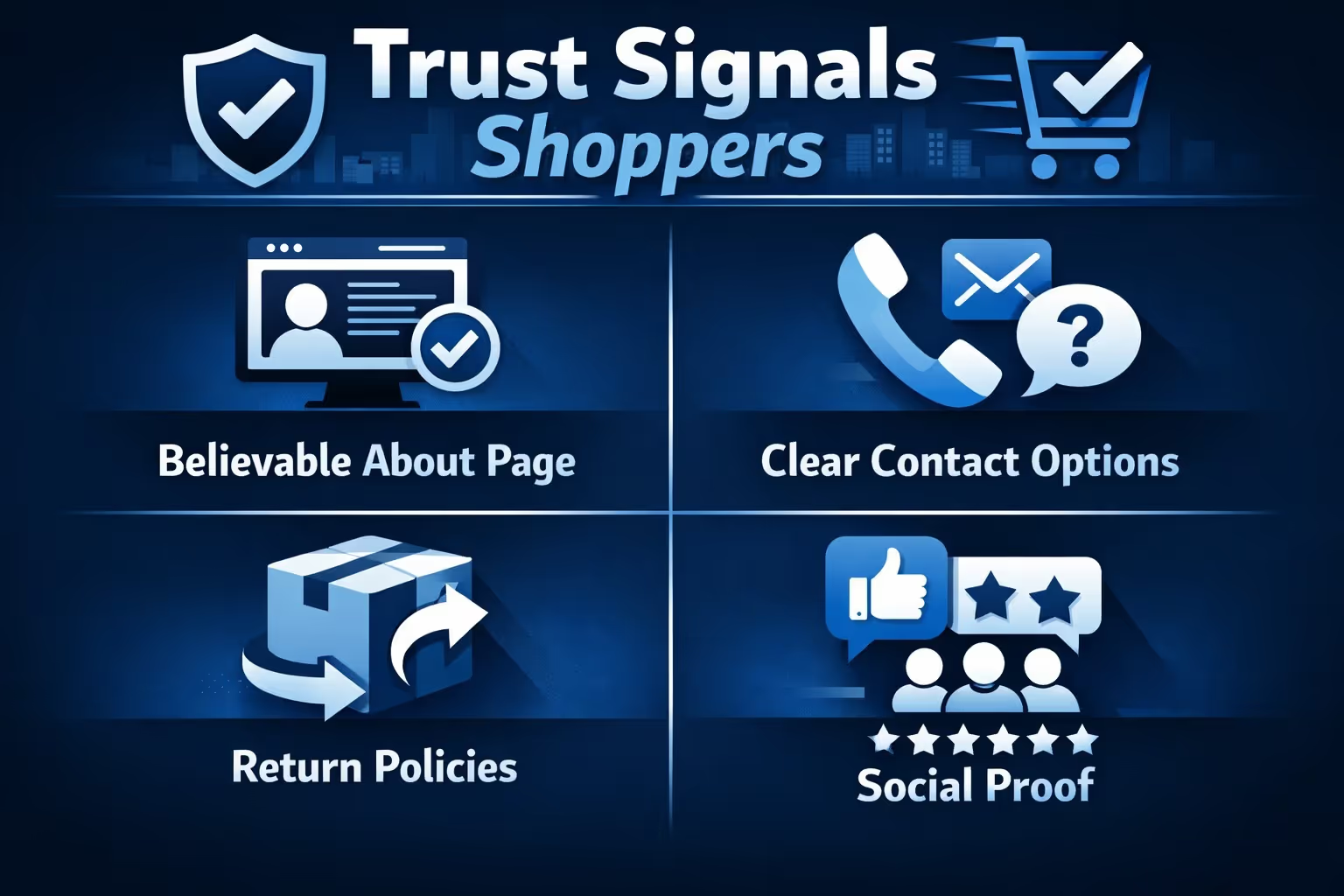
Trust is rarely built by a single element. It forms gradually as people move through the store and subconsciously check whether everything feels consistent and legitimate. Most shoppers would struggle to explain why they trust one store and not another, but their behavior makes the difference obvious.
When these signals are missing or feel half-finished, visitors do not panic. They hesitate. And hesitation is usually enough to stop a purchase.
An About page is not there to impress. It is there to reassure.
Shoppers look for signs that a real person or team stands behind the store. A short backstory, a reason the brand exists, or even a simple explanation of what the business focuses on can make a difference. Pages that are vague, overly polished, or obviously generic tend to raise quiet doubts.
The goal is not to overshare. It is to show that the store has an identity beyond products and templates.
A contact form alone does not build confidence. It feels one-sided.
Shoppers want to know how they can reach you if something goes wrong. An email address, a support inbox, or even a simple contact page with clear expectations helps reduce perceived risk. Live chat can help too, but only if it feels accessible and not intrusive.
When contact information is hidden or missing, people start imagining worst-case scenarios. That alone can stop a sale.
Policies matter most when people are unsure.
Shoppers rarely read every line, but they want to know the basics without digging. How long shipping takes. Whether returns are allowed. What happens if something arrives damaged.
When this information is hard to find or written in confusing language, it creates friction right when people are deciding whether to trust the store with their money.
Clear, visible policies reduce mental effort and lower the perceived risk of buying.
Reviews and testimonials work best when they feel ordinary.
A handful of real reviews often performs better than dozens of overly enthusiastic ones. Shoppers look for balance, detail, and authenticity. They notice patterns quickly and can sense when something feels manufactured.
Social proof does not need to be perfect. It needs to feel human. Even small imperfections help.
An active store feels safer than a silent one.
Recent reviews, updated product listings, or social media posts from the last few weeks tell shoppers that the business is alive and paying attention. Outdated content, empty feeds, or year-old updates create uncertainty.
People do not want to feel like they are buying from a store that might disappear tomorrow.
Checkout is the moment when browsing turns into commitment. Up until this point, visitors are exploring with curiosity. Now they are about to hand over their money, and that shift changes how cautious they become.
This is where many Shopify stores lose sales, even when everything else feels right. Small uncertainties suddenly carry more weight. An unexpected cost. A step that feels unnecessary. A lack of clarity about what happens next. Any of these can introduce doubt at the worst possible moment.
Most shoppers abandon checkout not because they changed their mind about the product, but because the process feels risky, inconvenient, or slightly out of control.
These issues frequently stop buyers at the final step:
Reducing friction at checkout often produces faster and more noticeable improvements than redesigning the entire store. When the final steps feel simple, transparent, and familiar, buyers are far more likely to follow through.
Price is never evaluated on its own. Shoppers judge it against everything else they see, from product images to copy quality to how professional the store feels overall. A low price paired with weak presentation can raise suspicion instead of confidence. A higher price without enough context can feel risky, even if the product itself is solid.
Strong product pages do not try to justify pricing with sales language. They explain value quietly through clarity. Clear images, useful descriptions, and transparent policies help the price make sense without calling attention to it. When pricing feels disconnected from the rest of the experience, hesitation grows, and Shopify no sales often becomes the result.
Search traffic can create a false sense of progress. Seeing visitors arrive through Google feels encouraging, but not all traffic is ready to buy. Many keywords attract people who are researching, comparing, or learning, not shopping. Those visits increase numbers without moving revenue.
This does not mean SEO is failing. It usually means intent is mismatched. Pages built around specific use cases, comparisons, or problem-driven searches tend to attract visitors closer to making a decision. When SEO focuses only on volume instead of intent, Shopify no sales can persist even with growing traffic.
When sales slow down, the default reaction is often to add tools. More popups. More widgets. More automation. Each new app promises to fix conversions, but together they often create a cluttered experience that overwhelms visitors instead of helping them decide.
Most conversion problems are solved by simplifying, not stacking features. Removing distractions, tightening copy, and making the buying path clearer usually has a bigger impact than adding another layer of technology. When the experience becomes easier to understand and easier to complete, sales tend to follow without force.
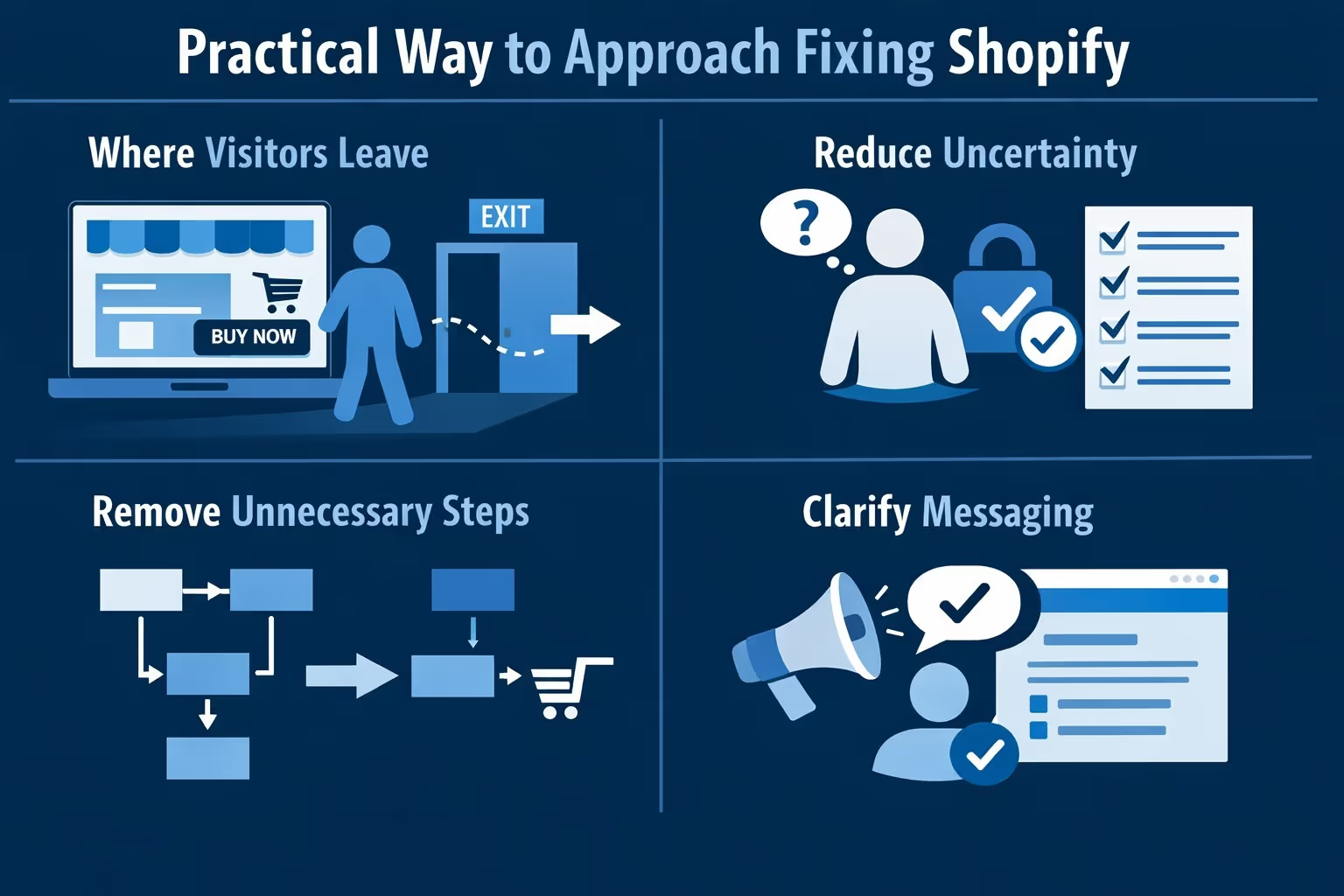
When a store has no sales, the instinct is often to change everything at once. New themes, new apps, new offers. That reaction is understandable, but it usually creates more noise than progress.
A better approach is to slow down and observe how people actually move through the store. Sales problems are rarely spread evenly. They usually show up at very specific moments where confidence drops or effort increases.
Focus on these steps:
Small, focused changes often produce better results than dramatic redesigns. When the right friction is removed, shoppers move forward naturally, and Shopify no sales starts turning into consistent conversions.
Shopify no sales is rarely a sign that the idea is bad. More often, it is a sign that something in the experience creates hesitation. Sales happen when trust, clarity, and ease align. When they do not, visitors leave quietly.
Treat the lack of sales as information. Fix friction instead of chasing shortcuts. When the experience improves, conversions usually follow without forcing them.
That is how stores move past Shopify no sales and into steady, predictable growth.


