Best AI Agents for SEO That Make Work Easier
Explore AI agents for SEO that handle research, content, and workflows. See how they work and where they fit in real projects.
Apr 12, 2026



Shopify marketing in 2026 is less about chasing every new trend and more about combining proven channels that complement the platform’s native strengths. The stores that grow fastest right now are the ones that treat marketing as three connected layers: traffic acquisition, onsite conversion, and post-purchase retention. Everything else is secondary.
Shopify already handles product feeds, basic analytics, checkout, and payment processing. This means marketing efforts should focus on feeding qualified visitors into an already optimized funnel instead of trying to fix core store problems with ads or content.
The most effective strategies fall into clear categories: search visibility, paid acquisition, email and SMS retention, onsite engagement, and loyalty mechanics. Each category has specific tools and tactics that work better on Shopify than on custom-built stores because of direct data flow between apps and the core platform.
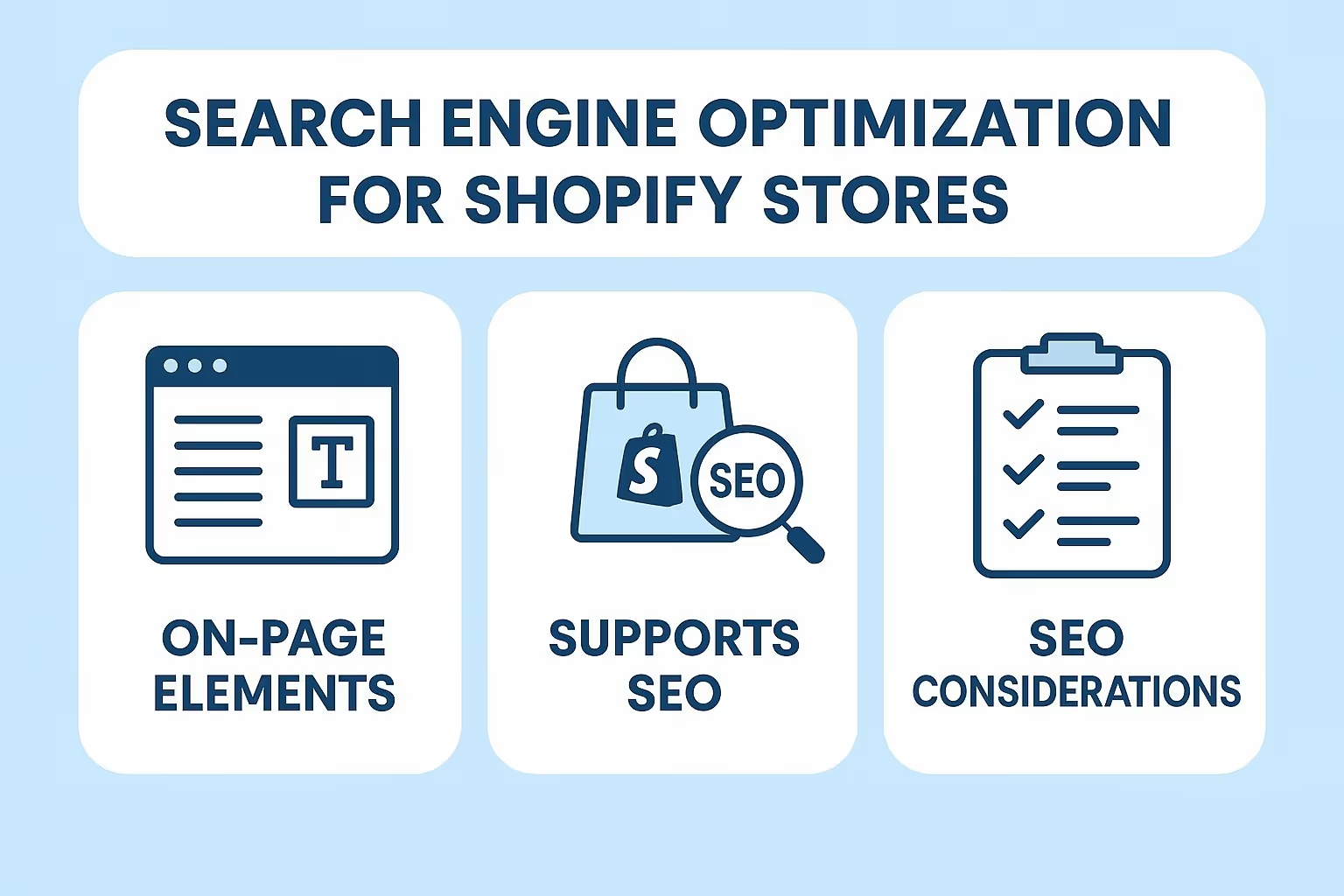
SEO remains the highest-leverage organic channel for most Shopify merchants. Product pages, collections, and blog content all index normally in Google. The technical foundation is solid out of the box, so the real work is content structure and keyword targeting.
Product titles, meta descriptions, image alt text, and URL handles directly influence rankings. Apps that bulk-edit these fields save hours compared to manual changes. Collection pages should contain descriptive text above the fold instead of just product grids. Internal linking from blog posts to category and product pages distributes authority and keeps visitors on site longer.
Long-form guides and comparison articles rank for informational queries and act as linkable assets. These pages naturally link to money pages, passing relevance. Shopify’s blog functionality is sufficient for most stores; separate domains or subdomains are rarely needed.
Site speed receives heavy weight in Core Web Vitals. Compressing images, lazy-loading, and choosing lightweight themes matter more than complex server-side tweaks. Structured data markup for products, reviews, and FAQs increases rich snippet appearance in search results.
Key technical SEO levers on Shopify:

We run a Shopify store and an AI platform in parallel, so we see the same problems from both sides every day. Most stores waste weeks brainstorming ad creative, guessing at copy angles, and burning budget on variants that never had a chance. We built Extuitive to cut that loop down to hours instead of months.
Our system connects straight to your Shopify store, pulls the catalog, and spins up hundreds of ad concepts - images, reels, headlines, pricing tests - then runs AI agents trained on real consumer behavior. The agents vote on what actually stops the scroll and drives intent. Only the top performers make it to your ad accounts. We launch the winners on Meta and TikTok the same day, track performance inside Shopify, and keep iterating. Nothing gets spent on creative that hasn’t already passed a simulated focus group. It’s the closest thing we’ve found to having an always-on research team that never sleeps and costs pennies per test.
Paid traffic scales faster than any other channel when the backend data flows correctly.
Shopify’s Google channel syncs catalog data automatically. Shopping ads, Performance Max, and standard search campaigns pull real-time inventory and pricing. Smart Shopping or Performance Max works best when stores have a steady flow of conversions to optimize from, rather than just traffic volume.
The Advantage+ suite uses Shopify pixel data for audience building and creative testing. Dynamic product ads and catalog sales objectives work best. Lookalike audiences built from customer lists uploaded directly from Shopify usually outperform interest-based targeting.
Basic retargeting segments include site visitors, add-to-cart users, and past purchasers. Separate campaigns for each segment prevent ad fatigue. Seven-day and thirty-day retargeting windows cover most buyer cycles.
Most profitable paid channels for Shopify stores right now:
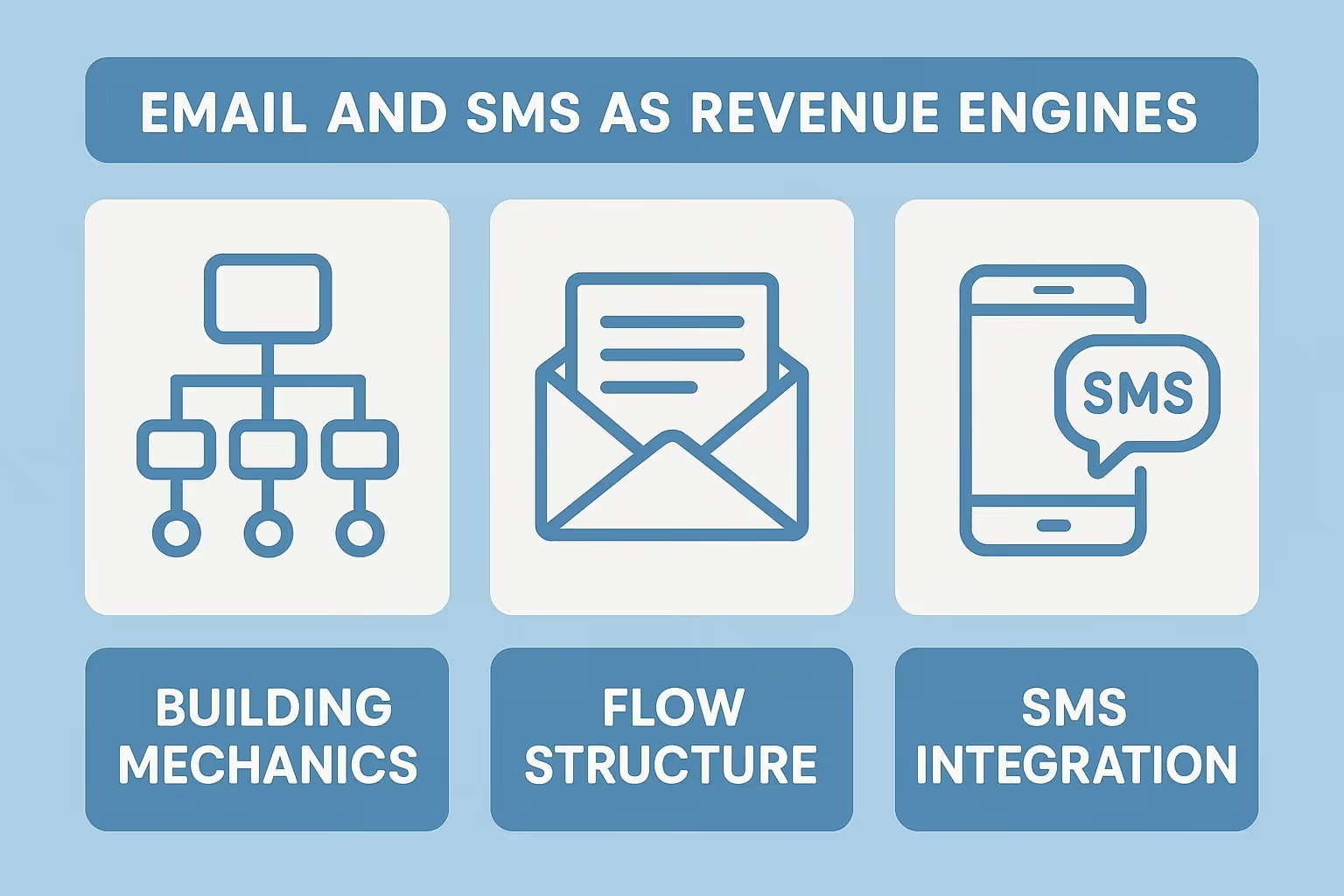
Email consistently delivers the highest ROI of any marketing channel for established stores.
Exit-intent popups, welcome discounts, and post-purchase opt-in prompts build lists quickly. Shopify’s checkout now includes an optional marketing consent checkbox that feeds directly into most major ESPs.
Welcome series, abandoned cart sequence, and post-purchase upsell flows form the backbone. Browse abandonment flows trigger when users view products without adding to cart. Segmentation by purchased categories enables relevant product recommendations.
SMS works best for time-sensitive messages: flash sales, order confirmations, and abandoned cart reminders. Two-way SMS allows customers to reply “STOP” or ask questions, which improves deliverability.
Core automated flows every Shopify store should have:
Traffic without conversion is wasted spend. Even small improvements at this stage compound across every visitor, regardless of source.
Mobile visitors abandon pages that take longer than three seconds to load. Core Web Vitals (LCP, FID, CLS) now directly affect Google rankings and ad quality scores. Practical fixes include converting to WebP format, lazy-loading offscreen images, deferring non-critical JavaScript, and removing unused app code. Shopify’s Online Store 2.0 themes load app blocks only when they enter the viewport, eliminating most render-blocking issues without manual liquid edits. Regular testing with PageSpeed Insights or Lighthouse keeps performance from drifting.
Customer reviews remain the strongest trust factor. Apps that push verified reviews into product schema generate rich snippets in Google, boosting organic click-through rates. Showing review count, star rating, and recent photo reviews directly on collection pages moves buying decisions forward before the product page loads. Trust badges for payment methods and return policy at key decision points (cart, checkout) further reduce hesitation.
Friction at checkout kills sales. Shopify’s one-page checkout, guest checkout option, and saved payment profiles already outperform most custom solutions. Enabling Shop Pay increases conversion by double digits for returning visitors. Apple Pay, Google Pay, and PayPal express buttons displayed prominently on both cart and checkout pages capture impulse buyers on mobile. Dynamic shipping rate calculation and clear tax display helps reduce last-minute checkout friction. Removing unnecessary fields and hiding coupon boxes from high-intent visitors are two more levers that consistently lift completion rates.
Increasing average order value is one of the fastest ways to improve profitability without raising ad spend. These are the main upsell and cross-sell tactics that work reliably on Shopify right now:
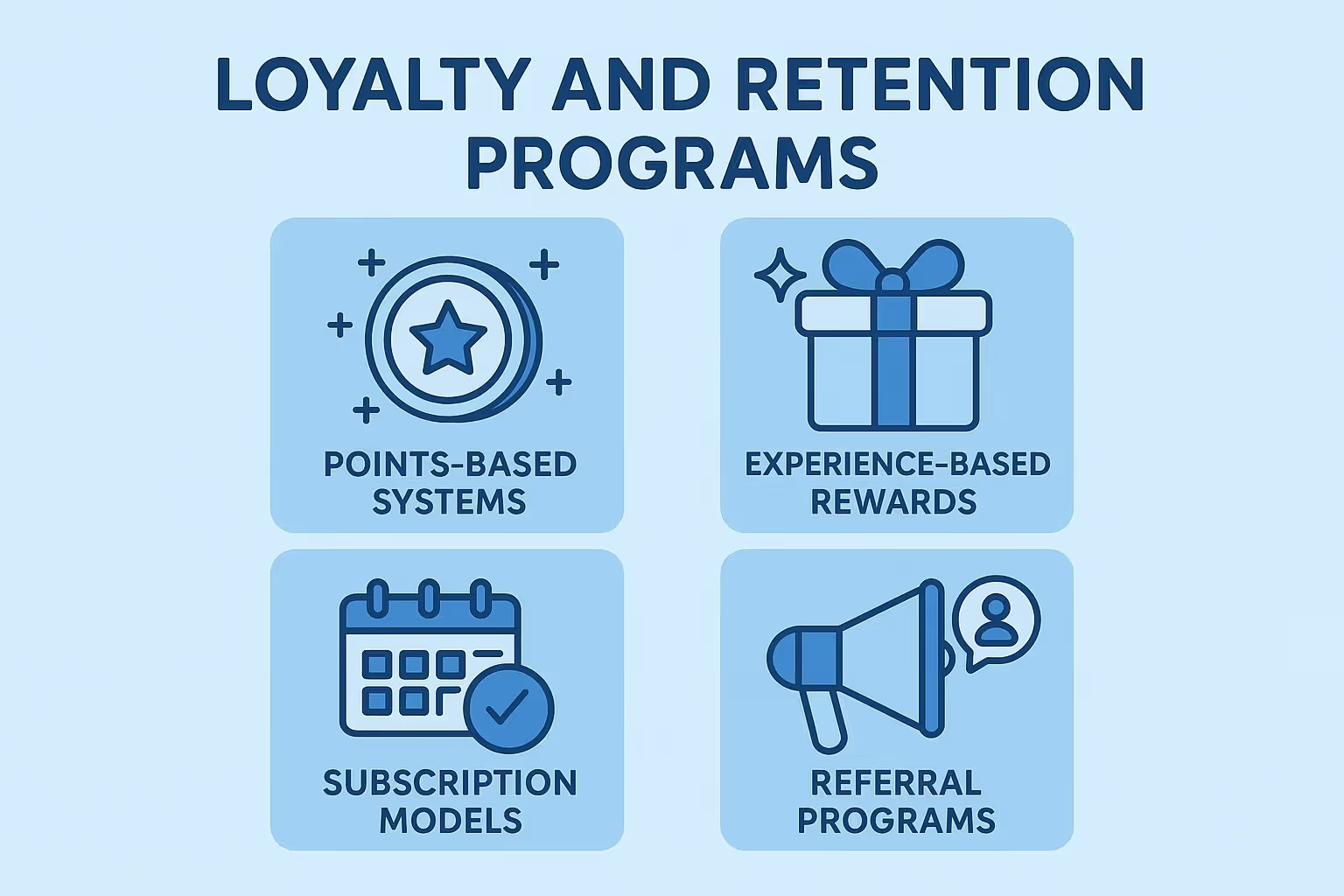
Customer retention compounds faster than any acquisition channel. A 5% increase in repeat purchase rate often translates into 25-75% higher profits over time because returning buyers spend more, cost less to serve, and refer others without additional advertising spend.
The classic model awards points for every dollar spent, referrals, reviews, or social shares. Points then redeem for discounts, free products, or exclusive perks. Tiered structures (silver, gold, platinum) work particularly well: once customers see tangible benefits at the next level (free express shipping, early sale access, dedicated support), they consciously purchase more to qualify. Shopify apps handle balance tracking, expiration rules, and redemption automatically at checkout.
Some stores move beyond pure monetary rewards. Higher tiers unlock experiences: preview access to new collections, invitations to virtual events, or personalized product recommendations from the founder. These non-discount perks protect margins while still creating strong emotional attachment to the brand.
Products that customers naturally repurchase (consumables, supplements, pet food, coffee, razor blades) convert well to subscriptions. Shopify’s native subscription features have expanded significantly over the past few years, managing billing cycles, failed payment retries, pause/skip options, and churn analytics without relying on third-party apps. Discounts for longer commitments (3-month or 6-month prepay) further reduce churn and improve cash flow predictability.
Satisfied customers become a scalable acquisition channel when rewarded for bringing friends. Double-sided incentives (referrer and new customer both receive credit) produce the highest volume. Shopify Collabs and dedicated referral apps track referrals accurately and issue rewards automatically after the new customer’s order ships.
Many stores lose a large portion of first-time buyers after the initial purchase. Automated win-back flows target customers who have not ordered in 60-120 days. Combining email and SMS in the same reactivation flow routinely doubles recovery rates compared to email-only campaigns. Segmentation by lifetime value ensures high-value customers receive better offers while low-margin buyers get lighter incentives.
Implementing even a basic version of these retention layers turns one-time buyers into predictable revenue and significantly lowers overall customer acquisition cost within 6-12 months.
Shopify’s built-in analytics suite gives merchants access to first-party data that external platforms rarely match. The reports update in real time and pull directly from orders, sessions, and customer behavior without sampling or delays.
Simple A/B tests on product page layout, discount offers, and email subject lines produce measurable lifts. Apps that integrate directly with Shopify’s checkout allow true split testing of post-purchase offers.
The difference between Shopify stores that barely break even and those that scale predictably comes down to execution across three layers that reinforce each other. Paid traffic brings new visitors, onsite optimization turns those visitors into buyers, and email/SMS/loyalty systems bring buyers back cheaper each time. Most merchants spread effort across too many channels and never get the core loop tight. Get search and paid acquisition profitable first, lock in conversion rate at the store level, then build retention flows that reduce customer acquisition cost over time. Once that foundation is solid, adding new channels becomes incremental profit instead of another expense line.
Run Meta Advantage+ Shopping campaigns and Google Performance Max simultaneously while building email list assets. Both platforms use machine learning to find buyers quickly.
Yes. Paid traffic can stop instantly if budget runs out or policies change. SEO provides baseline organic visits that compound over time.
Klaviyo offers the deepest native integration, including checkout links and real-time sync. Omnisend and Attentive are strong alternatives for stores heavy on SMS.
Stores selling $5K+ monthly almost always see positive ROI from review apps that handle photo reviews and schema markup.
Many stores profitably spend 15-25% of revenue on advertising once they have a proven offer. Starting with $30-50 daily per platform gives enough data within two weeks.
Add SMS once email list reaches 2,000-3,000 subscribers or when abandoned cart value justifies the additional touchpoint.
Modern apps handle everything from points accrual to reward redemption automatically. Setup time is usually under two hours for basic programs.


