How to Refund Shipping on Shopify Without Making Costly Mistakes
Learn how to refund shipping on Shopify for full or partial orders, what limits apply, and what to watch out for to avoid costly mistakes.
Jan 26, 2026



Customer retention determines long-term profitability on Shopify far more than acquisition volume. Stores that keep buyers coming back reduce dependency on paid traffic and create predictable revenue. The strategies below come from analyzing hundreds of mid-to-high six-figure stores and the systems they run daily.
Most Shopify operators track new customer numbers but ignore what happens after the first purchase. Existing customers already know the brand, trust the fulfillment process, and cost almost nothing to reach again. When retention improves even marginally, lifetime value compounds quickly while acquisition costs stay constant. The math favors keeping buyers longer over finding new ones constantly.
Most stores allocate the majority of their budget to paid advertising and new visitor traffic. While growth requires new customers, profit stability comes from the ones who return. A small increase in retention rate creates a compounding effect on revenue because the same customers buy more often and spend more per order.
The operational costs such as warehousing, payment processing, and fulfillment remain largely fixed. Additional purchases from existing buyers therefore drop almost entirely to the bottom line. Stores that shift even part of their focus from acquisition to retention typically see faster profit growth without increasing ad spend.
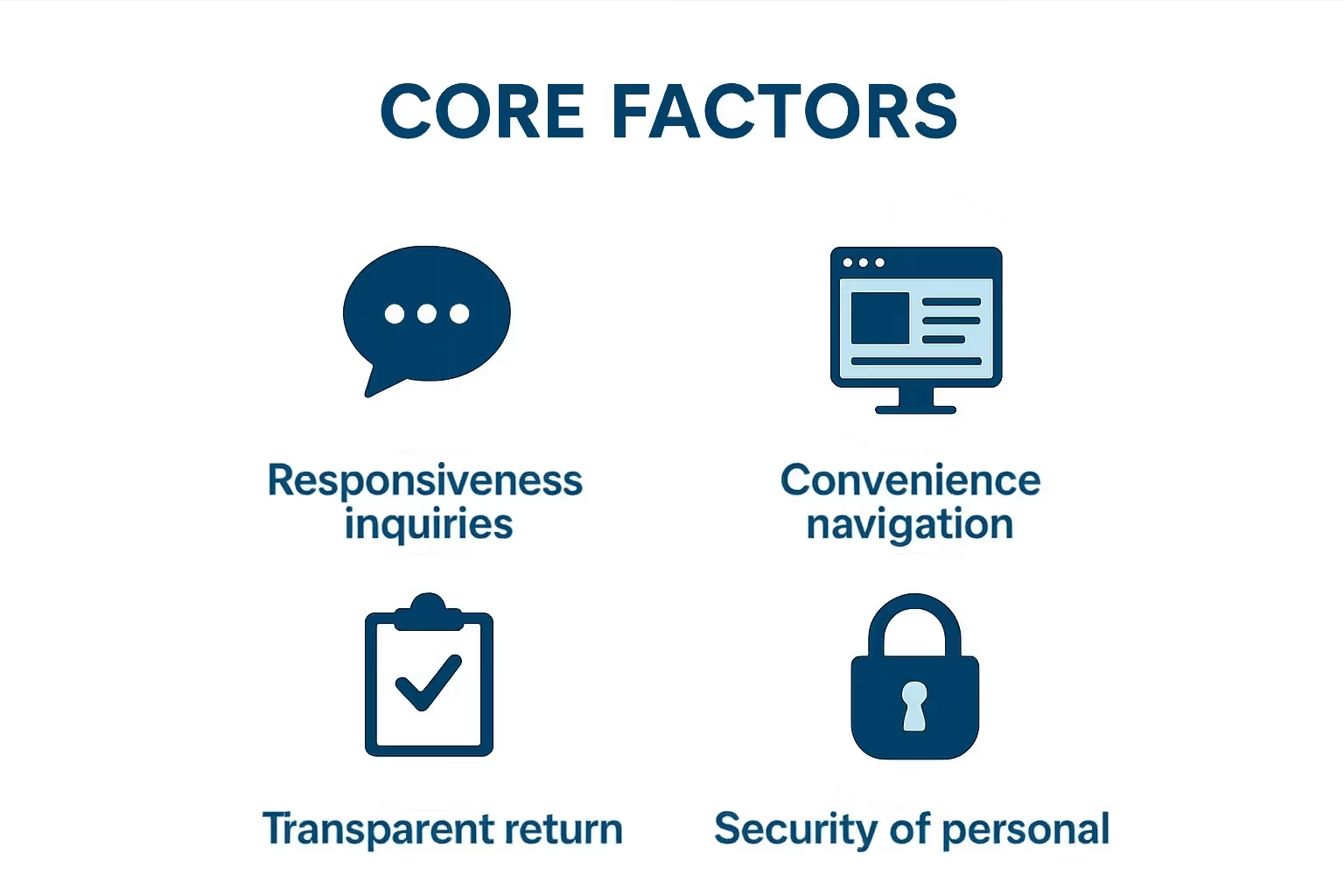
Several elements directly affect whether a customer comes back. Speed and quality of issue resolution rank highest among them. Customers remember how a problem was handled more than the problem itself.
Ease of finding information and placing orders follows closely. A site that works smoothly on mobile and loads quickly reduces abandoned carts and frustration. Trust in data handling and payment security has become non-negotiable after multiple large-scale breaches in recent years.
The most common retention drivers include:
Support interactions represent the moments when retention is most at risk or can be strengthened. Poor handling of a single ticket can erase months of positive experience. The goal is to solve problems quickly and leave the customer feeling heard.
Customers expect replies within hours, not days. Live chat, email, and social messaging must route to the same queue so agents see the full conversation history. 24/7 coverage through staffed hours combined with automated initial responses handles peak traffic without delays.
Delays longer than a few hours increase the chance of chargebacks and negative reviews. Stores that maintain consistent response times across channels keep more customers.
A complicated return flow creates hesitation for future purchases. Clear time windows, prepaid labels when possible, and instant refund issuance upon receipt remove friction. Stores that process returns quickly see higher repurchase rates from the same customers.
The return experience is often the last touchpoint before the next order decision. A smooth process turns a potentially negative event into a neutral or even positive one.
Knowledge bases, order tracking pages, and FAQ sections handle common questions without agent involvement. Returns portals, address updates, and subscription management pages give customers control and reduce wait times.
Effective self-service tools typically cover:
Well-structured self-service cuts ticket volume significantly and frees agents for complex issues. Customers who solve simple problems themselves report higher satisfaction than those who wait for replies.
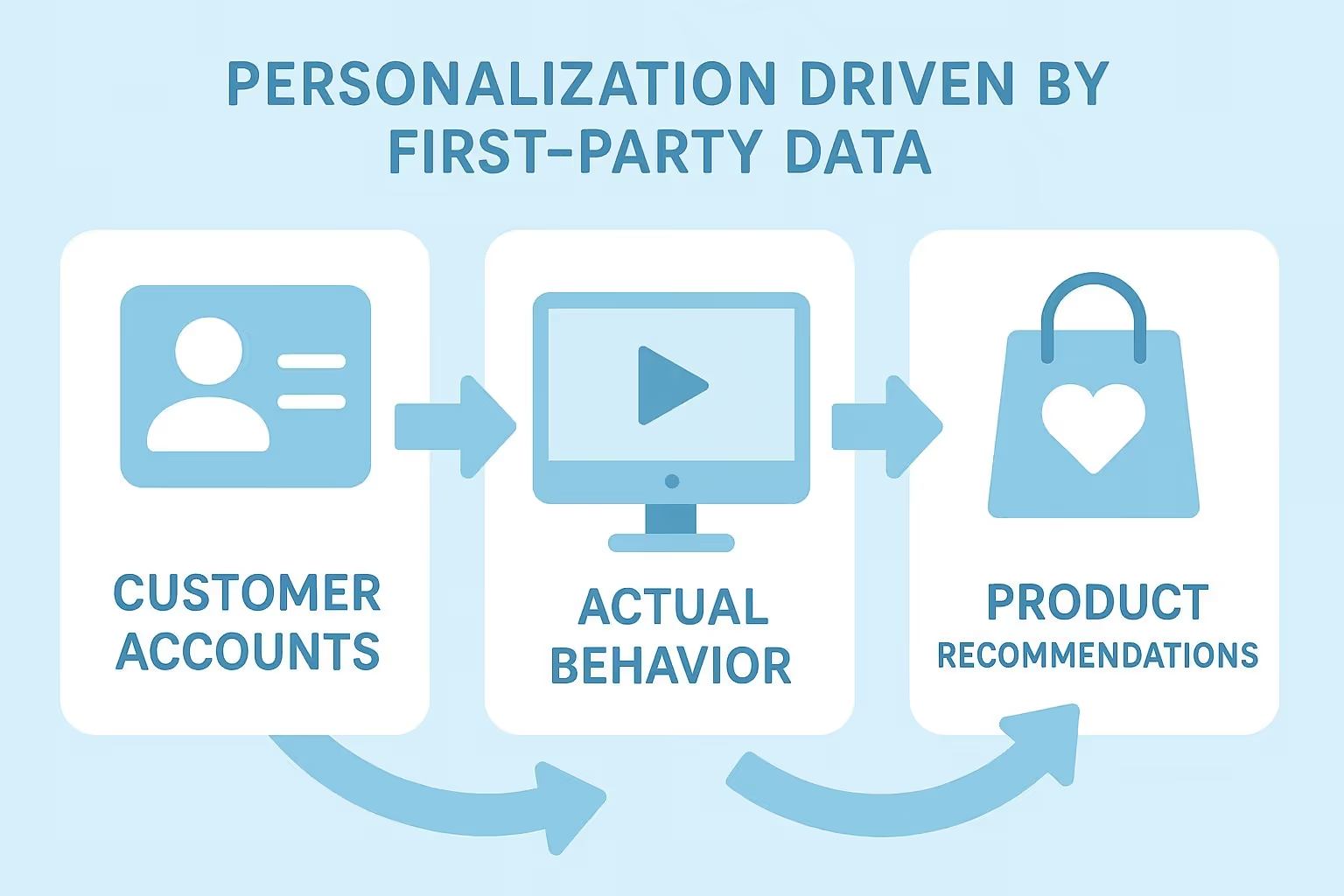
Generic messaging gets ignored in crowded inboxes. Relevant communication requires data collected directly from the store. Shopify provides the tools to capture and activate this data without third-party dependencies.
Accounts store order history, preferences, and saved payment methods. When login is optional at checkout and offered afterward, more buyers create profiles without abandoning carts. The stored data then powers targeted campaigns and support context.
Mandatory account creation at first purchase increases cart abandonment noticeably. Guest checkout with post-purchase account prompts strikes the right balance.
Divide customers by purchase frequency, average order value, product categories bought, and time since last order. Each segment receives different messaging timing and offers. Segmentation prevents high-value customers from receiving the same generic discounts as one-time buyers.
Simple segments based on recency and monetary value deliver most of the benefit. Over-segmentation creates complexity without proportional returns.
Post-purchase emails and on-site blocks showing complementary items increase the likelihood of additional orders. Recommendations work best when based on items already in the order history rather than generic best-sellers.
Cross-sell and upsell blocks placed on thank-you pages capture intent while the purchase is still fresh. Timing matters more than algorithmic complexity.

At Extuitive, we see the same pattern in almost every store we connect to: teams spend weeks crafting the perfect loyalty program or post-purchase flow, then dump generic ads at past buyers and wonder why reactivation rates stay flat. The fix is not another discount code - it is showing the right customer the right message at the right moment. That is exactly what our platform was built to do.
When you link your Shopify store, our app pulls order history, product data, and customer segments instantly. Our AI agents - trained on behavioral data from hundreds of thousands of real shoppers - generate and test dozens of ad variants in minutes. They predict which creative will drive the highest purchase intent from lapsed buyers, high-LTV segments, or cart abandoners before you ever hit “boost”. The stores we work with routinely cut their cost to reactivate a customer by 30-50 % because the ad already feels personal when it lands in the feed. Retention stops being just emails and points; the paid channel becomes another lever that brings existing customers home profitably.
Loyalty programs remain one of the most reliable retention tools when properly structured. They create predictable reasons for customers to return. The key is keeping rules simple and rewards attainable.
Simple points per dollar spent encourage additional purchases to reach redemption thresholds. Tier levels based on annual spend create status that customers want to maintain. Clear redemption options prevent frustration when points accumulate without use.
Common reward structures that perform well:
Programs that require excessive spend before the first reward lose momentum quickly. Lower thresholds for initial redemptions drive early engagement.
Items bought regularly such as supplements, coffee, pet food, and cosmetics convert well to subscriptions. Flexible pause, skip, and cancellation options reduce churn while maintaining recurring revenue.
Subscription fatigue has increased in recent years. Stores that make management simple keep subscribers longer than those with restrictive policies.
Automated emails sent 3-7 days after delivery ask for feedback and include a small discount on the next order. These messages capture issues early and prompt reordering. Multiple touchpoints spaced appropriately outperform single follow-ups.
The sequence should include order confirmation, shipping updates, delivery confirmation, and then the thank-you with incentive. Missing any step reduces overall effectiveness.
Existing customers represent the most credible promotion channel. Referral programs work when the process is simple and the reward is worth the effort.
Both the referrer and the new customer receive a reward such as discount, store credit, or free product. Fixed amounts work better than percentages because the value is immediately clear.
Percentage discounts confuse customers when order values vary. Fixed currency amounts or specific free items convert better.
Pre-filled referral links and one-click social sharing lower the effort required. Placement after order confirmation and in account dashboards catches customers when satisfaction is highest.
Separate referral pages buried in the footer get almost no traffic. Inline prompts at high-satisfaction moments perform significantly better.
Customer photos, reviews, and videos build trust for new visitors and remind past buyers of their positive experience. Authentic content outperforms professional photography in many categories.
Automated requests sent after delivery confirmation receive higher response rates than immediate post-purchase emails. Including a direct upload link for photos increases visual content.
Requests sent too early get generic responses. Waiting until the product has been used produces more detailed and useful reviews.
Product pages with customer photos convert better, and collection pages featuring real usage scenarios reinforce brand connection. Reviews with images carry more weight than text alone.
Galleries that load quickly and allow filtering by product variant keep visitors engaged longer. Poor implementation hurts page speed and reduces impact.
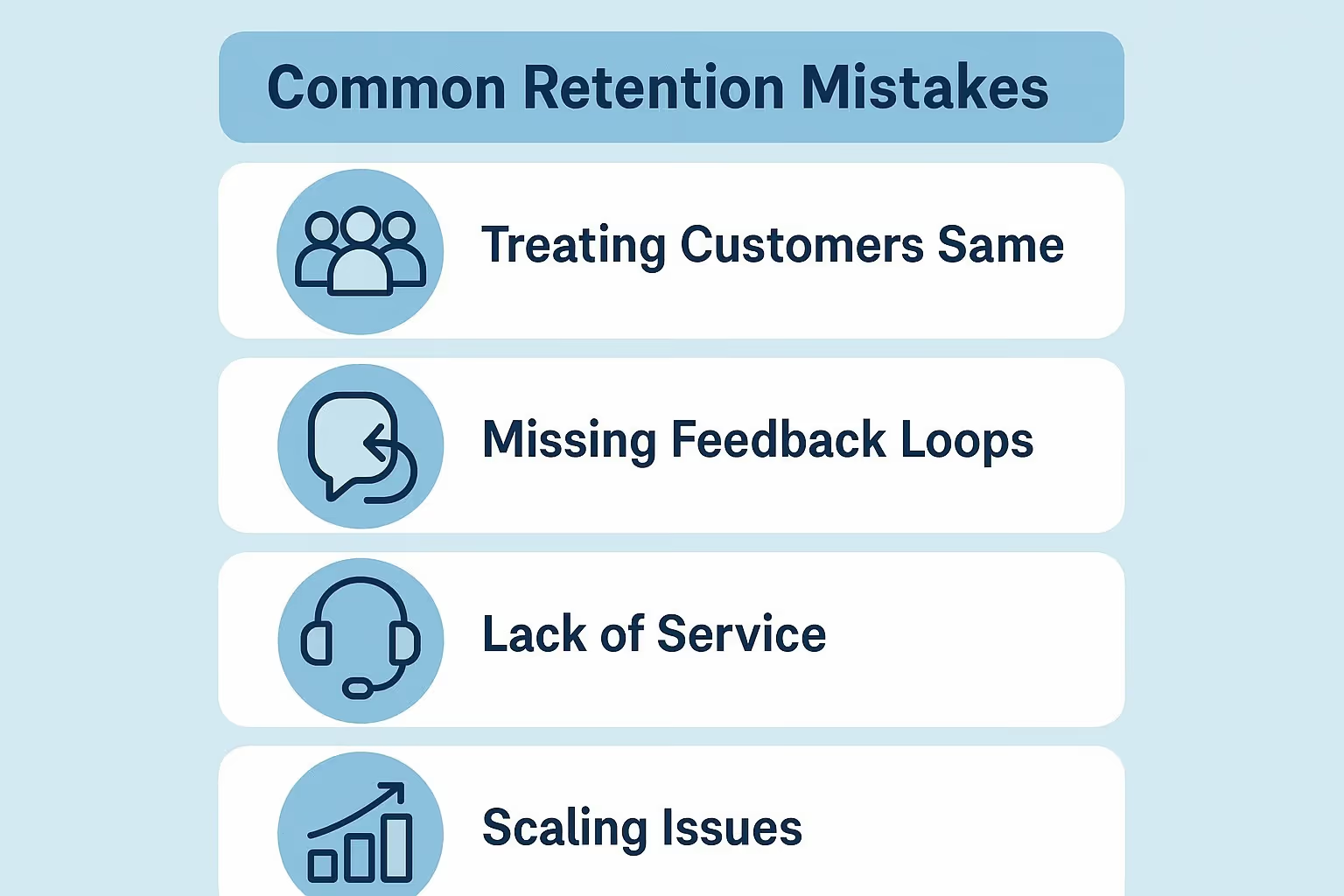
New buyers need education while high-value repeat customers expect recognition. Using the same messaging for both groups wastes opportunities.
New buyers need education while high-value repeat customers expect recognition. Using the same messaging for both groups wastes opportunities.
Blanket discount campaigns train customers to wait for sales instead of buying at full price. Segmented offers maintain margin while rewarding loyalty.
Collecting reviews and support ticket data without analyzing trends leaves problems unaddressed. Regular review of common complaints reveals product or process improvements.
Monthly ticket categorization highlights recurring issues faster than annual reviews. Small recurring problems cause more churn than occasional large ones.
Internal targets for response time and resolution duration create accountability. Published SLAs set clear expectations for customers.
Unrealistic public promises damage trust more than modest but met commitments. Internal targets should exceed public ones to provide buffer.
Traffic spikes and order volume increases strain support and fulfillment. Processes that work at lower volume break without automation and staffing adjustments.
Many stores experience their highest churn immediately after successful marketing campaigns. Support capacity must scale ahead of traffic, not after.
Shopify provides native tools and a large app ecosystem for retention features. Most core functions can be achieved without custom development.
Customer accounts, discount codes, automated collection tags, and basic email flows cover foundational needs without additional cost. Shopify Email and Flow provide sufficient automation for stores starting out.
Native limitations appear at higher volume or with complex segmentation. Third-party apps become necessary when built-in tools reach their limits.
The majority of retention tasks fall into these categories:
Choose apps that integrate deeply with each other to avoid data silos. Poor integration creates manual work that undermines the entire stack.
Track these metrics monthly to understand what actually moves the needle. Single-metric focus creates blind spots while consistent tracking across several indicators reveals the real impact of changes.
Important retention indicators include repeat purchase rate within different time windows, customer lifetime value by cohort, and average order value growth among returning buyers. Monitoring support tickets per order and redemption rates shows operational efficiency.
Retention compounds over time. A customer retained today generates revenue next month, next quarter, and next year with minimal additional cost. The strategies above focus on operational execution rather than marketing spend, making them accessible regardless of advertising budget.
Consistent execution across support, personalization, and reward systems creates the difference between stores that constantly chase new customers and those that profit from the ones they already have.
Even small retention improvements create disproportionate profit increases because fixed costs stay constant while revenue grows.
Only for products with predictable repeat purchase patterns. Forced subscriptions on irregular items increase cancellations.
Yes when implemented with templates and automation for common questions. It prevents cart abandonment and answers pre-purchase objections.
Annual resets work best. Lifetime tiers create inactivity from top spenders once they reach the highest level.
7-14 days after delivery confirmation, when the product has been used but the experience remains fresh.
Repeat purchase rate within 90 days provides the clearest early indicator of strategy effectiveness.


