Top Facebook Ads Agencies Houston - What to Know Before You Hire
Looking for Facebook ads agencies in Houston? This guide covers what to expect, how agencies work, and who they are best for.
Mar 24, 2026



Conversion rate optimization on Shopify is not about random changes or chasing trends. It is a systematic process of reducing friction, building trust, and guiding visitors toward purchase using data from analytics, heatmaps, and testing tools. The stores that consistently outperform average conversion rates treat CRO as ongoing engineering work rather than occasional redesigns.
Shopify calculates conversion rate as the percentage of sessions that result in a completed checkout. The platform tracks sessions rather than unique visitors, which makes the metric more accurate for optimization purposes. Average rates across all Shopify stores hover in the low single digits, while top performers regularly exceed higher benchmarks through deliberate improvements in specific areas of the funnel.
The gap between average and high-performing stores usually comes from systematic attention to checkout flow, page performance, trust signals, and targeted testing. Stores that ignore these areas leave significant revenue on the table even when traffic volume is healthy.

We run Extuitive - an AI platform built specifically for Shopify brands that need better traffic quality before they even touch the site. The way we see it, half of conversion optimization happens before the visitor lands. If your ads speak to the wrong people or the creative does not match real purchase intent, no amount of checkout polishing will save the day.
Our app connects straight to your Shopify store, pulls the product feed, and lets our AI agents (trained on behavioral data from over 100,000 real buyers) generate and pressure-test dozens of ad variants in minutes. Instead of launching ten creatives and praying, the platform predicts which ones will drive the highest add-to-cart and checkout rates before a single dollar is spent. Stores using this workflow typically see 15-30 % better conversion from the same ad spend simply because the traffic that arrives is already pre-qualified and ready to buy.
Page load time remains one of the strongest levers for conversion rate improvement. Slow-loading elements create immediate friction, especially on mobile devices where most Shopify traffic now originates.
Core Web Vitals provide the technical framework for performance work. Focus on Largest Contentful Paint for perceived load speed, Cumulative Layout Shift for visual stability, and First Input Delay for interactivity. Reducing layout shifts alone often delivers noticeable lifts because content jumping frustrates users during decision-making moments.
Key performance actions that deliver the fastest gains:
Shopify themes that follow mobile-first principles and limit heavy apps keep baseline performance strong.
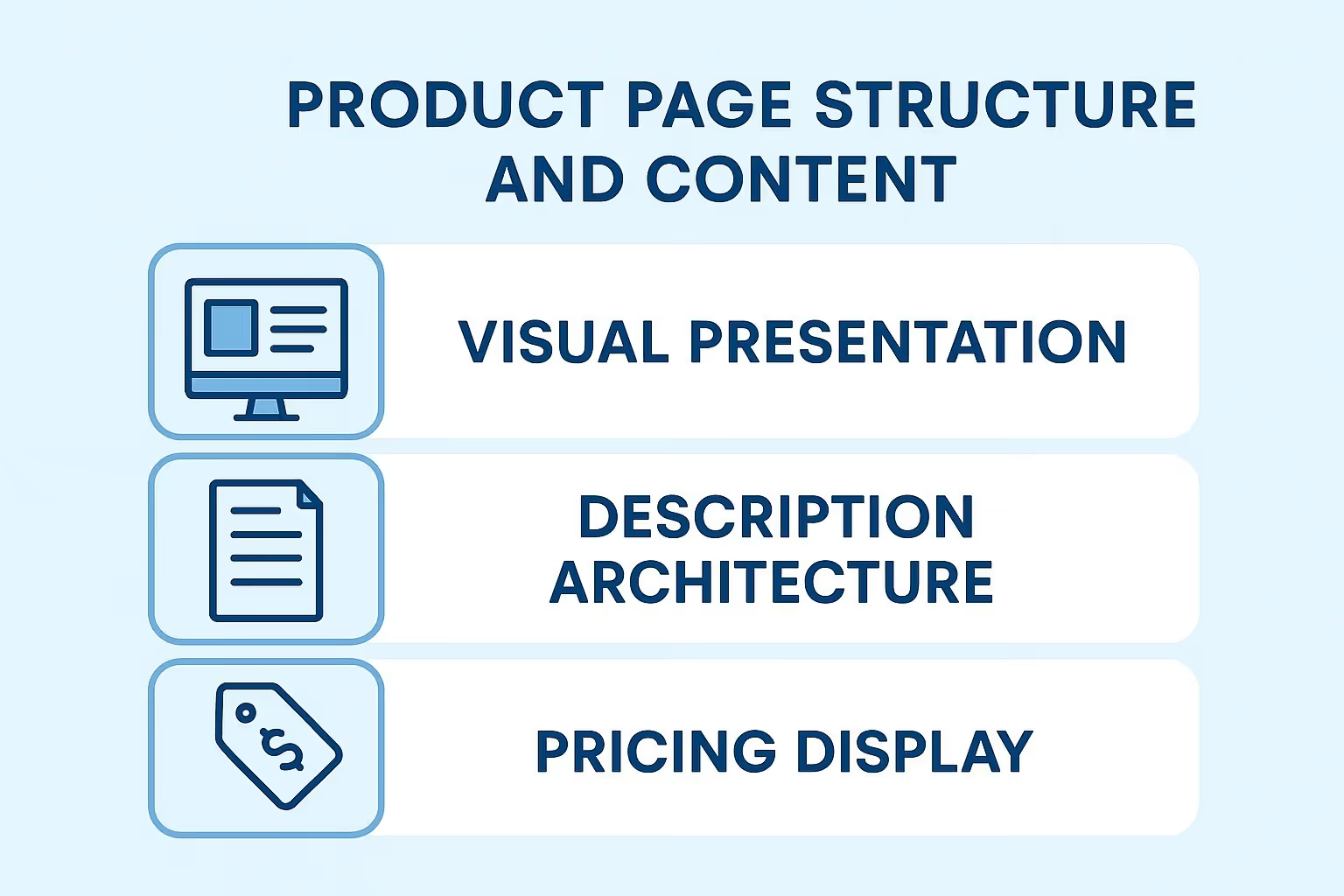
Product pages carry the heaviest conversion responsibility in ecommerce. Weak pages fail to answer buyer questions quickly enough, leading to hesitation and cart abandonment.
High-resolution images from multiple angles remain essential. Lifestyle photography that shows products in use helps visitors visualize ownership better than studio shots alone. Zoom functionality and alternative image views reduce uncertainty about materials and fit.
Video content on product pages increases time on site and conversion rate when kept short and focused. Demonstration clips or unboxing videos perform particularly well for complex or high-consideration items.
Effective descriptions follow a clear hierarchy: headline benefit, key features in bullet form, detailed usage information, and technical specifications lower on the page. Long paragraphs without breaks cause visitors to skim or leave entirely.
Size charts, material breakdowns, and care instructions placed prominently prevent returns and remove purchase barriers. When visitors can find exact information within seconds, add-to-cart rates improve.
Variant dropdowns that update pricing and availability in real time prevent confusion. Showing stock levels for each variant creates controlled urgency without fake scarcity tactics. Clear pricing that includes any discounts or comparisons removes mental math during evaluation.
Checkout experience determines whether completed sessions turn into revenue. Friction at this stage has the highest cost because visitors have already shown purchase intent.
High-impact checkout improvements that consistently reduce abandonment:
Autofill from digital wallets cuts completion time significantly. Transparent shipping cost display before final submission prevents sticker shock.
The thank-you page should continue the conversion process. Related product recommendations, subscription options, and clear order tracking information maintain momentum from the point of sale.
The moment after payment is the hottest touchpoint in the entire funnel. Customers are in peak trust mode and payment details are already saved.
One-click post-purchase upsells on Shopify now regularly convert at 12-25 %. The mechanics are simple:
In-cart cross-sells and thank-you page bundles add another 8-15 % to AOV when limited to 2-3 relevant items with real bundle pricing. The rule of thumb: never force the customer to re-enter card details and never show more than four options total across the entire post-purchase flow.
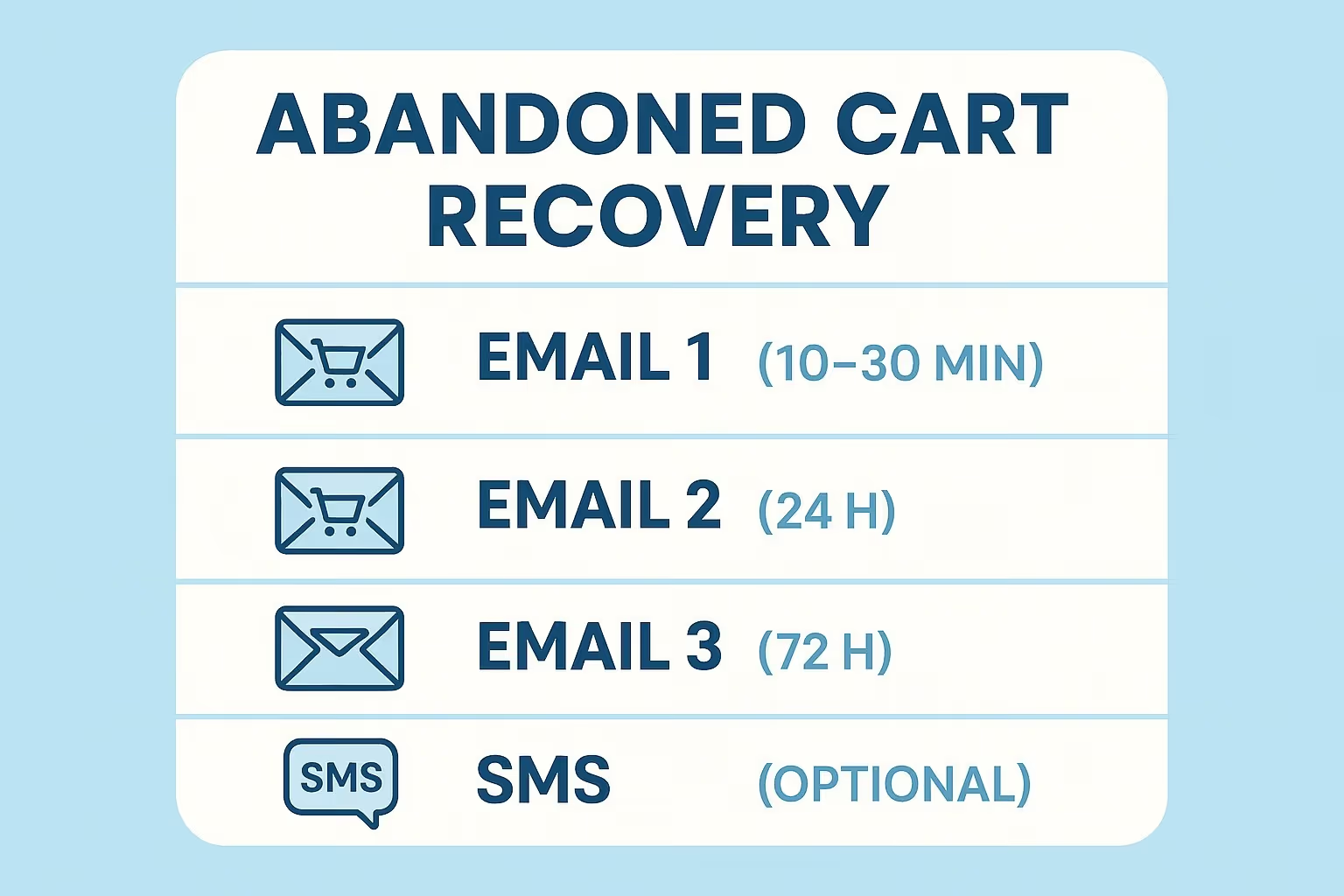
Cart abandonment on Shopify typically sits between 65-75 %. A well-executed recovery sequence can bring back 10-20 % of that lost revenue with almost zero additional traffic cost.
Standard multi-channel recovery flow that works in 2026:
Most stores see the biggest recovery lift from the first two emails. Adding dynamic product images and real stock levels in the emails prevents “out-of-stock surprise” drop-offs when the customer returns.
Trust signals influence purchase decisions more heavily in ecommerce than in physical retail because buyers cannot touch products. Effective CRO shifts the visitor's focus from perceived risk to perceived value. Beyond simple customer reviews, trust is built through a robust framework of risk mitigation. This involves the Clarity of Promise—making your guarantees, return policies, and shipping timelines explicitly clear and easily accessible.
When buyers feel completely secure, their purchasing inertia diminishes. This security is reinforced by:
Clear, prominent return and warranty information
Customer reviews with photos carry particular weight. Displaying review summaries near add-to-cart buttons provides reassurance at the decision point.
Poor navigation forces visitors to work harder than necessary to find products. Clear category structure with descriptive labels guides users efficiently.
Site search becomes critical as catalog size grows. Predictive search that suggests results while typing saves time and surfaces relevant products. Handling misspellings and synonym matches prevents zero-result frustration.
Filtering and sorting options must align with how buyers actually think about products. Overly complex filter combinations can paralyze decision-making.
Effective site structure is a strategic map designed to move the visitor from Awareness (landing page) through Evaluation (product page) to Decision (checkout). Clear category structure with descriptive labels guides users efficiently by mapping the site to their mental model of the product set.
Critically, the system must handle the reality of human error—preventing the "zero-result frustration" by intelligently suggesting alternatives or common synonyms when a direct match is not found. An optimized journey is one where the customer never feels blocked, lost, or confused about the next step required to complete their goal.
Personalization ranges from simple recently-viewed sections to sophisticated recommendation engines.
Related products shown below the main content or in the cart perform consistently well. Recommendations based on browsing history or purchase data outperform generic best-sellers in most cases.
Showing different hero banners or promotions based on traffic source or visitor status increases relevance. Returning customers seeing personalized offers convert at higher rates than first-time visitors receiving generic messaging.
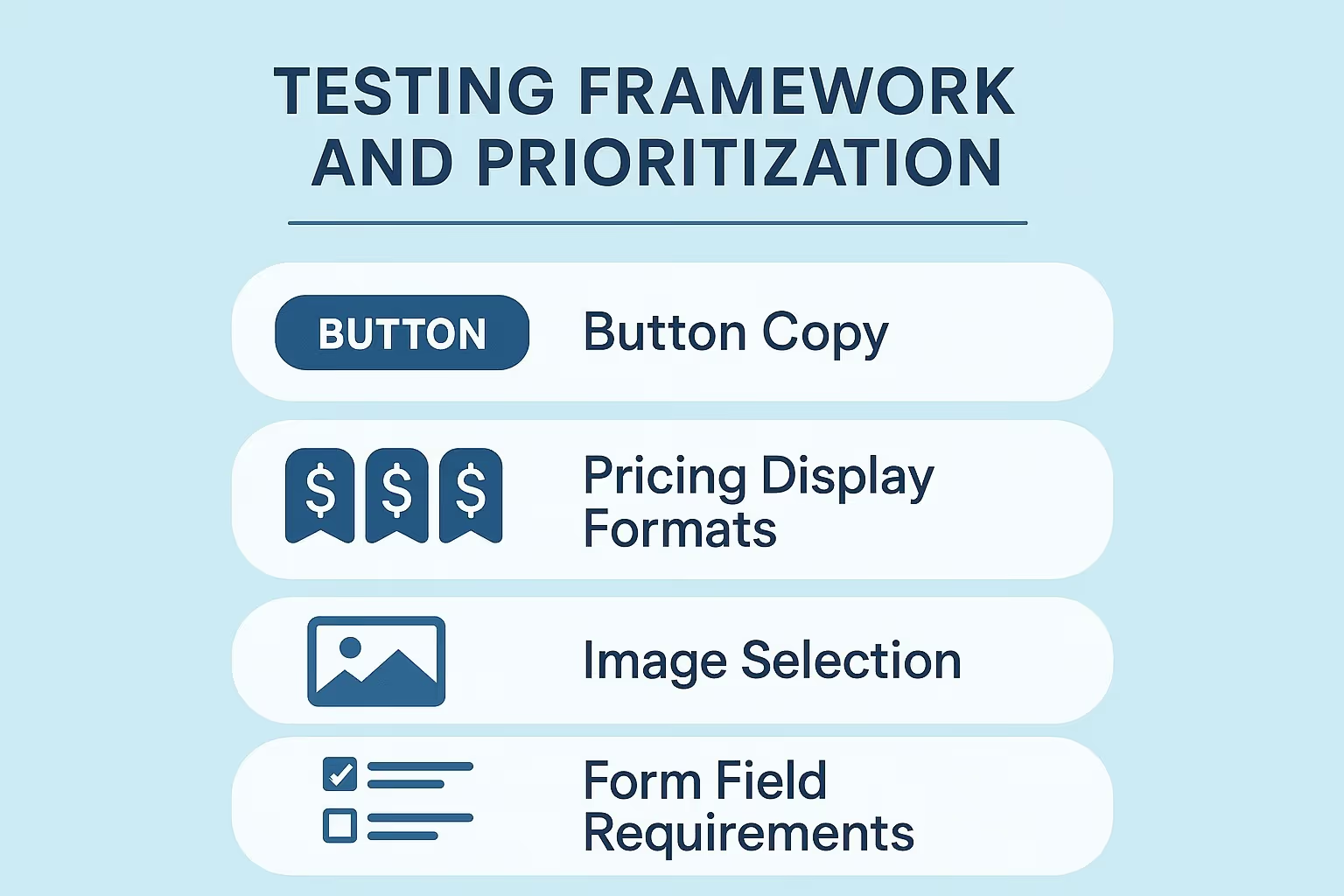
Successful CRO requires structured testing rather than random changes.
A/B testing individual elements provides clear winners when traffic volume supports statistical significance. Testing one variable at a time isolates impact. Common elements to test include:
The sheer number of potential test ideas can be overwhelming. To maintain focus and maximize the return on development effort, successful CRO teams employ structural prioritization frameworks, such as PIE (Potential, Importance, Ease) or ICE (Impact, Confidence, Ease). These methodologies require a systematic assessment of each proposed hypothesis, ensuring that resources are dedicated to experiments with the highest predicted strategic value. For instance, testing an element on the primary call-to-action button, due to its high traffic exposure, is typically assigned a high Importance score, placing it higher on the testing roadmap. Furthermore, once a test successfully identifies a winning variant, that change must be swiftly and permanently integrated into the store’s live code base to secure the conversion gains.Heatmaps and session recordings reveal behavioral patterns that quantitative data misses. Watching real user sessions identifies where visitors hesitate, scroll back, or rage-click on broken elements.
Mobile traffic dominates Shopify stores, making mobile experience a primary conversion factor.
Mobile-specific requirements that directly affect conversion:
Thumb-friendly design places primary actions within easy reach of natural hand positions.
Shopify CRO success comes from methodical attention to performance, clarity, trust, and testing. The highest-impact changes usually involve removing friction from checkout, strengthening product page information architecture, and ensuring fast mobile performance. Stores that treat optimization as continuous technical work rather than occasional redesigns consistently achieve conversion rates well above platform averages. Prioritizing improvements based on data from analytics, user recordings, and controlled tests produces compounding returns over time.
Rates above 3% place stores in the top tier of performance, though results vary by industry and product price point.
The platform divides completed checkouts by total sessions, then multiplies by 100 to create a percentage.
Common causes include slow page loads, unclear product information, complicated checkout processes, and lack of trust signals.
Streamlining checkout by enabling guest options and digital wallets typically delivers the largest immediate lift.
Critical, since mobile devices generate the majority of traffic and a significant portion of orders on Shopify stores.
As soon as traffic volume reaches several hundred visitors per day to ensure statistical significance within reasonable timeframes.
Reviews with photos and verified purchase badges substantially increase add-to-cart rates by reducing perceived risk.


