Best Madgicx Alternatives for Effective Ad Optimization
Exploring solid Madgicx alternatives? Discover reliable ad optimization tools that help automate campaigns, boost ROI, and simplify Meta advertising without the usual headaches.
Apr 12, 2026



Most Meta ad campaigns don’t flop because of one big mistake. They bleed budget quietly, through small missteps, missed settings, or creatives that just don’t land. And the frustrating part? A lot of this is avoidable. You don’t need to be a media buying wizard, you just need a system. This checklist pulls together the steps that experienced advertisers don’t skip. From pixel setup to scaling logic, it's not theory. It's the stuff that keeps your campaigns clean, predictable, and easier to scale. Whether you’re launching your first ad or auditing a client account, start here before you hit “Publish.”
At Extuitive, we’ve seen how too many ad budgets get drained not by bad ideas, but by late insights. Most teams still launch ads, watch what happens, and then try to optimize after the money’s already spent. We think that approach is fundamentally broken.
So we built something different: a predictive advertising engine that tells you which creatives are most likely to perform before they go live. Instead of waiting weeks for data, you get clarity in minutes. We use brand-specific performance models and consumer intelligence datasets to simulate creative-market fit and forecast outcomes like CTR and ROAS with precision.
This isn’t about vague AI guesses. It’s contextual prediction grounded in your actual performance history and market signals. Two brands can submit the same creative, and get totally different scores, because we know context matters.
For creative teams, this shortens the feedback loop from weeks to hours. For growth teams, it means wasting less budget on ideas that were never going to work. And for leadership? It creates something rare in digital marketing: decision-making leverage. You know what’s likely to work, and you act faster, with less risk.
Predictive ad performance isn’t a nice-to-have anymore. In 2026, it’s the edge that separates efficient growth from expensive guesswork. If you’re still relying solely on launch-and-see, let’s change that. We built Extuitive to make sure the best ideas don’t get buried under the wrong ones.
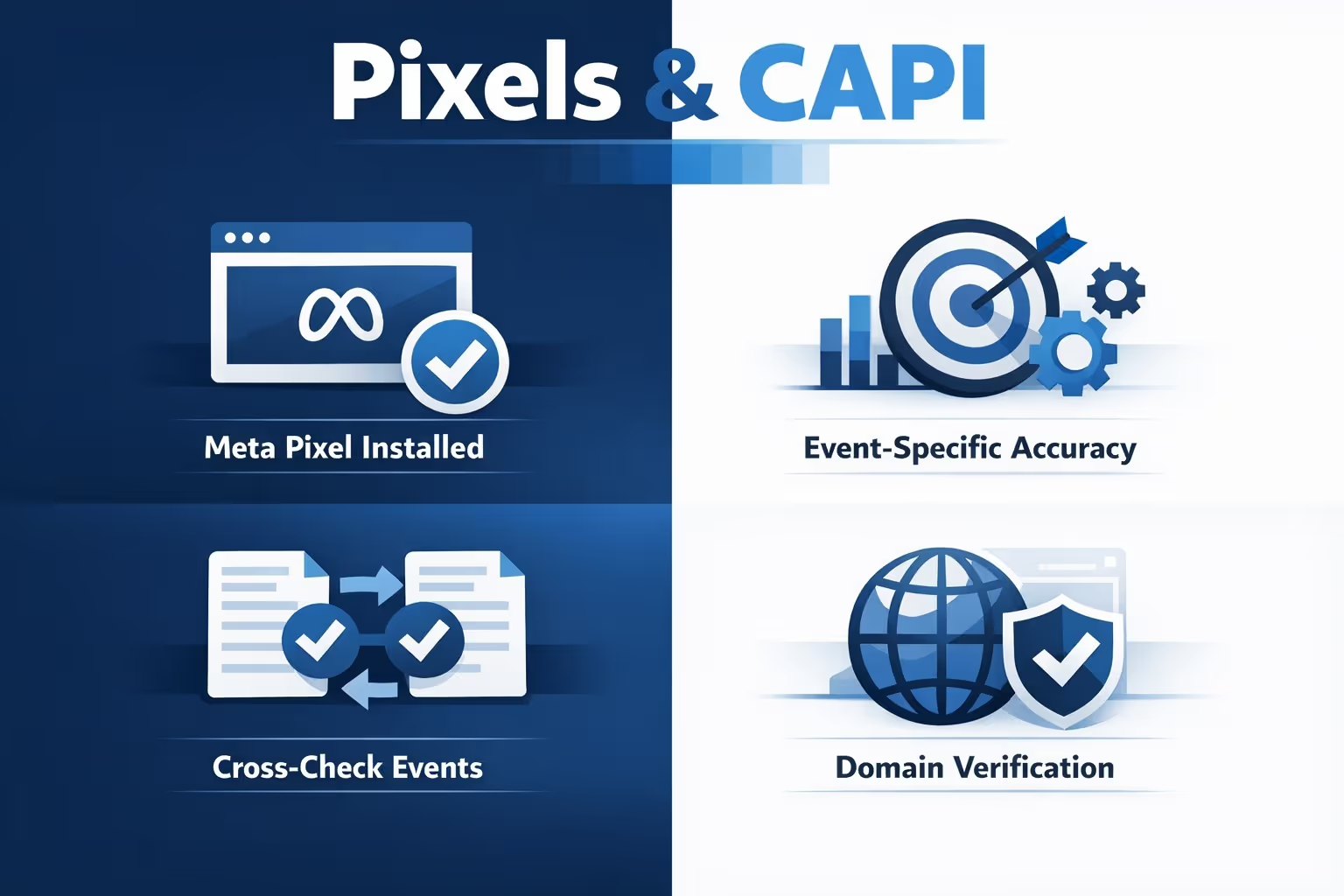
Most campaigns don’t suffer from a lack of creativity. They suffer from a lack of data. If you’re not getting accurate signals, Meta won’t optimize properly, no matter how good your ad is.
Think of your pixel and CAPI setup as the nervous system of your ad account. If it’s not firing correctly, you’re flying blind. Here’s what to check:
Meta doesn’t need perfect data. But it needs consistently clean and structured signals to learn who’s converting and why. If your tracking is half-broken, even the best ads won’t scale properly. Before you increase budget, inspect the foundation.
One of the easiest ways to ruin your results? Choose the wrong objective. It sounds obvious, but it happens all the time. I’ve seen ecommerce brands run Traffic campaigns when they want Sales. What happens? You get a flood of visitors who never buy. The algorithm delivered exactly what it was told to: link clicks, not purchases.
A lot of people blame the algorithm when it’s really user error. Meta’s system is powerful, but only if you give it the right signals, the right objective, and the room to do its job.
Meta’s automation handles more targeting than ever. But that doesn’t mean it’s smart out of the box. You still need to guide it.
Think of your audience like a funnel: cold (lookalikes, interests), warm (website visitors, post engagers), and hot (abandoners, existing customers). Your messaging and offers should match each group’s level of familiarity with your brand.
One of the most expensive mistakes? Serving cold-intro ads to someone who already visited your site. Exclude warm and hot audiences from cold campaigns unless you want overlap. Target smarter, not broader.
Don’t just dump a giant list of past leads into a Lookalike. Use your highest-value customers, those who purchased recently or frequently. Lookalike quality always beats quantity.
Meta can scale fast. But if you scale without segmentation, you’ll also scale waste. Structured targeting isn’t optional. It’s what separates high-performing campaigns from noisy, expensive ones.
Here’s the truth: your targeting matters less in 2026. Creative does the heavy lifting. The algorithm finds people, but your creative decides whether they care.
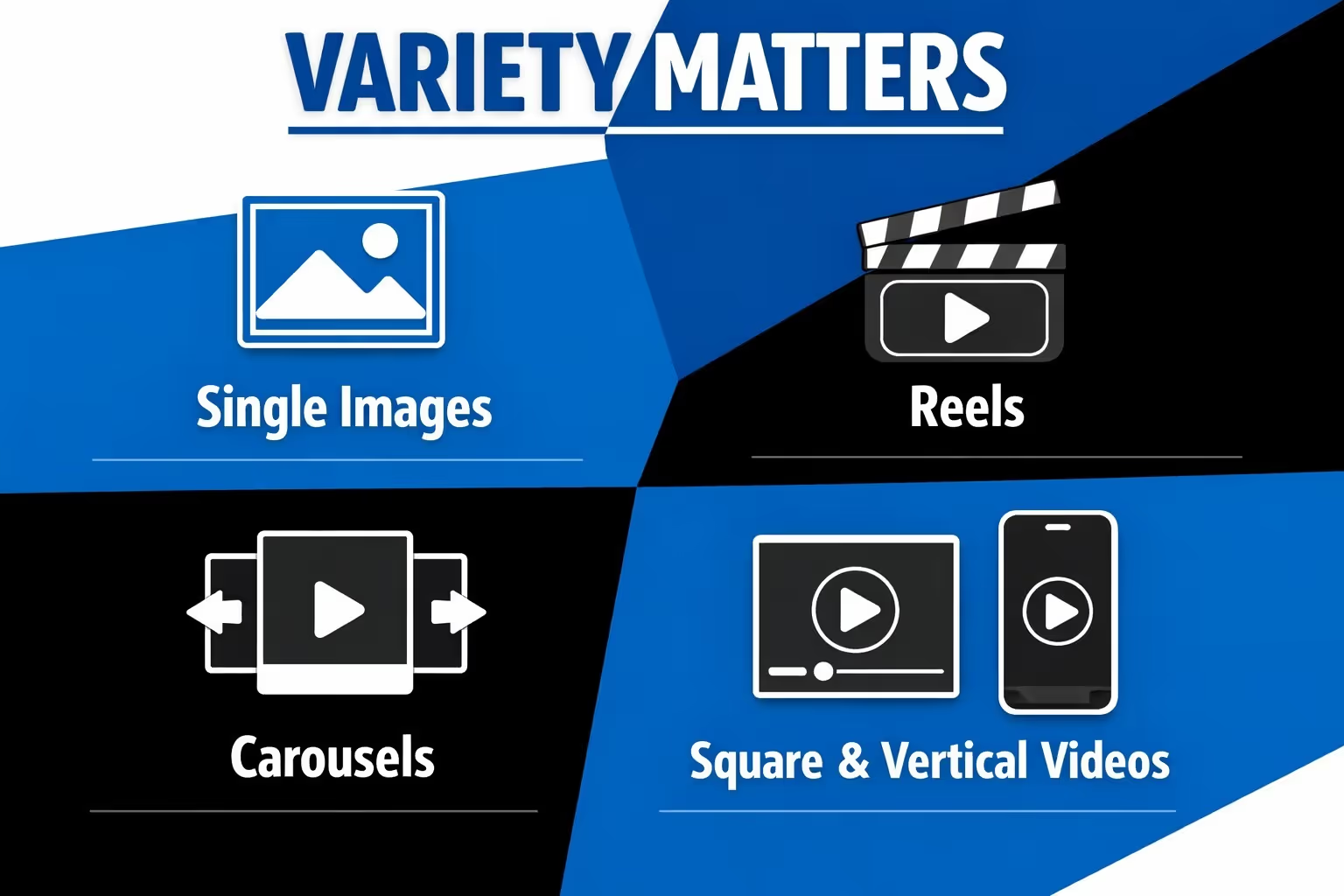
Clean, punchy images still work. They’re often best for retargeting or when paired with a strong offer or testimonial. Test them, but don’t rely on them.
Short-form vertical video is dominating feed placement. Reels let you tell a quick story with movement and sound, great for cold traffic.
Useful for product showcases, step-by-step benefits, or “before vs after” storytelling. Keep each frame sharp and narrative-driven.
Use 1:1 for Feeds, 9:16 for Stories and Reels. Misaligned aspect ratios are the fastest way to look amateur.
If your ad opens with a spinning logo or dramatic fade-in, you’ve already lost most of your audience. Lead with motion, problem framing, or a striking visual.
Studio shoots often underperform. Raw, believable iPhone clips feel native to feed environments, and they outperform because of it. If it looks like an ad, people scroll. If it looks like a peer, they pause.
Don’t just resize - redesign. A story placement isn’t just taller, it’s faster and louder. Tailor your asset to the context.
Dynamic Creative Optimization lets Meta mix and match your assets: headlines, text, creatives, CTAs, to find top combinations. Upload variations strategically. Rotate creative every few weeks to prevent fatigue.
Creative isn’t a single asset, it’s an evolving process. Your job isn’t to guess the winner. It’s to feed the system consistently good options and let the platform reveal what scales.
If your creative gets someone to stop scrolling, the copy has to carry the weight from there. That’s the handoff. And it’s not about clever taglines or fluffy brand lines. It’s about making someone feel something fast enough to click.
Your first line is everything. It should feel sharp, real, maybe even a little uncomfortable. Think pain point, punchy stat, or a moment of recognition. Something like “Sick of ads that follow you but never convert?” lands a lot harder than “We optimize your performance.” You’re not writing a welcome email. You’re trying to break a scroll.
The old AIDA formula still works for a reason. Attention. Interest. Desire. Action. Use your primary text to guide the reader through that journey. Line by line, it should earn their next glance. Think of it less like a paragraph and more like a conversation in motion.
Meta shortens headlines in some placements, and long ones rarely stop the thumb. Stick to five words or less if you can. Don’t repeat what’s already in the image. Make it about the benefit, not the product.
A good call to action isn’t just a button. It’s a nudge that fits the moment. “Shop Now” can work great if the value’s clear. “Learn More” feels safer for earlier-stage traffic. The worst thing you can do? Ask someone to convert when they still don’t understand what you’re offering.
AI tools can help you explore ideas and variations, but they often miss the nuance: tone, rhythm, timing. If your copy reads like it came from a template, people scroll right past. Edit it. Adjust the pacing. Read it out loud. Make sure it sounds like you.
Copy isn’t just decoration. It’s infrastructure. The right words, in the right order, are often the difference between someone clicking and someone forgetting you ever existed.
This is where strong advertisers separate themselves from everyone else. The final checklist before launch isn’t exciting, but it’s where most expensive mistakes get caught. Small issues compound fast once money starts spending.
Before you hit publish, slow down and verify the basics:
Checklist work isn’t glamorous. But it prevents wasted spend, awkward client conversations, and late-night damage control. Five extra minutes here can save days of cleanup later.
One of the most common mistakes advertisers make is jumping in too early to fix things that aren’t broken yet. The moment a campaign goes live, Meta begins gathering data, but that doesn’t mean it knows what to do with it instantly. Every new ad set enters a Learning Phase, typically lasting 24 to 72 hours. That period is fragile. It’s where the system starts to understand who’s clicking, who’s converting, and why.
This is not the time to panic. Don’t tweak the budget. Don’t swap out creative. Don’t shift the audience just because the first few hours look slow. Early data is noisy. It doesn’t mean much on its own. The goal here is to give Meta enough stable signal to actually learn. Think of it like training a new employee, you wouldn’t rewrite the job description on day two just because results weren’t perfect.
Once you do decide to scale, go slow. The 20 percent rule exists for a reason. Scaling gradually helps preserve the optimization Meta has already built. Doubling your budget overnight might feel bold, but it often forces the campaign right back into Learning, undoing days of progress.
The big lesson? Don’t confuse activity with strategy. The more you poke and prod the system, the harder it is for Meta to find patterns. Watch your data, but focus on real trends: three-day averages, not hour-by-hour swings. If you’re constantly reacting, you’re not optimizing. You’re interrupting.
Let it breathe. Let it learn. That’s how performance gets predictable.
AI can speed things up, but it can’t think for you. That’s the tradeoff every smart advertiser has to manage now. The tools are powerful, no doubt, but they only shine when guided by clear strategy.
AI has become a real force multiplier for performance marketers. It can save hours, streamline workflows, and surface insights faster than any manual process. But there’s a line, and it matters. You can automate execution. You can’t outsource thinking.
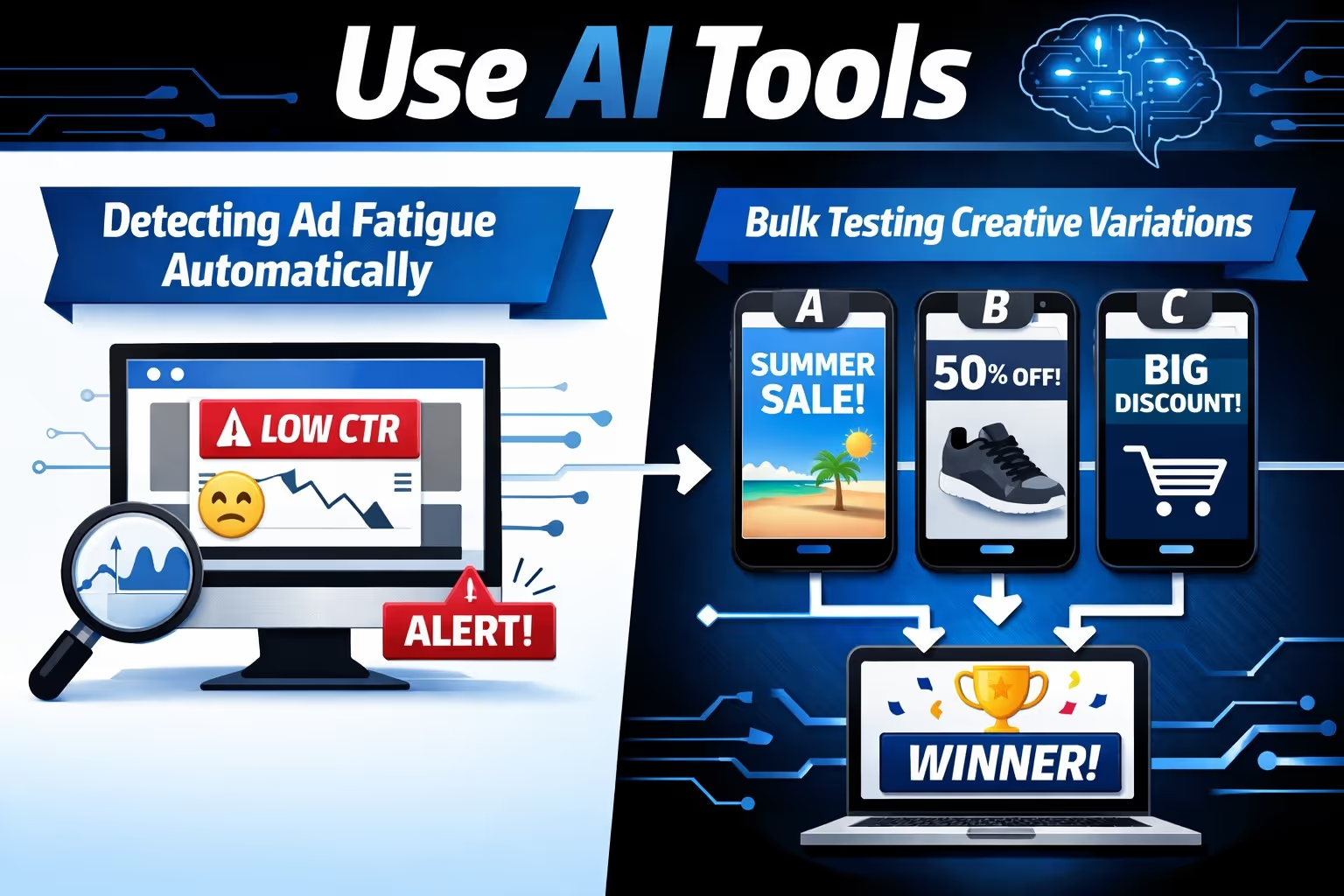
Let’s say you’re running multiple creative sets across different audiences. AI can flag which versions are starting to slip, before your cost-per-result climbs. That saves budget and lets you refresh ads before performance tanks. But deciding how to refresh? That’s on you.
Want to test 10 different headlines, 5 visuals, and 3 calls-to-action? AI can spin those combinations instantly and push them live without touching Ads Manager. But deciding which ideas are worth testing in the first place? That still takes strategic judgment.
Use AI to move faster, test wider, and monitor smarter. Just don’t let it pick your message, define your value, or steer your goals. The best campaigns come from humans setting clear direction, and machines doing the heavy lifting to get there faster. That’s where performance compounds.
Creative fatigue doesn’t shout - it creeps. One week your ad is crushing it, the next it’s quietly dragging down your ROAS. Meta won’t send a warning. But the signs are there: your CPM starts creeping up, your CTR starts dipping, and conversions flatten out. That’s your cue.
Don’t wait for performance to tank before making a move. Most creative runs its course in two to four weeks, especially in high-frequency environments. Even top performers eventually wear out their welcome. Instead of letting them fade, get proactive. Duplicate the winners, tweak the angle, switch the hook, refresh the visuals, and relaunch with intention.
Think of your creative like inventory, not a one-time upload. You wouldn’t fill a store once and walk away. You’d restock, rotate, and introduce new products to keep people interested. Great ad accounts do the same with their creative pipeline, they don’t just build campaigns, they build systems to keep them alive.
You can’t control the Meta algorithm. But you can control your setup, your signals, and your systems. That’s what optimization really means: making better decisions before the spend happens.
If your Meta ads feel inconsistent, frustrating, or just plain expensive, don’t jump straight to tactics. Step back. Audit the fundamentals. Use a checklist that makes your structure tight before you get fancy.
Because the truth is, most performance problems aren’t creative or copy. They’re structural. Fix the structure, and the results usually follow.
Bookmark this. Better yet, turn it into your personal pre-flight ritual. Every campaign. Every client. Every time.


