Trending Dropshipping Products 2026: What's Selling Now
Discover the most profitable dropshipping products for 2026 based on real search data. Find high-margin winners in tech, home, wellness & more.
Apr 14, 2026



Creative testing isn’t just a nice-to-have in your Meta ads strategy anymore. It’s the thing that decides whether you’re scaling profitably or burning through the budget with nothing to show. You can have perfect targeting and solid bids, but if your ad doesn’t grab attention or earn trust, none of it matters.
And here’s the truth: most brands mess this up. They test the wrong things, react too fast, or just never figure out what actually worked. In this guide, we’re breaking down the creative testing practices that actually help you find winners – fast, without wasting weeks or thousands of dollars. Whether you're running one ad or fifty, this is how to test smarter.
The most effective Meta advertisers no longer treat creative testing as a live experiment. The best practice now is to evaluate before spending, and that’s exactly what we at Extuitive makes possible. We help brands predict how each concept will perform, not after launch, but at the earliest stage of production.
Instead of testing through trial campaigns, we apply a model trained on your past ad performance and validated through large-scale simulations of consumer response. Our system forecasts key outcomes like CTR and ROAS, allowing you to see which ideas are likely to succeed and which aren’t before committing a budget.
With this predictive layer in place, weak creatives are filtered out automatically, and only high-potential assets move forward. It’s a fundamental shift: less waiting, less waste, and a creative process guided by proof, not assumptions.
Meta ads creative testing is the process of systematically comparing different versions of ad creatives to understand what actually drives results. Instead of guessing which image, video, headline, or hook will perform best, you run controlled tests that let real user behavior guide your decisions.
At its core, creative testing answers simple but critical questions. What makes someone stop scrolling? What convinces them to click? What builds enough trust to convert? By isolating creative elements and measuring performance over short testing windows, advertisers can quickly spot patterns and focus budget on ads that prove their value in real conditions.
The goal isn’t to find a perfect ad. It’s to learn faster than your competition and reduce wasted spend by letting performance, not opinion, decide what scales.
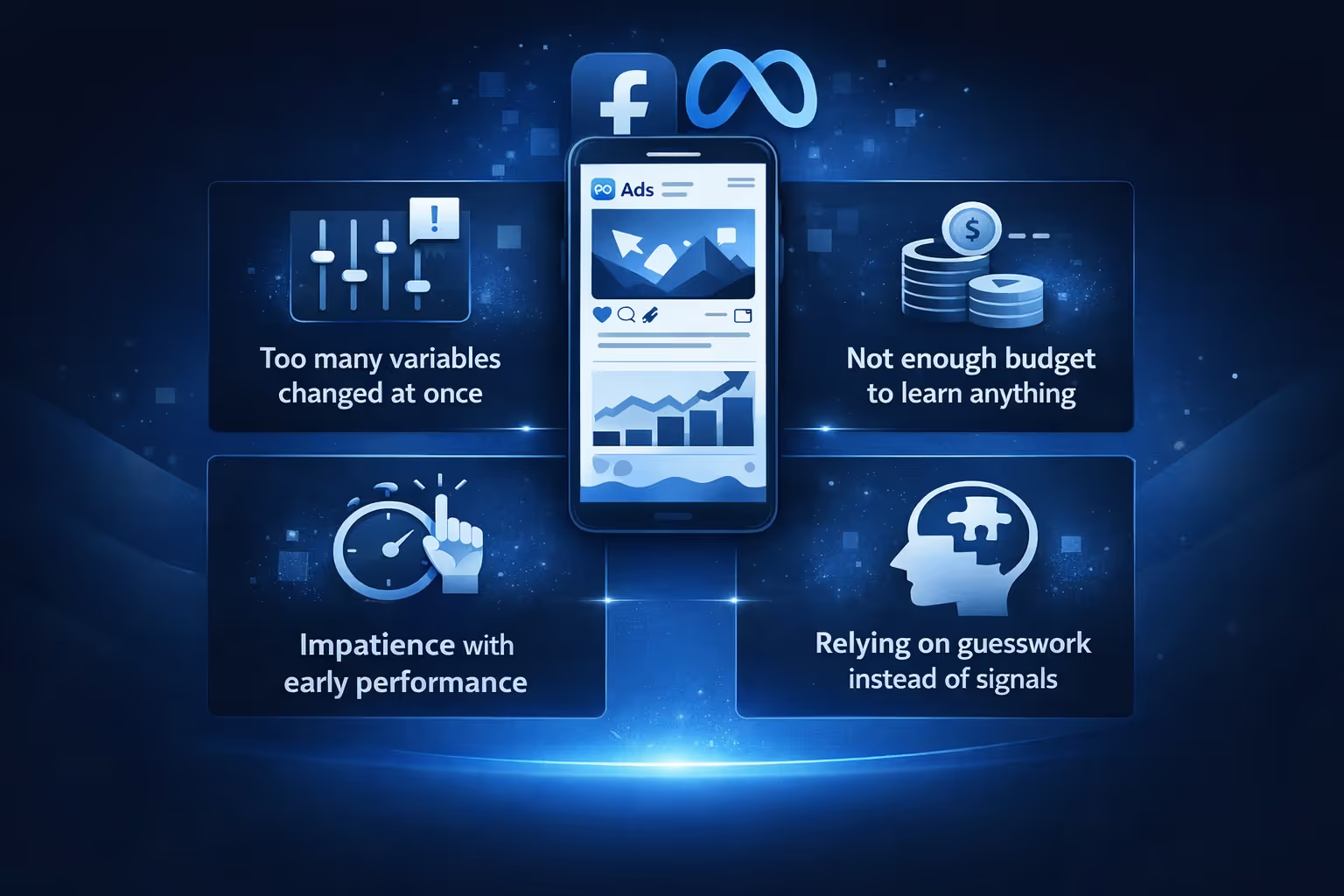
Plenty of marketers run "tests" that don’t tell them anything useful. They change five things at once, run it for a week, then wonder why the data’s all over the place. Or they hit publish and check results two hours later, already itching to turn off half the campaign.
What goes wrong:
If you want testing to actually help, you need a tighter system. One that’s rooted in data, built to isolate variables, and structured to spot patterns without the noise.
Before diving into ad sets and budgets, step back. Creative testing isn’t about finding the best ad ever made. It’s about learning fast. Your job is to figure out, with as little spend as possible, which ideas show promise and which ones deserve to die quickly.
Be prepared that your first idea probably won’t be your best, one test won’t answer everything, performance changes fast – you need to keep testing, and small tests can reveal big truths.
With that in mind, let’s look at how to set it up properly.
The first rule of useful testing? Don’t test everything at once. If you change your headline, visual, CTA, and audience all at the same time, how will you know which one worked?
Instead, isolate a single element per test. Start by identifying the weakest part of your funnel or ad structure. That’s where you dig.
Examples:
Testing one thing at a time sounds slower, but it’s the only way to get a signal you can trust.
A messy test gives you messy data. You don’t want ad performance influenced by audience overlap, algorithm bias, or campaign structure quirks.
Keep it clean:
You're trying to learn what works creatively, not what happens when five settings conflict with each other.
You don’t need a massive budget, but your test must be large enough for Meta’s algorithm to gather statistically meaningful data. A small test budget (e.g., $100) may help surface trends, but required spend varies by CPM, audience size, and campaign goals. Some tests need more to produce reliable results.
Each creative should have enough budget to accumulate impressions and engagement without being prematurely cut off. To ensure consistency, run your test for at least 3 full days. Avoid turning ads off mid-test, changing budgets, or adjusting placements during the test window.
The goal isn’t to act on early spikes or dips – it’s to let the data stabilize before making decisions.
Wait at least 72 hours before making changes, but allow longer for tests with low spend or smaller audiences, as stabilization may take more time. Don’t just look at CTR or CPC. Look at the full chain: “Did they click and bounce?”, “Did they view but not engage?”, “Did scroll-stopping visuals fail to convert?”.
If a variation clearly underperforms, kill it. If something shows promise, great - but don’t triple the budget overnight. Scale in small steps and keep watching.
A solid scaling approach increase daily budget by 20%-30% max, duplicateы the ad into a new campaign for cleaner learning, and doesn't assume past performance = future performance.
Winners can burn out fast, so...

Creative fatigue is real, especially with smaller audiences or high-frequency campaigns. Even your best-performing ad will stop working eventually.
What helps:
You don’t always need something brand new. Sometimes a small twist keeps the momentum going.
This is where many brands miss the mark. Meta users don’t want to be sold to - they want to feel like they're watching content, not an ad.
High-performing creative tends to feel organic (user-generated content style works), show people using or reacting to the product, start strong in the first 3 seconds, and include on-screen text (since most watch without sound).
Try leaning into review-style content, demos, short testimonials, or “I tried this so you don’t have to” formats. You don’t need influencers. You need relatable content that doesn’t scream ad.
If you’re running video, your message has to work without sound. That’s where on-screen text carries the weight.
Best practices:
Text overlays aren’t just accessibility tools – they’re ad real estate. Use them to drive the point home clearly.
The value of creative testing compounds when you track the why, not just the what. Instead of just labeling something as a winner, break down why it won.
Start building a feedback loop. Which hooks get more engagement? Which formats (UGC vs. polished) drive better conversions? Do testimonials outperform features? Do bright colors outperform neutral palettes?
Over time, these patterns become your creative blueprint. They help you brief faster, produce smarter, and spend better.

Your logo doesn’t need to take over the screen. People don’t engage with logos – they engage with stories, problems, and benefits.
That said, brand recognition still matters. You just want to show it without being loud.
Examples:
This helps you stay memorable without annoying people.
If you’re running ads, you’re testing creativity. It’s not a side project or one-off sprint - it’s part of the ongoing campaign cycle.
Every new product, audience, or season is a new test. What worked last month might flop today. That’s fine. The goal isn’t perfection. It's the speed of learning.
Build a repeatable system that looks like this:
This is how smart Meta advertisers build creative muscle over time.
You don’t need a hundred variations, fancy editing, or a massive budget to test Meta ads properly. You just need discipline, patience, and a bias toward learning.
Start small. Test clearly. Cut quickly. And keep iterating. That’s how you stop guessing and start scaling.


