How to Sell on Instagram with Shopify Without the Guesswork
Learn how to connect Shopify to Instagram, sync products, and start selling fast using built-in tools and smart content strategies.
Jan 6, 2026



You launch a campaign, check the stats every hour, and hope conversions roll in. Sometimes they do. Other times... not so much. But what if you didn’t have to cross your fingers every time you hit publish?
That’s where Meta ads conversion prediction steps in. It’s not magic, and it’s not some black-box AI thing only engineers understand. It’s about using the right mix of past data, behavior signals, and platform tools to get a realistic sense of what’s likely to work before your budget disappears into the void.
In this article, we’re going to break down how to make that prediction process actually useful – not just another set of dashboards to scroll through. No fluff. Just what to look for, what tools help, and how to turn numbers into action.
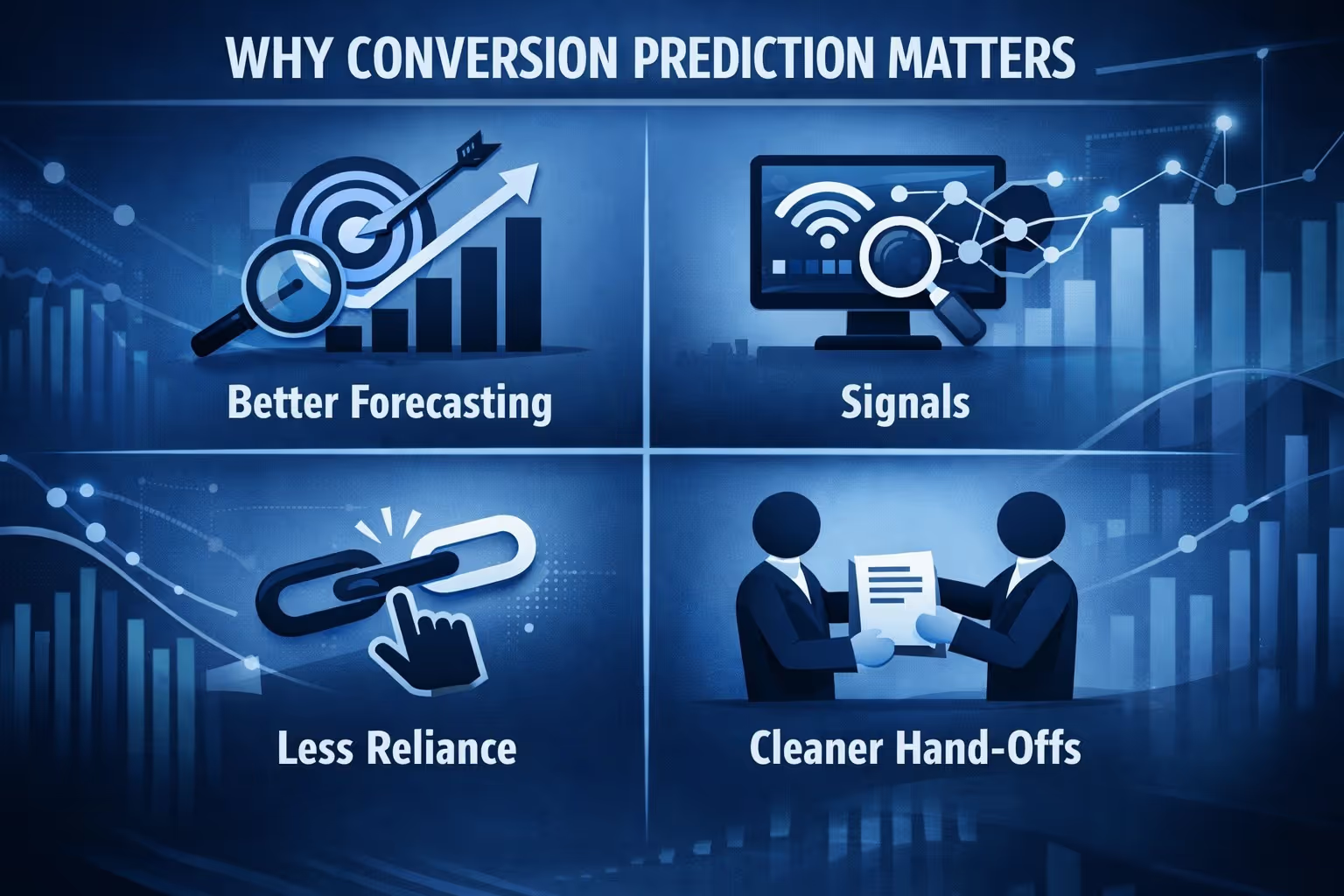
Let’s start with the obvious: Meta ads are expensive when they don’t work. But the kicker is, they’re also expensive when they almost work. If you’re running a campaign that’s close to converting or converting the wrong traffic, you’re not losing pennies. You’re burning budget and losing out on growth.
Conversion prediction flips that around. Instead of launching and hoping, you build a system where your Meta campaigns are set up with:
You don’t need a PhD or a team of data scientists. You need the right tracking, smart assumptions, and realistic benchmarks.
Let’s clear this up right away. Predicting conversions doesn’t mean knowing exactly how many sales you’ll make every day. It’s not about chasing 100% accuracy.
Instead, conversion prediction is about using your available data – historical performance, audience trends, site behavior, purchase signals – to forecast how likely your campaigns are to convert before you pour in more budget.
It’s about reducing the number of bad bets you make.
It’s not a replacement for good creativity, a substitute for understanding your customers, or a “set it and forget it” thing you only do once.
It is a way to validate ideas before launch, a system to guide your scaling decisions, and a sanity check when numbers feel off.
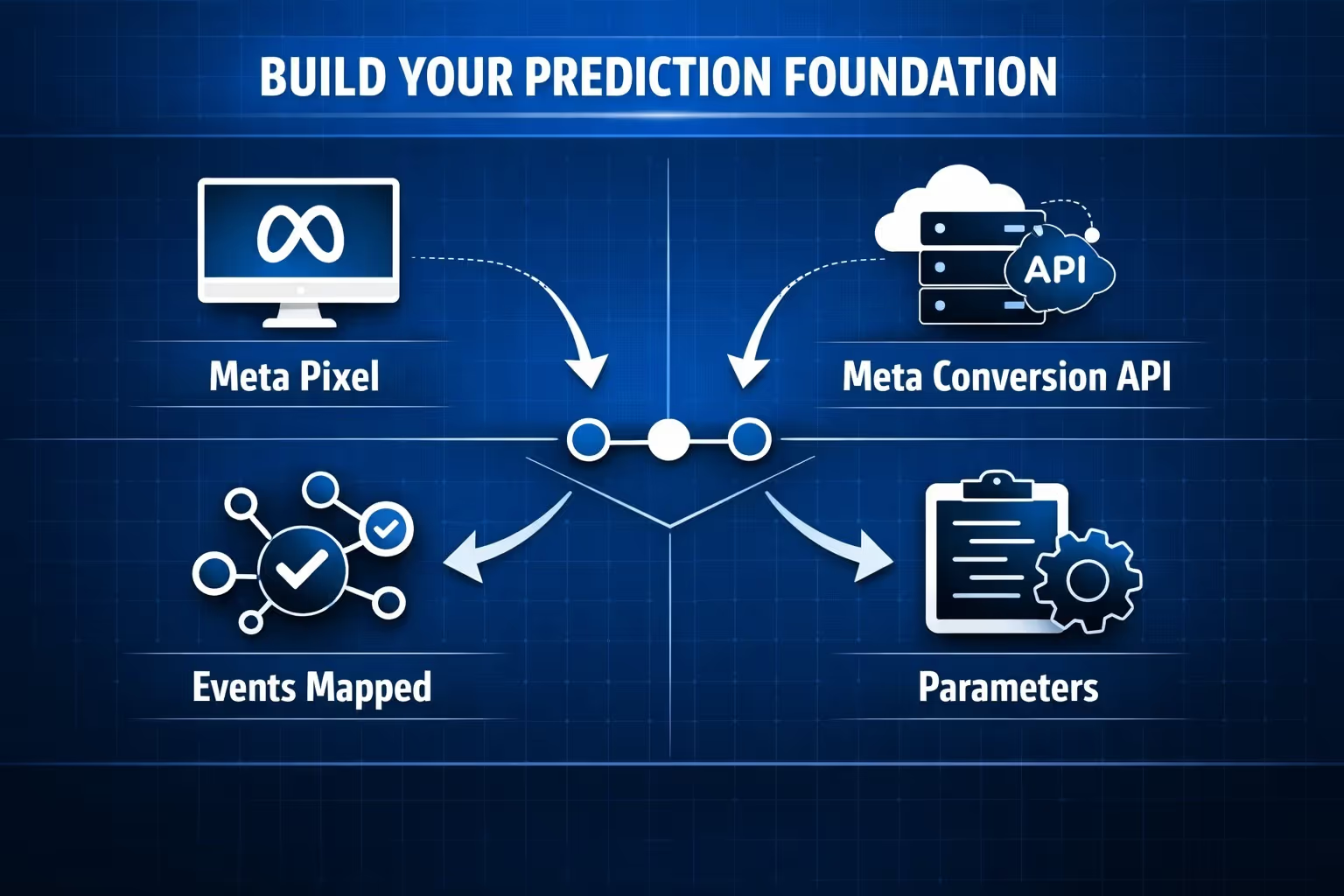
Before we talk about AI, platforms, or dashboards, here’s the honest truth: if your tracking is messy, your predictions will be worse.
This is where too many marketers get tripped up. You can’t make smart decisions if your Meta ad manager, Google Analytics, and Shopify dashboard all tell different stories. Your prediction model is only as good as the signals it receives.
What you absolutely need in place:
Even small issues like missing deduplication between Pixel and CAPI can throw your entire performance forecast off.
Once your tracking is cleaned up, conversion prediction becomes less about trying to forecast the future with perfect accuracy and more about making smarter, informed decisions. It’s a way of sizing up your campaign with real questions in mind. You might ask yourself whether the conversion rate you’ve seen before is a realistic benchmark for this audience, or whether engagement signals like CTR, bounce rate, and time on site are in the same ballpark as your top-performing campaigns.
You’re also likely thinking about whether this campaign has a shot at hitting 50 conversions in a week so it can clear the learning phase. None of this is about hitting exact numbers. It’s more about knowing whether you’re headed in the right direction before you start cranking up the budget.
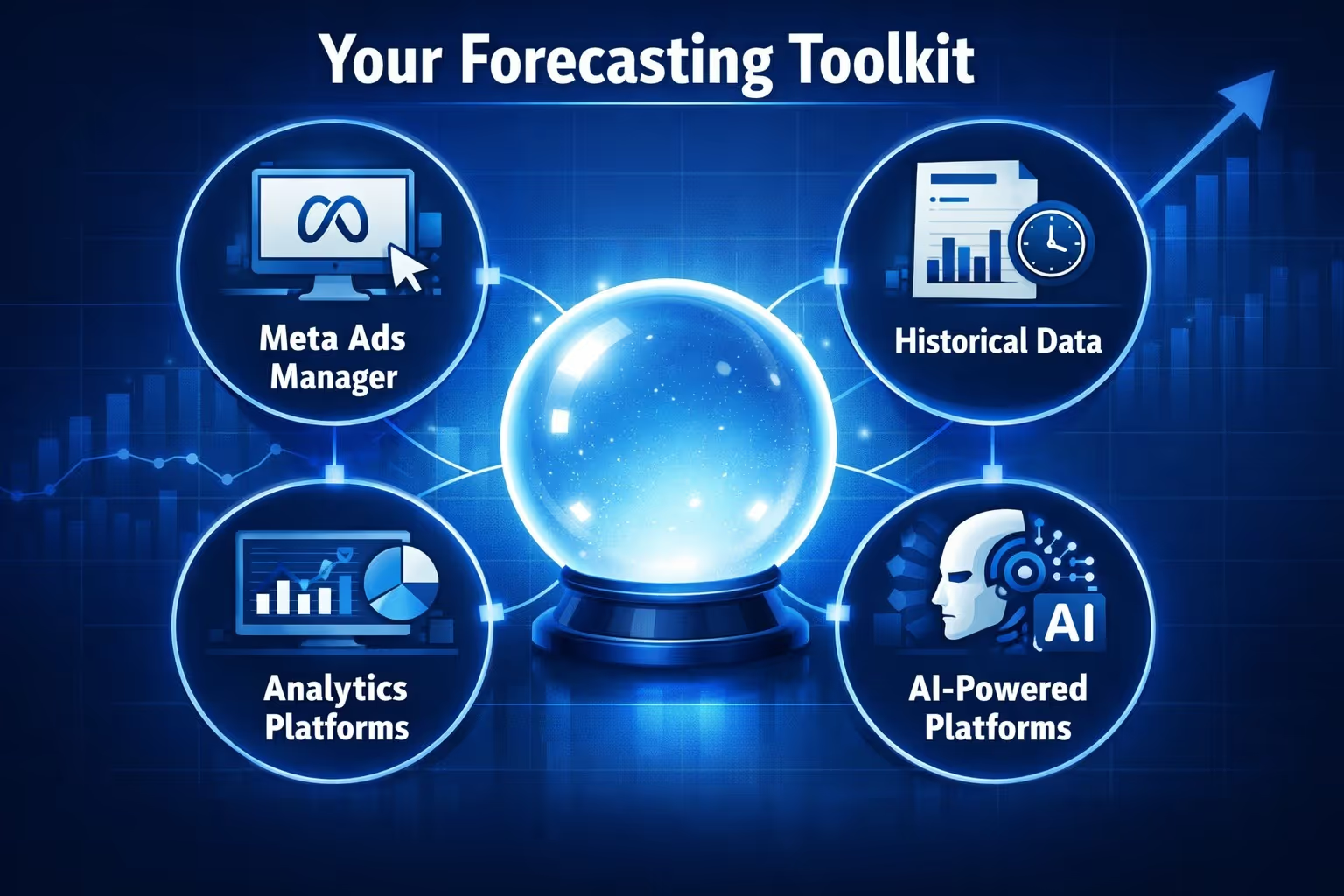
Let’s look at the tools that actually help here. Most teams rely on a mix of platform-native features, external analytics, and AI-powered platforms.
Meta gives you delivery estimates when setting up your campaign. It’s a decent starting point, but don’t take the numbers at face value. The estimates are platform-wide averages and often optimistic.
Use this to sense-check your audience size and potential reach and estimate whether your daily budget is realistic for your goal. But avoid using it as your sole forecast source or relying on it for expected ROAS.
Pull data from the last 60-90 days. Look at:
This gives you a baseline that reflects your business reality, not Meta’s averages.
Different tools help you analyze post-click behavior:
You’ll get insights that Meta won’t show you, especially if attribution models differ.
This is where things get interesting. Modern tools use historical performance and consumer modeling to simulate future results. They’re not infallible, but they’re helpful for:
Choose platforms that integrate well with Meta and your e-commerce platform. And remember: predictions are a starting point, not gospel.
At Extuitive, we built our platform to help Shopify brands create and test Meta ads faster, but more importantly, smarter. Conversion prediction isn't just a buzzword for us – it's baked into how we validate creativity, simulate audience response, and launch campaigns that have a real shot at working from day one.
Instead of relying on gut feel or expensive market research, we model ad performance using insights from thousands of real-world consumer personas. That means before you run a single dollar of spend, you're already getting signals on purchase intent, product-market fit, and creative strength. Our AI agents take the guesswork out of audience targeting and give you validation at a speed and scale that typical testing just can't match.
The best part? You’re not waiting weeks for panels or surveys. You connect your store, generate creative, and test against buyer segments in minutes. For any brand trying to cut wasted spend and increase ad reliability, this kind of predictive testing isn’t just helpful – it’s essential. Especially when margins are tight and scaling has to be strategic.
It’s tempting to chase every metric, but conversion prediction relies on a handful of key signals that correlate strongly with outcomes. Focus here:
Behavioral signals:
Platform signals:
Use these to build a prediction model that reflects your actual funnel, not a generic one.
Once you’ve got a prediction system running, the next step is using it to guide budget decisions. Here’s how to approach it by spend tier:
Under $5,000/month:
$5,000-$20,000/month:
$20,000+/month:
The point isn’t to chase perfection. It’s to make fewer bad calls and more repeatable wins.
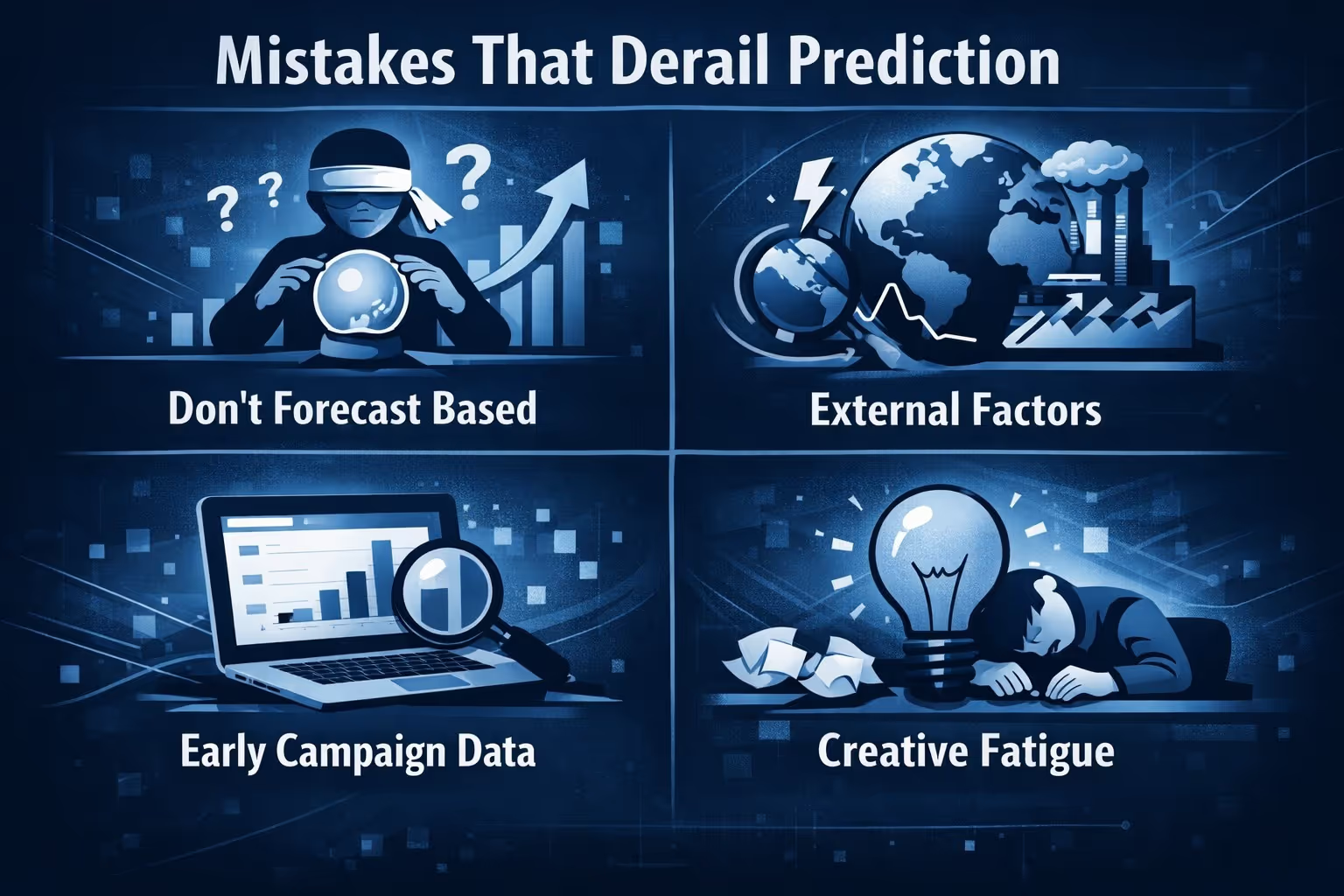
Let’s keep it real: even with solid tools and good instincts, it’s surprisingly easy to fall into a few common traps when working with conversion prediction. Here’s how they usually show up.
It’s tempting to use that one golden week where everything clicked as your baseline, but that’s not the number you want to build projections around. Instead, look at your median performance over time. It’s far more useful – and much less misleading – than chasing your peak.
Conversion models don’t operate in a vacuum. Things like inventory levels, price changes, shipping delays, or even unexpected weather can impact your results. If you’re not factoring in these outside variables, your predictions may feel solid right up until they suddenly miss the mark.
A lot of campaigns get judged too soon. If you haven’t hit at least 50 conversions in a week, you’re still in the learning phase, and your numbers can swing wildly. Early data is a signal, not a conclusion. Give it time before you make major decisions.
Even the best-performing ad won’t last forever. Predictive models might suggest a campaign will hold, but they don’t always account for how quickly people tune out. As a general rule, refreshing your creativity every couple of weeks keeps things from going stale.
It’s easy to get confused when Meta says one thing and your e-commerce platform tells another. Usually, this comes down to mismatched event definitions or inconsistent attribution windows. If you want reliable forecasts, make sure everyone’s speaking the same language.
Let’s say you’re launching a new supplement. You’ve run similar products before, so you:
You’ve now turned what would’ve been a gamble into an informed move.
Conversion prediction isn’t a “set it and forget it” feature. It’s a habit. A skill. Something you refine over time. And the more you do it, the better you get at seeing patterns before they cost you.
If you want to win with Meta ads today, it's not just about better creative or bigger budgets. It's about better decisions. And those start with knowing what's likely to convert before you start spending.
Set up your tracking right. Use your data well. Treat predictions as input, not outcome. That’s how you stop guessing and start scaling on your terms.


