Marketing Ideas for School Admission: 2026 Guide
Discover proven marketing ideas for school admission that boost enrollment. From digital strategies to community outreach, learn what works in 2026.
May 18, 2026



Shopify is often described as the easiest way to start an online store. And in many cases, that’s true. You can sign up, choose a theme, add products, and be ready to sell faster than with almost any other platform. That speed is a big reason Shopify became so dominant.
But “easy to start” is not the same as “right long term.” Once real money, apps, transaction fees, and growth plans enter the picture, the question becomes more nuanced. Shopify can feel like a great decision at first and an expensive one later, depending on how you use it.
This article looks at Shopify without cheerleading or doom-saying. Just a practical view of what the platform does well, where it falls short, and who it actually works for.
Shopify is often described as an ecommerce website builder, but that label undersells what it has grown into. Today, Shopify is closer to an operating system for selling. It handles storefronts, payments, inventory, taxes, point-of-sale, analytics, and integrations across dozens of channels.
That expansion matters because Shopify is no longer just a tool you pick at the start. It shapes how your business operates over time. Decisions about apps, themes, markets, and payments tend to compound. By year two or three, most stores are deeply tied into Shopify’s ecosystem.
This is both Shopify’s strength and its quiet trade-off.
On one hand, you get consistency. Hosting, security, updates, and infrastructure fade into the background. On the other hand, you accept that Shopify’s way of doing things will influence how flexible you can be later.
Speed is the obvious answer, but it is not the full one.
Yes, Shopify lets you launch quickly. But what really keeps people choosing it in 2026 is the reduction of mental overhead. You do not need to think about servers, patches, or the technical infrastructure for PCI compliance, as Shopify handles the core security requirements.
For founders who want to spend their time on products, marketing, and operations rather than infrastructure, that trade feels reasonable. Shopify’s interface is not just user-friendly. It is predictable. Once you learn it, you can move faster without rethinking the basics every time.
That predictability is especially valuable for teams without dedicated developers. It creates momentum early on, which is often more important than perfect customization.

Before deciding whether Shopify is worth it in 2026, it’s important to separate the platform from the decisions made on top of it. Shopify makes execution fast, but it does not remove guesswork around products, pricing, or ads. That gap is exactly why we built Extuitive.
We help Shopify brands create, validate, and launch high-performing ads and product concepts in minutes, not months. Our proprietary ecosystem of 150,000 AI consumer agents acts as an always-on focus group, pressure-testing ideas before real budget is spent. Copy, visuals, pricing, and positioning are evaluated against real behavioral data, so only the strongest concepts move forward.
For Shopify businesses, this means fewer failed launches and faster clarity. Instead of learning what works after campaigns go live, teams can predict purchase intent upfront and enter Shopify with confidence rather than assumptions.
When decision quality improves, Shopify stops feeling expensive and starts working the way it should. That’s where Extuitive fits best: not replacing Shopify, but making it far more effective from day one.
Shopify’s base plans have been stable for a while, and on paper, the monthly fees do not look extreme. Where many businesses misjudge the cost is everything layered on top.
By 2026, very few serious stores run on Shopify alone. Apps fill the gaps. Some add essential functionality. Others solve small annoyances that quietly become dependencies. Each one might cost ten or twenty dollars a month, but the stack adds up.
Transaction fees also deserve attention. If you do not use Shopify Payments, the extra percentage cuts directly into margins. For high-volume stores, this matters more than the subscription price itself.
The result is that Shopify is rarely cheap, but it is often predictable. You know roughly what your costs will be month to month, even if they are higher than expected at the start. For some businesses, that predictability is worth paying for.
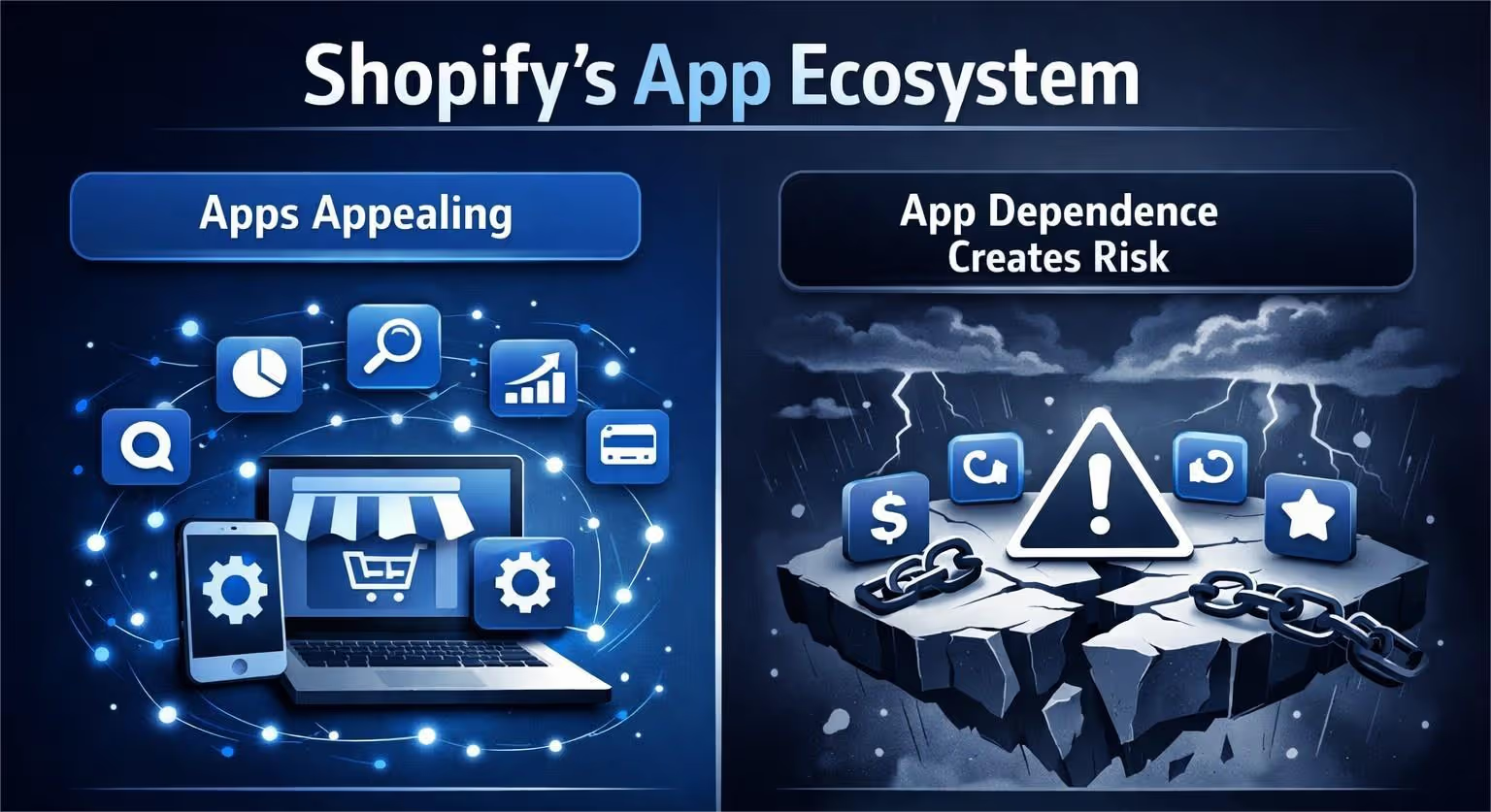
Shopify’s app store is one of its defining features. There is an app for nearly everything: subscriptions, bundles, reviews, loyalty, analytics, SEO, localization, and more. This flexibility allows stores to evolve without heavy development work or custom builds.
At the same time, this strength comes with trade-offs that are easy to underestimate.
Apps let merchants move fast. Instead of building features from scratch, you can install functionality in minutes and test new ideas without technical risk. For early-stage stores, this speed often makes the difference between launching and stalling.
Apps also allow non-technical teams to stay independent. Marketing, operations, and merchandising teams can adjust workflows without relying on developers for every change.
As stores grow, app stacks tend to grow with them. Each app adds scripts, logic, and sometimes overlapping responsibilities. Over time, this can slow down storefront performance or create conflicts that are hard to trace.
Pricing changes are another risk. Apps can shift from free to paid tiers or increase costs as usage grows. Because many apps become embedded in checkout flows or data structures, removing them later is rarely frictionless.
One common criticism of Shopify is limited customization. This is partially true, but often misunderstood.
Out of the box, Shopify themes prioritize conversion and performance. That means constraints. You can adjust layouts, colors, typography, and sections, but you are not getting full creative freedom unless you move into custom theme work.
For many stores, this is a benefit. The design defaults are battle-tested. They reduce the risk of creating something visually interesting but commercially ineffective.
For brands where design is the product, or where storytelling matters as much as transactions, Shopify can feel restrictive. Workarounds exist, including headless setups or external content systems, but those raise complexity and cost.
The key question is not whether Shopify can be customized. It is whether the cost of customization matches the value it brings to your business.
Shopify handles products exceptionally well. Content is another story.
Basic pages and blog posts work fine, but once you need richer content structures, multi-language workflows, or editorial control, limitations appear. Many growing brands solve this with third-party content systems or headless configurations.
That solution works, but it changes the nature of the platform. You move from a simple hosted experience to something closer to a custom build. For businesses that rely heavily on content marketing, SEO-driven publishing, or long-form storytelling, this is a serious consideration in 2026.
While Shopify has introduced advanced AI tools and metaobjects to improve content management, it still requires more effort to match the flexibility of dedicated editorial CMS platforms.
Omnichannel and multichannel selling are no longer optional for many businesses. Customers move between platforms fluidly, and Shopify’s strength here remains clear.
By running social sales, marketplaces, and physical retail from one backend, Shopify reduces operational friction. Inventory stays in sync, orders flow into a single system, and customer data remains centralized. That consistency makes growth easier to manage and less error-prone.
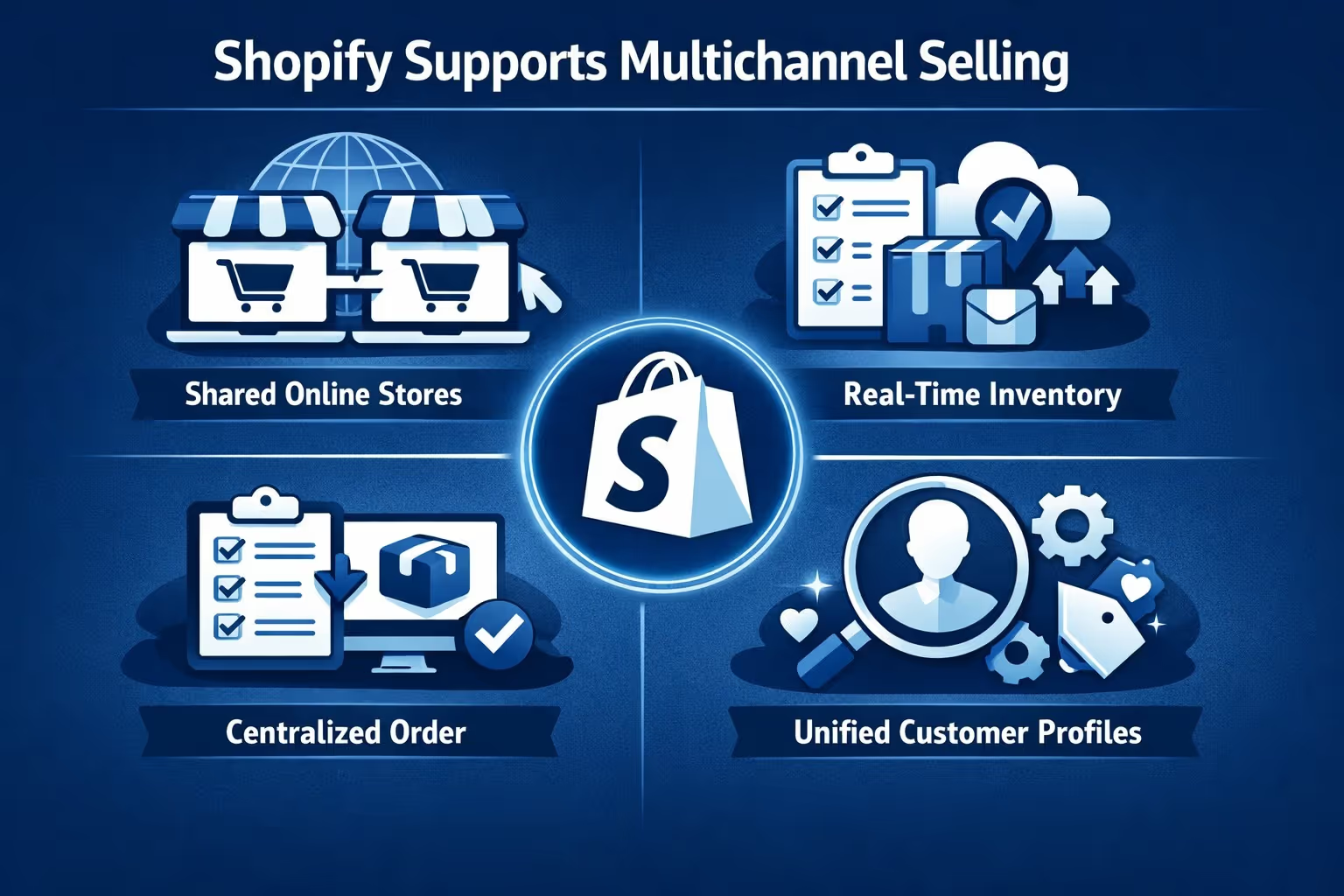
In practice, Shopify supports multichannel selling through:
Shopify’s point-of-sale system deserves special mention. For brands that blend online and offline sales, the integration feels cohesive rather than bolted on. Inventory, customer data, and payments stay connected whether a purchase happens in a store, at a pop-up, or online.
As retail continues to move away from strict channel boundaries and toward experience-driven buying, Shopify’s ability to unify selling contexts remains one of its strongest arguments in 2026.
Technically, Shopify scales well. Traffic spikes, large catalogs, and global audiences are not a problem for the platform itself. The real scaling challenge shows up in complexity.
As stores grow, teams expand. Permissions, workflows, reporting, and integrations become more important. Shopify Plus exists to address this, but it is not just a bigger plan. It represents a shift in how much responsibility you take on.
For businesses approaching enterprise scale, Shopify becomes less about convenience and more about architecture choices. It can still work, but the simplicity that attracted you at the start will not feel the same.
This does not make Shopify a bad option for large businesses. It just changes the value equation.
Shopify continues to align well with dropshipping and print-on-demand models in 2026. The low barrier to entry, app integrations, and automation-friendly workflows support experimentation.
That said, competition has intensified. Shopify does not solve differentiation. It makes execution easier, but success still depends on product selection, branding, and marketing discipline.
For sellers who treat Shopify as a launchpad rather than a shortcut, the platform remains a solid foundation.
Building on Shopify means accepting platform lock-in to some degree. Data exports exist, but themes, apps, and custom logic do not transfer cleanly to other systems.
For businesses with long-term ambitions, this is often framed as a risk. In reality, it is a trade-off. Lock-in simplifies early decisions and accelerates execution. The cost is flexibility later.
The question is not whether lock-in exists. It is whether the value you gain along the way outweighs the difficulty of leaving if you ever need to.
For many businesses, the answer is yes.
Shopify is a good fit in 2026 for businesses that prioritize momentum over control. If getting to market quickly, staying operationally stable, and relying on a well-established ecosystem matter more than owning every technical detail, the platform makes a lot of sense.
It works especially well for small to mid-sized businesses and growing brands that do not want to spend time managing hosting, security, updates, or performance. Shopify removes much of that overhead, allowing teams to focus on products, marketing, and fulfillment instead.
Another strong use case is multichannel growth. Businesses that plan to sell across their own site, social platforms, marketplaces, and physical locations benefit from Shopify’s centralized backend. Expanding into new channels does not require rebuilding systems or stitching together multiple tools from scratch.
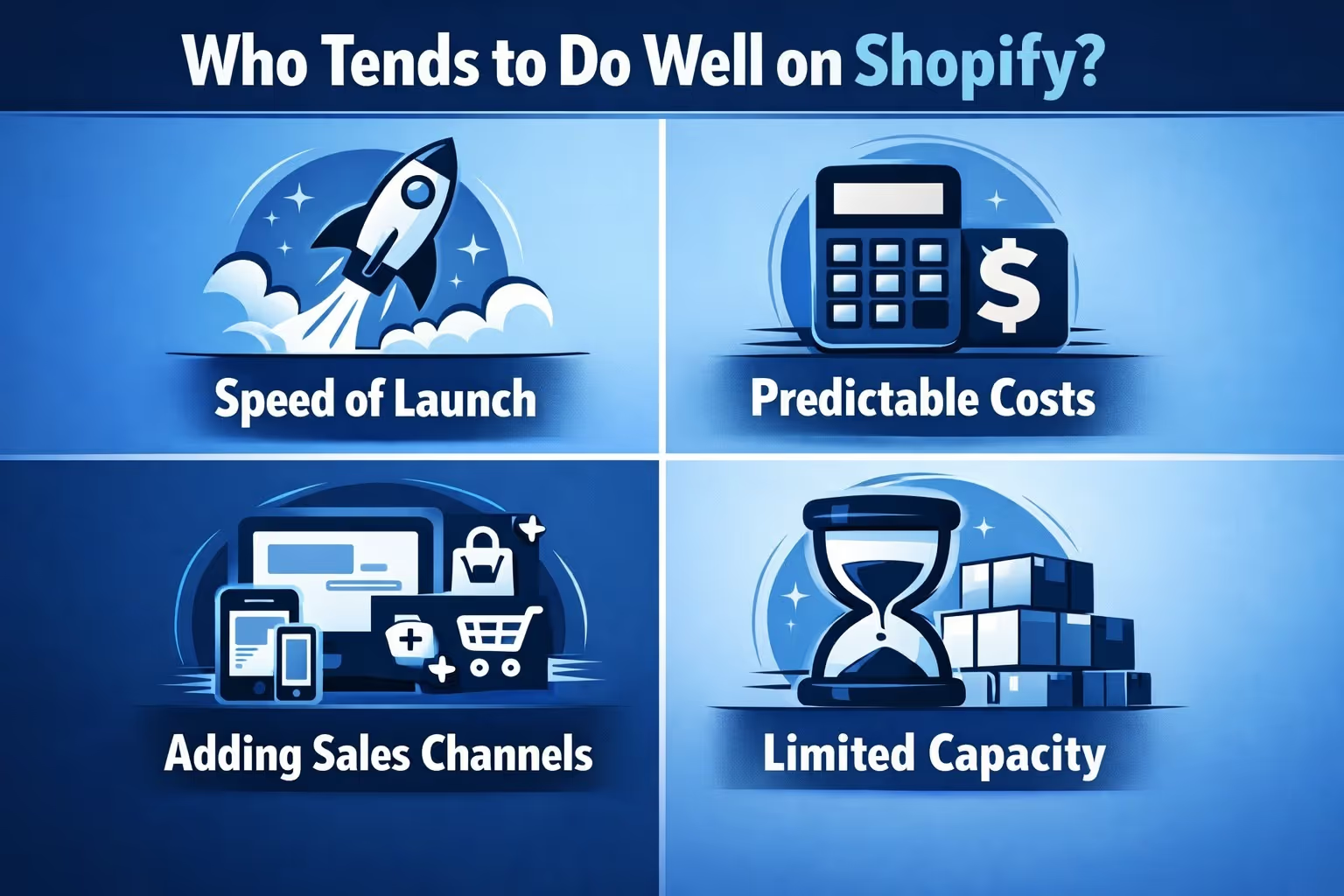
Shopify tends to serve businesses best when:
In these cases, Shopify acts as a stable foundation rather than a constraint.
Shopify becomes less attractive when a business’s priorities lean heavily toward customization and control. Companies that depend on complex content structures, advanced publishing workflows, or highly tailored front-end experiences often run into friction unless they invest in additional tools or headless setups.
It can also be a poor fit for businesses operating on very thin margins. Transaction fees, app subscriptions, and platform costs may erode profitability more quickly than expected.
Finally, teams with strong technical resources may find Shopify limiting. If full ownership of the tech stack, custom architecture, and deep backend control are strategic priorities, a more flexible or self-hosted solution may align better with long-term goals.
In short, Shopify works best when it supports the way a business wants to operate, not when the business has to bend to fit the platform.
In 2026, Shopify is not the perfect platform. But it is a mature, reliable one that has earned its place.
It rewards clarity. Businesses that understand what they need from the platform tend to succeed. Those who expect Shopify to solve strategic problems often end up frustrated.
If you approach Shopify as a tool rather than a promise, it remains worth considering. Not because it is fashionable, but because it still does what many businesses need it to do, quietly and consistently.
The right question is not whether Shopify is worth it in general. It is whether the way Shopify works aligns with how you want your business to grow.


