Best Shopify Subscription Apps to Grow Your Business in 2025
Discover top Shopify subscription apps that make recurring sales easy, automate your store, and keep customers coming back for more.
Dec 29, 2025



Running an online store means handing over more than products. You hand over payment details, customer data, and a large part of your reputation to the platform you choose. That is why the question “is Shopify safe?” comes up so often, especially from founders who are about to launch or scale.
Shopify has earned a reputation as a stable, reliable ecommerce platform, but safety is rarely absolute. It is the result of how the platform is built and how it is used. This article looks at Shopify security in practical terms. What Shopify protects by default, where responsibility shifts to the store owner, and how risks actually show up in day-to-day operations.
When people talk about ecommerce security, they often mix several different concerns into one. Payment protection, data privacy, fraud prevention, uptime, and admin access are all part of the same conversation, but they work differently.
Shopify approaches safety as a layered system. The platform itself handles infrastructure, hosting, and payment compliance. Store owners control access, apps, and operational habits. Problems usually appear when those layers drift out of alignment.
Understanding this split helps explain why Shopify is considered safe, yet still requires active participation from merchants.
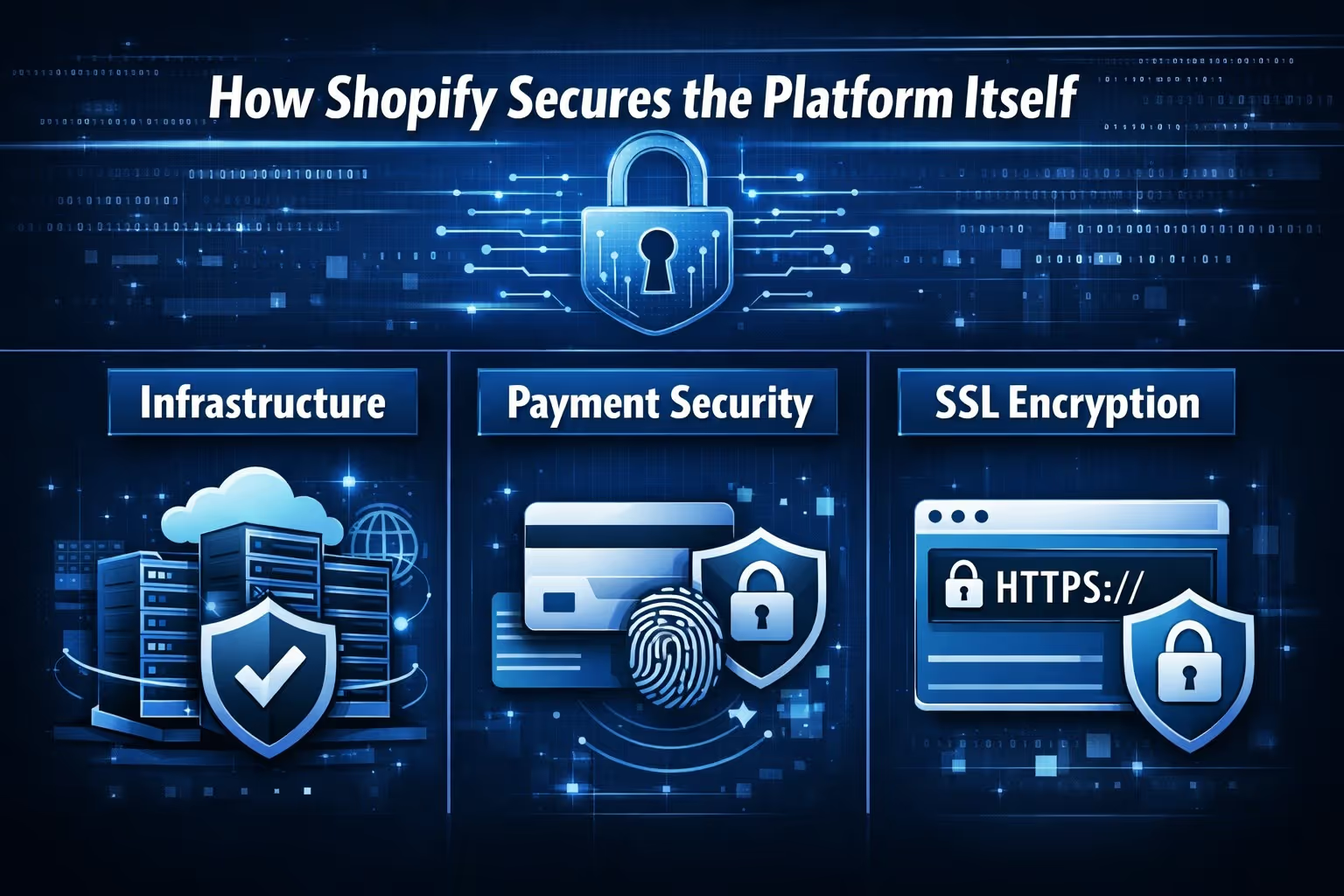
Shopify’s strongest security advantage is that it controls the core environment. Unlike self-hosted platforms, store owners are not responsible for servers, software updates, or payment infrastructure. Those risks are centralized and managed at scale.
Every Shopify store runs on Shopify’s own hosting infrastructure. Servers are monitored continuously, patched automatically, and protected against common large-scale attacks. Merchants do not need to manage firewalls, install updates, or worry about server-level vulnerabilities.
This removes a major source of risk that affects many ecommerce sites built on unmanaged hosting. It also means performance and uptime are treated as security concerns, not just technical ones. A store that stays online and stable is harder to exploit.
Shopify is certified as PCI DSS Level 1 compliant, the highest standard for handling card payments. This matters more than many store owners realize.
In practice, it means payment data never lives on your store server. Transactions are processed inside Shopify’s secure systems, which are audited regularly and built to meet strict global standards. For most businesses, achieving this level of compliance independently would be expensive and technically demanding.
Shopify makes it part of the default setup, not an optional upgrade.
Every Shopify store includes SSL encryption by default. All data exchanged between customers and the store is encrypted, from checkout details to login credentials.
This is no longer a bonus feature. It is a baseline expectation. Shopify treats it as such, which removes one more decision point where merchants could otherwise make mistakes.

When we talk about safety on Shopify, it is not only about protecting data or preventing fraud. It is also about reducing risk before money ever leaves your account. That is exactly where we come in.
At Extuitive, we help Shopify brands make safer marketing decisions by removing guesswork from ad creation and validation. Instead of launching campaigns based on assumptions or limited testing, we let brands pressure-test ideas with our network of 150,000+ AI consumer agents modeled on real behavioral data. Before you run ads, before you scale spend, you already know which messages resonate and which ones do not.
We connect directly to your Shopify store, generate ad creatives tailored to your products, and validate them against real-world consumer behavior in minutes. Copy, visuals, pricing angles, and even reels are tested before launch. That means fewer failed campaigns, fewer wasted budgets, and far less risk tied to experimentation. In a landscape where ad costs rise fast and margins are thin, predictability becomes a form of protection.
From idea to launch, our platform handles the heavy lifting. We generate, test, and refine ads using an evolutionary approach that surfaces what actually works instead of what sounds good in theory. For Shopify merchants, that translates into faster launches, stronger conversions, and marketing decisions that feel controlled rather than speculative. Safety is not just about what happens at checkout. It starts with knowing where your money should go in the first place.
Security becomes most visible at checkout. This is the moment where money, personal data, and trust intersect. Shopify treats this part of the store with extra care, especially when merchants use its native payment tools.
At checkout, Shopify focuses on a few key safety principles:
Together, these measures create a checkout flow that stays secure without becoming complicated or intrusive. Merchants remain in control, but they are not left to interpret raw data or manage security on their own.
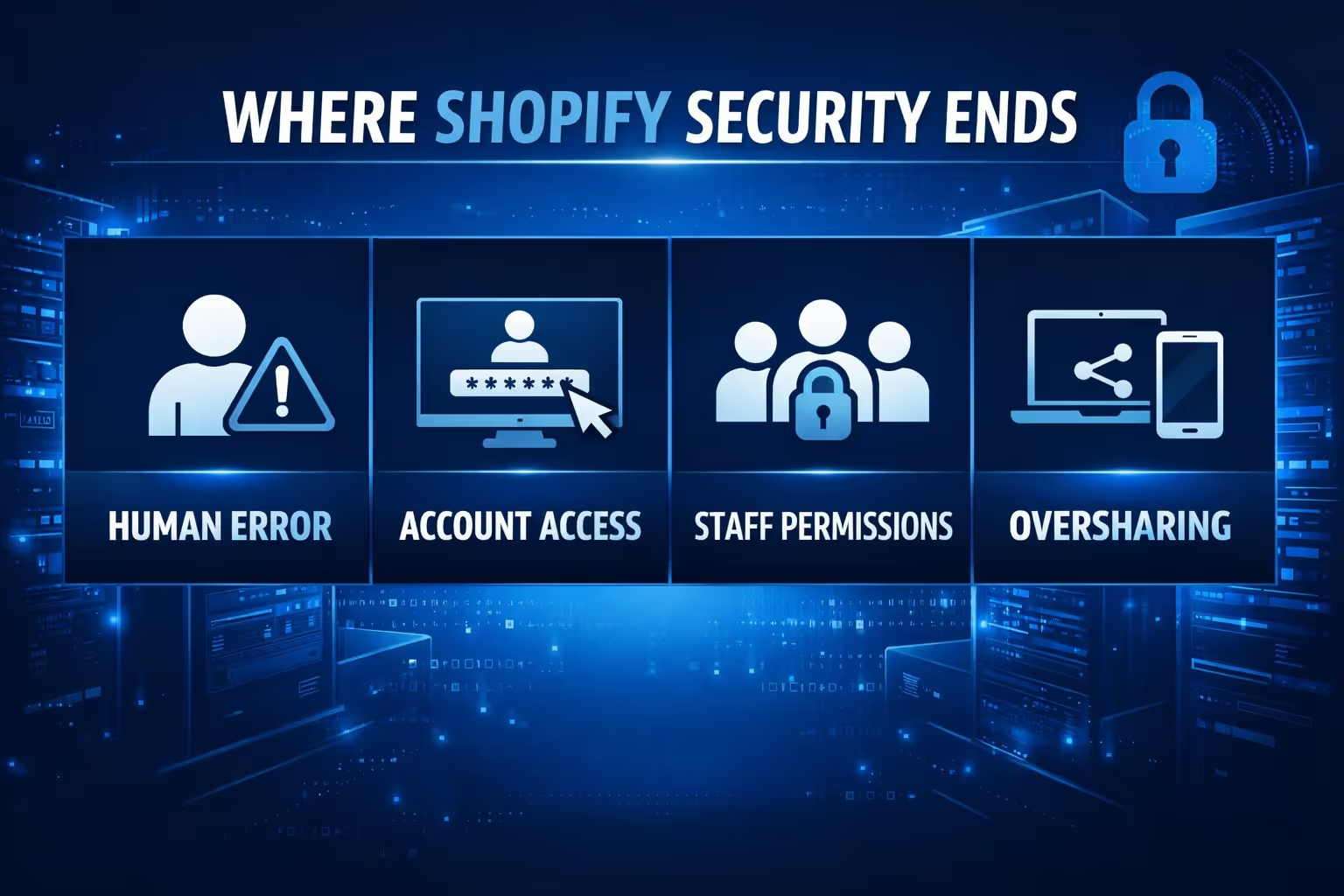
This is the part many articles gloss over, but it is where most real-world issues start.
Shopify secures the platform. Merchants secure access and behavior.
Shopify cannot control passwords, staff habits, or the apps a store installs. Those decisions live entirely at the store level.
The most common Shopify security incidents involve compromised admin accounts. Phishing emails, reused passwords, or missing two-factor authentication create easy entry points.
Once an attacker has admin access, the platform’s strength does not matter. They are inside by permission, even if that permission was given unknowingly.
Two-factor authentication dramatically reduces this risk, but only if it is enabled and enforced for everyone with access.
As stores grow, access tends to spread. Designers, marketers, agencies, and support staff all need some level of entry. Problems arise when permissions are not limited or reviewed.
Shopify provides granular role controls, but they only help if used intentionally. Fewer permissions mean fewer ways for mistakes or abuse to happen.
Apps are one of Shopify’s biggest strengths, but they are also the area where merchants have the most influence over security outcomes.
Every app requests specific permissions. Some need access to products. Others need orders or checkout scripts. The problem is not apps themselves, but permission mismatches.
Security issues tend to appear when an app requests more access than its function requires, or when old apps remain installed long after they stop being useful. Shopify reviews apps before listing them, but that does not replace merchant judgment. Reviewing permissions is part of maintaining a healthy store.
Some modern attacks target the storefront rather than the server. Malicious scripts injected through compromised apps or themes can skim data before it ever reaches Shopify’s secure systems.
These attacks are rare but serious. They are also hard to detect if merchants are not paying attention. Regular app audits and cautious installation habits are the best defense.
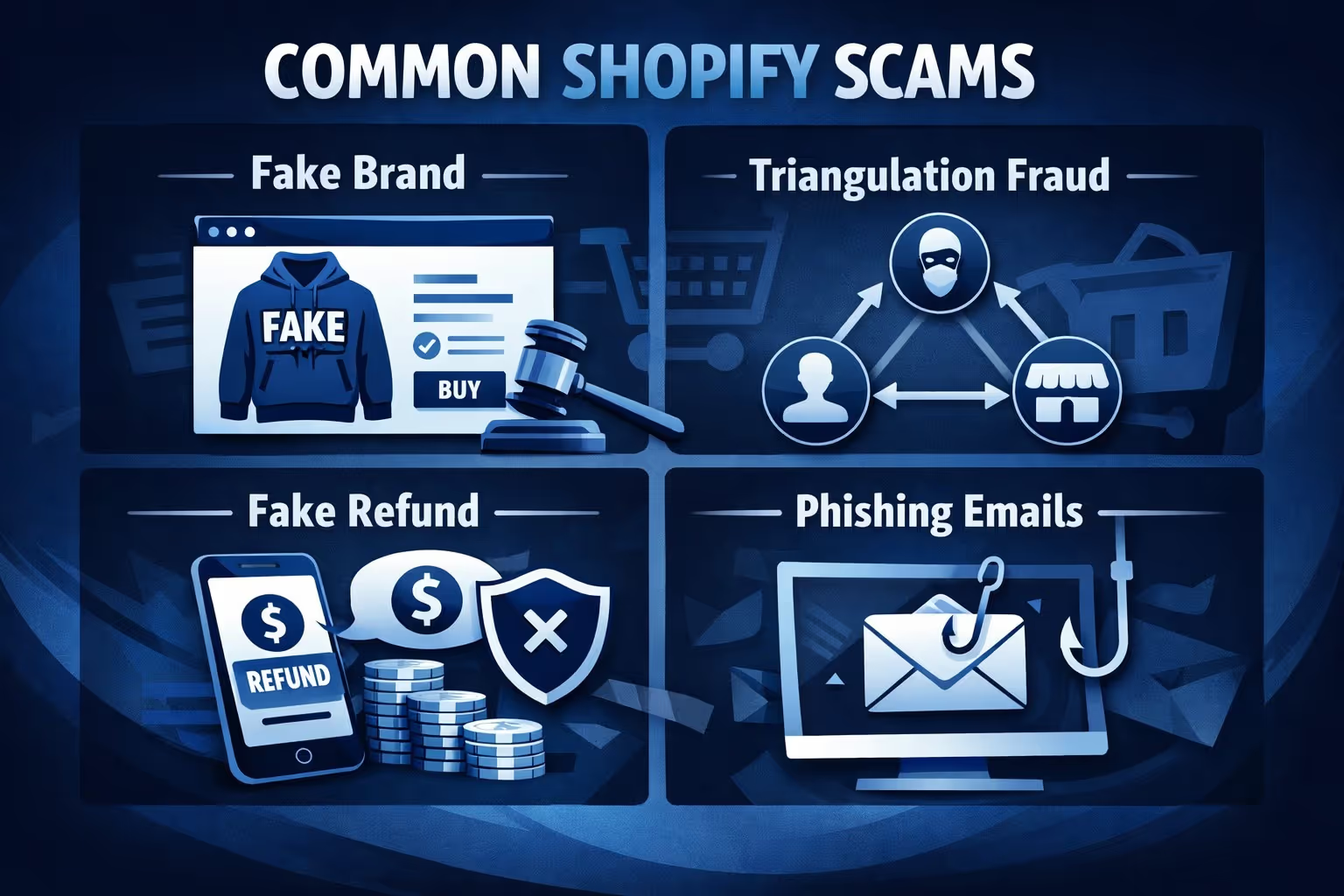
Even with a secure platform, scams still happen. Not because Shopify is unsafe, but because fraud usually targets people, not infrastructure. These examples reflect the most common patterns merchants actually run into.
One of the most damaging scams involves fake Shopify stores that copy real brands. Scammers duplicate product images, descriptions, and even social proof, then run ads pointing to the fake store. Customers believe they are buying from the original brand, only to receive low-quality items or nothing at all.
For legitimate merchants, the damage goes beyond lost sales. Brand trust takes a hit, customer support gets flooded with complaints, and refund disputes increase. Shopify can take these stores down, but the impact often happens before action is taken. Monitoring for brand impersonation becomes part of staying safe.
Triangulation fraud is harder to spot because it initially looks like a normal sale. A scammer sets up a storefront offering popular products at low prices. When a customer places an order, the scammer buys the product from a real store using stolen credit card details and ships it directly to the customer.
The customer gets the product. The real store later receives a chargeback when the card owner disputes the transaction. The scammer disappears with the profit. Shopify’s fraud signals can flag some of these orders, but merchants still need to review high-risk transactions carefully.
This scam targets store owners directly. A buyer claims an item arrived damaged or incorrect and requests a refund. Sometimes they provide fake tracking numbers or send back empty boxes or different items altogether.
If return policies are unclear or loosely enforced, merchants may issue refunds without verifying the return. Over time, these small losses add up. Clear return rules and careful inspection of returned items help reduce this risk significantly.
Phishing remains one of the most effective attack methods. Emails often look identical to official Shopify notifications and claim there is an urgent issue with payments, billing, or account access. The goal is to trick the merchant into entering login credentials on a fake page.
Once access is compromised, attackers can change payout settings, install malicious apps, or redirect traffic. Two-factor authentication stops most of these attacks instantly, even if a password is exposed.
Some scams do not target money directly. Instead, attackers inject hidden spam pages or links into a store, often through vulnerable third-party apps or outdated themes. These pages damage search rankings, confuse customers, and quietly erode trust.
Merchants usually discover the issue after noticing traffic drops or strange indexed pages. Regular app reviews and removing unused tools help prevent this type of slow, invisible damage.
In most cases, Shopify is safer by default.
That does not mean other platforms cannot be secure. It means Shopify removes many opportunities for mistakes by handling infrastructure, payments, and updates centrally.
Self-hosted platforms can reach similar levels of security, but only with consistent maintenance, technical expertise, and disciplined processes. For many businesses, that level of operational overhead is unrealistic.
Shopify’s value is not just that it is secure, but that it stays secure without constant intervention.
Shopify is a secure platform built to handle real-world ecommerce risks at scale. Its infrastructure, payment systems, and compliance standards are solid and well maintained.
At the same time, safety is shared. The platform protects the foundation. Store owners protect access, behavior, and daily operations. Most problems arise not from technical failures, but from preventable human decisions.
If you understand where your responsibility begins and take it seriously, Shopify offers one of the safest environments available for running an online store.
And for most merchants, that balance of strong defaults and clear ownership is exactly what makes Shopify a reliable choice.


