Best Facebook Ads Agencies Guide for Brands That Want Real Results
A practical look at what Facebook ads agencies actually do and which types of teams make sense for different business goals.
Mar 24, 2026



Ask ten people whether Shopify is free and you will probably hear ten slightly different answers. Some will say yes, because you can sign up without paying. Others will say no, because every real store they know is on a paid plan. Both answers come from a real place, which is why this question keeps coming up.
Shopify sits in an awkward middle ground. It is not a free platform in the long-term sense, but it also does not demand a credit card on day one in the same way traditional software once did. You can enter, explore, build, and experiment before money changes hands. That makes it feel free, at least at first.
This article explains what Shopify actually offers at no cost, when payment becomes unavoidable, and how much control you really have before committing. If you are trying to decide whether Shopify fits your budget or if you are simply curious about what “free” really means here, this breakdown will give you a clear answer.
Shopify does not use the word “free” in the same way as platforms that offer permanent free tiers. There is no version of Shopify where you can run a live store indefinitely without paying something. Instead, Shopify focuses on removing friction at the start.
You can create an account, access the admin panel, design your store, and test features during a trial period. At that stage, Shopify is free in a practical sense. You are not charged, and you can see whether the system makes sense for you.
The key point is this: Shopify’s free access is temporary and conditional. It exists to help you evaluate the platform, not to run a business forever.
Once you want to accept real orders, publish your store publicly, and collect payments, you move out of the free phase and into paid territory.
Once Shopify moves from free to paid, the real question is not just what you are paying, but what you are getting back. Ads are often the first place costs start to feel risky. You spend money before you know what will actually convert. That is exactly the problem we built Extuitive to solve.
At Extuitive, we help Shopify stores create, validate, and launch high-performing ads before real budget is spent. Instead of guessing which message, image, or angle will work, we test ads using our network of more than 150,000 AI consumer agents modeled on real behavioral data. These agents simulate how real shoppers respond to creative, pricing, and positioning, so weak ideas get filtered out early and strong ones rise fast.
For Shopify merchants, the workflow is simple. You connect your store, we generate and validate ad concepts in minutes, and then you launch with confidence. What used to take weeks of manual testing, expensive panels, or wasted ad spend now happens dramatically faster and at a fraction of the cost. Our customers consistently tell us the same thing: ads come together quicker, messaging feels sharper, and results show up sooner.
Shopify may not be free once you start selling, but smarter tools can make those costs work harder. We built Extuitive as a Shopify partner to remove guesswork from growth, so every dollar you invest in ads is backed by real validation, not hope. If you are already paying for Shopify, this is where optimization stops being optional and starts becoming an advantage.
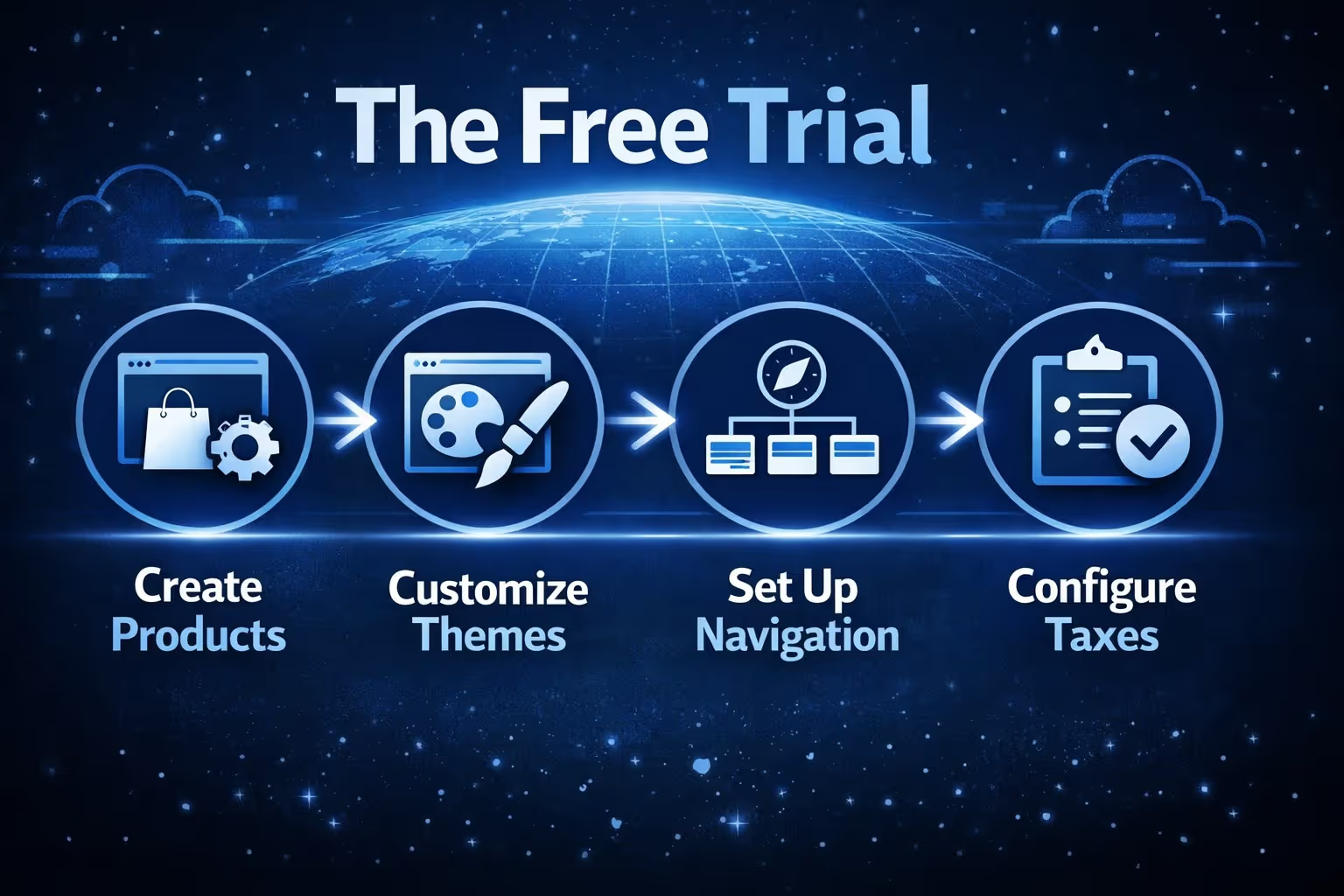
Shopify currently offers a short free trial. During this period, you can build almost the entire store from the inside out.
You can:
From a learning perspective, this is generous. You are not locked into a demo version with artificial limits. The admin experience you see during the trial is the same one used by paying merchants.
What you cannot do during the free trial is sell. Checkout is disabled for real customers, and payment processing does not go live until you choose a plan. That boundary is intentional. Shopify lets you prepare, but not operate, for free.
If you have followed Shopify for a while, you might remember when the free trial lasted much longer. That changed, and not by accident.
Shopify noticed that many users were treating long trials as a way to delay decisions rather than evaluate fit. Stores were half-built, abandoned, and never launched. From Shopify’s perspective, that did not help merchants or the platform.
Shorter trials encourage faster clarity. Either the platform fits your needs, or it does not. This shift also explains why Shopify pairs the free trial with heavily discounted first months. The trial lets you explore, and the low-cost intro period lets you test selling without major risk.
After the trial ends, Shopify often offers a symbolic price for the first few months. This is not technically free, but it is close enough that many people treat it that way.
Paying a small amount per month unlocks:
This phase is important because it is the first time you see how Shopify behaves under real conditions. Traffic, abandoned carts, refunds, app costs, and customer support all become real.
If you are careful, this low-cost period can act as an extended trial with actual data attached to it. You are no longer guessing how Shopify feels. You are running a real store.
Shopify stops feeling free the moment one of three things happens:
The monthly subscription fee is the most obvious cost, but it is rarely the only one. Over time, stores pick up additional expenses that do not show up on the pricing page.
This is not unique to Shopify. It happens on every serious ecommerce platform. The difference is how quickly those costs appear and how transparent they are.
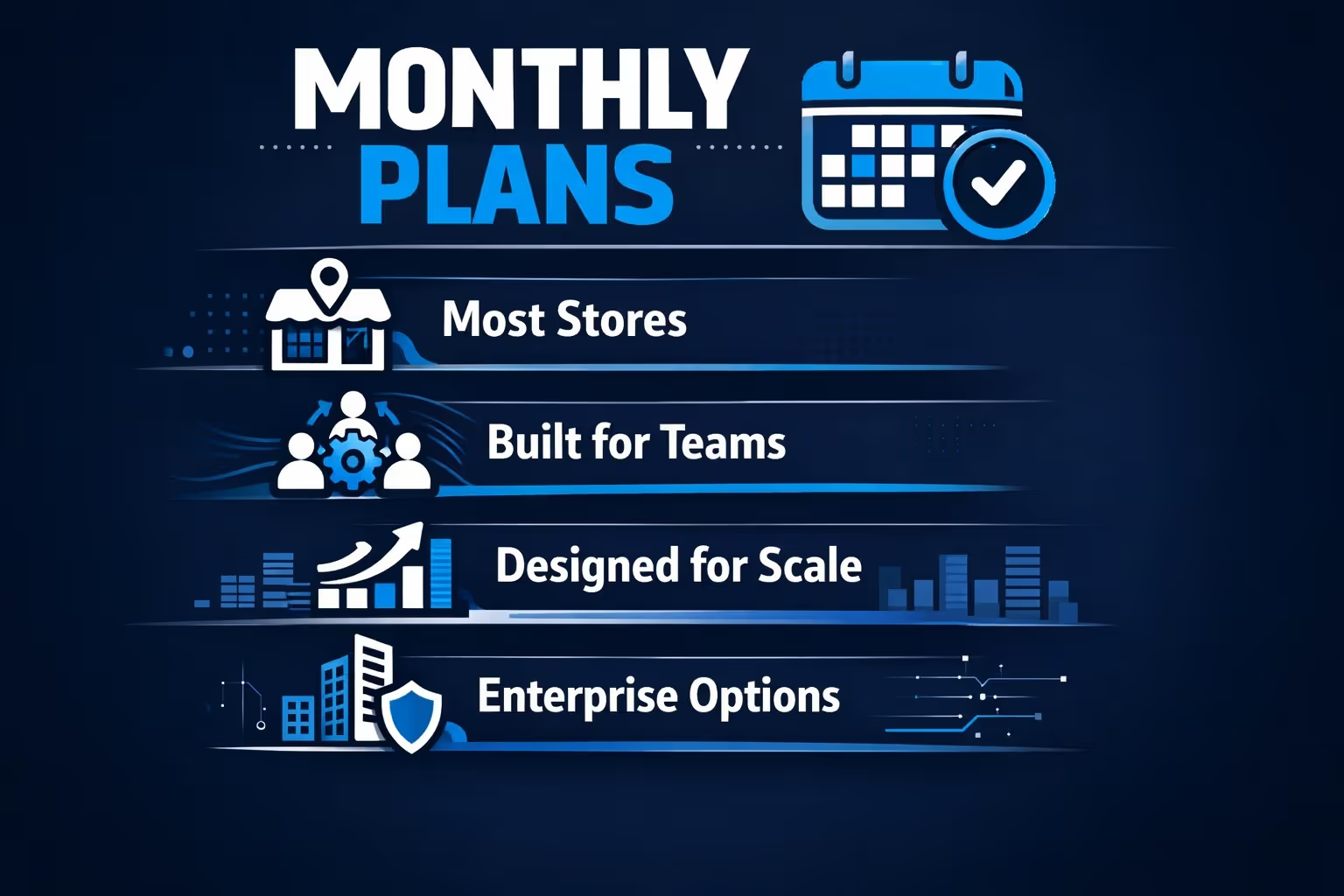
Once the introductory period ends, you move onto standard pricing. At this point, Shopify becomes a paid tool in the traditional sense. Every plan includes hosting, security, access to the Shopify admin, checkout and payment integration, core ecommerce functionality, and customer support. The differences are not about whether you can sell, but about how comfortably you can operate and scale as the business grows.
The Basic plan is designed for solo founders and small businesses that need a fully functional online store without extra complexity. It supports unlimited products, multichannel selling, and a reliable checkout, which makes it enough for many early-stage stores. The limitations mainly show up around staff access and advanced reporting, but for merchants who are still validating products or demand, this plan often covers everything that matters.
The Grow plan is aimed at stores that have moved past the one-person stage and need more flexibility behind the scenes. It allows additional staff access, offers more detailed reporting, and slightly improves transaction economics. The storefront itself does not change much, but day-to-day operations feel less tight, especially when sales volume increases or responsibilities are shared across a small team.
The Advanced plan targets stores operating at higher volume or across multiple markets. It focuses on deeper analytics, better performance handling during traffic spikes, and more control over international selling. This plan usually makes sense only once decisions become more data-driven and operational complexity starts to grow, which is why it tends to be unnecessary for smaller or newer stores.
Shopify Plus and enterprise-level plans sit outside the standard upgrade path and are built for large, established businesses. These plans offer extensive customization, advanced automation, and dedicated support, turning Shopify into a core commerce system rather than just a store platform. For most merchants, this level is not relevant early on and only becomes part of the conversation once scale demands it.
Even after paying for a plan, Shopify still takes a percentage of each sale, depending on how you accept payments.
If you use Shopify Payments, you avoid extra platform transaction fees, but you still pay standard card processing rates. These rates are not hidden, but they are easy to overlook when people focus only on monthly pricing.
If you use a third-party payment provider, Shopify adds an additional transaction fee on top of card processing. This is one of the clearest examples of Shopify not being free beyond the surface.
For stores with higher sales volume, these percentages matter more than the subscription fee itself.
Shopify works well out of the box, but most stores install apps sooner or later. Some are free, many are not.
Common reasons people add paid apps include:
Individually, these apps may seem inexpensive. Together, they often exceed the cost of the Shopify plan itself. This is not a flaw in Shopify, but it is part of the real cost structure.
A store with ten paid apps is no longer anywhere near free, even if the base plan feels affordable.
Shopify gives you a working store address, but most businesses want a custom domain. That is an additional yearly cost.
Themes are another decision point. Shopify offers free themes that are perfectly usable. Many merchants still choose paid themes for design flexibility or brand alignment.
Neither of these costs is required on day one, but they often appear within the first year. Again, Shopify is not hiding these expenses, but they do not show up in the “Is Shopify free?” conversation very often.
In short, no.
You cannot keep checkout active, accept payments, publish a live store, or process real orders without paying Shopify something. While you can build privately, test layouts, and explore features during the trial period, those activities stop short of operating a real business.
Beyond the trial, Shopify requires a paid plan to function as a live commerce platform. Ecommerce is not an optional add-on here. It is the core product, and it does not run for free once customers are involved.
Shopify’s trial and introductory pricing tend to work best for first-time founders who want to test an idea without committing upfront. It also suits small teams that need to validate demand before investing heavily, as well as creators launching a first product who want a clean path from setup to real sales.
This entry model is also useful for businesses migrating from another platform. It gives them space to rebuild, compare workflows, and check performance before switching fully.
In these situations, the early “free” phase reduces pressure. You can learn the system, make mistakes, and adjust before money becomes a serious factor. For anyone looking for a zero-cost side project that can run indefinitely without fees, Shopify is usually not the right fit.
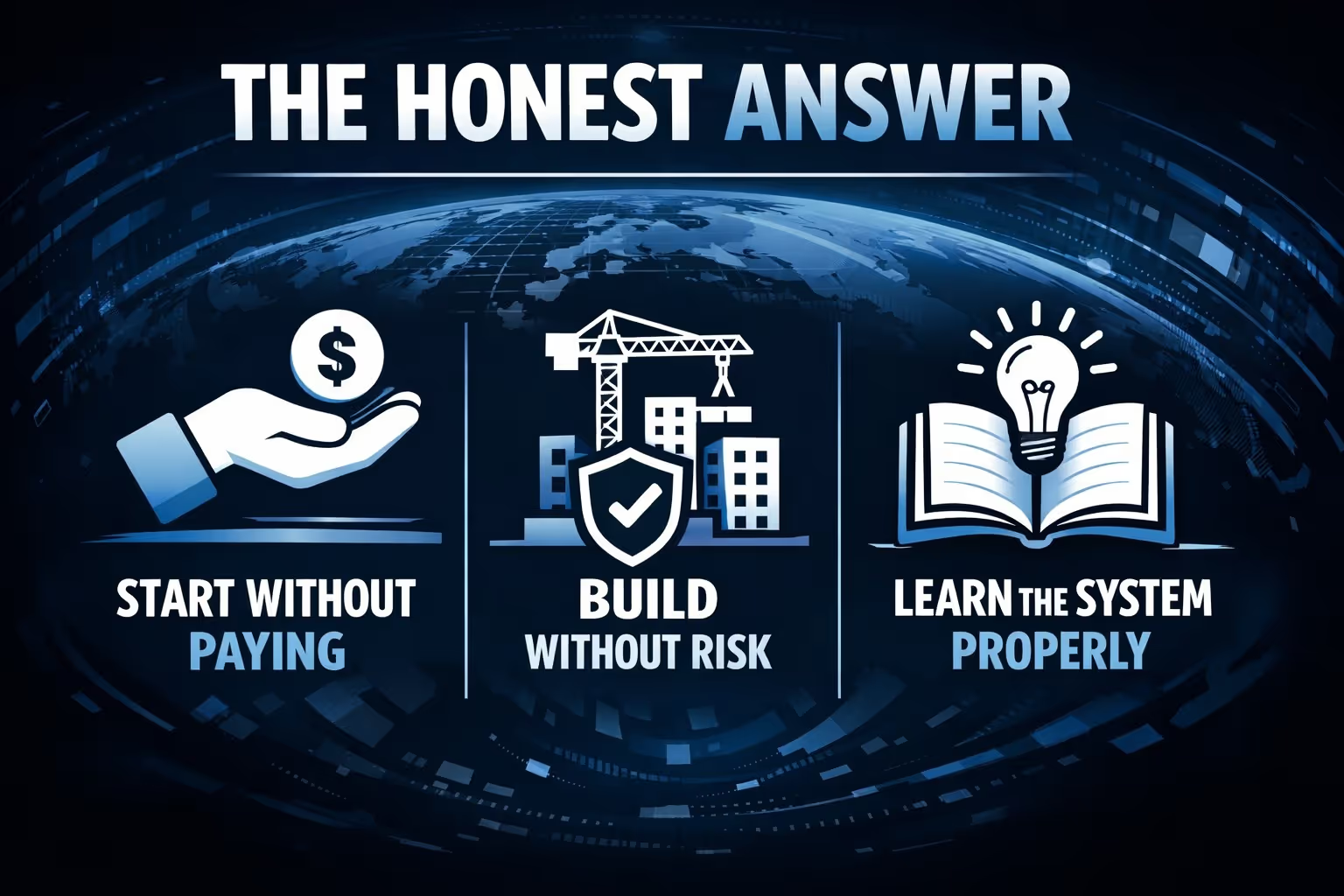
Shopify is free to explore, free to learn, and cheap to test. It is not free to run.
You can:
But once you want real customers and real revenue, Shopify becomes a paid tool with ongoing costs.
That is not a trick. It is the business model.
The idea that Shopify is free comes from a mix of marketing language, short trials, and low intro pricing. None of those are misleading on their own, but together they create confusion.
If you think of Shopify as a professional tool with a free entry phase, the pricing makes sense. If you expect a free ecommerce platform in the traditional sense, it will disappoint you.
The right question is not whether Shopify is free. It is whether the value you get justifies the cost once the free phase ends. For many businesses, the answer is yes. For others, it is not.
Knowing that upfront puts you in control, which is exactly what a good platform should do.


