How to Drive Traffic to a Shopify Store Without Wasting Time
Learn practical ways to drive traffic to your Shopify store using SEO, content, ads, and channels that bring buyers, not just clicks.
Mar 25, 2026



At some point, almost every online seller hits the same question: should I sell on Amazon, or should I build my own store with Shopify?
On the surface, it looks like a simple choice. Amazon gives you instant access to millions of buyers. Shopify gives you control, flexibility, and your own brand. In reality, the decision is less about which platform is “better” and more about what kind of business you’re trying to build.
This article breaks the comparison down without hype or platform loyalty. No shortcuts, no one-size-fits-all answers. Just a clear look at how Amazon and Shopify actually work, where each one shines, and where the trade-offs start to matter once real money and time are involved.
Amazon is built for transactions. It is exceptionally good at matching buyer intent with available products. If your product fits an existing demand pattern, Amazon can generate sales faster than almost any other channel.
Amazon works well when:
The marketplace removes friction. Customers trust Amazon. Checkout is familiar. Shipping is fast. Fulfillment by Amazon handles logistics at scale. For many sellers, this allows revenue to appear long before they could build traffic to their own store.
For early traction, Amazon is often unmatched.
The same structure that makes Amazon powerful also creates ceilings.
On Amazon:
As sales grow, so do referral fees, fulfillment fees, storage costs, and ad spend. In competitive categories, price pressure increases. Reviews become a defensive asset rather than a growth lever.
You can scale revenue on Amazon. Many businesses do. But growth remains tightly coupled to Amazon’s rules and economics.
At a certain size, sellers often realize they are building Amazon’s marketplace more than their own business.
Shopify is not a marketplace. It is infrastructure. That distinction matters more as a business grows.
With Shopify, there is no built-in traffic. Every visitor is earned. That makes the early stage harder. But it also changes the nature of growth over time.
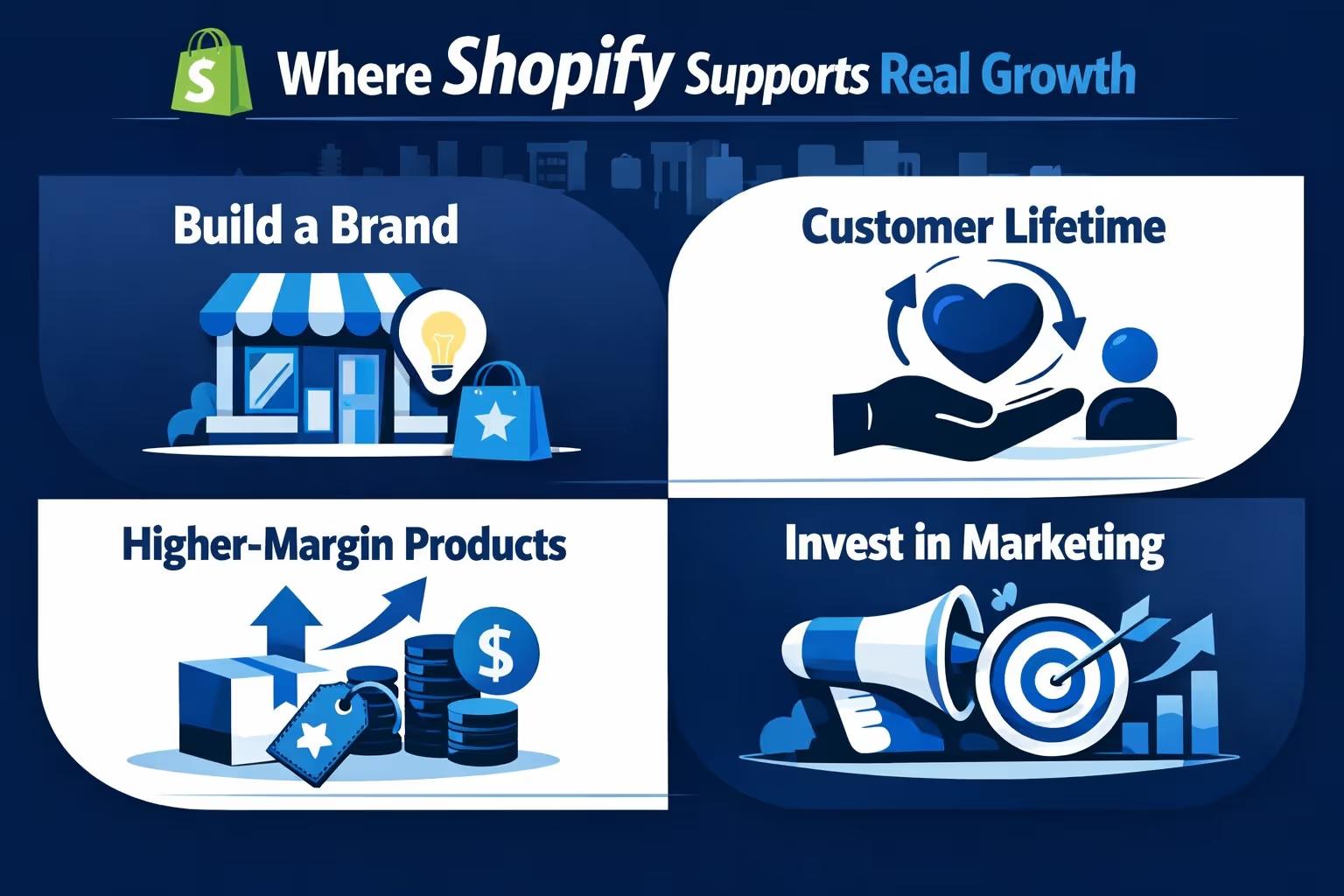
Shopify shines when:
On Shopify, you own the customer relationship. You control the storefront, the checkout, the messaging, and the post-purchase experience. Email, SMS, subscriptions, loyalty, content, and SEO all compound over time.
Costs are more predictable. You pay a platform fee and processing fees, not a commission on every sale. As volume grows, margins often improve rather than shrink.
Growth is slower at first. But it is cumulative.
Shopify does not hand you customers. Growth requires:
Many stores fail because sellers underestimate this work. Shopify does not protect you from weak positioning or poor products. It simply gives you the tools to build something real if you use them well.
For growth-oriented businesses, that trade-off is often worth it.

If you choose Shopify, ads quickly become one of the biggest levers for growth and one of the biggest risks. You have full control, but that also means every creative test, every audience experiment, and every budget decision is on you. That is exactly where we come in.
At Extuitive, we help Shopify brands predict how their ads will perform before they go live. Instead of spending weeks testing ideas that might fail, we use AI models trained on your historical data and validated against real campaign results to forecast winners and losers in advance. The goal is simple: stop wasting spend on underperforming ads and scale what actually works.
Our platform analyzes creatives at scale, identifies which audiences are most likely to convert, and shows you expected performance in clear, practical terms like CTR and ROAS. Brands use Extuitive to launch with more confidence, move faster without guessing, and grow paid acquisition without the usual trial-and-error tax. If Shopify is your foundation for long-term growth, we help make sure your advertising supports that growth instead of slowing it down.
We work with Shopify teams that want results they can plan around, not surprises after the budget is gone. That is why Extuitive is built for prediction, not experimentation for its own sake.
One of the clearest differences between Amazon and Shopify appears once a business starts growing beyond its early sales phase. The way each platform charges fees directly shapes how profit behaves as revenue increases.
Amazon’s pricing model is built around variable fees. Each sale triggers multiple costs that stack on top of one another, and those costs rise in proportion to volume. Referral fees differ by category, fulfillment fees apply to every unit shipped, and storage costs increase during peak seasons or when inventory moves slowly. On top of that, advertising often becomes unavoidable as competition increases, and returns or compliance issues add further pressure on margins.
The result is that revenue growth does not translate cleanly into profit growth. Doubling sales on Amazon does not mean doubling profit. In some cases, profit barely moves at all. Amazon rewards sellers who optimize listings, logistics, and ad efficiency, but it also takes a percentage of every successful transaction. The more you sell, the more you pay for the privilege of selling there.
Shopify works differently. Most of its core costs are fixed or semi-fixed. You pay a monthly subscription, standard payment processing fees, and any apps you choose to run your store. These expenses do not automatically rise just because your sales increase.
As revenue grows, marketing spend usually increases as well, but that spending builds assets rather than disappearing into commissions. Traffic data, customer lists, and brand recognition accumulate over time. A well-run Shopify store can gradually rely less on paid acquisition by improving repeat purchase rates, tightening conversion paths, and expanding its product range to an existing audience.
From a growth perspective, this difference is significant. Amazon ties success to ongoing fees. Shopify allows successful stores to improve efficiency and margins as they scale. That structural gap becomes more important the longer a business plans to operate.
Growth is not just numeric. It is also positional.
Amazon customers search for solutions, not stories. They compare prices, reviews, and delivery times. Brand loyalty exists, but it is secondary to convenience.
Even with Brand Stores and enhanced content, the environment remains product-centric. Your competitor’s listing is one scroll away. Often, it is cheaper.
This makes Amazon excellent for commodities and functional products. It is less forgiving for brands that rely on differentiation.
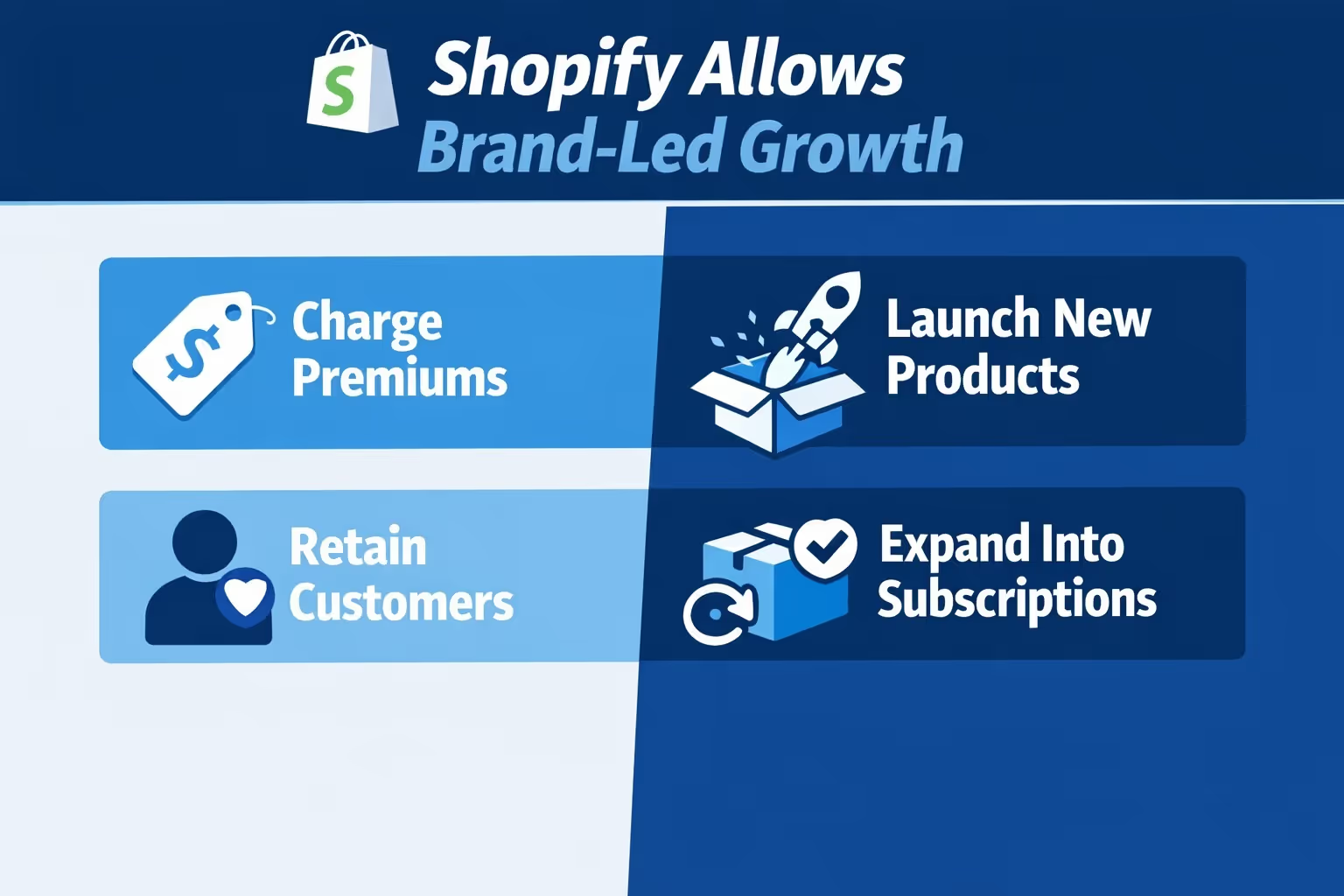
On Shopify, the brand is the destination. Design, voice, content, and storytelling matter. Over time, this creates pricing power.
Brands built on Shopify can:
Brand equity does not show up immediately in analytics. But it is one of the strongest drivers of long-term growth.
Fulfillment often becomes a growth bottleneck earlier than sellers expect. The difference between Amazon and Shopify is not just who ships the product, but how much control you keep as volume increases.
For sellers moving large quantities of similar products, Amazon FBA can be efficient and predictable. For businesses that care about customer experience, brand perception, and long-term margin control, Shopify’s fulfillment flexibility often becomes an advantage rather than a burden as the business grows.
Growth accelerates when learning compounds. The difference between Amazon and Shopify becomes clearer over time, not at launch, but after months of selling and marketing decisions.
Amazon gives sellers access to performance metrics such as impressions, clicks, and conversions. These numbers are useful for optimizing listings and ad campaigns inside the marketplace. What Amazon does not provide is deeper access to customer-level insights. Sellers cannot see who buys again, how customers behave across touchpoints, or how messaging outside the listing influences purchasing decisions.
This structure makes scaling efficient but shallow. You can improve short-term performance, but you cannot easily build a broader understanding of your audience or use that knowledge to shape future products, pricing, or brand strategy.
Shopify works in the opposite direction. Every visit, purchase, and interaction contributes to a clearer picture of how customers behave. Over time, patterns emerge around repeat purchases, content effectiveness, traffic quality, and price sensitivity. That information feeds smarter marketing decisions and more deliberate growth.
As these insights accumulate, marketing shifts from constant acquisition to system refinement. Effort moves toward improving retention, strengthening conversion paths, and building long-term customer value. That compounding effect is one of the main reasons Shopify-based businesses tend to grow more sustainably once they pass the early stage.
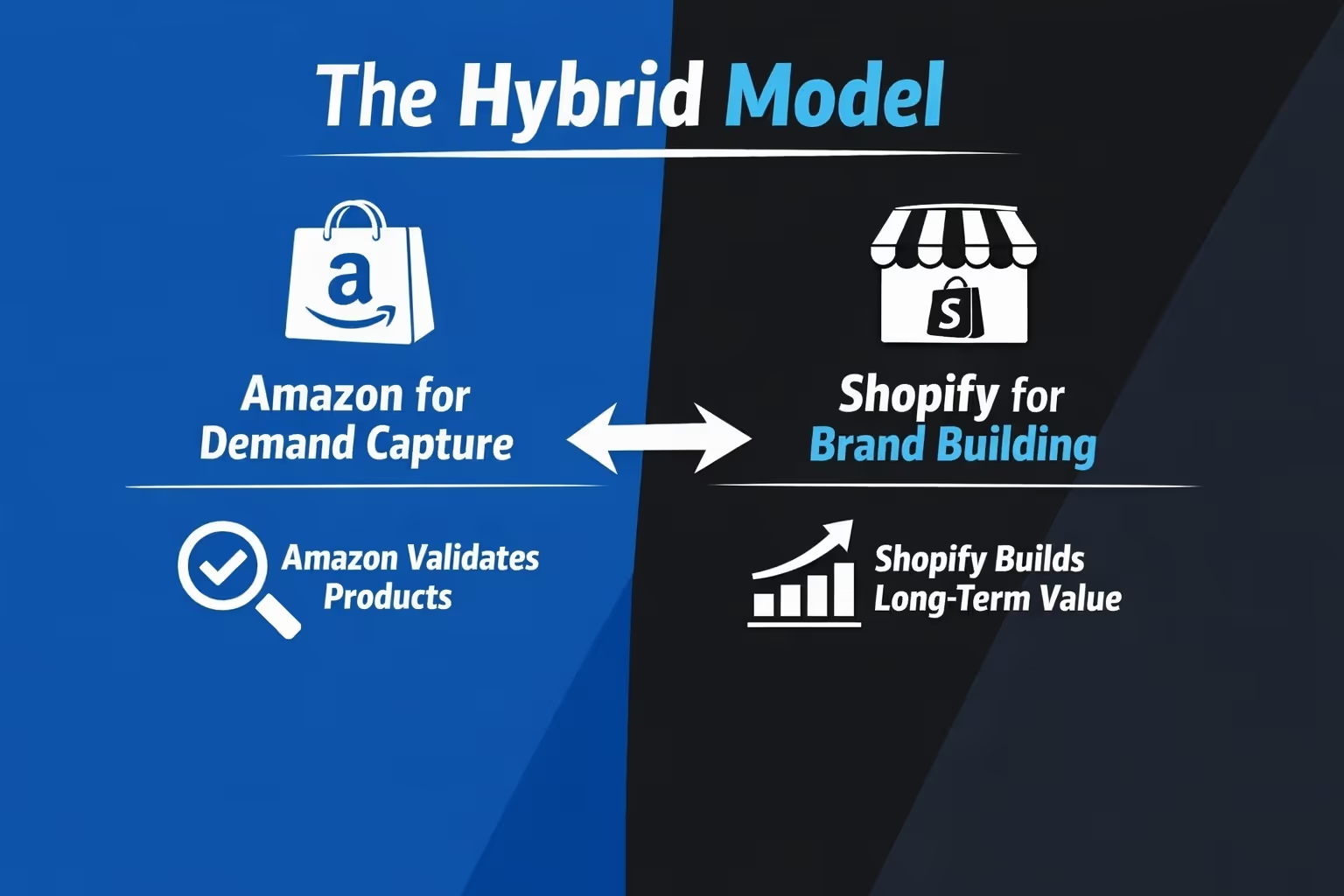
For many businesses, the most realistic answer is not Amazon or Shopify. It is both.
A hybrid approach often looks like this:
This approach reduces risk and creates optionality. It also requires discipline to avoid channel conflict and margin erosion.
The mistake many sellers make is treating one channel as an afterthought. Hybrid only works when each platform has a clear role.
The answer depends on what you actually mean by growth.
If growth means getting to market quickly, generating sales with minimal setup, and keeping operations simple in the early stages, Amazon is often the better starting point. Its built-in demand and managed fulfillment remove many of the barriers that slow new sellers down.
If growth means building strong margins, encouraging repeat purchases, controlling how your brand is presented, and reducing long-term dependence on a single platform, Shopify is usually the stronger foundation. It takes more effort to get traction, but that effort compounds over time into assets you own.
Most mature ecommerce businesses eventually move toward owning their audience, even if they began on marketplaces. That shift is rarely driven by emotion or branding ideals. It happens because the economics of ownership tend to work better as businesses scale.
Amazon and Shopify are not rivals in the way they are often presented. They solve different problems at different stages.
Amazon helps you sell. Shopify helps you build.
If your goal is real growth, not just revenue spikes, the question becomes less about where sales come from and more about who owns the relationship, the margin, and the future.
Platforms change. Algorithms shift. Fees increase.
Businesses that grow well plan for that early. And they choose their channels accordingly.


