Top Facebook Ads Agencies Houston - What to Know Before You Hire
Looking for Facebook ads agencies in Houston? This guide covers what to expect, how agencies work, and who they are best for.
Mar 24, 2026



If you’re planning to sell online, chances are you’ve already run into the big question – Etsy or Shopify? On the surface, they both get your products in front of customers, but the way they work couldn’t be more different. One gives you a ready-made audience, the other gives you total control. So how do you know which one actually fits what you’re building?
This article breaks it down in plain language. No fluff, no platform hype. Just a real comparison to help you figure out where your products and your time are best spent. Whether you're selling handmade jewelry or launching a full-blown brand, we’ll walk through what each platform brings to the table and where it might fall short.
Before diving into the tech, fees, and features, here's a mindset shift: you're not just choosing software. You’re choosing how your business operates, how much control you have, and how you interact with customers.
Etsy is a marketplace. Think of it like a giant digital craft fair. You're renting a stall in a very busy venue.
Shopify is your own storefront. You set the rules, design the space, and bring in your own crowd.
So the real question is: do you want exposure with limitations, or freedom with responsibility?
These two platforms help you sell online, but they do it in totally different ways. Let’s walk through how each platform handles the key parts of running an online store, and what that means for your business.
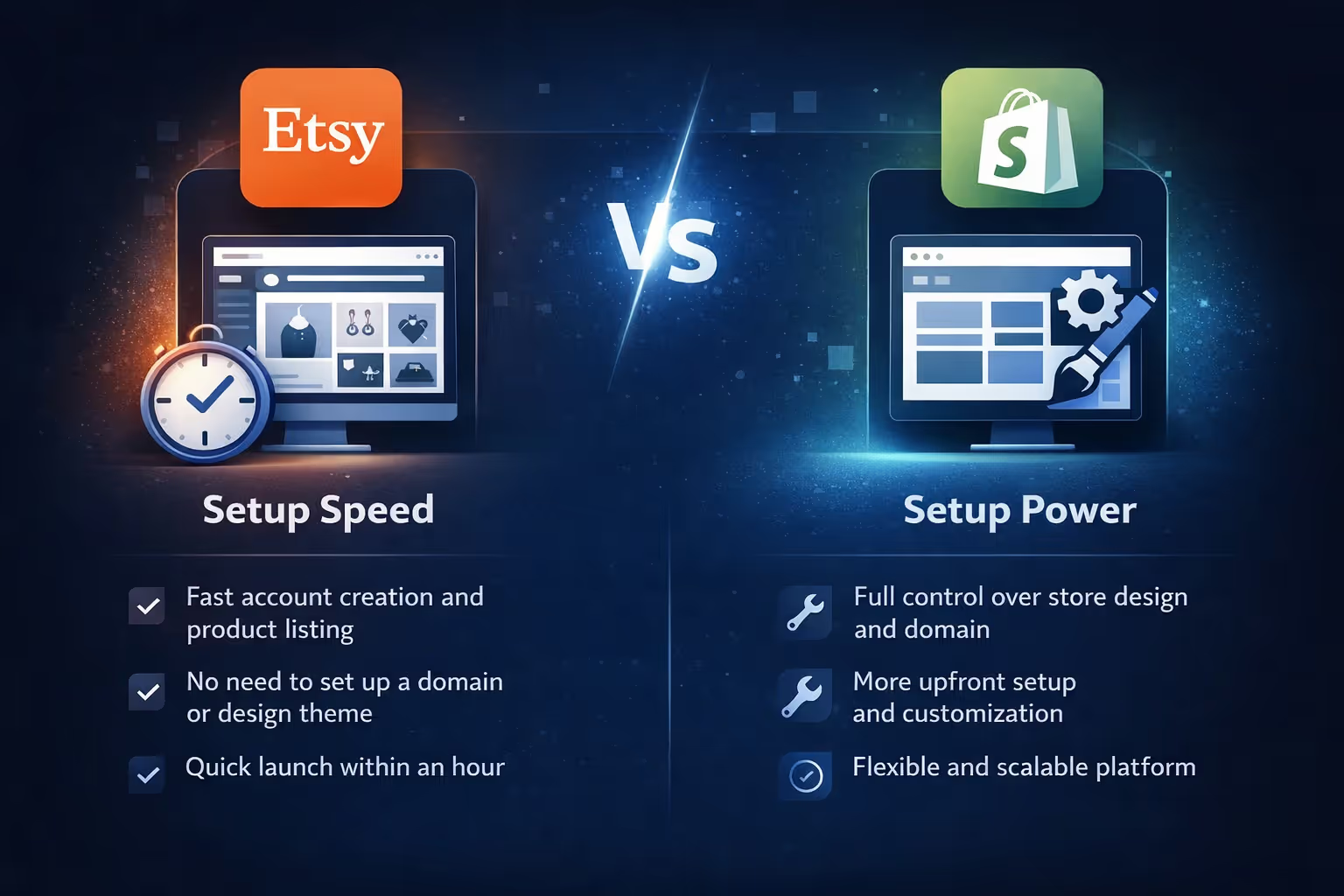
Let’s start at the beginning: getting your store live.
Etsy wins on speed. You could be up and running in an hour or less. You make an account, list your products, and start selling. There’s no need to think about themes, domains, or technical settings.
Shopify, on the other hand, takes more time. You’re not just uploading products – you’re building a brand. There are design decisions to make, apps to install, shipping to configure, and more. But that extra effort pays off in flexibility later on.
If you want a fast test run: Etsy is your friend.
If you want full control: Shopify gives you the tools, but it asks for more upfront.
With Etsy, your shop looks like... an Etsy shop. You get a banner, a logo, some photos, and product listings in Etsy’s format. That’s it. Your store sits next to thousands of others with the same layout.
Shopify flips that. You pick a theme (free or paid), adjust the layout, change fonts and colors, and build pages however you like. Want a homepage with customer reviews, a newsletter sign-up, and a custom product gallery? You can do that.
So the tradeoff is simple:
If branding matters to you (and it should if you're serious about growing), Shopify takes the lead.
Pricing gets messy fast, so let’s clear it up with what actually affects your take-home revenue.
Etsy charges per action:
Shopify has more predictable costs:
Here’s the big takeaway. Etsy is cheaper to start but chips away at every sale. Shopify has a higher upfront cost, but margins get better as you scale.
If you’re selling in volume or at higher price points, Shopify often ends up more profitable in the long run.
Etsy started with handmade, vintage, and craft supplies, and that’s still the heart of its community. They’ve since allowed some expansion (like print-on-demand or digital downloads), but there are still firm restrictions. Mass-produced goods that don’t meet Etsy’s seller policies are not allowed.
Shopify doesn’t care what you sell, as long as it’s legal. From supplements to subscriptions, ebooks to car parts, it’s all fair game.
So if your business idea sits outside the handmade/artisan category, Shopify opens more doors.
This is a big one.
Etsy gives you an audience. As of 2025, nearly 90 million active buyers use Etsy to search for goods. Your listings can be discovered organically through Etsy search and category pages, even without marketing.
Shopify gives you a toolbox. But you bring the people. You’ll need SEO, social media, email campaigns, or paid ads to get eyes on your store. That sounds harder, and it is at first, but the upside is you own the traffic. You build a customer list. You keep the data.
In short:
One is easier now. The other pays off later.
If you're selling on Shopify, getting traffic isn't automatic. You have to run ads, test creative, and make decisions fast. But guessing what will work is expensive. That’s exactly where we come in.
At Extuitive, we help you forecast how your ads will perform before you spend money on them. Using AI models that are trained and validated against real campaign data, we give you a way to test creativity at scale and predict actual results before going live. Whether you're focused on CTR, ROAS, or just finding the right audience, our platform gives you a clear picture of what’s likely to work, and what isn’t worth the spend.
We built Extuitive for brands that move quickly, especially those using platforms like Shopify. If you’re running ads to grow your store, you don’t have time (or budget) to throw money at guesses. We help you see ahead, so you can make decisions backed by data, not gut feelings.
Both platforms let you sell worldwide, but the experience is different.
Etsy does support international buyers and offers multi-currency features, but full currency support depends on whether Etsy Payments is available in your country.
Shopify offers full localization:
If you’re planning to expand globally, Shopify gives you more ways to tailor your store to different countries without extra apps or workarounds.
This is one of Shopify’s biggest strengths. Its app store has over 8,000 tools for everything from email automation to advanced analytics. You can build subscription models, upsell flows, loyalty programs, or even connect to marketplaces like Amazon and Walmart.
Etsy? It’s a closed ecosystem. You get basic shop stats, a few ad options, and some listing tools. That’s about it.
If you like to automate, optimize, and tweak performance, Shopify gives you room to play. Etsy keeps things simple, which is good until it starts to feel limiting.
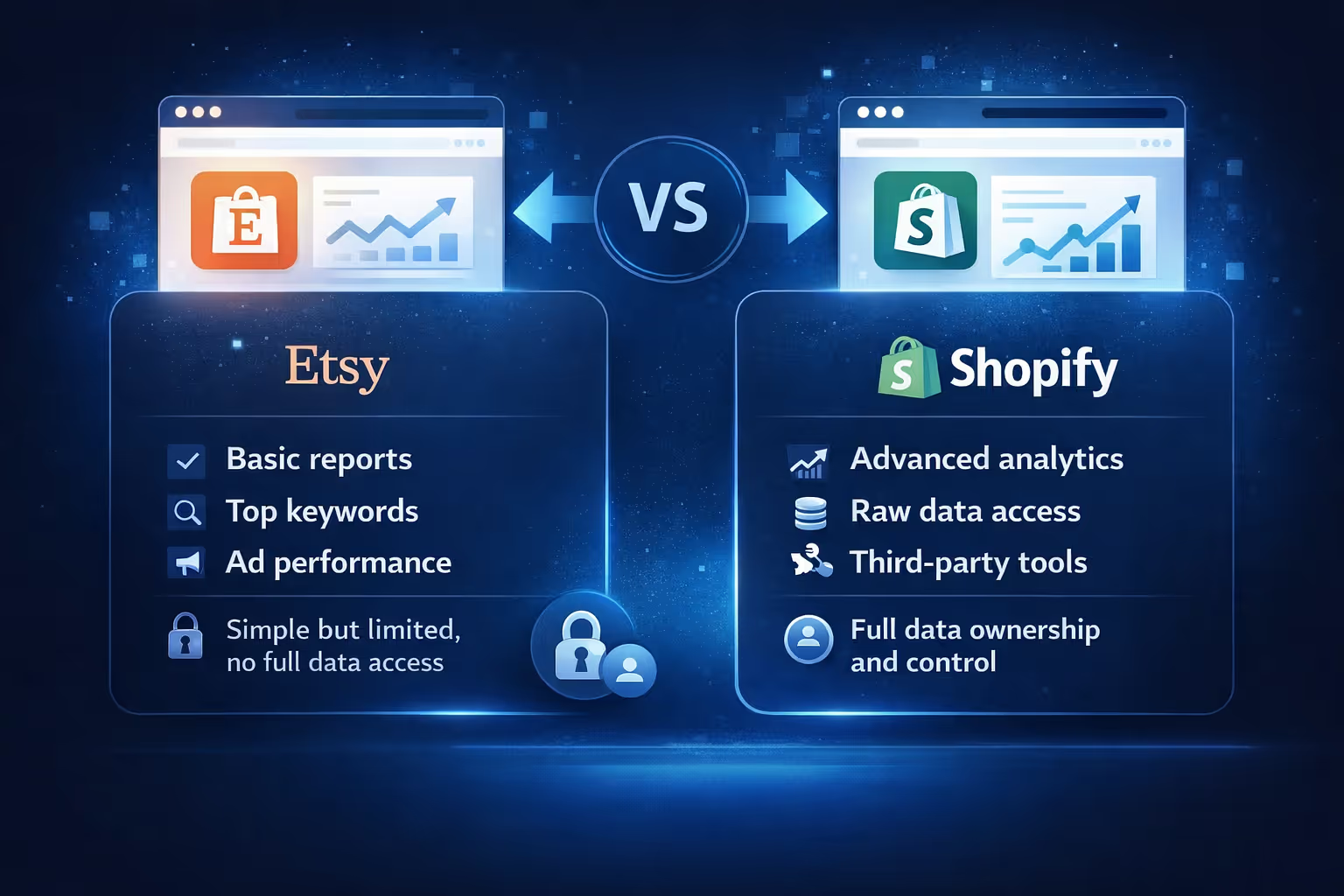
Etsy shows you the basics:
It’s clean and beginner-friendly, but doesn’t go very deep. You don’t get full control over customer data either.
Shopify’s analytics scale with your plan:
You also own the data. Emails, order history, location – it’s yours to use for retargeting, campaigns, and retention.
This part’s often overlooked.
When you sell on Etsy, you’re renting space on someone else’s property. If they change the rules or suspend your account, you don’t have many options. Sellers have reported payout holds, listing removals, and suspensions with little warning or explanation.
Shopify doesn’t run a marketplace, so it’s much less likely to interfere with your business. As long as your store follows legal and payment regulations, you’re in control.
Bottom line: if owning your store matters to you, Shopify wins. Etsy owns the marketplace and makes the rules.
Etsy support is functional but slow. You mostly deal with email tickets, and during peak seasons, resolution times can stretch.
Shopify offers 24/7 live support, including chat and phone. They also have a large partner network, educational content, and an AI assistant to guide you through common questions inside your admin.
If support speed matters to you or you’re not super tech-savvy, Shopify gives you more options when things go sideways.

Here’s a quick way to think about it:
Etsy is a better fit if:
Shopify is a better fit if:
Absolutely. Many sellers start on Etsy to test products, build a following, and generate early revenue. Then they open a Shopify store to grow their brand, reduce fees, and gain ownership.
While there’s no built-in integration between Etsy and Shopify, third-party apps can help sync inventory and manage listings across both platforms.
So, is Etsy or Shopify better?
That depends on what kind of business you're trying to build. Etsy is like a shared apartment in a great location – easy to move into, affordable, and full of neighbors. Shopify is like owning your own place. It takes more work, but you can do whatever you want with it.
If you're testing the waters, Etsy is a solid starting point. If you're planting roots and thinking long term, Shopify gives you the room to grow.
Either way, the best platform is the one that matches your goals today and doesn’t limit you tomorrow.


