Instagram Ads Optimization Checklist That Actually Improves Results
Most Instagram ads do not fail all at once. Performance usually slips because small things stack up. Targeting drifts, creatives lose relevance, budgets keep running, and no one notices until results are already down.
This checklist is meant to slow that slide. It is not about hacks or trends. It is about the few checks that matter when you want ads to stay efficient, predictable, and worth the spend. Use it to spot issues early, clean up what is underperforming, and make smarter decisions before the budget does the learning for you.
Step 1. Start With Predictive Ad Performance Using Extuitive
At Extuitive, we built our platform around a simple belief: most ad optimization happens too late. Teams launch creatives, wait for spend to reveal signal, then optimize after budget has already been burned. That model might have worked when attention was cheap. It does not scale anymore.
Most brands still follow the same pattern. Ads are launched, spend accumulates, signals arrive slowly, and optimization happens only after inefficient campaigns have already consumed budget. Extuitive is built to interrupt that cycle by shifting optimization to the pre-launch stage.
By combining brand-specific performance history with large-scale consumer intelligence, Extuitive forecasts how Instagram ad creatives are likely to perform in terms of CTR and ROAS. Predictions are contextual, meaning two brands can receive different performance forecasts for the same creative based on audience behavior, past results, and messaging patterns.
What Predictive Performance Changes in Optimization
Using predictive ad performance alters how Instagram ads are optimized across teams and campaigns.
Extuitive helps identify which creatives are most likely to earn attention and engagement before launch, reducing low-signal testing
Underperforming concepts are filtered out early, which limits wasted spend and shortens feedback loops
High-confidence creatives move forward faster, allowing budgets to be allocated with clearer expectations
Optimization decisions rely less on generic benchmarks and more on brand-specific performance patterns
Creative and growth teams gain earlier alignment, with fewer debates driven by delayed results
Instead of optimizing after spend reveals winners and losers, teams can make informed decisions earlier, when changes are cheaper and impact is higher.
Why This Matters for Instagram Ads Optimization
Predictive performance does not replace optimization. It changes when optimization begins.
When teams know which ads are more likely to work before launch, the rest of the checklist becomes easier to execute. Targeting is clearer, budgets are more controlled, testing is more focused, and performance becomes more predictable over time.
By acting as a memory layer for advertising, Extuitive helps ensure that learnings compound across campaigns rather than resetting with every new launch. The result is an Instagram ads optimization process that is more efficient, more scalable, and far less dependent on costly trial and error.
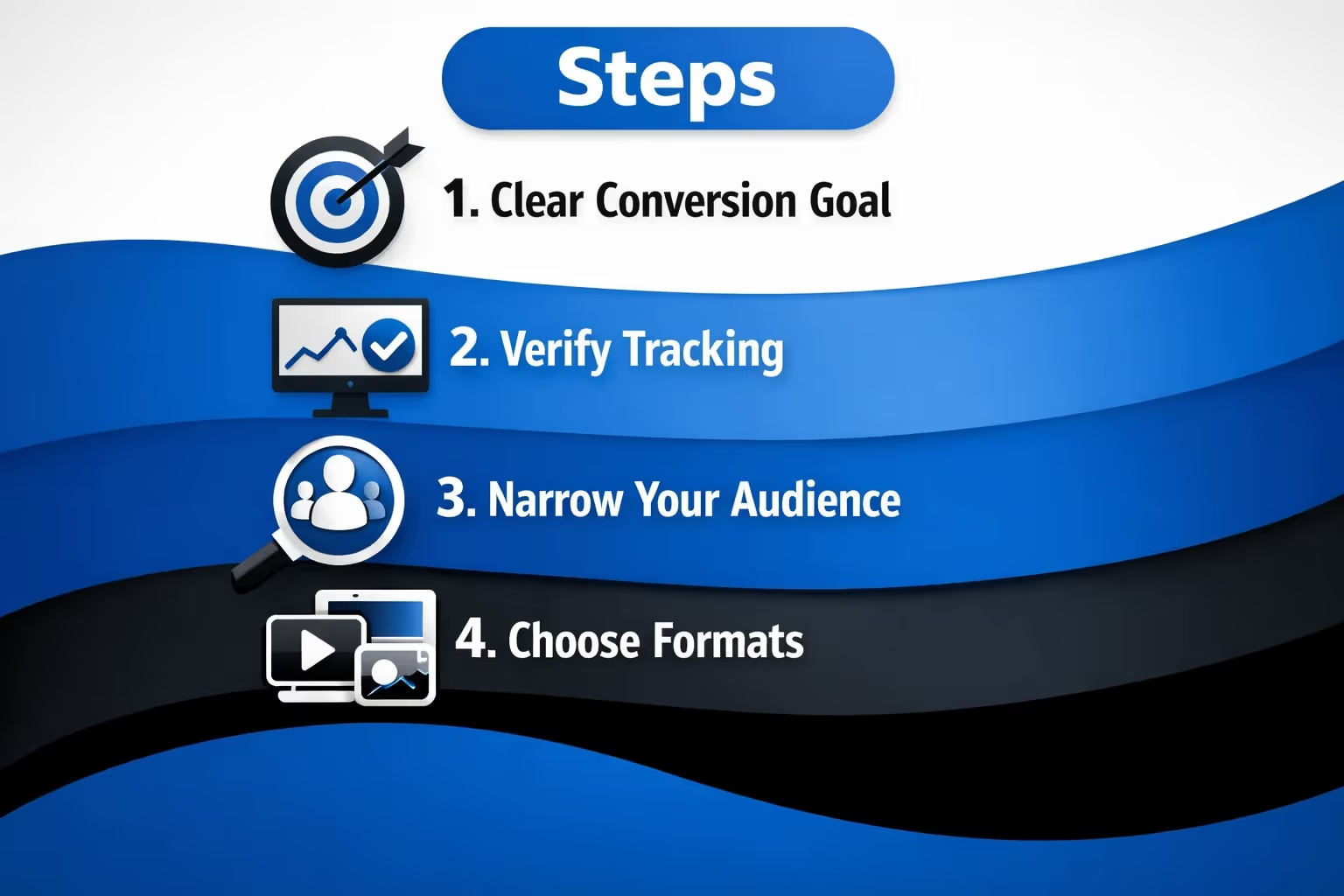
Step 2. Lock In One Clear Conversion Goal
Optimization always starts with clarity. If you are optimizing for more than one outcome at the same time, you are not optimizing at all.
Instagram allows you to chase many things. Purchases. Leads. Traffic. Video views. Engagement. The problem is not the options. The problem is letting different stakeholders pull the campaign in different directions.
Before touching creatives or budgets, write down the single action that defines success. One conversion event. One metric that decides whether the campaign is working.
For most performance-driven accounts, that means purchases or qualified leads. If volume is too low, add-to-cart or landing page views can be a temporary proxy. What matters is that everyone agrees on the same finish line.
When this step is skipped, optimization becomes emotional. People react to clicks when sales matter, or celebrate engagement that never turns into revenue.
Step 3. Verify Tracking Before Optimizing Anything Else
You cannot optimize what you cannot trust. Before adjusting creatives, budgets, or bids, tracking has to be reliable. Otherwise, every optimization decision is built on distorted signals.
1. Confirm You Are Tracking the Right Conversion Event
Start by verifying that the Meta Pixel or Conversions API fires on the exact action that defines success for the campaign. This should be the real outcome you care about, not a proxy event used out of convenience. When multiple events are treated as conversions, the algorithm receives mixed instructions and performance becomes harder to interpret.
2. Test Events Inside Meta Ads Manager
Trigger test actions and confirm they appear inside Meta Ads Manager. Look for delays, duplicate fires, or missing values such as revenue or currency. Tracking that appears to work on the surface can still introduce enough noise to undermine optimization.
3. Review Attribution Settings and Conversion Paths
Attribution windows shape how performance is reported, not how it actually happens. Make sure the active window reflects how users move from click to purchase or lead. If conversions typically happen days later or across devices, narrow attribution can undercount results and lead to premature decisions.
4. Fix Data Issues Before Changing Anything Else
Many ad accounts run for weeks with silent tracking problems. Conversion counts drift, reports stop matching backend numbers, and campaigns get paused for the wrong reasons. Clean tracking gives both the algorithm and the team a clear signal to work with. Without it, optimization is guesswork no matter how strong the creative or targeting may be.
Step 4. Narrow Your Audience Before You Scale It
Wide targeting is often sold as a shortcut to better results. In practice, it usually becomes a tax on efficiency, especially early in a campaign when the algorithm has limited signal to work with.
Start with the warmest audiences available. These groups convert with less friction and help the system understand what a good outcome looks like before you attempt to scale.
Recent website visitors and engaged users
Past buyers or subscribers
Email or CRM-based audiences
Seed-based Advantage+ Audiences built from high-quality converters (formerly known as 1% Lookalikes).
Only after these audiences deliver stable performance should cold interest targeting be introduced. When used too early, interests inflate costs, slow learning, and make optimization harder than it needs to be.
Good optimization narrows first and widens later.
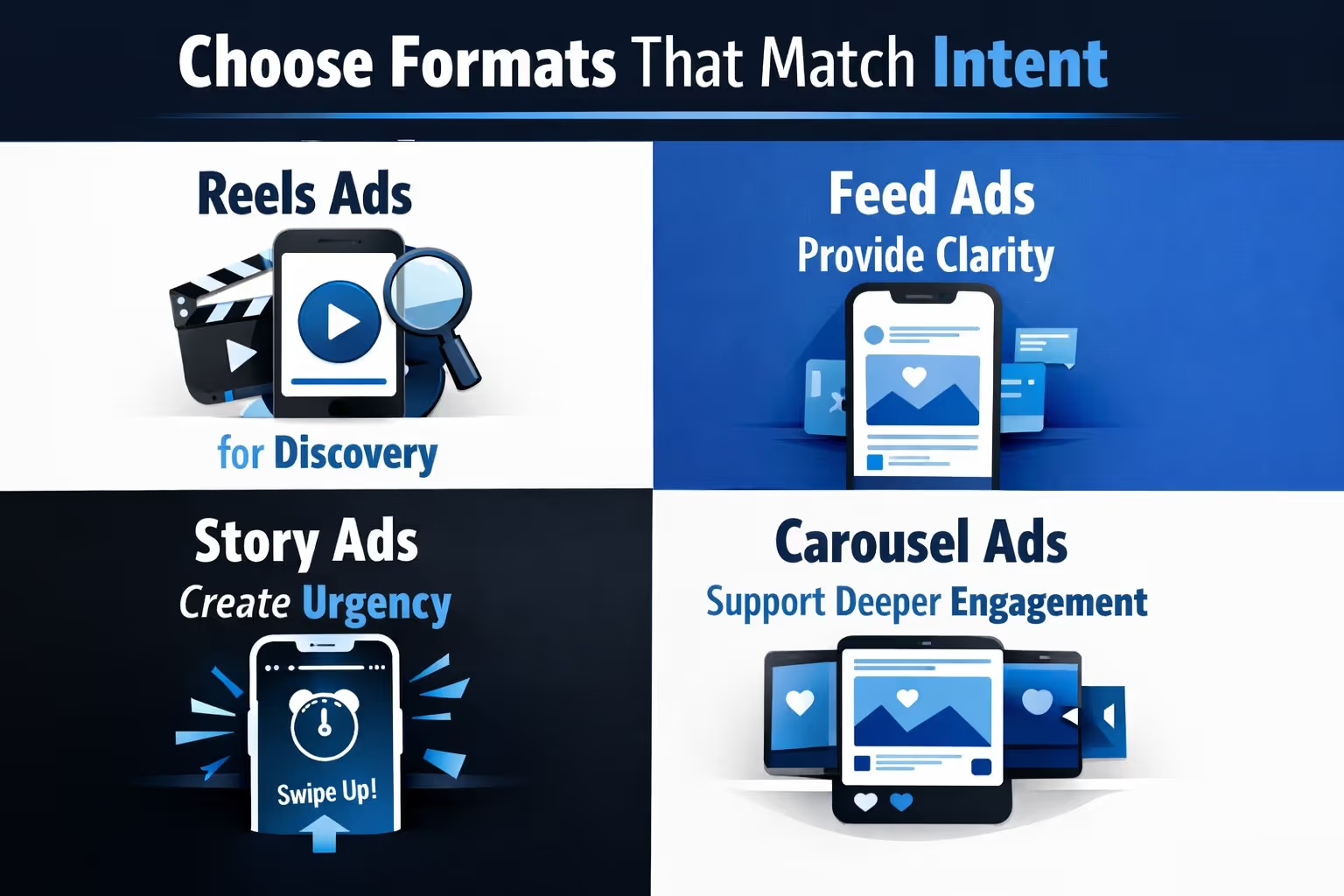
Step 5. Choose Formats That Match Intent, Not Trends
Not every Instagram ad format solves the same problem. Optimization improves when formats are selected based on user intent, not on what the algorithm happens to favor this month.
Reels Ads Work Best for Discovery and Early Attention
Reels ads are built for speed. They rely on motion, sound, and strong hooks to interrupt scrolling and earn attention fast. This makes them effective at the top of the funnel, where the goal is visibility and initial interest.
When Reels Ads Make Sense
Reels perform best for brand discovery, lifestyle storytelling, and simple offers that can be understood instantly. They are less predictable for direct conversions unless the product is familiar or the value is obvious within the first few seconds.
Feed Ads Provide Clarity and Conversion Control
Feed ads give users space to pause, read, and process information. Static images and short videos allow for clearer messaging and more deliberate decision-making.
Why Feed Ads Often Convert Better
For higher-intent actions such as purchases or lead submissions, feed placements tend to perform more consistently. They support clearer offers, stronger copy, and better alignment with landing pages.
Story Ads Create Urgency and Personal Context
Story ads sit between discovery and conversion. They feel more personal and ephemeral, which makes them useful for time-sensitive promotions or limited offers.
Where Story Ads Fit Best
Stories work well for flash sales, product launches, and retargeting users who already recognize the brand. Their full-screen format helps drive quick decisions when the message is simple.
Carousel Ads Support Deeper Engagement and Explanation
Carousel ads are often underused, despite their flexibility. They allow multiple frames to work together instead of forcing everything into a single visual.
How Carousel Ads Improve Performance
Carousels perform well when there is a sequence to tell, a process to explain, or multiple benefits to highlight without overwhelming the first frame. They reward users who engage deeper and spend more time with the ad.
Optimization improves when formats are chosen intentionally instead of rotated blindly. Each format has a job. Results improve when that job is clear.
Step 6. Treat The First Three Seconds as a Separate Asset
Most Instagram ads fail before they start.
Users decide whether to keep watching within the first two to three seconds. That moment deserves as much attention as the rest of the creative combined.
Strong openings do one of three things. They interrupt. They identify a problem instantly. Or they promise a specific outcome.
Weak openings explain, introduce, or warm up. Those ads lose attention before the message lands.
When optimizing creatives, isolate the hook. Test different openings with the same body. Small changes at the start often outperform full redesigns.
Step 7. Write Copy That Supports the Visual, Not Competes With It
Instagram ad copy does not need to carry the entire message. Its job is to support what the visual already communicates and remove any remaining friction. When copy tries to compete with the image or video, both usually suffer.
Strong ad copy answers three questions almost immediately. Who this is for. What problem it addresses. What the user should expect if they click. If any of those are unclear, performance drops even if the creative itself looks good.
Avoid long introductions and background context. Users are not looking to be convinced through storytelling at this stage. They want clarity. Generic claims and brand-centric language slow that clarity down and make ads feel interchangeable with everything else in the feed.
Short, specific language tends to outperform clever phrasing. A concrete benefit is more persuasive than a smart headline, and proof consistently beats promises. Numbers, outcomes, and clear use cases give users something real to react to instead of abstract positioning.
When copy underperforms, it is rarely because it is too short. More often, it is because it is vague, indirect, or trying to say too many things at once. Good copy makes the decision easier, not louder.
Step 8. Match The Landing Page to the Ad Exactly
Many Instagram ads fail after the click. Not because the ad was weak, but because the landing page breaks the experience users expected.
When someone clicks an ad, they are carrying momentum. Any disconnect slows that momentum down and turns intent into hesitation.
Why Continuity Matters After the Click
Users expect the landing page to feel like a natural continuation of the ad. When the page looks different, loads slowly, or shifts the message, trust drops immediately. Even strong ads cannot compensate for a confusing or inconsistent destination.
What to Check Before Optimizing Ads Further
Before changing targeting, bids, or creatives, review the landing page fundamentals:
Page load speed on mobile, especially on slower networks
Headline alignment with the exact promise made in the ad
Visual consistency between the ad creative and the page
One clear call to action without competing links or distractions
Each of these elements either reinforces the decision to click or quietly undermines it.
When to Fix the Page Instead of the Campaign
If click-through rates are strong but conversions are weak, the ad is doing its job. Optimizing ads further at this stage only masks the real issue.
Fix the landing page first. When the message, visuals, and action all align, optimization becomes easier and results improve without additional spend.
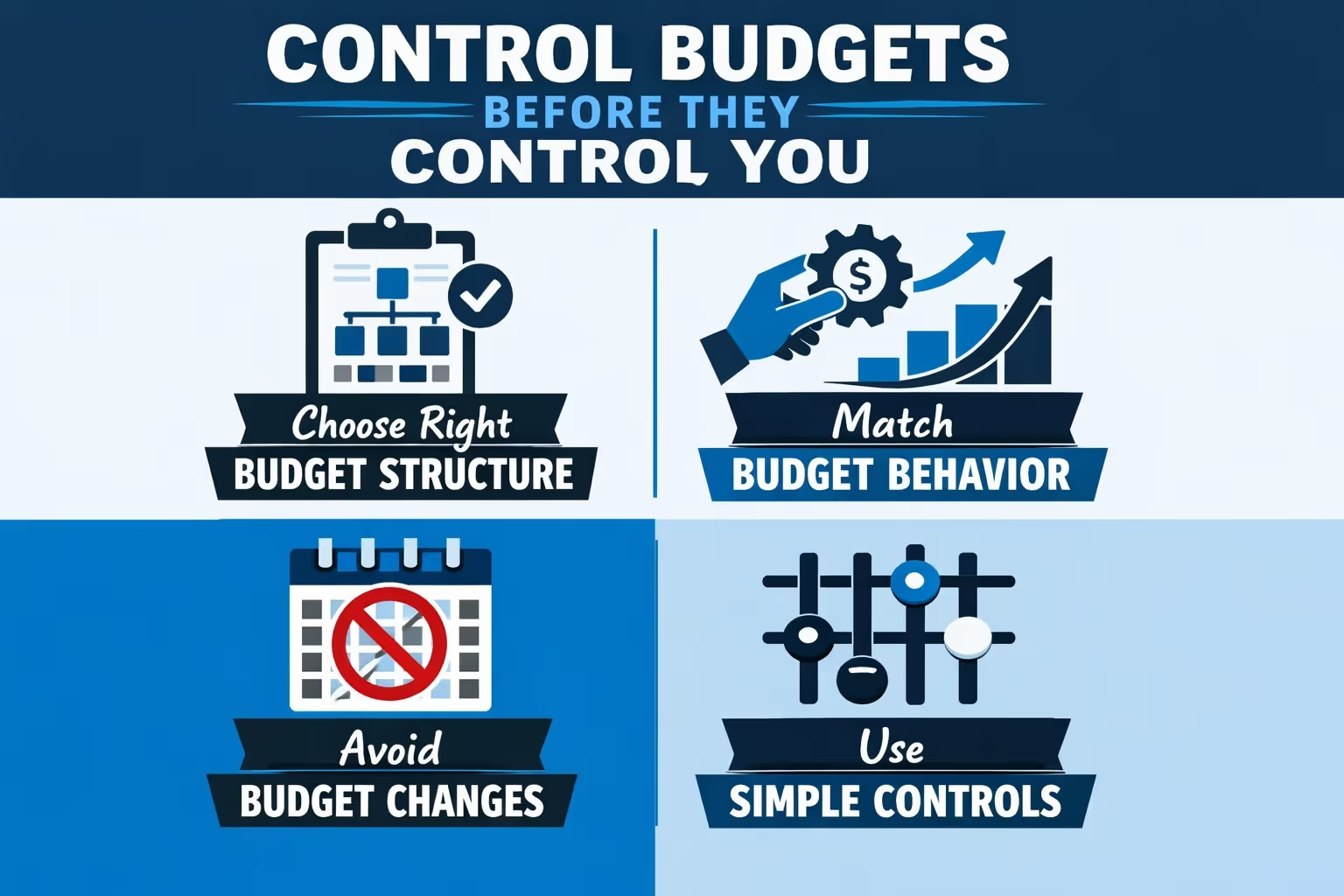
Step 9. Control Budgets Before They Control You
Budget optimization is not about spending more money. It is about deciding where money should go and why. Most performance issues tied to budget are not caused by bad ads, but by budgets running without intent or oversight.
Tip 1. Choose the Right Budget Structure for the Job
Different stages of a campaign require different levels of control. A common mistake is using the same budget setup for testing, scaling, and long-term maintenance.
Daily budgets provide tighter control and are usually better for testing and early optimization. Lifetime budgets add structure when timing matters. Campaign budget optimization can simplify scaling, but it also reduces manual influence over where spend flows.
The right choice depends on the campaign goal, not convenience.
Tip 2. Match Budget Behavior to the Campaign Stage
Budgets should behave differently depending on what the campaign is trying to achieve.
During testing, restraint matters more than speed. Smaller, controlled budgets help isolate signals and prevent weak creatives from consuming unnecessary spend. During scaling, consistency matters more than precision. Stable budgets allow the algorithm to build momentum instead of constantly relearning.
When these stages blur, wasted spend and unstable performance usually follow.
Tip 3. Avoid Budget Changes That Disrupt Learning
Sudden budget increases are one of the fastest ways to destabilize performance. Large jumps reset learning phases, distort delivery, and make results harder to interpret.
Gradual increases protect stability and preserve the signals the algorithm has already learned. If performance drops immediately after a budget change, the issue is often the change itself, not the creative or audience.
Tip 4. Use Simple Controls to Prevent Waste
A few disciplined habits make a meaningful difference over time.
Increase budgets gradually instead of doubling spend overnight. Pause or cap budgets on underperforming campaigns instead of letting them run unchecked. Separate test budgets from scaling budgets to avoid mixed signals. Review spend regularly to catch drift before it becomes expensive.
Most wasted spend comes from inattention, not bad strategy. When budgets are intentional, optimization becomes calmer, cleaner, and far more predictable.
Step 10. Optimize Bids Only After Creative and Targeting Are Stable
Bid strategies are powerful, but they are rarely the first fix. When bids are adjusted too early, they often hide deeper problems instead of solving them.
Different bid strategies serve different purposes:
Lowest cost works best when conversion volume is healthy and signals are consistent
Cost caps help protect efficiency, but only when expectations are realistic and data is stable
Bid caps offer tighter control, yet require close monitoring and frequent adjustments
Bidding should come after creative, audience, and funnel issues are addressed. If ads are unclear, targeting is diluted, or the landing page underperforms, bid changes only distort results and slow learning.
Optimization works best when levers are pulled in the right order. Fix what users see and who sees it first. Tune bids only when the foundation is solid.
Step 11. Test Systematically, Not Constantly
Testing is essential. Chaos is not. When everything changes at once, nothing is learned, and optimization turns into guesswork.
Effective testing starts with focus. Change one variable at a time so results can be traced back to a clear cause. Whether that variable is a hook, a visual, or a headline, isolating it is the only way to understand what actually moved performance.
Ads also need time. Early fluctuations are common and often misleading. Shutting ads down too quickly based on limited data interrupts learning and favors randomness over signal. Let tests run long enough to collect meaningful results before drawing conclusions.
A simple structure works best. One audience. Two creatives. One clear success metric. A winner should only be declared when the performance gap is obvious, not when results differ by a few percentage points.
Many accounts fall into the trap of constant testing. New ideas launch every day, but nothing is measured long enough to produce insight. Fewer tests, run with discipline, create better learning than endless experimentation.
Step 12. Watch for Fatigue Before Performance Collapses
Ad fatigue rarely shows up as a sudden drop. More often, it appears gradually through rising costs and fading engagement, long before performance clearly breaks.
To spot and manage fatigue early, focus on a few repeatable signals:
Increasing cost per result without changes in targeting or budget
Declining click-through rates over time on the same creatives
Rising frequency across key audiences
Comments or engagement indicating repeated exposure
Refreshing does not mean starting from scratch. Rotate visuals regularly, update hooks, and adjust copy while keeping the core message intact. Small changes often extend creative lifespan without resetting learning.
Frequency plays a quiet but decisive role. When the same users see the same ad too often, performance erodes even if the creative was once strong. Optimization works best when creatives are refreshed before decline, not after results have already collapsed.
Step 13. Review Performance on a Schedule, Not Emotionally
Optimization breaks down when reviews are driven by mood instead of structure. A consistent review cadence keeps decisions grounded in data rather than short-term reactions.
Avoid Extremes in Review Frequency
Checking performance daily creates anxiety and encourages overcorrection. Waiting a full month delays learning and allows small issues to grow expensive. Neither approach supports steady optimization.
Use Weekly Reviews to Spot Real Trends
Weekly reviews strike the right balance. They provide enough data to evaluate performance without overreacting to normal fluctuations. The goal is to identify patterns over time, not spikes caused by randomness or delivery shifts.
Look At Metrics Together, Not in Isolation
No single metric tells the full story. Cost per result, click-through rate, conversion rate, and return on ad spend should be reviewed together. Improvements in one area can hide deterioration in another if metrics are viewed in isolation.
Keep Optimization Disciplined and Intentional
Good optimization is not about reacting quickly. It is about reacting correctly. When performance is reviewed on a schedule and decisions are tied to trends rather than emotions, optimization becomes predictable and far more effective.
Revisit Fundamentals Regularly
Optimization is not a one-time task. It is ongoing maintenance. What worked last month can quietly lose effectiveness as markets shift, audiences change behavior, and creatives start to feel familiar.
Platforms evolve as well. Delivery systems adjust, competition increases, and small changes in how ads are served can compound over time. Without regular check-ins on the basics, performance drifts and problems are often noticed only after results slide.
The strongest accounts do not win because they uncover hidden tricks. They win because they return to fundamentals repeatedly. Clear goals, clean tracking, focused targeting, disciplined budgets, and consistent testing. Repeating these basics with intention is what keeps results stable as conditions change.
Final Word
Instagram ads optimization is rarely about fixing one big mistake. More often, it is about catching small issues before they stack up and quietly drain performance. Most wasted spend comes from drifting fundamentals, not from bad ideas or poor intent.
A solid optimization process starts earlier than most teams expect. Clear goals, reliable tracking, focused audiences, intentional budgets, and disciplined testing create stability. From there, performance becomes easier to read and easier to improve. The checklist works because it forces attention on the parts of the system that actually move results.
The best accounts are not constantly reinventing how they run ads. They are repeating the basics with consistency, reviewing performance calmly, and making changes with purpose. When optimization becomes routine rather than reactive, Instagram ads stop feeling unpredictable and start behaving like a controllable growth channel.
Frequently Asked Questions
How often should Instagram ads be optimized?
Optimization should happen on a schedule, not continuously. Weekly reviews are usually enough to spot trends and make informed decisions without reacting to short-term noise. Daily changes often create instability rather than improvement.
Why do my ads get clicks but not conversions?
This usually points to a disconnect after the click. Common causes include slow page load times, messaging that does not match the ad, or too many competing calls to action. When click-through rates are strong but conversions lag, fix the landing page before changing the ads.
Is broad targeting better for Instagram ads?
Broad targeting can work, but it is rarely the best place to start. Warm audiences and tight lookalikes provide cleaner signals and more efficient learning early on. Broad or interest-based targeting is more effective once performance is stable and the algorithm understands what a good conversion looks like.
How long should I let ads run before making changes?
Ads need enough time to gather meaningful data. Shutting them down too early favors randomness and prevents learning. As a general rule, allow tests to run until there is a clear performance gap, not just a small difference driven by early fluctuations.
When should I change bids?
Bids should be adjusted only after creative, targeting, and funnel issues are addressed. Changing bids too early often masks deeper problems instead of solving them. Bidding works best as a fine-tuning lever, not a first response.
How much are you wasting on Meta ads? Connect your ad account. See your ad efficiency.