Do I Really Need a Business License to Start and Run a Shopify Store?
Not sure if you need a business license to sell on Shopify? Here is how licensing works, when you need one, and when you can start without it.
Mar 25, 2026



Starting on Shopify often feels bigger than it actually is. Not because it’s complicated, but because there’s too much advice pulling you in different directions at once. Themes, apps, ads, niches, taxes. It piles up fast.
The truth is simpler. You don’t need a perfect store, a big budget, or a clever growth hack to begin. You need a clear idea of what you’re selling, a basic setup that works, and the willingness to adjust once real people start interacting with your store.
This article walks through how to start selling on Shopify in a grounded, realistic way. No hype, no shortcuts. Just the steps that matter, explained the way someone would if they’d actually done it before.
Before touching themes, apps, or ads, it helps to reset expectations.
Shopify is not a marketplace like Amazon or Etsy. It does not bring customers to you by default. What it gives you is ownership. You control the store layout, the brand voice, the checkout experience, and the customer relationship.
Think of Shopify as your home base, not your traffic source.
That distinction matters because many beginners expect sales simply because the store is live. When that does not happen, they assume something is broken. In reality, the store is doing exactly what it is supposed to do. It is waiting for you to send people to it.
Once you accept that, decisions become easier.
One of the fastest ways to stall is trying to sell too many things to too many people.
A Shopify store does not need a large catalog at launch. In fact, smaller stores are often easier to trust. They are clearer. Visitors understand what the store is about within seconds.
Instead of asking, “What can I sell?”, ask, “Who is this for and what problem does it solve?”
A narrow idea does not mean a tiny market. It means clarity. For example:
This kind of focus simplifies everything that follows, from product descriptions to marketing.
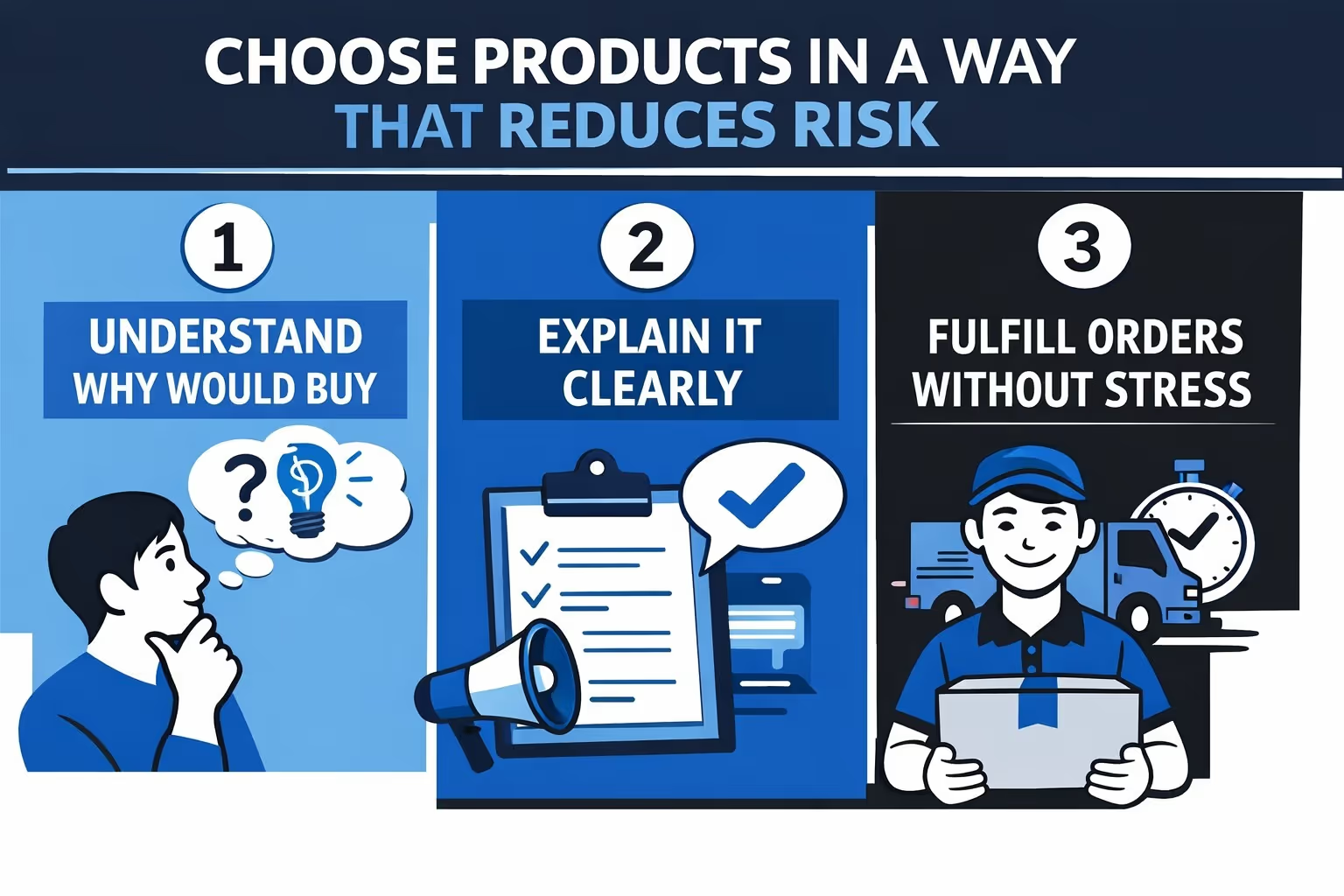
Product sourcing is where overthinking often peaks. People search for the perfect item that guarantees sales. That product does not exist.
What you are looking for instead is a product that meets three simple conditions:
There are several common paths here, and none of them are wrong.
If you want low upfront risk, dropshipping and print on demand let you test ideas without buying inventory. The tradeoff is thinner margins and less control.
If you want more control, sourcing from wholesalers or manufacturing small batches gives you better branding options, but requires upfront investment.
If you already make something yourself, handmade or digital products can work well on Shopify because the story behind the product is clear and personal.
What matters is not the model. What matters is choosing one and moving forward instead of comparing them endlessly.
Shopify pricing causes unnecessary hesitation. Many beginners spend days comparing plans before they have even added a product.
You do not need an advanced plan to start selling.
For most new stores, the basic plan is enough. It gives you everything required to list products, accept payments, and ship orders. You can upgrade later when data, not guesses, tells you to.
The free trial exists so you can build without pressure. Use it to set things up, not to chase perfection.
Once the store is functional, the plan becomes a small operational detail, not a big decision.

Once your Shopify plan is chosen and the store is functional, the next pressure point usually shows up fast: ads. Many stores reach this stage and immediately start testing creatives, audiences, and budgets without much signal, hoping something clicks.
That is exactly why we built Extuitive. Our platform helps Shopify brands forecast real-world ad performance before launching campaigns. Instead of testing blindly, we use AI models validated against live campaign results to predict which creatives, messages, and audiences are most likely to perform. This means fewer wasted tests and faster clarity on what actually resonates.
We let teams simulate ad performance at scale using over 150,000 AI consumer agents trained on behavioral data. You can compare creatives, identify likely winners and losers, and see expected CTR and ROAS relative to your own historical benchmarks. That insight makes it easier to move forward with confidence, whether you are launching your first Shopify ads or refining campaigns that already run regularly.
For stores trying to grow without overthinking every move, this kind of signal changes the equation. Instead of guessing and reacting after money is spent, you make decisions earlier, with clearer expectations. Sometimes that insight confirms an idea is worth pushing. Other times it saves budget by showing what not to run. Either way, you move faster, with fewer costly detours.
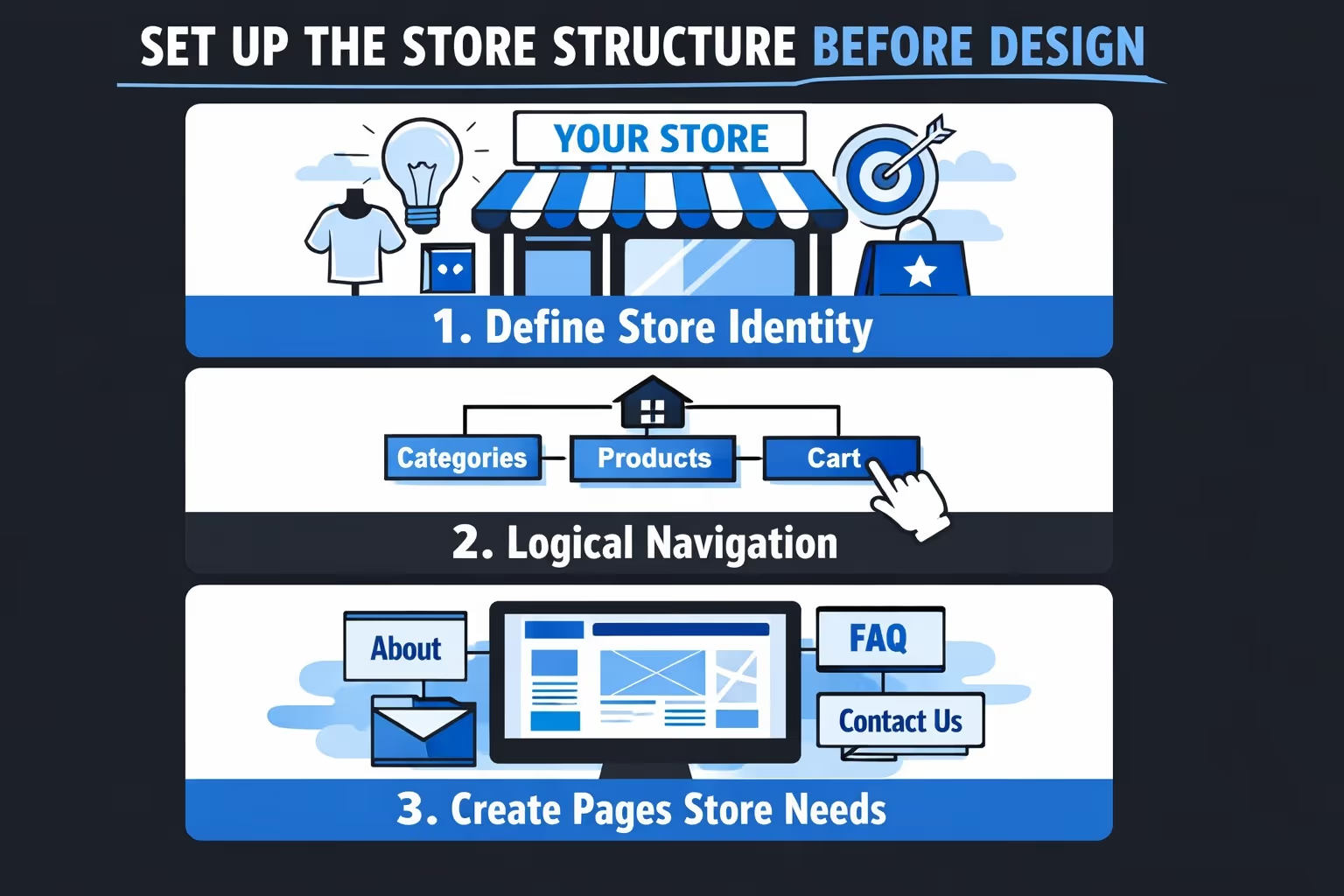
Design is tempting because it feels productive. But layout and structure matter more than colors, fonts, or visual effects.
Before customizing anything, focus on the foundation. A solid structure makes the store easier to understand, easier to trust, and easier to improve later.
Start with the basics. Set your store name and make sure it clearly reflects what you sell. Then connect a proper domain instead of relying on a default platform URL. A custom domain signals that the store is real and intentional, even at an early stage.
Navigation should help visitors find what they are looking for without thinking. Add clear menu items and avoid overloading them with options. A few well-labeled links are better than a complex structure that tries to cover everything at once.
At a minimum, your store should include a small set of essential pages. These are not about selling harder. They are about removing doubt.
These pages build trust quietly. Most customers will not read them word for word, but they notice immediately when something feels missing.
Shopify themes often create more pressure than they deserve. Many beginners feel like the theme has to perfectly express their brand from day one, as if choosing the wrong layout will somehow lock them into a bad decision. That mindset usually leads to endless browsing and very little progress.
In reality, a theme is just a container. Pick something clean, mobile-friendly, and easy to read, then move on. The default themes exist for a reason: they load fast, work well across devices, and convert well enough while you are still figuring things out. At this stage, reliability matters more than personality.
Design decisions become much easier once real people start using your store. You will see which pages they visit, where they pause, and where they leave. That information is far more valuable than guessing in advance. A theme is not a commitment. It is a starting point you are free to change later.
Product pages are where overthinking quietly hurts conversion.
Many new sellers write descriptions that sound like marketing brochures. Others go too technical. Both miss the point.
A good product description answers simple questions:
Write the way you would explain the product to a friend who asked about it. Use clear language. Avoid exaggeration. If something has a limitation, mention it. Honesty builds trust faster than hype.
Images matter just as much. Use clean photos. Show the product clearly. If possible, include context so people can imagine using it.
Pricing is another area where beginners tend to freeze. It feels permanent, public, and risky, even though it is one of the easiest things to change later. That pressure often leads to overthinking or to copying competitors without understanding why their prices are set the way they are.
You do not need the perfect price. You need a reasonable one that covers your costs and makes sense for the kind of store you are building. Start by knowing your expenses, then look at similar products and note the general range they sit in. Your goal is not to undercut everyone, but to land in a place that feels believable for your brand and audience.
If you are unsure, it is usually safer to price slightly higher than too low. Very cheap pricing can raise doubts about quality, especially when customers are unfamiliar with your brand. Remember that pricing is not a one-time decision. You can adjust it once real customers start reacting. Early sales data and feedback will teach you far more than any spreadsheet ever will.
Checkout should feel boring. That is a good thing.
Enable widely trusted payment methods. Credit cards, digital wallets, and local options where relevant. Do not overwhelm customers with unnecessary choices.
Reduce friction:
Most abandoned carts happen because of surprises, not because people changed their minds.
You do not need same-day delivery to start selling, especially as a new store. Most customers are not comparing you to global retailers with massive logistics networks. They are deciding whether they trust you enough to place an order and wait a reasonable amount of time.
What customers care about most is knowing what will happen after they click “buy.” Clear delivery times, clear costs, and clear return rules reduce uncertainty and build confidence. When shipping details are vague or hidden, people assume the worst and leave. When expectations are spelled out, even longer delivery windows feel acceptable.
Decide the basics early so your store feels consistent and intentional:
These decisions do not need to be perfect. They just need to be consistent and easy to understand.
Once your shipping rules are set, make them visible. Mention delivery times on product pages, clarify costs before checkout, and keep your policy pages easy to find. Even slower shipping can work well if customers know exactly what they are agreeing to and nothing comes as a surprise later.
This is usually where overthinking shows up the strongest. Everything can feel almost done, yet never quite finished. There is always one more tweak to make, one more app to test, or one more sentence to rewrite before letting anyone see the store.
Many stores sit in draft mode for weeks because of this. The problem is that a store does not become clearer in isolation. There is no moment where it suddenly feels complete or “ready.” That feeling only arrives after real people start interacting with it.
Launch anyway. A soft launch is more than enough. Make the store public and share it with a small, low-pressure audience. Watch what people do, not what you imagine they will do. Real behavior replaces assumptions quickly, and that is where useful feedback begins.
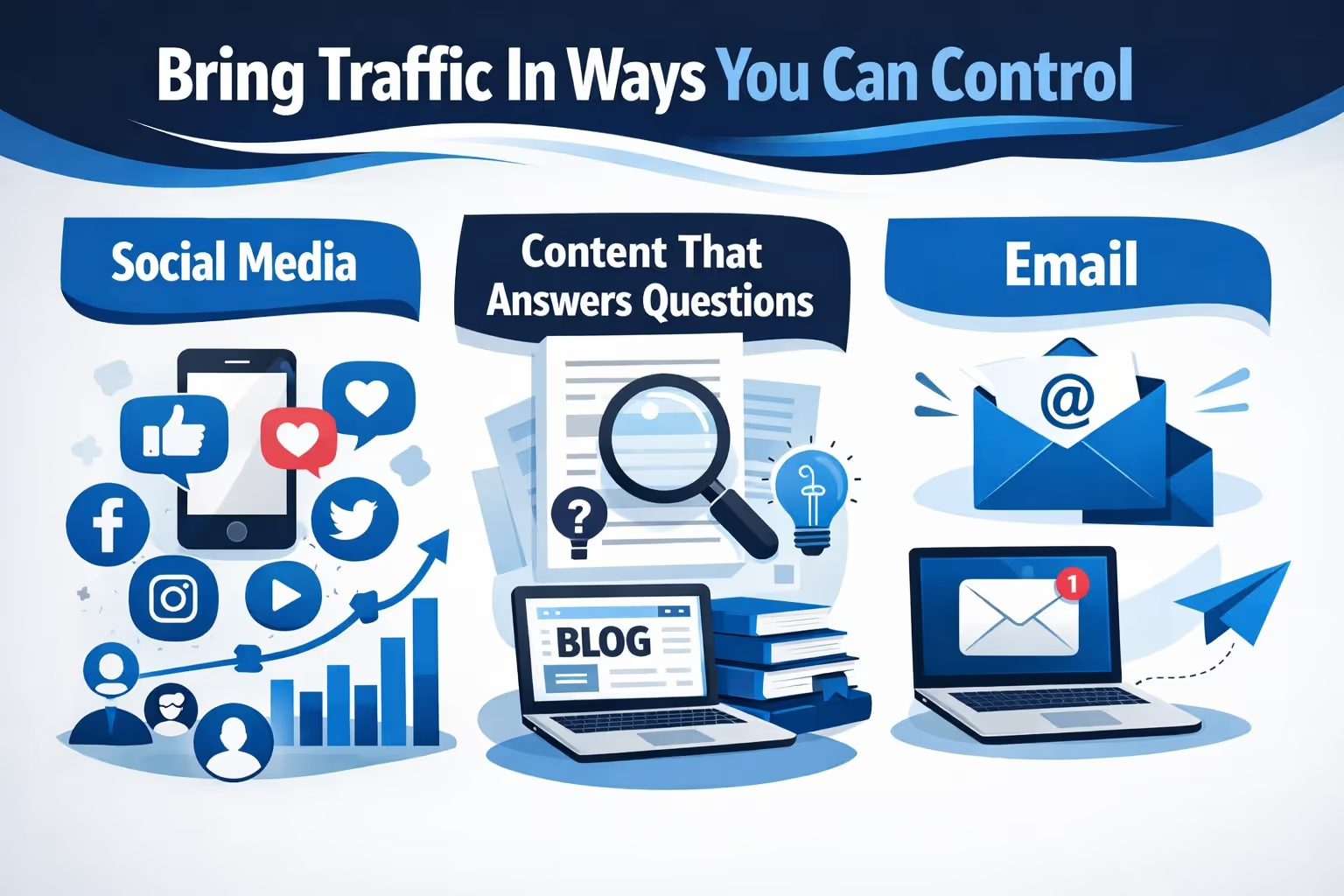
Once the store is live, the next question is traffic.
You do not need to do everything at once. Pick one or two channels and focus.
For many beginners, organic traffic is the least stressful place to start:
Paid ads can work, but they amplify both good and bad setups. Running ads before your product pages are solid often leads to wasted spend.
Traffic is a skill, not a switch. Learn it gradually.
Progress on Shopify is usually quiet. It rarely shows up as a sudden spike in sales or a clear moment where everything clicks. More often, it appears in small, almost unremarkable signals that are easy to overlook if you are only watching big numbers.
It looks like one product selling twice instead of once. A customer emailing a question instead of leaving silently. Someone abandoning checkout, then returning a day later to finish the purchase. A small change to a product description leading to slightly better engagement. None of these moments feel dramatic, but each one is evidence that the store is being used.
These small signals matter. They tell you the store is alive and responding to real people, not just sitting online waiting to be perfected. Momentum builds from noticing these patterns and adjusting accordingly, not from chasing an ideal version of the store that only exists in your head.
Starting to sell on Shopify does not require confidence. It builds confidence.
The platform is forgiving. You can change almost everything later. What you cannot replace is time spent waiting for the perfect moment.
Start with something clear. Set it up simply. Launch sooner than feels comfortable. Then improve based on reality, not imagination.
That is how most real Shopify stores begin.


