Meta Ads LTV Prediction: From Quick Wins to Long-Term Growth
Learn how to use LTV prediction in Meta Ads to shift from clicks to profits. See how AI, data, and smart bidding help you scale campaigns sustainably.
Jan 8, 2026



The idea of selling on Shopify for free sounds almost too good to be true. In practice, it’s a little more nuanced than the headline suggests. Shopify isn’t a charity platform, but it does give you enough room to test an idea, set up a store, and even make early sales without paying anything upfront.
The key is understanding what’s genuinely free, what’s temporarily free, and what costs only appear once you’re already moving forward. This guide walks through how to sell on Shopify for free in a practical way, without pretending the platform has no limits or hidden rules. Just a clear look at what you can do, how far “free” actually goes, and how to use that window wisely.
Before diving into tools and tactics, it is important to clear up a common misunderstanding. Selling on Shopify for free does not mean running a fully operational online store with zero costs forever. What it usually means is one of three things:
Shopify is built as a paid platform. The free options are designed to help you start, test, and learn, not to replace a paid plan indefinitely. Once you accept that, the rest becomes much easier to navigate.
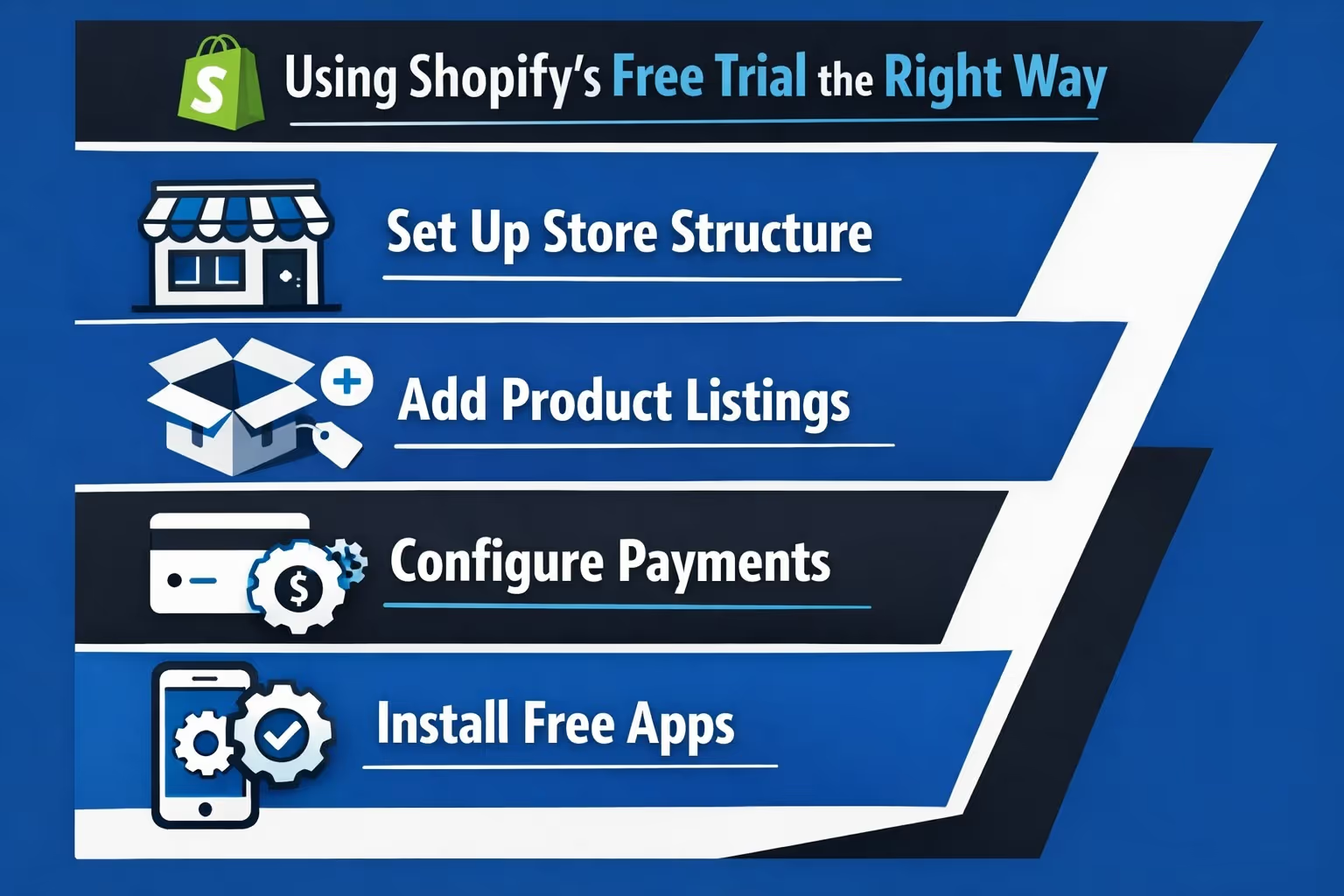
The most direct way to sell on Shopify for free is through its free trial. This trial allows you to create a store, add products, customize your design, and explore the admin dashboard without entering payment details at the start.
During the trial, you can:
The free trial gives you full access to store setup and configuration, including products, themes, and payment settings. However, Shopify only enables live checkout once a paid plan is selected, which makes the trial a space for preparation and validation rather than active selling.
The real value of the free trial is not the ability to sell for a few days. It is the ability to avoid paying while you figure out whether your idea makes sense at all.
One of Shopify’s strongest advantages is how much you can do without spending on design or development. Many new sellers assume they need a paid theme, custom branding, or outside help just to look credible. That is rarely true at the beginning.
Shopify offers a solid selection of free themes that are clean, mobile-friendly, and conversion-ready. They are not flashy, but they are functional and trusted.
A free theme is usually more than enough if:
Spending money on design before you have sales often creates false confidence. A simple, clear store that loads fast usually performs better than an expensive theme loaded with features you do not need yet.
Inventory is one of the biggest financial barriers for new sellers. Shopify makes it possible to sell without buying products upfront by supporting business models like dropshipping and print-on-demand.
With dropshipping, products are sourced from suppliers only after a customer places an order. You do not pay for inventory in advance, and you do not manage storage or shipping yourself. This setup allows you to test demand for a product, validate pricing, and understand how order flow works without taking on financial risk at the start.
Many dropshipping apps offer free plans or limited access without immediate charges, which makes this model especially appealing during the early stages. You can focus on learning how customers respond to your offer instead of worrying about stock or fulfillment logistics.
The tradeoff is control. Shipping times, product quality, and branding are not fully in your hands, and those limitations become more noticeable as expectations grow. Because of that, dropshipping works best as a testing method rather than a permanent long-term solution.
Print-on-demand works similarly, but with custom designs on products like shirts, mugs, or posters. You upload designs, list products, and production happens only after a sale.
This model avoids upfront costs and allows creative testing. The tradeoff is thinner margins and less flexibility in materials and fulfillment.
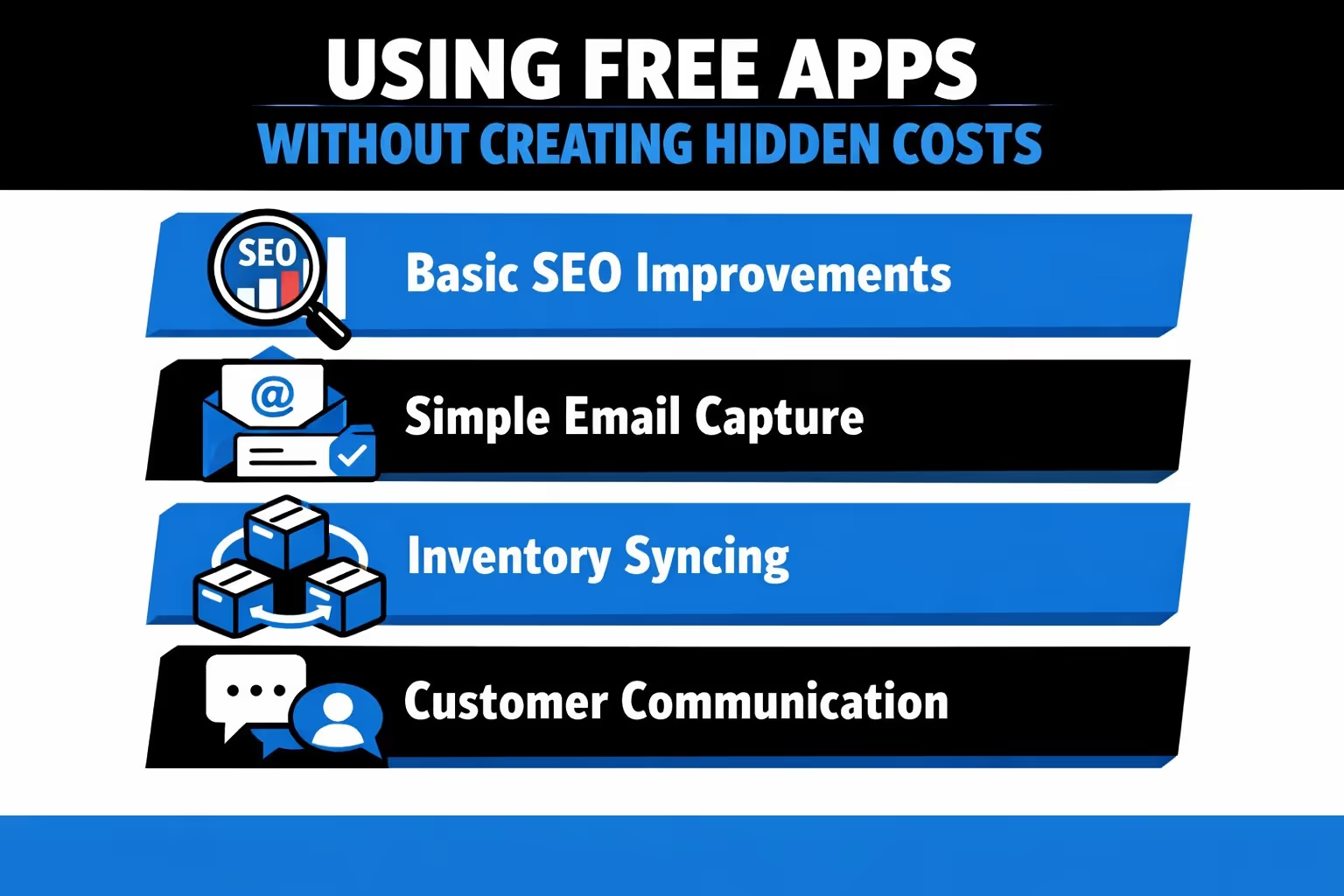
Shopify’s App Store is filled with tools promising growth, automation, and optimization. Many offer free plans, but not all free plans are equal.
Free apps are most useful for:
The key is restraint. Installing too many apps, even free ones, can slow your store and complicate management. Use apps to solve specific problems, not because they look helpful.
A good rule is to add one app at a time and remove anything that does not clearly add value.
Traffic is where many people assume money is unavoidable. While paid ads can accelerate growth, they are not the only way to get visitors.
Posting consistently on platforms your audience already uses can generate early interest without ad spend. This works best when content feels natural and not overly promotional.
Short videos, behind-the-scenes posts, and simple product demonstrations often perform better than polished ads.
Search engine optimization does not require expensive tools to start. Writing clear product descriptions, using descriptive titles, and structuring your pages properly can bring in search traffic over time.
SEO is slow, but it compounds. Even small improvements early on can pay off later.
Shopify includes basic email features that allow you to collect addresses and send messages without extra software. If you focus on clear communication instead of complex campaigns, this is often enough at the beginning.
When you reach the point where organic channels are not enough, paid ads usually come next. The problem is that testing ads the traditional way costs money fast, especially if you are still figuring out what actually works. This is exactly where we come in.
At Extuitive, we help Shopify brands forecast real-world ad performance before they launch. Instead of spending budget on trial and error, we use AI models trained and validated against live campaign results to predict which creatives are likely to win and which ones will not. That means fewer wasted tests and more confidence before a single dollar goes into traffic.
Our platform is built to answer the questions marketers care about most. Which ads are likely to outperform your historical average. Which concepts are strong enough to scale. Which creatives will struggle no matter how much budget you give them. We analyze ads at scale, simulate audience response using large AI agent panels, and provide clear performance forecasts tied to CTR and ROAS expectations.
For Shopify brands that want faster feedback loops without burning budget, this changes how decisions are made. Instead of guessing, you start with data. Instead of testing losers in market, you filter them out before launch. Whether you are preparing your first paid campaign or scaling an existing one, Extuitive helps you move from experimentation to prediction, without adding unnecessary risk.
If you want to understand what your ads are likely to do before they ever go live, that is exactly what we are built for.
Even if you sell on Shopify for free in terms of subscription costs, payment processing fees still exist. These fees are charged by payment providers, not Shopify alone.
When a customer pays, a small percentage is deducted to cover card processing and transaction handling. This applies regardless of platform.
The important distinction is that these fees only apply when you make a sale. You are not paying upfront, and you are not charged if nothing sells.
This is one of the reasons Shopify works well for testing. Costs scale with activity instead of existing before it.
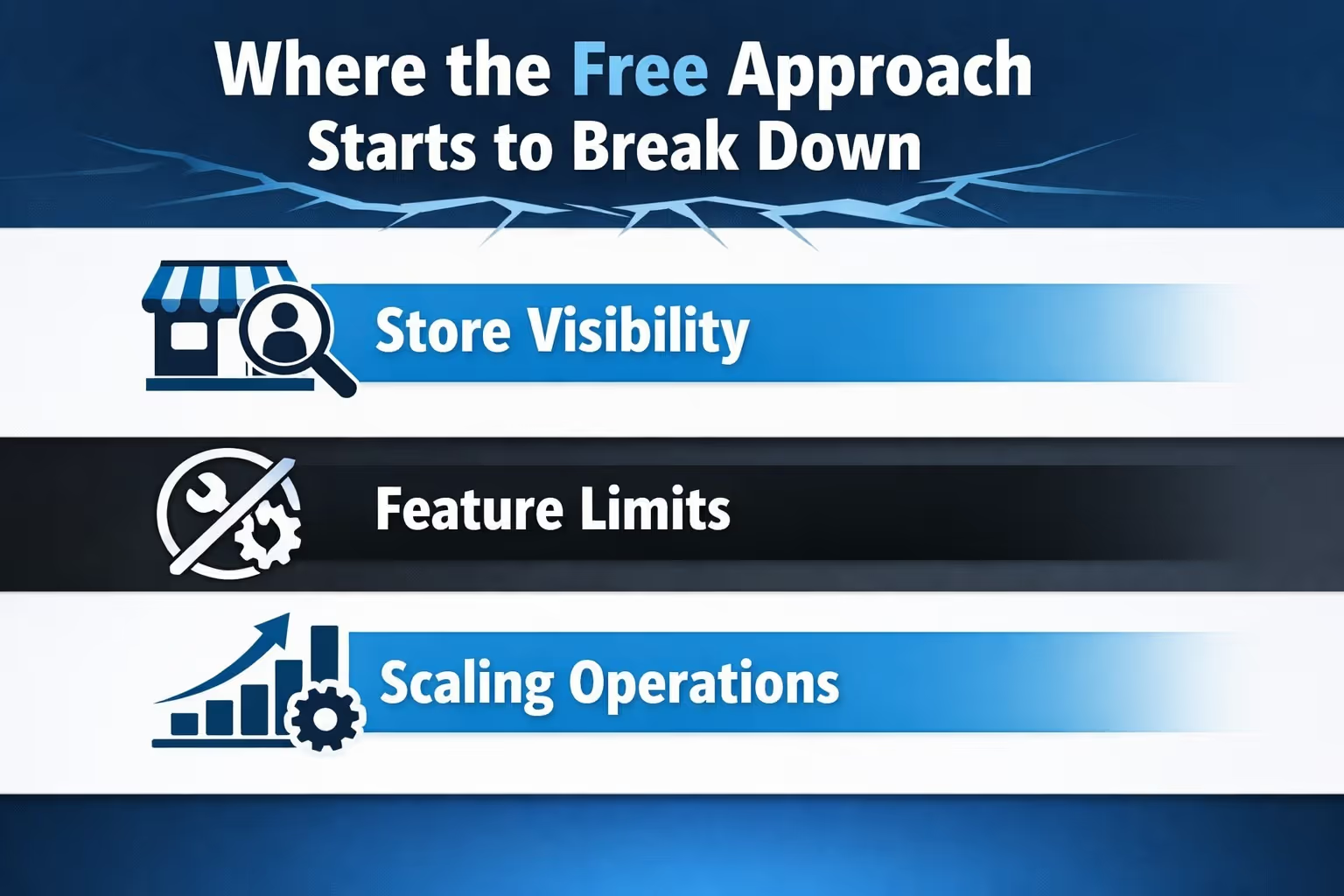
Selling on Shopify for free works best in the early stages. Over time, limitations appear that make paid plans necessary.
Customers expect a complete store experience. A custom domain, full navigation, and advanced checkout options build trust. These features are tied to paid plans.
Free app plans often restrict usage. As orders increase, those limits become frustrating. At some point, paying for tools saves more time than it costs.
Inventory management, reporting, automation, and international selling all require features beyond the free level. Growth naturally pushes you toward paid plans.
Instead of asking how to avoid paying forever, a better and more useful question is how long you can delay paying while learning as much as possible. Shopify’s free options are not meant to replace a real business setup. They exist to give you space to experiment without pressure.
Used properly, the free phase becomes a testing ground rather than a loophole. It allows you to move forward without commitment while still gaining real experience. This is where many new sellers either rush ahead or stall completely. The middle path tends to work best.
Shopify’s free options are best used to:
If you treat the free phase as a learning period instead of a permanent setup, it becomes incredibly valuable. The goal is not to stay free forever. The goal is to reach a point where paying feels justified because you know exactly what you are paying for.
There is a moment when paying for Shopify stops feeling like a cost and starts feeling like leverage. That moment usually comes when:
At that point, upgrading is not a failure. It is a signal that the experiment worked.
Selling on Shopify for free is possible in a limited, intentional way. The platform gives you room to explore, test, and learn without demanding money upfront. But it does not pretend that ecommerce can run forever at zero cost.
If you use the free tools to validate your idea instead of avoiding commitment, Shopify becomes a low-risk entry point rather than a trap. The real advantage is not the absence of cost, but the ability to choose when and why you start paying.
Used thoughtfully, that flexibility is worth far more than a permanently free plan ever could be.


