Is Shopify a Marketplace Facilitator or Not?
Is Shopify legally a marketplace facilitator in 2026? It depends on how you sell. Here’s what store owners actually need to know.
Jan 27, 2026



Selling clothes online sounds simple. Upload products, connect payments, run a few ads, and wait for orders. In reality, most clothing stores struggle not because of bad ideas, but because small setup decisions pile up and quietly hold them back.
Shopify makes it easier than most platforms to start a clothing business, but success still depends on how you approach the basics: what you sell, how you present it, and how smoothly everything works once customers land on your store. This guide breaks the process down in a way that feels realistic, not theoretical. No hype, no shortcuts, just a clear path from idea to a working Shopify clothing store.
Before touching themes, apps, or ads, it helps to slow down and decide what kind of clothing business you are actually building.
Most early mistakes come from trying to keep too many options open. Selling menswear, womenswear, vintage pieces, custom prints, and accessories all at once might sound flexible, but it usually creates confusion for both the seller and the customer.
A clearer approach is to answer a few basic questions in plain language:
These answers do not need to be clever. They need to be honest. A small, clear idea scales better than a vague big one.
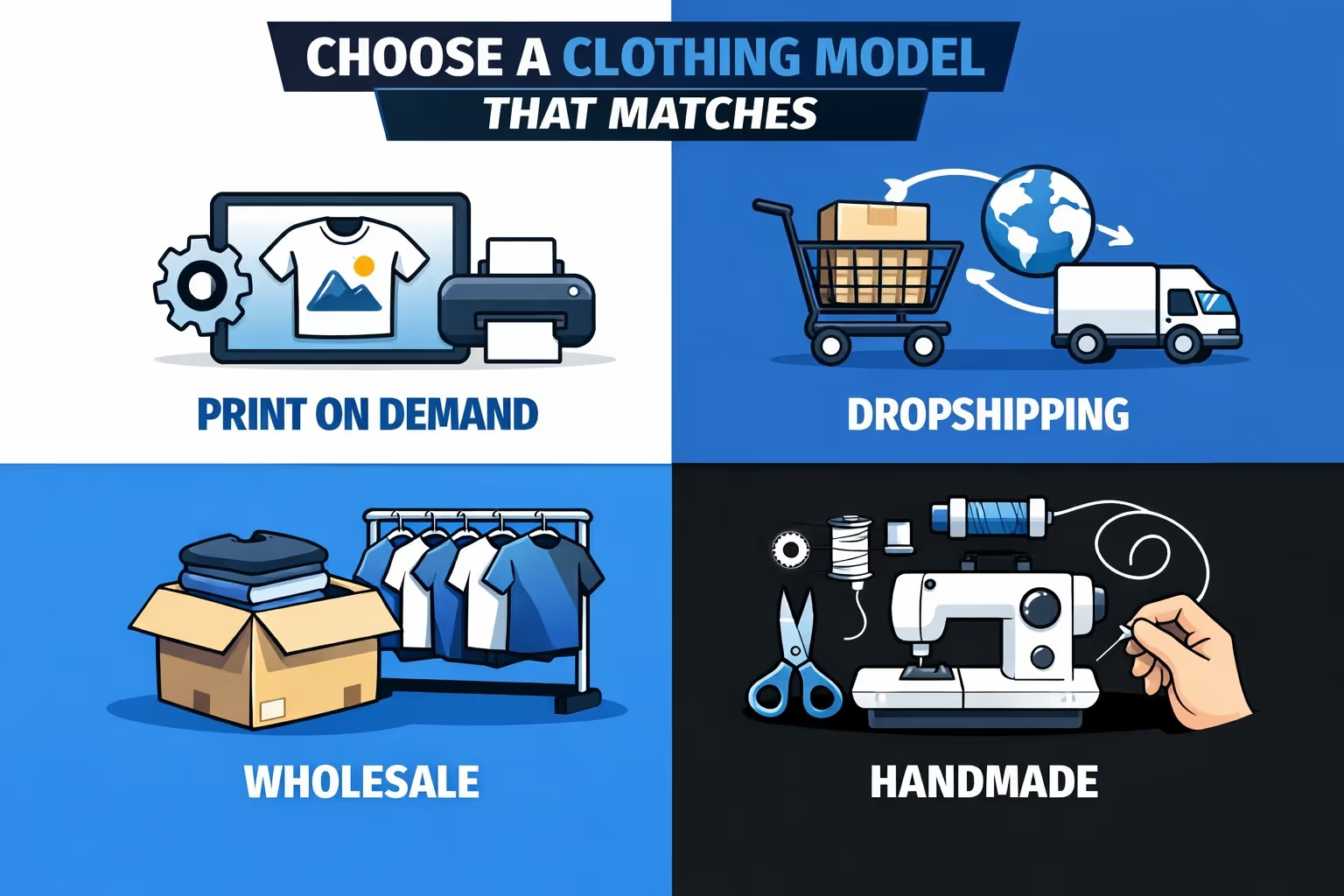
Clothing businesses fail less often from bad ideas and more often from mismatched models. The way clothes are produced, stored, and shipped shapes everything else.
This works well if you want to test designs without holding inventory. Orders are produced only after a sale happens. It reduces risk and upfront costs but limits control over packaging and turnaround time.
This model removes inventory handling but comes with tradeoffs. You depend heavily on suppliers for quality, consistency, and shipping speed. Branding becomes harder, especially in competitive niches.
Buying inventory upfront lowers per-unit cost but increases risk. Storage, forecasting, and cash flow become real concerns. This model works better once demand is proven.
This offers maximum control and brand depth but limits scale unless production is expanded. Time becomes the bottleneck quickly.
There is no best option. The best model is the one that fits your budget, time, and tolerance for complexity.
Shopify makes store setup straightforward, which can be a trap. When everything is customizable, it is tempting to keep tweaking instead of launching.
Free themes are usually enough to start. Clean layouts load faster, work better on mobile, and are easier to adjust later. Focus on readability, not decoration.
A good theme should:
If a theme needs heavy customization to feel usable, it is probably the wrong theme.
Colors, fonts, and logos should support the clothes, not compete with them. Clothing sells visually. Let product photos do the heavy lifting.
Avoid building complex homepages early. A simple structure with collections, product pages, and basic info pages works fine.
Product pages are where clothing stores win or lose attention. Many stores either say too little or try to say everything at once, which leaves shoppers unsure and more likely to hesitate.
The goal of a product description is simple. Help someone imagine wearing the item without guessing. That means describing the fit, fabric, and use case clearly, using normal language rather than sales phrases. If a shopper cannot picture how the piece feels or when they would wear it, the description has not done its job.
Strong clothing descriptions usually cover a few practical points without turning into a spec sheet. Explain the fit and cut in plain terms, describe the fabric and how it feels, include care instructions, and give some context about when or where the item works best. This information answers real questions and quietly builds confidence.
Overpromising is a common mistake. Clothing returns are expensive, and disappointment often comes from vague or exaggerated descriptions. Clear expectations reduce friction long after the sale.
Sizing deserves extra attention. Confusion here breaks trust faster than almost anything else. If sizing runs small, large, or differently across products, say so. Size charts should be easy to find and simple to read, especially on mobile devices. If you sell internationally, make measurement units obvious so customers do not have to convert them themselves.
Customers do not come to your store to think about logistics. When these systems work quietly, they do their job.
Enable common payment options early. Credit cards, digital wallets, and local options matter more than novelty methods.
Set up automatic tax calculations where possible. It reduces errors and saves time later. Review settings carefully if selling across regions.
Keep shipping rules simple at first. Flat rates or free shipping thresholds are easier to understand than complex tables.
Be clear about delivery times. Honesty here prevents support issues later.
About pages, policy pages, and contact pages rarely feel exciting, which is exactly why they are often rushed or ignored. In practice, these pages do more to build trust than most visual tweaks or theme customizations. For a first-time visitor, they quietly answer the question of whether this store feels legitimate.
A good About page does not need a long backstory or brand mythology. It should clearly explain what the store sells, who it is for, and why it exists in the first place. Shoppers are not looking for perfection here. They want a sense that there is a real point of view behind the products and that the store understands its own audience.
Policy pages are where expectations get set before anything goes wrong. Clear return, refund, and shipping policies reduce hesitation at checkout and prevent frustration later. When rules are easy to find and written in plain language, customers feel more comfortable completing a purchase. Ambiguity in this area often leads to disputes that could have been avoided with a few straightforward sentences.
Contact pages should feel human and accessible. Even a simple contact form, paired with clear wording about response times or support availability, helps reassure buyers that someone is on the other side. You do not need to offer live chat or phone support on day one. You do need to show that questions will not disappear into a void once an order is placed.
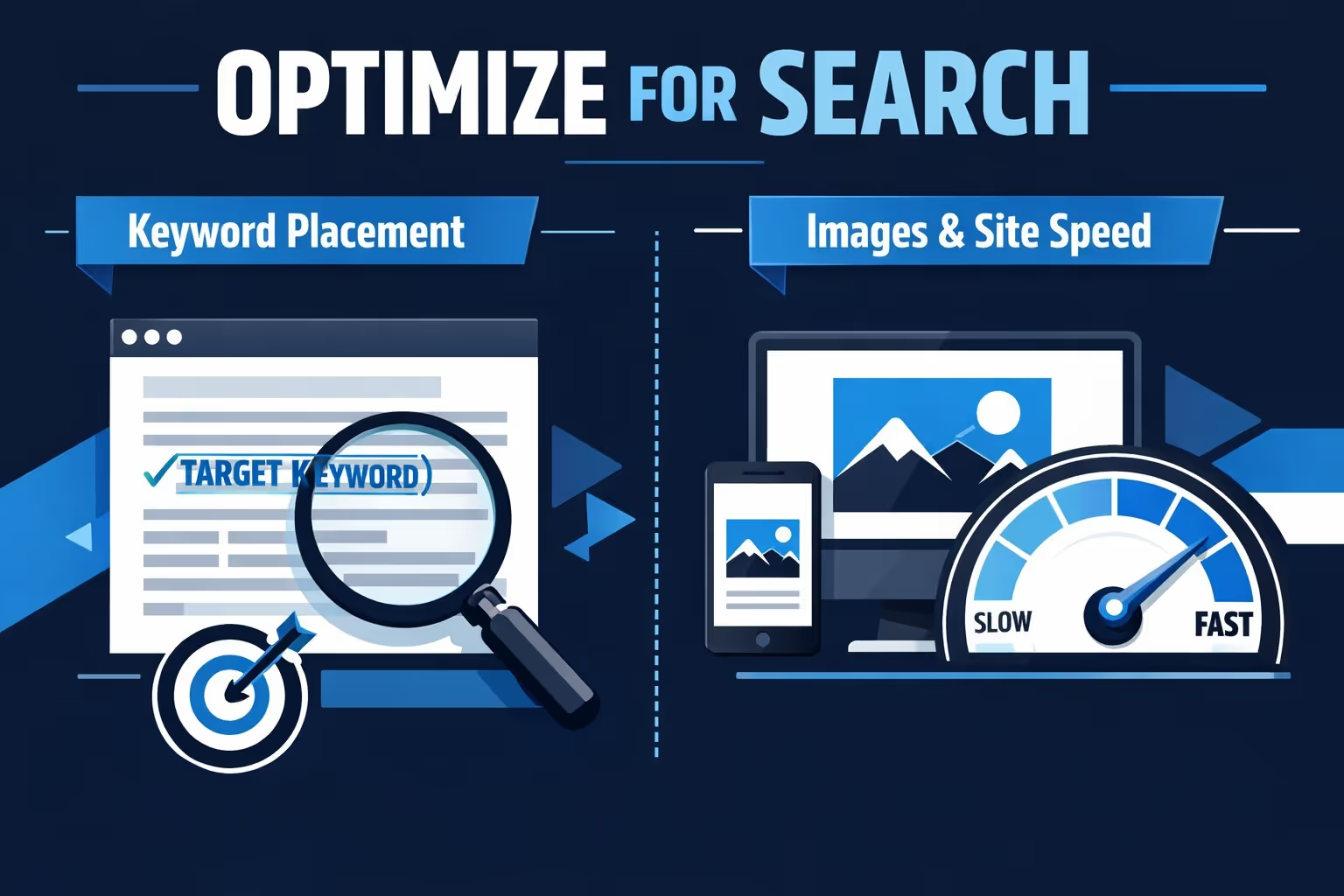
SEO matters, especially in fashion, but it should never distort how the store reads. Clothing stores rely on clarity and trust, and both suffer when pages start sounding written for algorithms instead of people. Good optimization supports readability rather than fighting it.
Search terms should appear where they make sense naturally, not where they feel forced. Product titles, descriptions, collection names, and meta titles are all logical places for keywords, as long as the language stays smooth and conversational. A simple test helps here. Read the sentence out loud. If it sounds awkward or overly repetitive, rewrite it.
Modern search engines are far better at understanding context than they used to be. You do not need to repeat the same phrase again and again to rank. Clear naming, consistent terminology, and well-structured content often perform better than aggressive keyword stuffing. Writing naturally usually improves both search visibility and user experience at the same time.
Clothing is visual, so images carry much of the selling work. High-quality photos help customers judge fit, texture, and overall style, but they also need to be optimized. Large image files slow down page load times, particularly on mobile devices, where most fashion browsing happens.
Slow stores lose attention quickly. Compressing images properly and keeping pages lightweight improves load speed, reduces bounce rates, and supports better search performance. A fast store feels more professional, and that perception matters just as much as rankings.
Fashion rarely sells through long explanations. It sells through context. Customers want to see how clothes look on real people, how they move, and how they fit into everyday life. The more natural and relatable the presentation feels, the easier it is for someone to imagine owning the piece.
Platforms like Instagram and TikTok reward consistency more than polish. Perfect lighting and studio shots can help, but they are not required to build interest. Short videos showing how an outfit comes together, quick try-ons, behind-the-scenes clips, or customer photos often perform better because they feel real.
Posting regularly matters more than chasing viral moments. A steady rhythm helps people recognize the brand and understand its style over time. Social media is less about explaining why a product is good and more about showing how it fits into someone’s routine.
Influencer marketing works best when the partnership feels natural. Smaller creators with focused, engaged audiences often deliver better results than large accounts with broad reach. Their recommendations feel more personal and less like advertisements.
Alignment matters more than follower count. A creator who genuinely matches the brand’s style, values, and audience can showcase products in a way that feels believable. Clear expectations, honest communication, and realistic goals help keep these collaborations productive on both sides.
Email works best when it feels like a direct line rather than a broadcast. Updates about new drops, restocks, or limited runs give subscribers a reason to pay attention. These messages perform better when they are specific and timely instead of generic.
Personalization goes a long way. Segmenting lists by past purchases or interests allows emails to feel more relevant without being intrusive. Over time, email becomes a way to maintain a relationship, not just push promotions.

Once you start marketing clothes seriously, one problem shows up fast. Testing ads is expensive. Creative cycles are slow. And too much budget gets burned on ideas that never had a real chance to perform.
That is exactly the gap we built Extuitive to solve.
We help Shopify brands predict how ads will perform before they ever go live. Instead of launching dozens of creatives and waiting for results, our AI models forecast real-world performance using data validated against live campaign outcomes. That means fewer guesses, fewer wasted tests, and more confidence when scaling what actually works.
Our platform is designed for teams that move fast. We analyze large volumes of ad creatives at scale and identify likely winners based on your own historical performance, not generic benchmarks. Whether you are testing product images, lifestyle shots, short-form videos, or different messaging angles, we show you which variations are most likely to drive higher CTR and ROAS before you spend real money.
Audience targeting is another place where clothing brands often lose efficiency. Styles, price points, and positioning matter, but only if the right people see them. We use AI-driven insights to help you reach audiences most likely to convert, so your ads feel relevant instead of broad or wasteful.
The result is a cleaner feedback loop. You stop testing obvious losers. You focus budget on creatives with real upside. And you scale faster without relying on gut instinct alone.
For Shopify clothing brands that want to grow without turning ad testing into a guessing game, Extuitive becomes a performance layer that sits upstream of every campaign decision. Less noise. More signal. Better outcomes.
Growth often brings complexity, even when it is gradual. New apps get installed to solve small problems, features are added to support short-term experiments, and before long the store feels heavier than it needs to be. This usually happens quietly, without a clear moment where things feel out of control.
Every few months, it helps to step back and review how the store is actually being used. Look at which apps are truly active and contributing to sales or customer experience, where shoppers tend to drop off during their visit or checkout, and which products consistently drive the most revenue rather than just traffic.
Anything that no longer serves a clear purpose should be removed or simplified. A lighter setup is easier to manage, loads faster, and leaves more room to focus on improvements that actually matter. Keeping things simple makes it easier to adapt as the business continues to grow.
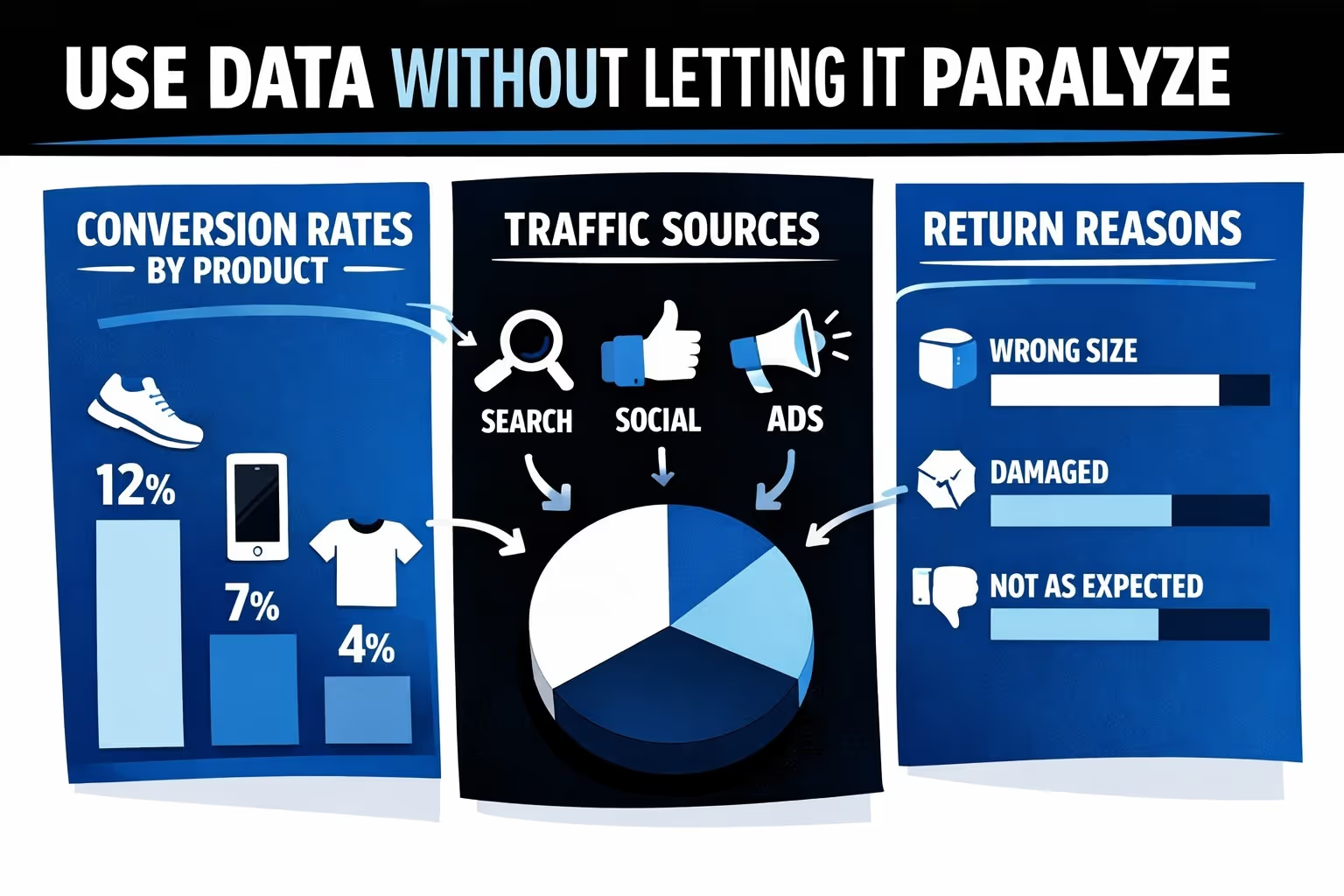
Analytics are useful, but only when they lead to decisions. Staring at dashboards without a clear goal often creates more confusion than insight. Numbers move constantly, and reacting to every spike or dip usually causes unnecessary changes that make performance harder to evaluate.
It is more helpful to watch patterns over time rather than focusing on daily fluctuations. Trends reveal how customers actually behave, while isolated data points often reflect short-term noise. Looking at a smaller set of meaningful metrics keeps analysis focused and manageable.
Useful signals include:
These data points help identify what is working and where friction exists. For example, a product with high traffic but low conversion may need better images or clearer sizing information. High return rates often point to expectation gaps that can be fixed with better descriptions.
Avoid changing everything at once. Small, intentional adjustments make it easier to understand cause and effect. Over time, this steady approach leads to clearer insights and more confident decisions.
Launching a clothing store is not the finish line. It is the first draft.
What works today may need adjustment next season. Trends shift. Customers change. Tools evolve.
The stores that last are not the most complex ones. They are the ones that stay clear about who they serve and keep improving without losing focus.
Shopify gives you the structure. The rest comes from thoughtful decisions, made in the right order, without rushing to add more than you need.


