Best AI Marketing Courses That Teach Real Skills
Explore practical AI marketing courses that focus on real skills - from automation to campaign optimization and data-driven decisions.
Apr 13, 2026



If you’re running a Shopify store, you’ve probably noticed that sales don’t grow just because traffic does. You can have decent products, a clean-looking site, even some returning customers, and still feel stuck at the same numbers month after month.
Increasing sales on Shopify is rarely about one big change. It’s usually about removing small points of friction, tightening how people move through your store, and making smarter decisions based on how customers actually behave. This guide focuses on those practical shifts. No hype, no shortcuts, just clear ways to turn more visits into real purchases.
Before adding anything new to your store, you need to understand what is currently holding it back. Low sales are rarely caused by a single issue. They are usually the result of several small problems stacking up.
Common causes include poor traffic quality, lack of trust, weak product communication, or unnecessary friction during checkout. You do not fix these by guessing. You fix them by observing behavior.
Look at your analytics with intent. Pay attention to where people leave, which pages struggle, and how performance differs across devices. A few examples:
You are not searching for perfect data. You are looking for patterns that explain hesitation.
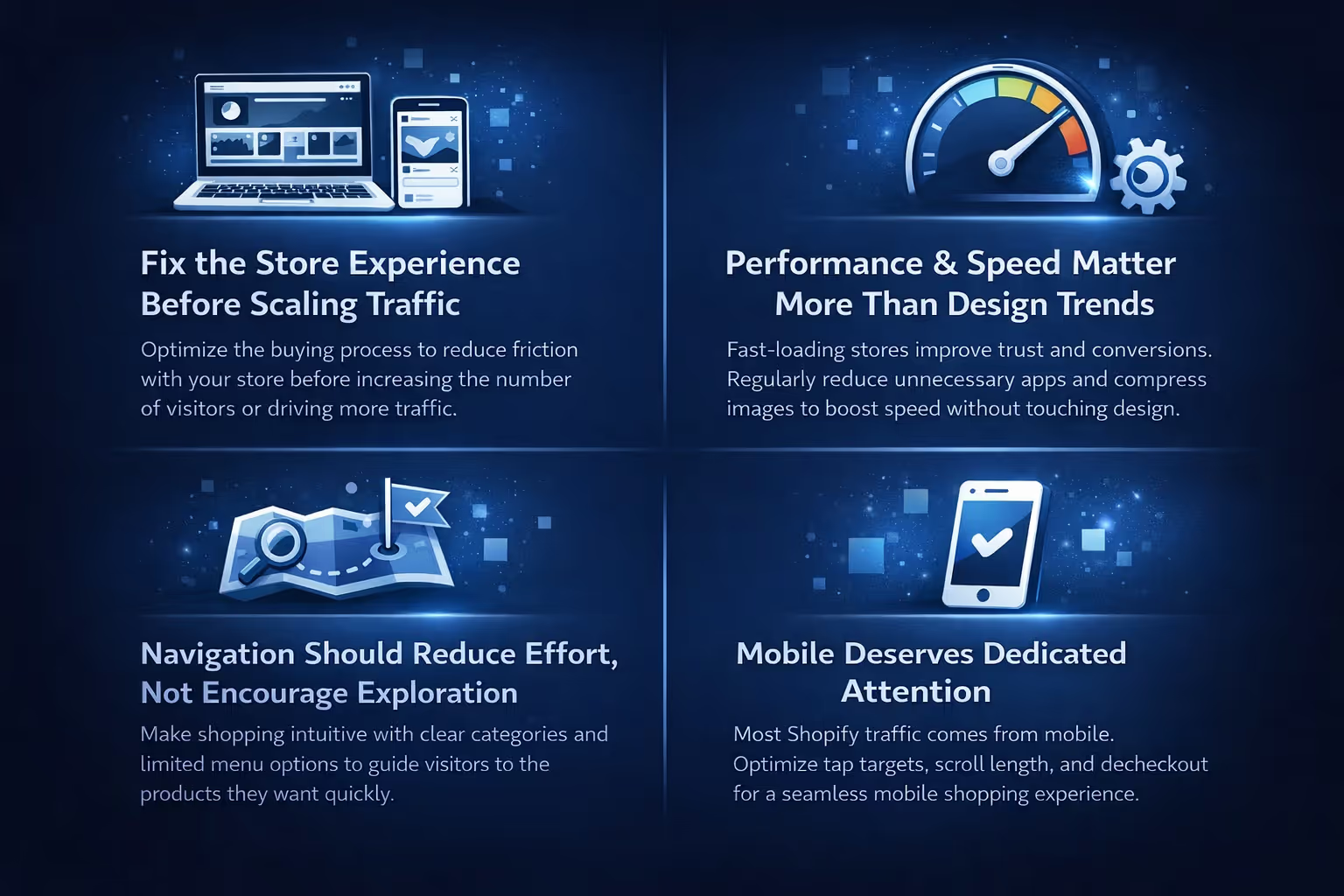
Driving more visitors to a store that leaks conversions only makes the leaks bigger. Before spending more on ads or partnerships, make sure the buying experience works smoothly.
A slow store quietly damages trust. Customers may not complain, but they leave.
Speed issues often come from too many apps, heavy images, or poorly optimized themes. Removing unused apps and compressing visuals can make a noticeable difference without touching the design.
Fast stores feel safer. That perception alone improves conversion.
Navigation exists to guide decisions, not to showcase creativity. Visitors should instantly understand where to go and how to find what they want.
Clear categories, limited menu depth, and predictable structure outperform clever naming almost every time. The goal is to remove thinking, not add options.
Most Shopify traffic is mobile, yet many stores still treat it as secondary. Check your store on a phone and look for friction points.
Pay attention to tap targets, scroll length, access to cart, and checkout usability. A store that feels “fine” on desktop can quietly lose sales on mobile every day.

At Extuitive, we work with Shopify brands that want to scale paid traffic without wasting budget on trial-and-error testing. Ads can be a strong growth lever, but only when the store experience is solid and teams know which creatives are worth backing before they launch.
Our platform helps brands forecast real-world ad performance in advance. Instead of pushing dozens of creatives live and waiting for results, we enable teams to identify likely winners early and filter out underperforming concepts using AI models trained and validated against live campaign data.
This changes how Shopify teams approach scale. When you can test ads before launch, it becomes easier to allocate spend toward creatives that show stronger potential for higher click-through rates and better return on ad spend. The result is fewer wasted impressions, faster optimization cycles, and more confidence when increasing budgets.
We also support smarter targeting decisions. Our audience intelligence highlights which segments are most likely to convert, helping campaigns reach buyers with genuine intent instead of broad, expensive audiences. For teams managing large creative volumes, Extuitive makes it possible to test and predict performance at scale without slowing down launch timelines.
Ultimately, we help Shopify brands move away from guessing. By forecasting performance, sharpening targeting, and scaling only what shows real promise, paid ads become a more predictable sales channel rather than a constant experiment.
People do not buy when they feel uncertain. Trust is what turns interest into action, especially for first-time visitors.
Shoppers trust evidence more than claims. Reviews, testimonials, and real customer feedback reduce hesitation far more effectively than persuasive copy.
Trust signals that consistently help conversion include:
None of these sell the product directly. They remove reasons not to buy.
Unexpected costs or unclear policies at checkout are one of the fastest ways to lose a sale. Shipping details, delivery timelines, and return rules should be visible before the final step.
Clarity feels honest. Honesty builds confidence.

Product pages do the real work in Shopify sales. Ads and content may bring people in, but product pages decide whether money changes hands.
Strong product descriptions explain, not exaggerate. They help customers understand what the product does, who it is for, and how it fits into their life.
Short paragraphs, concrete details, and plain language work better than buzzwords. If a customer has to imagine how something works, the description is incomplete.
Images and videos answer questions faster than text. Multiple angles, in-use photos, and short demonstration videos reduce uncertainty and increase confidence.
Whenever possible, show scale, texture, and real-world context. These details matter more than polished aesthetics.
SEO still plays a meaningful role in Shopify growth. Product pages should be easy to understand for both people and search engines.
Focus on descriptive titles, clean URLs, helpful headings, and natural language. Avoid keyword stuffing. Pages that genuinely help users tend to perform better long term.
Checkout is where many sales are lost, even when intent is high. Small obstacles here have an outsized impact because this is the moment when customers decide whether to follow through or walk away.
Focus on removing anything that slows people down or introduces doubt:
The easier checkout feels, the less time customers have to second-guess the purchase.
Upsells and cross-sells work best when they feel like guidance rather than pressure. The goal is not to squeeze more money out of a customer, but to help them make a better purchase. Timing and relevance matter far more than the size of the offer.
The most effective upsells are usually simple. Complementary add-ons that naturally fit the product, straightforward bundles that clearly explain the value, or small upgrades that improve the main purchase tend to perform well. These options make sense to the customer without requiring extra thinking.
What hurts conversion is overload. Showing too many offers at once, or pushing unrelated products, breaks focus and creates friction. In most cases, one well-placed, relevant suggestion will outperform multiple random recommendations competing for attention.
Not every visitor will buy immediately. Some need more time, more information, or simply a reminder. A missed purchase does not mean a lost customer. In many cases, it is just a pause in the decision process.
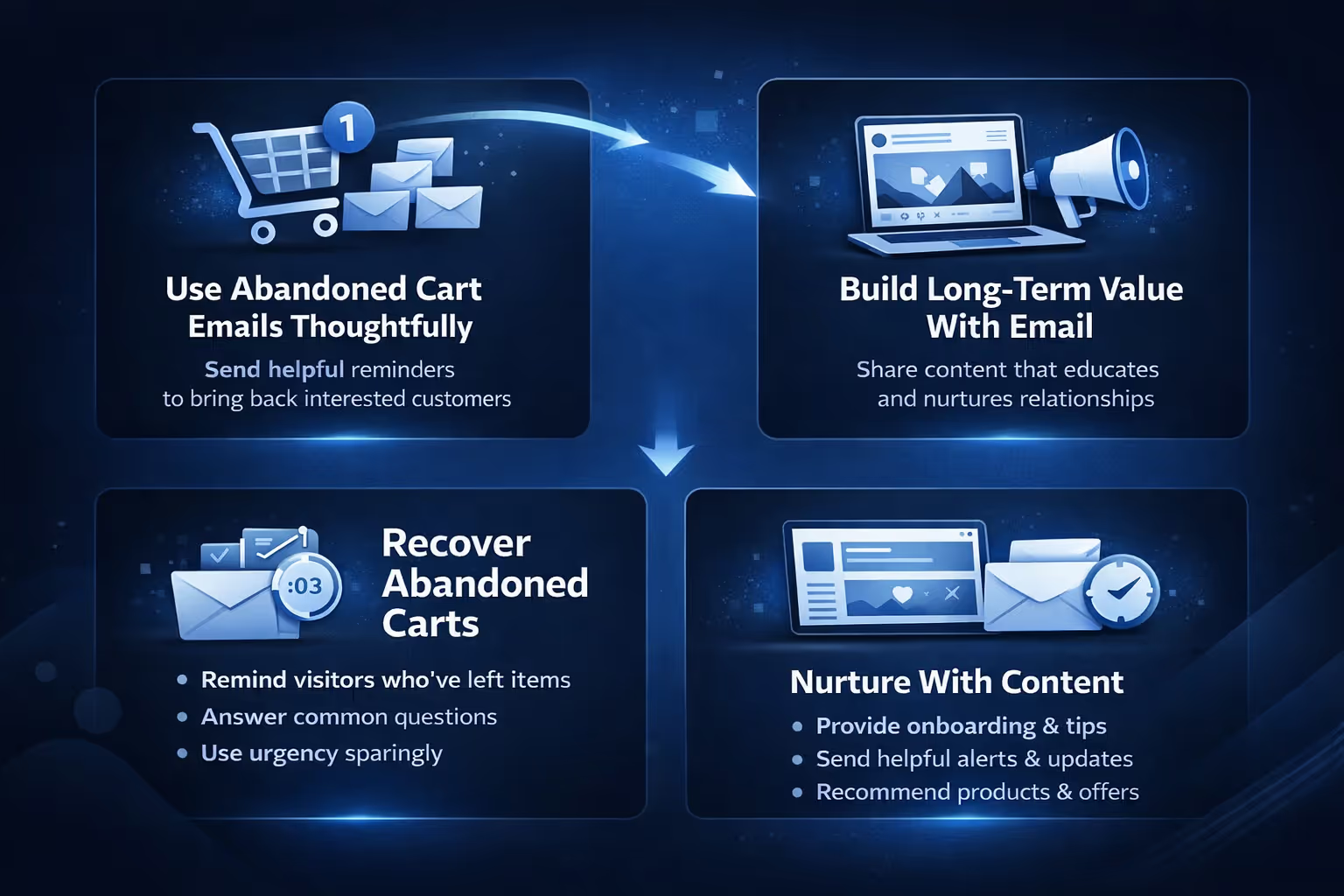
Abandoned cart emails work because they reconnect customers with intent they already showed. Someone who added a product to their cart was interested enough to consider buying. A well-timed reminder helps them pick up where they left off.
The best abandoned cart emails feel calm and useful. They focus on clarity, answer common questions, and gently bring the product back into view. Adding urgency or discounts can help in some cases, but pressure and aggressive language usually reduce trust rather than improve results.
Email should not exist only to push promotions. It is one of the most effective ways to educate customers, reinforce trust, and encourage repeat purchases over time.
Strong email content often includes onboarding messages that help customers get started, product guidance that shows real use cases, restock or availability alerts, and recommendations based on past behavior. When emails are relevant and timely, they feel helpful instead of intrusive. Frequency matters far less than relevance.
Sales growth becomes much easier when customers start trusting your brand before they ever reach a product page. Content plays a big role in that early stage. Helpful guides, blog posts, and FAQs answer questions, set expectations, and show that you understand the problems your customers are trying to solve.
Content also attracts more qualified visitors. People who arrive after reading something useful are usually further along in their decision process and more likely to convert.
For stores selling internationally, localization adds another layer of trust. Thoughtful localization goes well beyond translating text. Currency display, payment options, shipping expectations, and even small cultural details all influence whether a store feels familiar or foreign. When customers feel comfortable, they buy with less hesitation.
Analytics should guide better decisions, not serve as justification for assumptions. Instead of chasing isolated numbers, focus on patterns in how people actually behave on your store.
Asking the same simple questions regularly helps keep improvements grounded in reality:
Small, data-informed changes may feel slow at first, but they compound quickly. Over time, steady improvements driven by real behavior outperform dramatic changes made without evidence.
Increasing sales on Shopify without chasing hacks comes down to fundamentals done well. Speed, clarity, trust, and usability matter more than novelty.
Most growth is not dramatic. It is the result of steady improvement across the entire buying journey. When the system works, sales follow.
That is not exciting. But it is reliable.


