Best Tools for Multi-Touch Attribution in Meta Ads
An honest look at the best multi-touch attribution tools for Meta ads and how teams use them to understand real performance.
Jan 26, 2026



If you’re running a Shopify store, you’ve probably had this moment. Traffic looks decent. The products are solid. But sales feel stuck, or at least slower than they should be. That gap between effort and results is frustrating, and it’s more common than most store owners admit.
Increasing sales on Shopify is rarely about one big breakthrough. It’s usually a series of small, intentional changes that remove friction, build trust, and make buying easier. This guide focuses on those moves. No hacks. No buzzwords. Just practical ways to turn more visits into actual orders, and to help existing customers come back more often.
If this starts sounding generic at any point, I’ll stop and reset. Next sections can go deeper into specific tactics, examples, and decisions that matter when you’re trying to grow real revenue, not just dashboards.
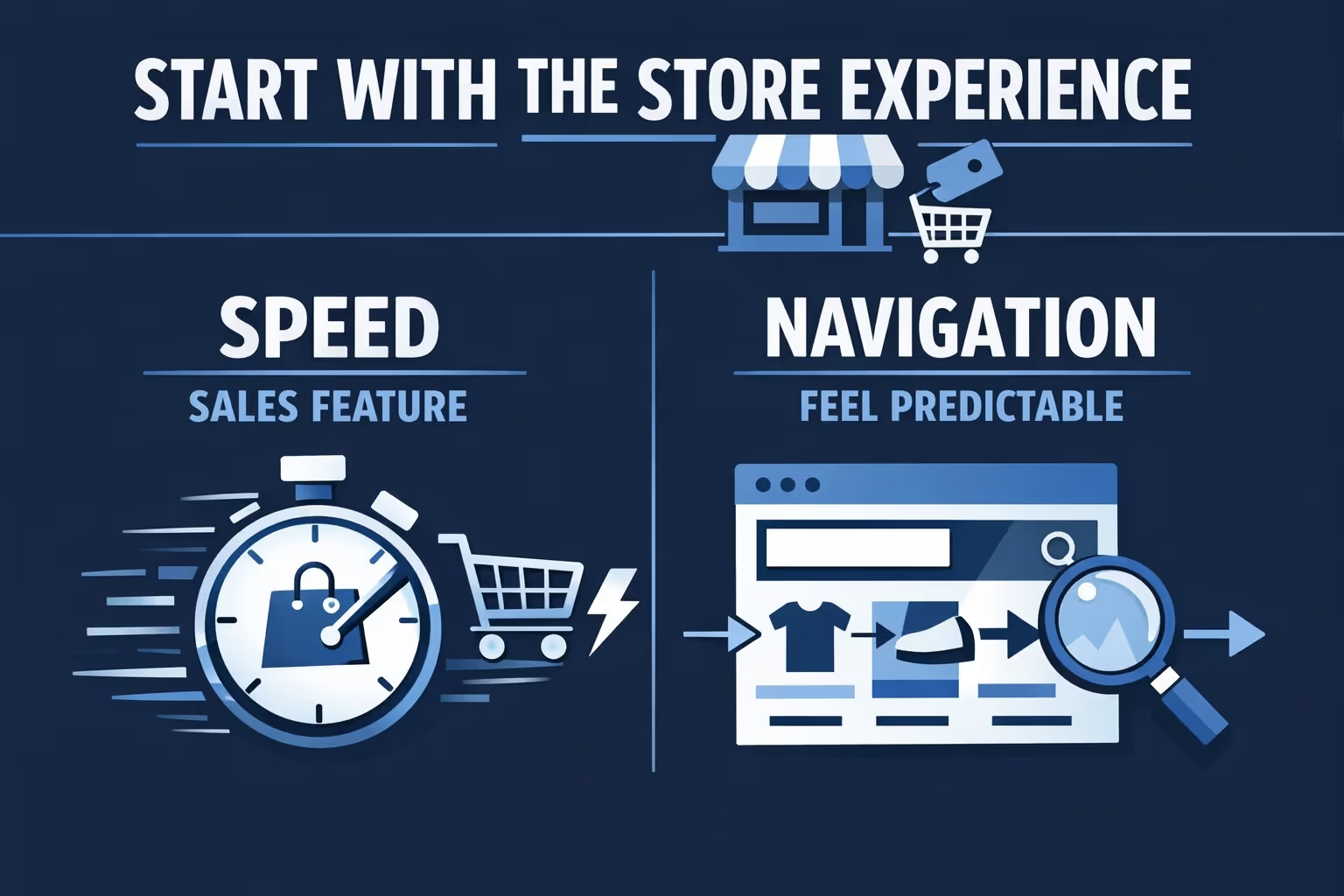
It is tempting to fix sales by buying more ads. But if the store experience is shaky, more traffic only magnifies the problem.
The first few seconds on a Shopify store matter more than most people admit. Visitors decide quickly whether the store feels reliable and easy to use. If something feels off, they do not wait around to figure it out.
A slow store creates doubt before a product is even seen. Mobile speed is especially important here, since many shoppers never touch a desktop.
Heavy images, unnecessary apps, and decorative elements that slow loading all chip away at conversion. The goal is not a technically perfect store. The goal is responsiveness. When pages load quickly, the store feels more confident by default.
Good navigation does not impress. It reassures.
Visitors should immediately understand:
Clear categories, simple menus, and visible search are worth more than clever labels. When people cannot find products easily, they rarely try harder. They leave.
Many Shopify stores assume visitors already understand why the product matters. Most do not. They are still deciding whether this store is worth their time.
Your value proposition should answer one simple question early: why buy this here instead of somewhere else?
That answer does not need clever language. It needs specificity. What problem does the product solve, and for whom?
Strong value statements often live in short lines near the top of the homepage or product pages. They work best when they sound like something a real person would say out loud, not something written to impress.

Improving your Shopify store experience is essential, but at some point, sales growth depends on traffic quality. Even strong product pages will underperform if the wrong audience sees your ads or the message does not resonate.
This is where Extuitive fits into Shopify sales growth.
At Extuitive, we help Shopify brands increase sales by validating ads before real budget is spent. Instead of launching campaigns and waiting weeks to see what works, we make it possible to predict ad performance upfront.
We built Extuitive to remove guesswork from Shopify advertising. Our platform uses AI agents modeled after more than 150,000 real consumer personas to test ad creatives, messaging, and audience fit before campaigns go live.
These AI consumers reflect real demographics, income ranges, and purchase intent. Shopify brands can see which ads are likely to convert before spending money on live traffic.
From the store owner’s side, the process stays simple. You connect your Shopify store, generate ad concepts tailored to your products, validate them with our AI consumers, and launch only what shows strong purchase intent.
Shopify brands use Extuitive to:
For Shopify stores with solid products and a working storefront, Extuitive acts as a growth accelerator. Less trial and error. More confidence in what goes live. Better use of marketing budget.
That is how we help Shopify brands increase sales without burning through ads.
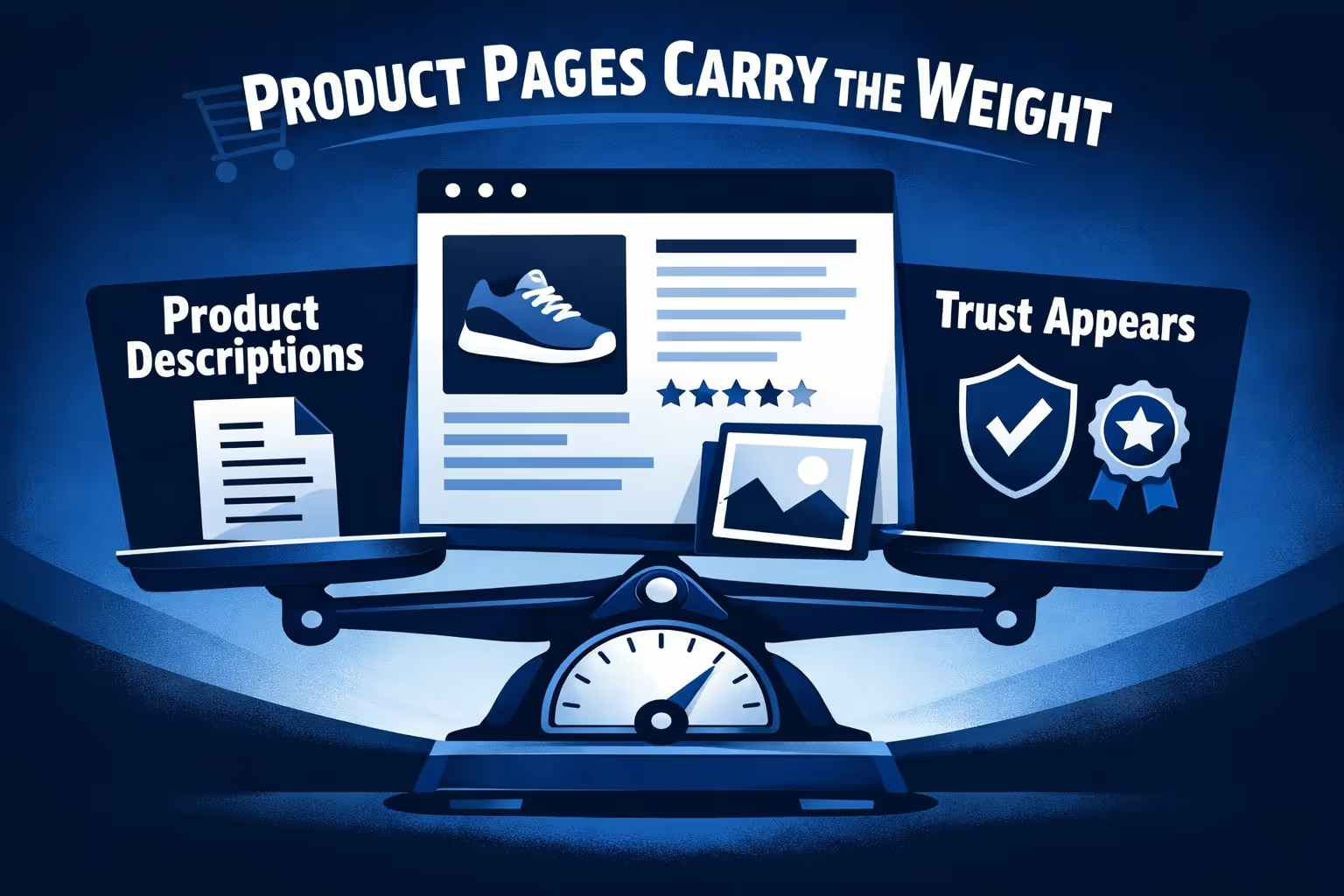
Most buying decisions happen on product pages. This is where hesitation shows up, and where clarity makes the biggest difference.
A good product page does not try to convince all at once. It walks the shopper through the decision, one question at a time.
SEO matters, but clarity matters more.
Good product descriptions:
Avoid stuffing every keyword into one block. Let the description breathe.
Images are often the strongest sales tool on a product page. They should answer questions, not just decorate the layout.
Shoppers want to understand size, texture, fit, and real-world use. Studio photos are helpful, but context matters. When customers can imagine the product in their own lives, hesitation drops.
Trust signals work best when they sit close to moments of hesitation. Reviews, clear return policies, and visible payment security reduce anxiety without demanding attention.
These elements do not need bold headlines. Their presence alone often does the work.
Many Shopify sales fall apart at checkout, not because of price, but because of friction. Every extra step adds a moment where doubt can creep in.
Checkout should feel faster than the rest of the store, not more complicated.
Reducing form fields, allowing guest checkout, and supporting autofill can noticeably improve completion rates. Familiar payment options also help shoppers feel safe moving forward.
When checkout feels effortless, people are less likely to second-guess the decision they already made.
Not all lost sales are gone forever. Many just need a reminder.
The best abandoned cart emails do not beg.
They:
A simple sequence often works better than a long campaign. One or two thoughtful emails can recover meaningful revenue.
Sending five reminders rarely helps. Sending one well-timed message often does.
Test different delays. Watch behavior. Adjust..
Growing sales does not always require more customers. Sometimes it comes from helping buyers make better choices once they are already interested.
Upsells and cross-sells work when they feel relevant. When they feel random, they get ignored.
Suggestions that complement the original product or solve a related problem tend to perform best. Bundles can also work when the value is clear and the offer feels thoughtful rather than aggressive.
Shoppers trust other shoppers. Even skeptical buyers look for signs that someone else went first.
Reviews work best when they are specific. Short comments that mention real outcomes carry more weight than vague praise.
Social proof does not need to create urgency. It simply needs to show that the store is active and trusted by real people.
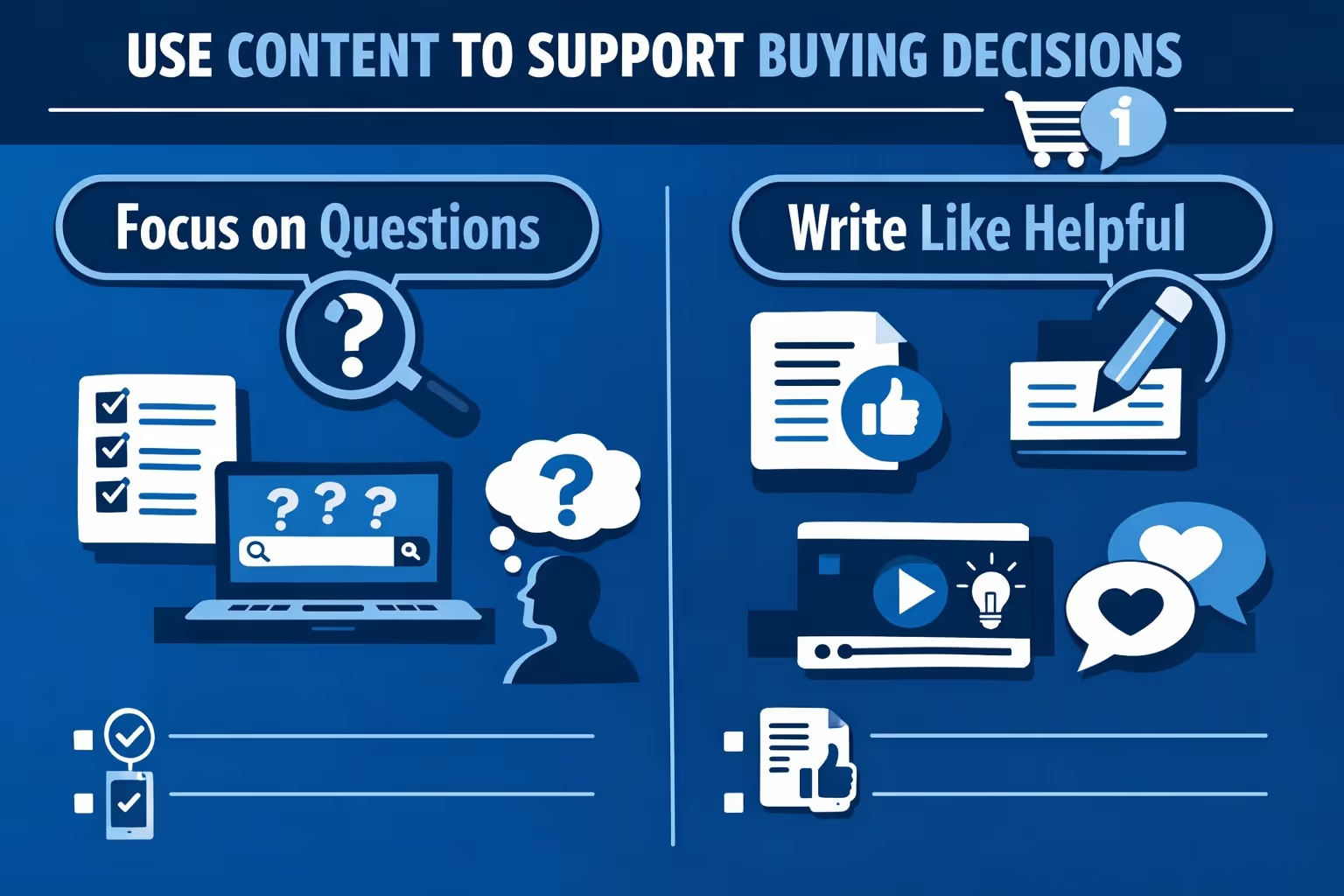
Blogging is not about volume. It is about intent.
Content works best when it answers questions buyers already have.
Strong content topics include:
If content does not connect to a product decision, it should have a clear secondary goal, such as building trust or authority.
Avoid filler. Avoid generic advice.
Explain things the way you would to a customer who emailed you a real question.
Email remains one of the most effective channels because it speaks to people who already showed interest.
A simple email setup often outperforms complex automation. A clear welcome message, thoughtful follow-ups, and occasional promotions are usually enough to start seeing results.
Relevance matters more than volume. Sending fewer emails that actually matter builds trust over time.
Once someone buys from you, the hardest part is over. Loyalty is often cheaper than acquisition.
Simple loyalty programs can encourage repeat purchases without overwhelming customers. Rewards should be easy to understand and easy to use.
When customers feel recognized, they are more likely to return.
Social platforms work best when they drive people back to a store that converts well.
Not every platform is necessary. The right choice depends on where your audience already spends time and how naturally your product fits that environment.
User-generated content often performs better than polished brand posts because it feels authentic. Real customers telling real stories build confidence quickly.
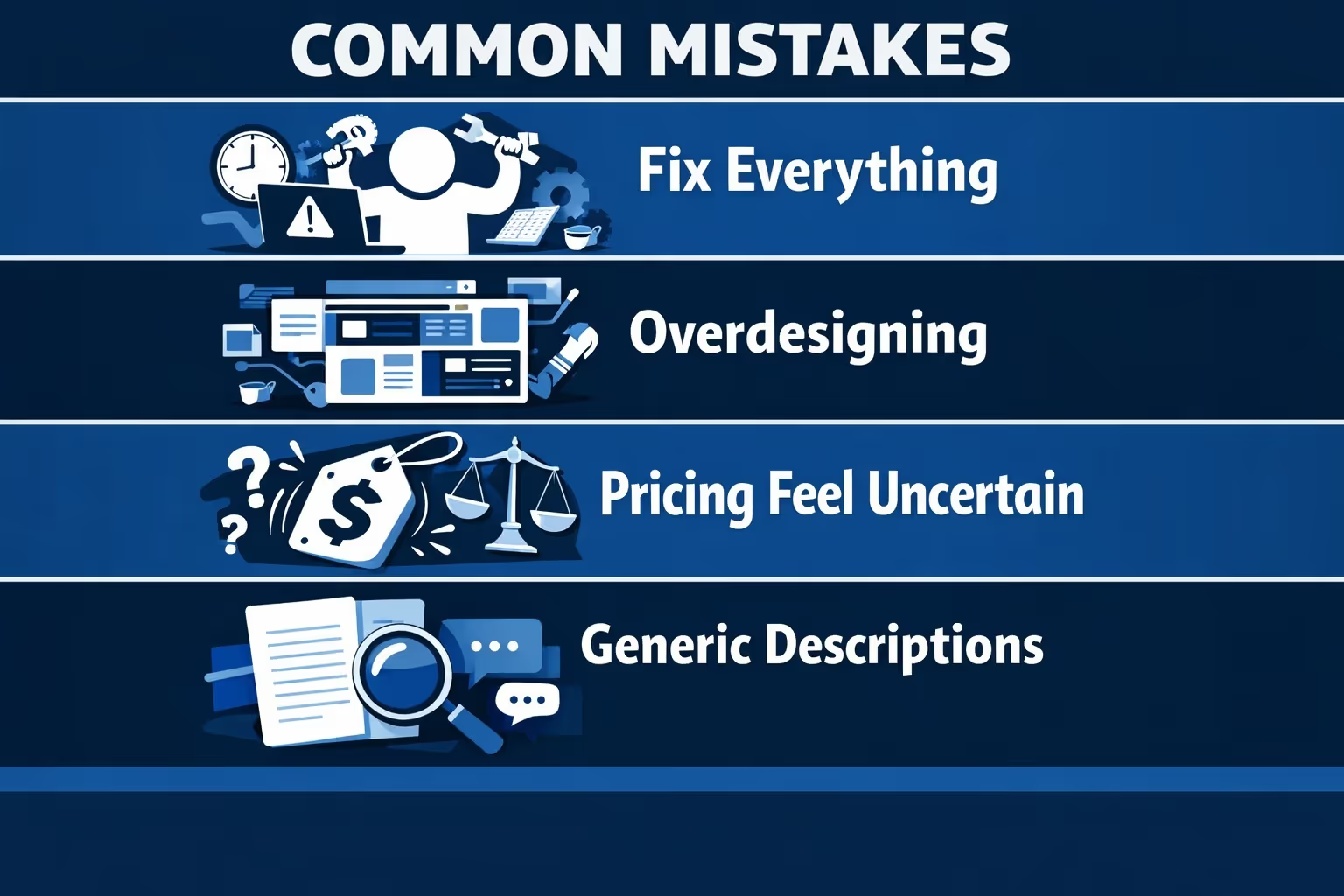
Most Shopify stores do not fail because of one obvious error. Sales slow down because of small decisions that seem reasonable on their own but add friction over time. These mistakes are easy to miss, especially when you are actively working on the store and trying to improve things.
When sales feel stuck, the instinct is often to change multiple things quickly. New apps, new layouts, new offers, new copy. The problem is not effort, it is overlap.
Making too many changes at the same time makes it hard to understand what actually helped. It also increases the risk of introducing new problems, such as slower load times or inconsistent behavior across pages. Focused changes are easier to measure and usually more effective.
A polished store is good. A crowded one is not.
Some stores lean too heavily into visuals, animations, and layered sections. While these elements can look impressive, they often compete with the product for attention. When shoppers have to work to understand where to look or what to do next, momentum drops.
Clear layouts tend to outperform clever ones, especially on mobile.
Few things stop a purchase faster than uncertainty around price.
Hidden fees, unclear shipping costs, or unexpected taxes that appear late in checkout break trust. Even if the final price is fair, the surprise itself creates doubt.
Transparent pricing early in the journey reduces abandonment and builds confidence.
Descriptions that simply list features rarely move people to buy.
Shoppers want to understand how a product fits into their lives, what problem it solves, and what makes it different. When descriptions sound interchangeable with dozens of other stores, they fail to create a reason to choose yours.
Specific language and real use cases make a bigger difference than polished wording.
Many Shopify stores are still designed with desktop first, even when mobile traffic dominates.
Small buttons, crowded layouts, and slow-loading pages affect mobile users more sharply. If the mobile experience feels awkward, sales will suffer, regardless of how well the desktop version performs.
Discounts can drive short-term spikes, but they come with a cost.
When promotions run constantly, customers learn to wait. Full-price purchases decline, and margins shrink. Over time, discounts stop feeling special and start feeling expected.
Using discounts strategically, rather than habitually, protects both revenue and brand value.
Analytics are only useful when they lead to decisions.
Many store owners track dozens of metrics but hesitate to make changes based on what they see. This creates the illusion of progress without real improvement.
One clear insight followed by action is worth more than constant monitoring with no response.
Increasing sales on Shopify rarely comes down to one clever trick or a single tool. It happens when the store starts making sense to more people. When pages load quickly. When products are easy to understand. When buying feels safe, simple, and predictable.
Most growth comes from stacking small improvements. Clarifying value. Reducing friction. Sending the right traffic to the right pages. Recovering sales that almost happened. These moves are not exciting on their own, but together they change how the store performs.
If there is one takeaway, it is this: work on the store before asking more from the customer. When the experience feels thoughtful and effortless, sales tend to follow without force.
Shopify growth is rarely instant. But it becomes reliable once the basics are handled well.


