Marketing Ideas for Masonry: 2026 Growth Strategies
Discover 12 proven marketing ideas for masonry businesses that drive leads, build trust, and outshine competitors. Digital strategies plus traditional tactics.
May 26, 2026



Running a Shopify store without ads isn’t a bold experiment anymore. For many stores, it’s a necessity. Ad costs keep climbing, tracking keeps getting messier, and even well-built campaigns don’t guarantee consistent returns.
The good news is that sales don’t disappear when ads do. They just come from different places. Organic traffic, repeat customers, and conversion clarity tend to do more heavy lifting than people expect. Most stores struggling without ads aren’t missing traffic. They’re missing trust, focus, or a reason to buy right now.
This guide breaks down how to get sales on Shopify without relying on paid ads. No shortcuts, no hype. Just practical levers that help real stores turn visits into orders, even on a limited budget.
Before focusing on traffic or growth channels, it is worth stepping back and asking a harder question.
Why are people not buying?
Many Shopify stores already get visitors. The issue is not visibility. It is hesitation. People arrive, browse, and leave without committing.
The same problems appear across many low-converting stores:
Ads can temporarily hide these issues. Organic traffic exposes them. Fixing them early makes every other effort more effective.

Improving your Shopify store experience is critical, but at some point, sales growth depends on the quality of traffic you bring in. Even well-optimized product pages struggle when ads reach the wrong audience or the message does not land.
This is where Extuitive comes into play.
At Extuitive, we help Shopify brands increase sales by validating ad ideas before real budget is spent. Instead of launching campaigns and hoping performance improves over time, our platform allows teams to predict which messages and creatives are likely to convert before ads ever go live.
We built Extuitive to remove guesswork from Shopify advertising. Using AI agents modeled after more than 150,000 real consumer personas, we test ad concepts against realistic demographics, income ranges, and purchase intent. Brands connect their Shopify store, generate ad concepts tailored to their products, validate them with our AI consumers, and move forward only with ideas that show strong conversion potential.
The result is faster decision-making, less wasted spend, and ad messaging that performs better not just in campaigns, but across product pages, email, and organic channels as well.
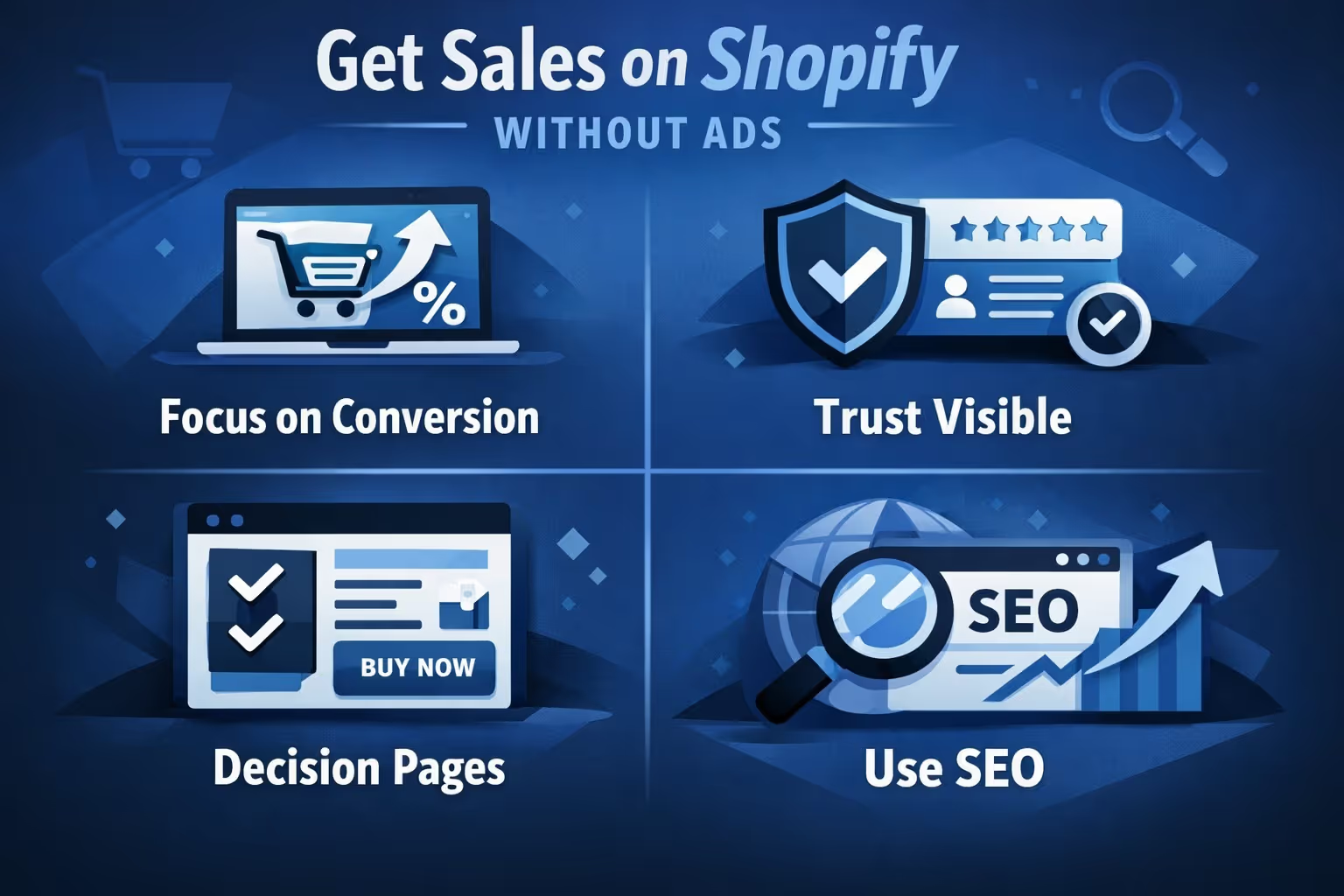
In a competitive market, traffic is not rare. Attention is.
Stores that rely on ads often think growth comes from volume. Without ads, growth comes from efficiency. Every visitor matters more.
Conversion optimization is rarely flashy, but it delivers consistent results.
Ask yourself:
Even small improvements here can have a big impact. Increasing conversion rates often generates more sales than doubling traffic.
Trust is one of the biggest silent blockers in ecommerce.
People rarely say they do not trust a store. They simply leave. That is why trust cannot be implied or hidden in fine print, especially when visitors are seeing your brand for the first time.
Strong stores make trust easy to notice. Customer reviews that include real detail or photos help shoppers see that others have already taken the risk. Clear, readable return policies reduce anxiety before checkout. Visible contact information reassures visitors that there is a real business behind the site. Secure, recognizable payment options remove doubts at the final step. A well-written About page, one that sounds human rather than corporate, often does more for credibility than any badge.
At the same time, restraint matters. Too many trust badges, popups, or guarantees can feel forced and raise suspicion instead of confidence. The goal is quiet reassurance, not pressure.
In crowded niches, trust often carries more weight than price.
A product page is not just a description. It is where the decision happens.
Many Shopify stores rely on short specs and hope the product sells itself. That approach rarely works without ads pushing urgency.
Strong product pages guide visitors toward a choice. They focus less on what the product is and more on what changes after buying it.
Good product pages usually:
This does not require long copy. It requires relevant copy. Clear structure, short paragraphs, and benefit-driven language make pages easier to scan and easier to trust.
SEO is often treated as a traffic strategy. In practice, it works best as a sales alignment tool.
Search visitors usually arrive with intent. They are actively looking for solutions, comparisons, or clear answers, which makes them more likely to convert than passive traffic from feeds or ads.
For Shopify stores, SEO is most effective when it supports buying decisions rather than chasing rankings for their own sake. Product and collection pages should be optimized around real search queries, not generic keywords. Blog content works best when it naturally connects to products instead of existing in isolation. Clear metadata helps set expectations before the click, and fast-loading pages with optimized images reduce friction once visitors arrive.
SEO does not deliver instant wins, but it compounds over time. Unlike ads, it does not disappear the moment spending stops.
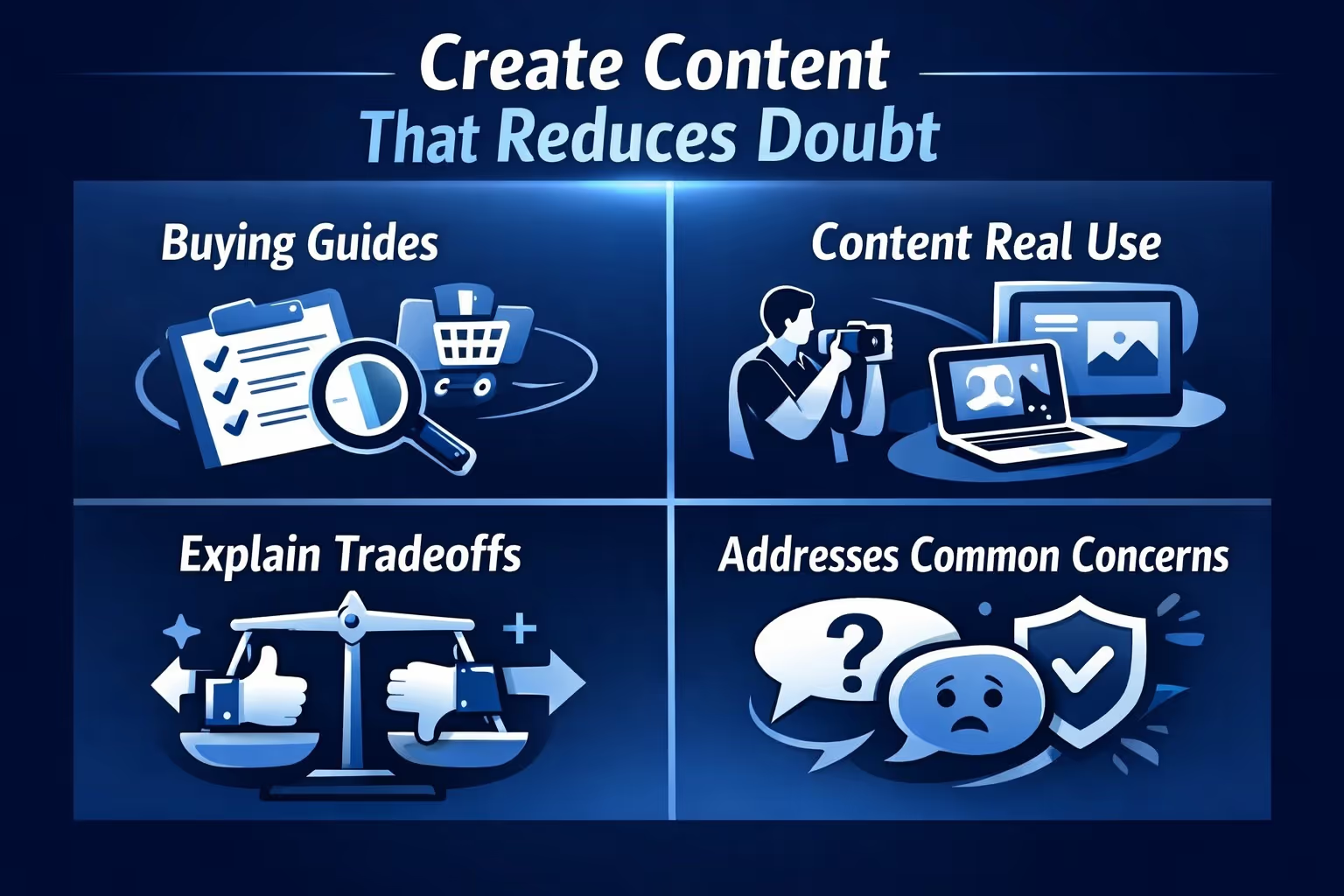
Content without ads needs a purpose beyond ranking. Traffic alone does not close the gap between interest and action. What matters is whether your content helps someone feel more confident about buying.
The most effective content answers questions visitors may not even realize they have yet. It removes uncertainty, clarifies tradeoffs, and makes the decision feel safer.
Buying guides work because they reduce mental effort. Instead of forcing visitors to compare options on their own, a good guide walks them through the decision logically. It highlights what actually matters, explains who each option is best for, and removes unnecessary complexity. When written well, a buying guide feels helpful, not persuasive.
How-to articles are powerful because they make ownership feel familiar. Showing how a product is used in real situations helps visitors imagine it in their own lives. This kind of content works especially well for products that solve a specific problem or require a bit of learning before use.
Comparisons build trust when they are honest. Instead of claiming that one option is perfect for everyone, effective comparison content explains tradeoffs clearly. It acknowledges limitations, outlines differences, and helps visitors choose what fits them best. Transparency here often increases conversions rather than hurting them.
Some content exists purely to reduce anxiety. Articles that address sizing, durability, compatibility, setup, or long-term use answer the quiet objections that stop people from buying. These pieces rarely go viral, but they quietly support conversions over time.
Content like this should feel like part of the shopping experience, not a detached blog section. When done right, it works in the background, building confidence long before the checkout page appears.
Email remains one of the strongest tools for Shopify stores that do not rely on ads.
Not because it is clever or new, but because it is personal and owned. Email supports repeat purchases, referrals, and long-term value in a way few other channels can.
The mistake many stores make is treating email as a constant promotion feed. A stronger approach focuses on relationship building. Welcome emails should explain what makes the brand different and set expectations early. Post-purchase emails can help customers get more value from what they bought, which reduces regret and increases loyalty. Thoughtful follow-ups keep the connection alive without relying on constant discounts. Segmentation based on real behavior, rather than assumptions, ensures messages stay relevant instead of intrusive.
Email works best when it feels like a conversation, not a broadcast.
Repeat customers are the backbone of stores that grow without ads.
Loyalty programs work because they reward behavior instead of pushing constant promotions. They make customers feel recognized rather than targeted. In many cases, simple loyalty systems perform better than complex ones. Points, referrals, or early access can be enough when they are easy to understand and clearly communicated.
Clarity matters more than creativity. Customers should immediately understand how rewards are earned, what those rewards unlock, and why staying loyal is worth their time. When the value is obvious, participation follows naturally.
In competitive markets, familiarity and reliability often drive repeat sales more effectively than discounts.
Organic social media without ads plays a different role than most people expect.
Instead of driving instant sales, it supports credibility. Many shoppers check a brand’s social profiles before buying, even if they discovered the store through search, email, or word of mouth. What they see there helps confirm whether the brand feels real and trustworthy.
Effective organic social content usually shows real product use, highlights customer stories, and offers small behind-the-scenes glimpses into the brand. Consistency matters more than polish. Posting regularly with a clear voice builds recognition over time.
You do not need to be everywhere. One or two platforms handled well are more effective than spreading thin across many channels.
Collaboration is one of the most overlooked growth strategies for Shopify stores that operate without ads.
Partnering with complementary brands or creators allows you to reach warm, relevant audiences without paid spend. This can take many forms, such as cross-promotions with aligned stores, bundled offers that add value on both sides, guest content or shared resources, and product-based influencer collaborations built around genuine fit rather than fees.
The strongest partnerships feel natural and mutually beneficial. When trust already exists between a partner and their audience, that trust transfers more easily than it ever could through cold traffic.
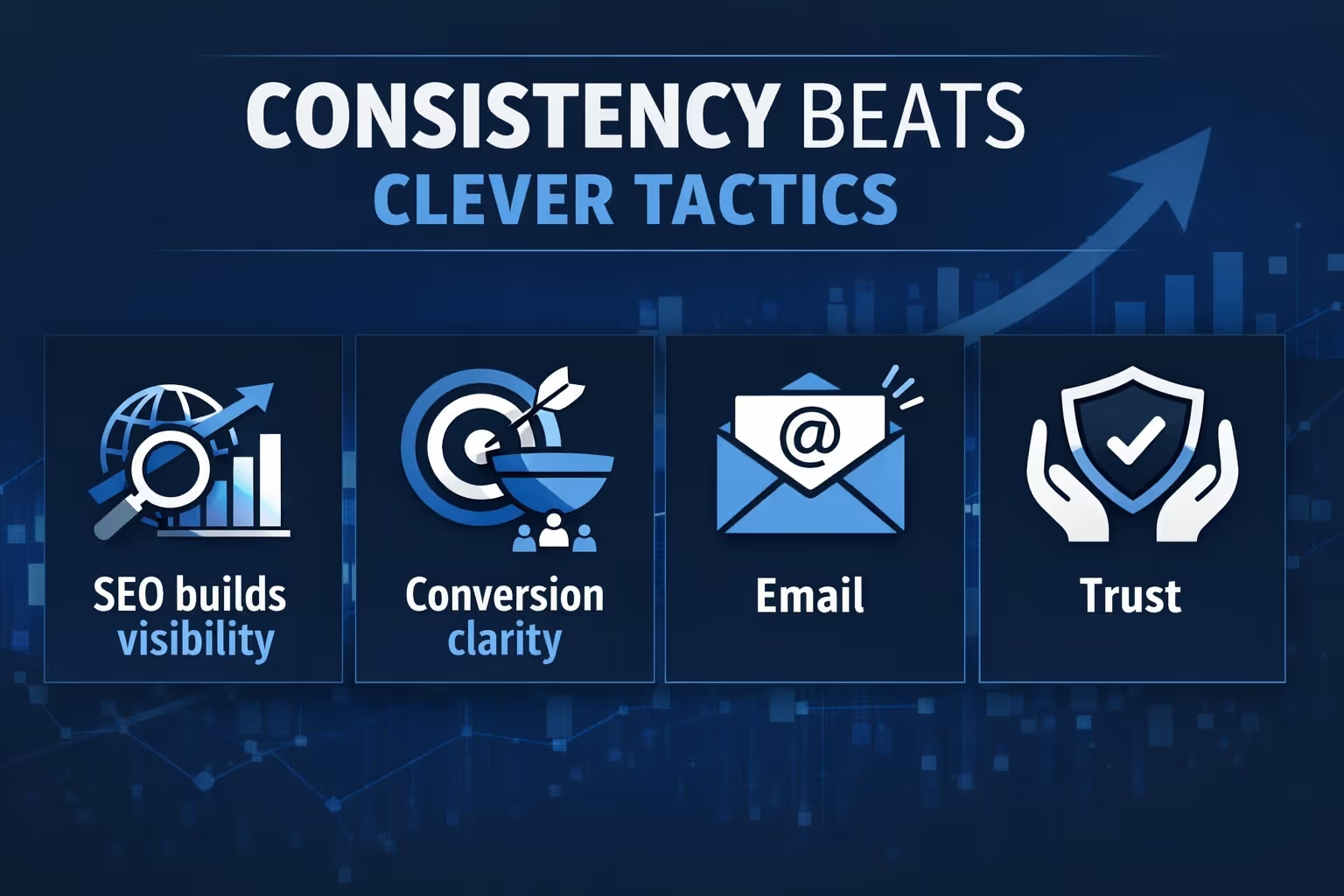
Selling on Shopify without ads is not about finding one perfect move or chasing the latest tactic. It is about stacking systems that work quietly and reliably over time.
None of these systems work overnight. Together, they create momentum that does not depend on daily ad spend or shifting algorithms.
Getting sales on Shopify without ads is not a fallback plan. For many stores, it becomes the most stable one.
It forces focus and rewards clarity. Ads can amplify what already works, but they cannot fix weak foundations.
When trust is clear, friction is low, and messaging is honest, sales do not disappear without ads. They simply take a different path.
And over time, that path tends to be more sustainable and easier to control.


