Marketing Ideas for Doctors Office: Complete 2026 Guide
Discover 10 proven marketing ideas for doctors offices that attract new patients, boost retention, and stay HIPAA-compliant. Actionable strategies inside.
May 15, 2026



When people think of Shopify, they often picture the sleek dashboards, the app integrations, and maybe even the checkout button that powers millions of stores. But behind all of that is a large team of people quietly building the platform merchants depend on every day. So how many employees does Shopify actually have? And what does that number tell us about how the company operates?
Let’s break it down.
As of the end of 2024, Shopify employs approximately 8,100 people globally. That number comes directly from the company’s own reporting and gives us a solid benchmark for its size in the tech world.
This workforce supports millions of merchants across more than 175 countries and helps facilitate millions of dollars in sales. So while 8,100 might not sound massive compared to some other tech giants, Shopify runs lean by design. And it’s not just about numbers. It’s about how the team is structured and how they get work done.

Shopify launched in 2006, and like most startups, it started small. Over the years, its team scaled alongside its platform’s popularity.
Here’s a rough outline of Shopify’s headcount evolution:
This kind of growth didn’t happen just because Shopify wanted to get bigger. It was driven by expansion into new products (like Shop Pay and Shopify Fulfillment Network), new markets, and support for more enterprise-level merchants.
One of the most important things to know about Shopify’s workforce is how they work. In 2020, like many companies, Shopify pivoted to remote work during the pandemic. But unlike many, they didn’t go back.
Instead, they leaned into it and introduced a model called Digital by Design (DxD). That means most people work from wherever they do their best work. There are no mandatory office days. Instead, Shopify uses “Ports” – optional co-working spaces in select cities where employees can meet up when it makes sense.
This has a few key implications:
It’s a setup that suits fast-moving teams and independent thinkers, which happens to be exactly the type of people Shopify wants to hire.
Shopify doesn’t just hire for headcount. The company is known for hiring people who are highly skilled and ready to grow fast. Their career page makes this very clear: if you’re looking for structure, predictability, and a slow pace, you’re probably not a fit.
They value independent thinkers, people who thrive on uncertainty, crafters obsessed with improvement, and those who can ship meaningful work quickly.
This doesn’t mean it’s a chaotic environment. It just means the company looks for people who can manage ambiguity and stay focused on outcomes. That approach directly impacts how the team functions with a headcount that’s still lean compared to the scale of its impact.
One of Shopify’s internal mantras is that everyone works on a product. That includes folks in finance, support, and even HR. The idea is that no matter your role, you’re contributing to something that helps entrepreneurs and brands succeed.
Shopify has even open-sourced its Product Principles to show how seriously it takes this mindset. The principles are built around speed, clarity, and ownership. This kind of cultural alignment helps keep the team tight-knit and focused, even as it grows past 8,000 people.
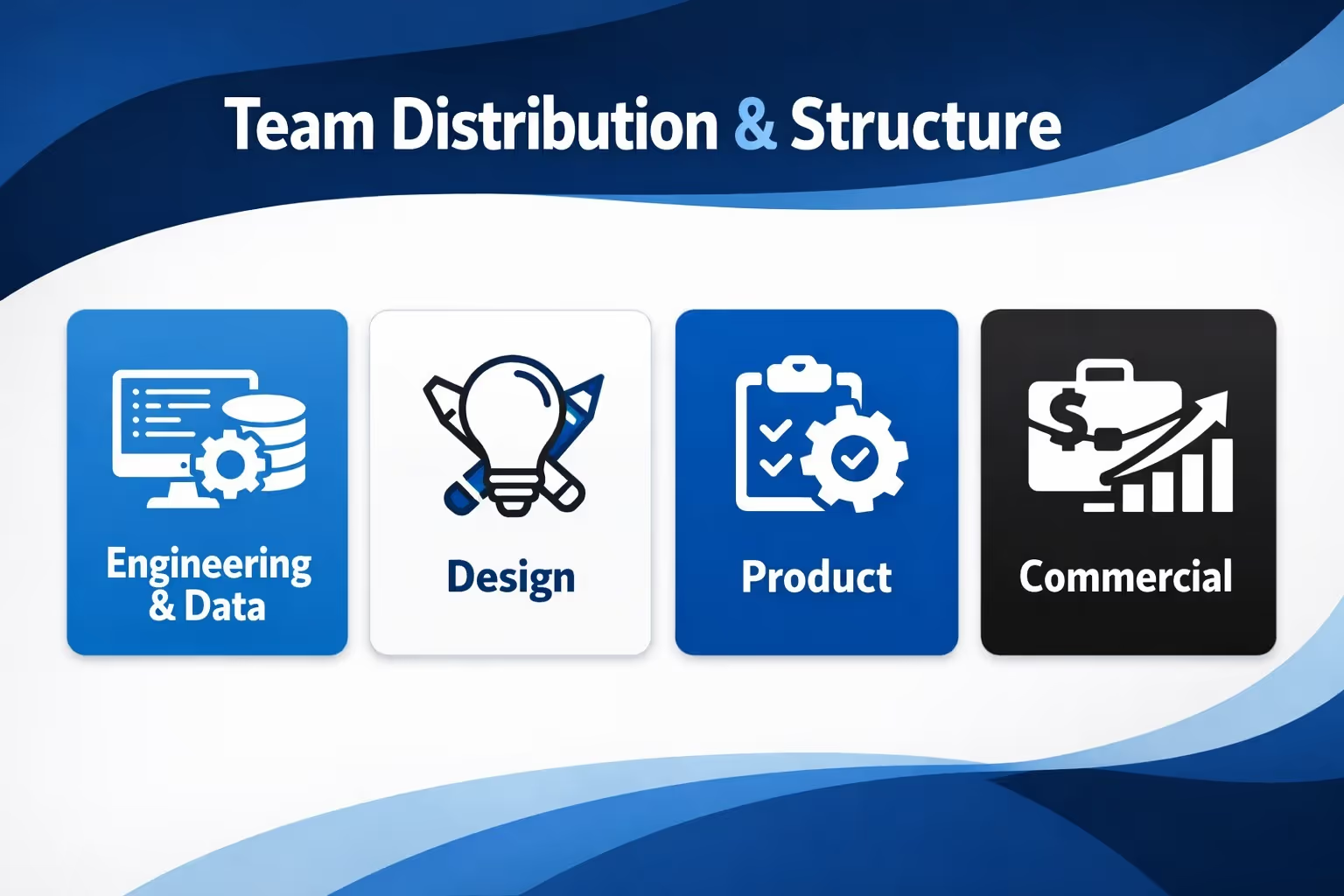
Although Shopify doesn’t publish detailed breakdowns of where each employee works or what departments are the largest, we do know the company hires across a wide range of areas:
There are also early-career pathways like the Dev Degree program, internships, and apprenticeships in design and product.

We’ve seen firsthand how lean teams like Shopify’s still support massive output. At Extuitive, we work with Shopify brands every day that rely on speed, precision, and performance. That means their internal teams, often small and scrappy, need tools that give them real leverage without slowing things down.
That’s where we come in. Our prediction engine helps these brands forecast ad performance before launch, using AI models validated against actual campaign outcomes. Instead of guessing which creative might land, they get clarity on what’s likely to convert. That saves time, cuts waste, and lets fast-moving teams do more with less.
The connection is pretty clear: Shopify’s 8,100-person team isn’t just powering a platform. It’s enabling an entire ecosystem of partners, apps, and tools like ours to fill in the gaps. Together, we’re helping leaner teams punch above their weight, using smarter systems to do what used to take entire departments.
Knowing that Shopify has around 8,100 employees is useful context, but on its own, it’s just a number. What matters more is what the company is able to do with that team size.
Here’s why it’s relevant:
In the world of tech and e-commerce, it’s easy to be impressed by giant teams. But in Shopify’s case, the focus has been on impact per employee, not just adding bodies.
One theme that comes up again and again in Shopify’s messaging is growth. But not just company growth – personal growth. The company expects people to evolve, push themselves, and try new things regularly.
This mindset is baked into everything from how teams are structured to how job roles are defined. Instead of rigid org charts, people often move across teams or take on projects outside their original scope. That flexibility helps Shopify scale without needing a huge staff for every function.
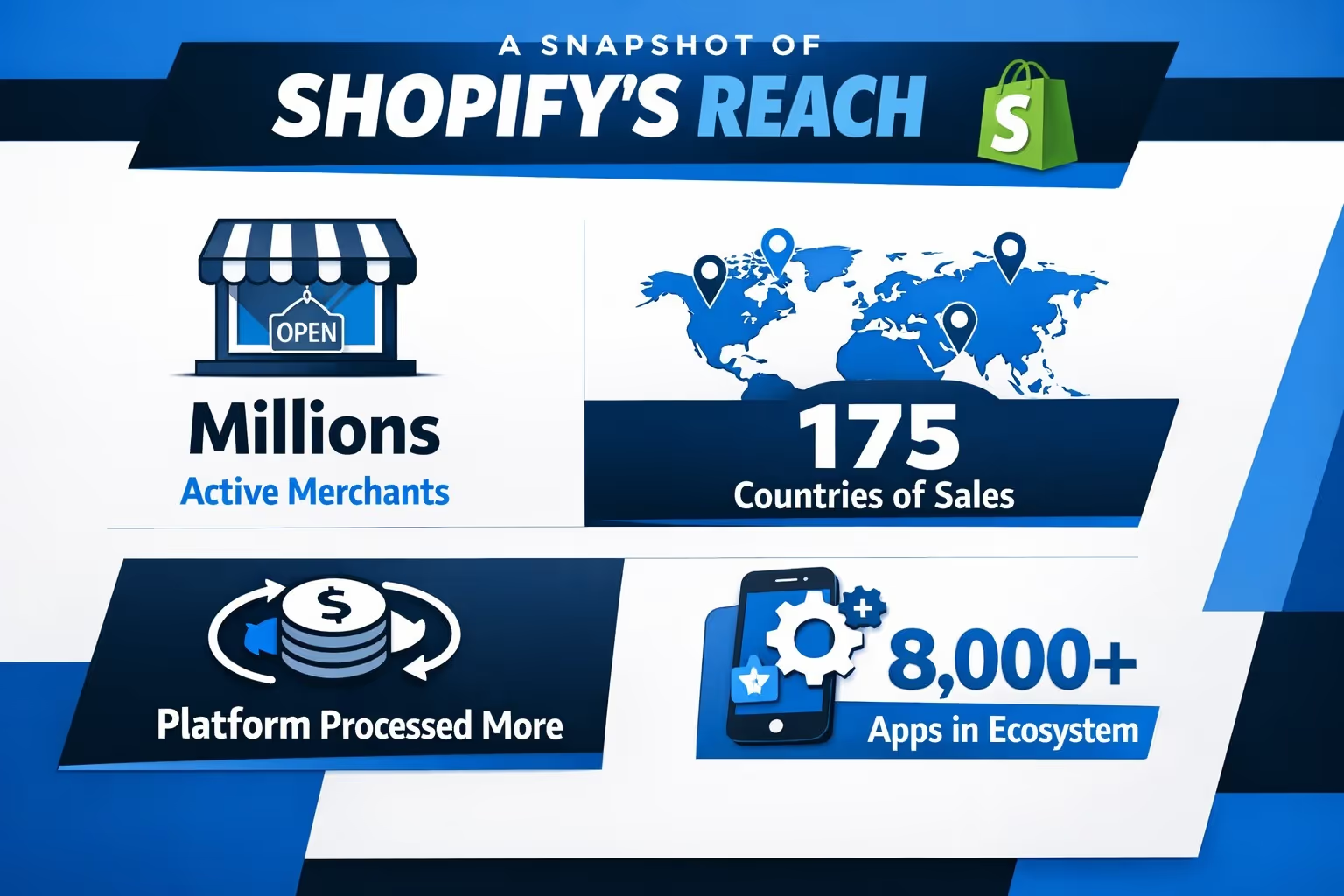
To put things in perspective, here’s what Shopify’s ~8,100 employees help support:
Not bad for a team that’s smaller than many Fortune 500 tech firms.
So, how many employees does Shopify have? Around 8,100 as of the end of 2024. But the number alone doesn’t tell the whole story. It’s how Shopify hires, how they work, and what they expect from their people that really explains the impact.
This isn’t a company focused on headcount for the sake of scale. It’s focused on building tools that make commerce better for everyone, and they’ve designed a team structure to match that mission.
Whether you’re a merchant, a developer, or someone curious about how modern tech companies operate, Shopify’s team size gives you a window into what it takes to run one of the world’s most influential commerce platforms.


