Why Shopify Is Bad and Could Be Holding Your Business Back
Explore the limitations of Shopify and why it may not be the right fit for businesses looking to scale efficiently and customize freely.
Feb 3, 2026



Most marketers don’t wake up excited about forecasting. And to be honest, Google Ads prediction doesn’t exactly scream thrill ride. But here’s the thing: if you care about your ROAS, your time, or your budget, prediction isn't just nice to have – it’s essential.
Predicting performance doesn’t mean trying to hit some perfect number. It's more like building a map. You won’t know the weather or every twist in the road, but at least you won’t be driving blind. With the right approach, a few solid tools, and some critical thinking, you can stop guessing and start planning with confidence.
Whether you’re managing $500 or $500K in monthly spend, this guide will walk you through the real-world approach to Google Ads prediction that skips the fluff and sticks to what actually works.
Let’s start with a reality check: Google Ads is more automated than ever. Between Smart Bidding, Performance Max, and Google’s obsession with black-box features, it's tempting to assume you don’t need to forecast anymore. But that’s a trap.
Prediction is one of the few tools left that puts the marketer in control. You’re not just watching metrics tick up or down – you’re asking hard questions:
Good forecasting forces you out of the comfort zone of dashboards. It connects ad performance to business performance – margins, goals, timelines, constraints. And in a world of one-click automation, that kind of thinking is becoming rare .
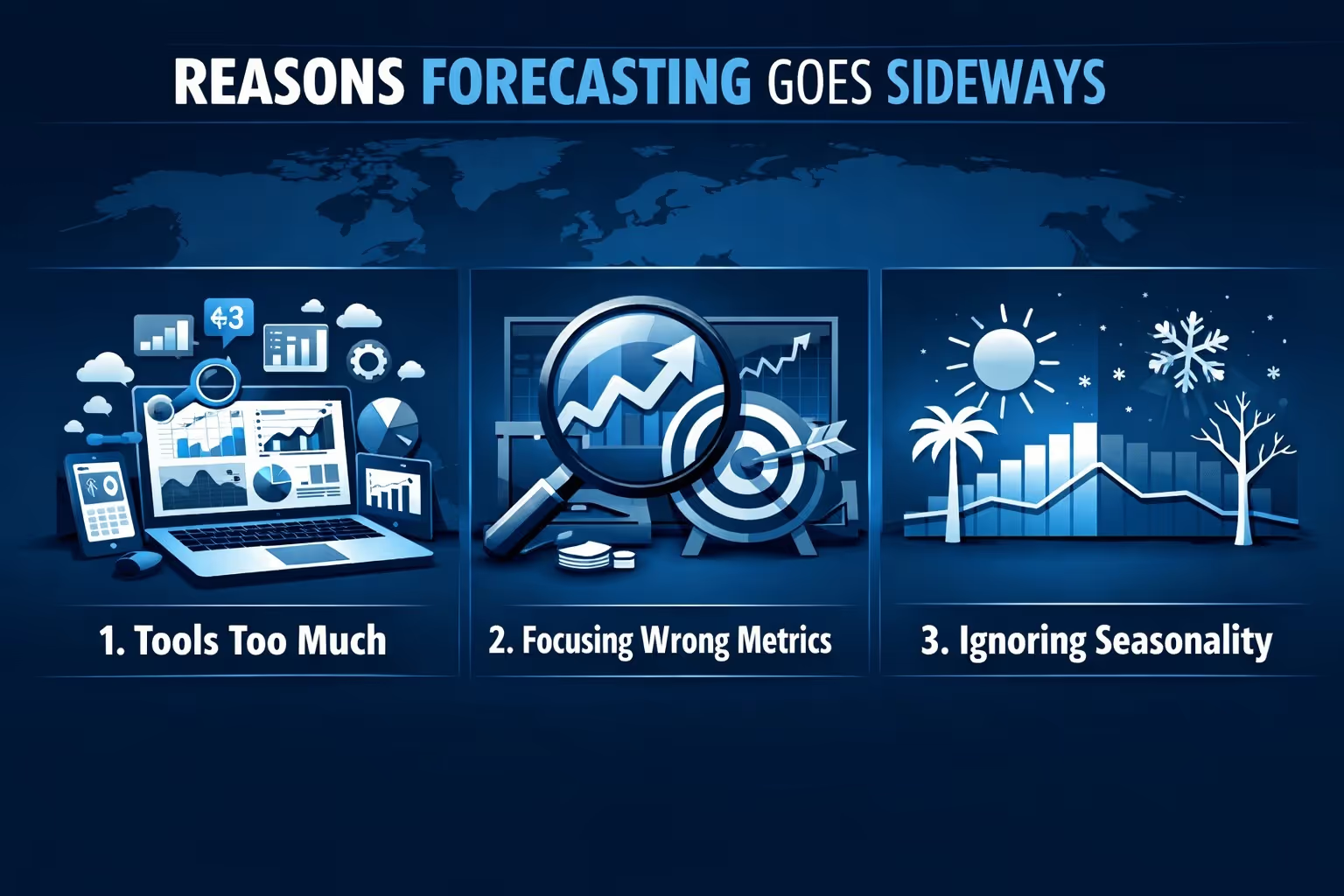
Before we talk about tools or strategy, let’s get real about why most people do this wrong. Here are three recurring issues I see all the time.
Google’s built-in tools aren’t bad, but they’re limited. You’ll get projections for impressions, CTR, and clicks. That’s useful – until you remember those numbers don’t mean anything without margins, LTV, or conversion lag factored in. By default, they forecast media metrics like impressions and clicks – but with proper setup, they can also reflect business results such as LTV or margins.
Click-through rates and Quality Scores are great, but they don’t tell you if your ad will make money. A smart forecast connects ad-level inputs to outcomes that matter: leads, sales, retention, CAC, and ROAS.
One of the biggest mistakes? Assuming last month’s performance is a reliable baseline. Seasonality (both obvious and subtle) can completely skew results. Florists see spikes around weddings. Tax prep services peak early in the year. Back-to-school isn’t just for retailers. Build that into your model, or you’ll miss the mark .
If your predictions don’t answer these, you’re flying blind. Here is what to look for:
We’ve spent a lot of time thinking about what makes ad prediction actually useful in the real world. It’s one thing to forecast click-through rates or impressions on paper, but it’s a whole different story when those numbers actually drive decisions on budget allocation, messaging, and launch timing.
At Extuitive, we’ve built our entire approach around speed, precision, and practicality. Instead of burning through budget with trial-and-error testing, we let brands validate their ads using AI agents modeled on real consumer behavior. These aren’t vague lookalike segments either – we’re talking unique personas built from behavioral data that reflect actual purchase intent. It means our users can skip the guesswork and get clarity early, often before a single dollar is spent on live campaigns.
We connect directly with Shopify stores, pull in product context, and automatically generate ad variations ready for testing. From there, we use our models to predict how different audiences will respond – not just clicks, but deeper signals that lead to conversions. And once an ad proves it can perform, we make launching and tracking it easy. That’s where we believe prediction matters most: when it’s baked into the creative process and actively shortens the distance between concept and performance.
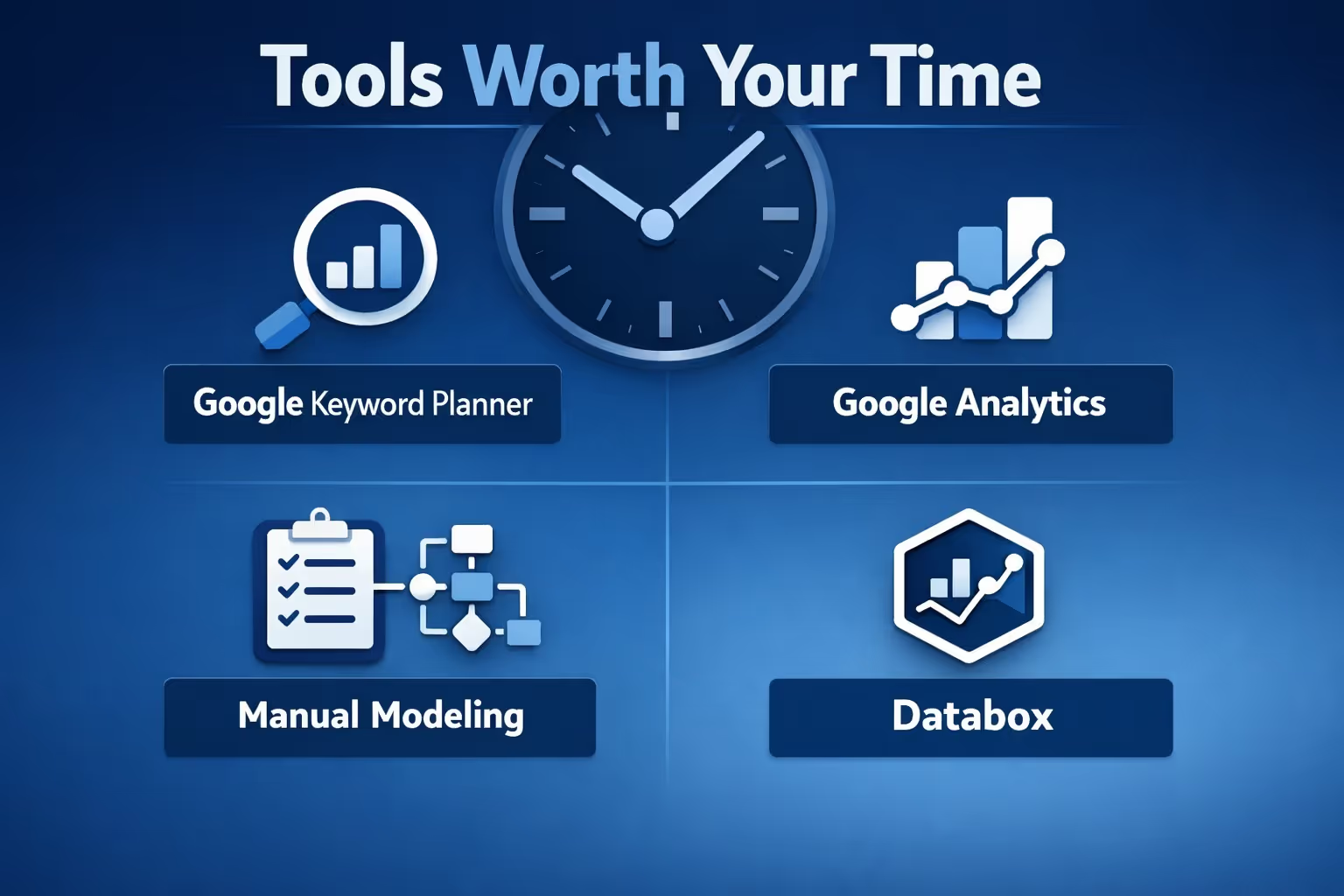
You’ve got a lot of options. Some are free. Some are not. Here’s a mix that can actually help.
Yes, we just knocked Google’s native tools – but Keyword Planner still has value. You can plug in terms and get baseline forecasts for search volume, clicks, and CPC. Just don’t treat it like gospel. Use it to spot patterns, not build budgets.
Great for understanding where organic trends cross over with paid intent. If people are landing on certain pages organically and converting, that tells you something about what’s already working.
If you’re serious, you’ll need to get your hands dirty. Export your keyword data. Layer in conversion data. Model your margins. Tools like Excel or Google Sheets give you more flexibility than most plug-and-play platforms.
If you’re managing multiple accounts or clients, Databox can pull everything into one place and track performance over time. It doesn’t forecast for you, but it makes reporting easier – which helps when testing predictions against reality
No two campaigns are the same. But some approaches work across the board. These aren’t hacks – they’re just what smart marketers actually do.
You’re not optimizing for CTR. You’re trying to get 500 leads under a $2,500 budget with a 3X ROAS. Everything else flows from that.
Start with CPCs and conversion rates. Factor in seasonality and external trends. Adjust for bidding behavior. Run the numbers. Check if they even make sense.
Either you say: “Here’s our budget, what can we get?” Or: “Here’s what we want, how much will it cost?”
Both approaches are valid – just don’t mix them in the same model without knowing it.
More money doesn’t always mean better results. As you scale, you start bidding on lower-intent clicks, which dilutes performance. CPCs rise. ROAS drops. If your forecast doesn’t account for this, you’ll overpromise and underdeliver.
Pro tip: Always show how efficiency changes per additional $1,000 spent. That forces realistic conversations with clients or stakeholders .
There’s a lot of noise around AI tools predicting performance. And sure, some of them can surface patterns you’d miss. But you still need to understand what’s under the hood.
AI is great for:
It’s not great for:
Use it as a co-pilot, not an autopilot .
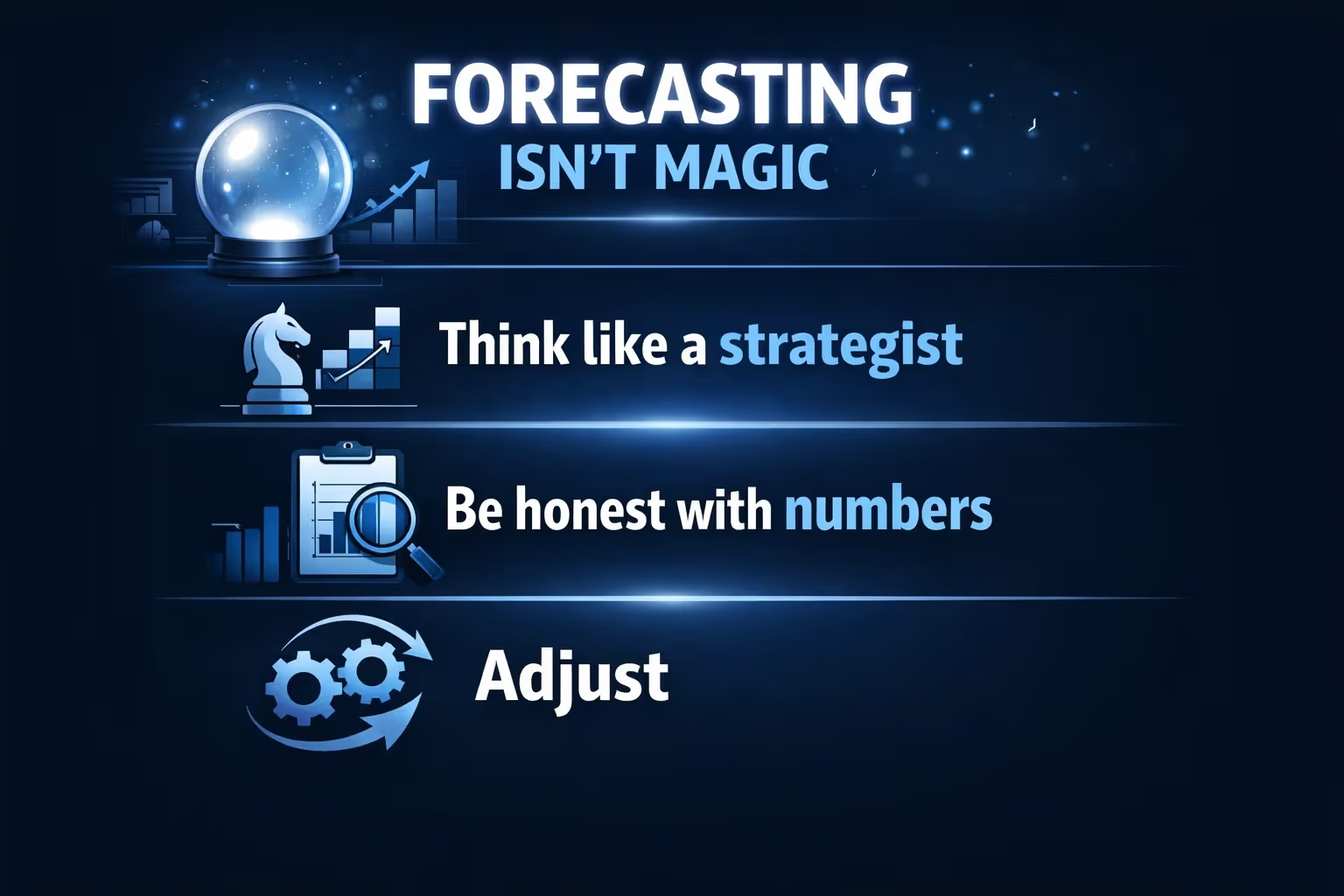
You don’t need to be a data scientist to make good predictions. You just need to:
The truth? Most campaigns fail quietly because nobody bothered to do the hard work upfront. Or they overreact to short-term dips without understanding the bigger picture.
Forecasting isn’t about being right every time. It’s about being ready.
If you’ve made it this far, you already care more than most. That’s a good start. But don’t stop at theory. Download a forecast template. Run your own scenarios. Break things on paper before they break your budget.
And remember: the best forecasts aren’t perfect. They’re useful. That’s more than enough.


