Meta Lead Ads Testing Tool: Test Your Lead Forms (2026)
Learn how to use Meta's Lead Ads Testing Tool to verify Facebook and Instagram lead form integrations. Step-by-step guide with troubleshooting tips.
Mar 23, 2026



If you’ve spent any time inside Google Ads, you’ve probably seen the optimization score change and wondered what actually drives it. One day it jumps up, the next day it drops, sometimes without any obvious changes on your side. That leads to a fair question: can this score really be predicted, or is it just reacting to whatever Google wants you to do next?
The truth sits somewhere in between. Google does not publish a formula for how optimization score is calculated, but it does leave enough signals to understand the patterns behind it. When you look closely, the score follows a set of predictable behaviors tied to recommendations, bidding choices, feature adoption, and account activity. This article breaks down the main methods behind optimization score prediction, so you can understand what moves the needle and decide when it’s worth paying attention to and when it’s not.
Google describes Optimization Score as an estimate of how well your Google Ads account is set to perform. It ranges from 0% to 100% and updates in real time. The score is based on how closely your account follows Google's best practices, according to their internal algorithm.
But here’s what’s important: the score itself doesn’t directly impact your ad performance or Quality Score. It’s just a reflection of what Google thinks you could do better. So when you see a recommendation and a score boost attached to it, that boost only applies to the Optimization Score, not your actual campaign results.
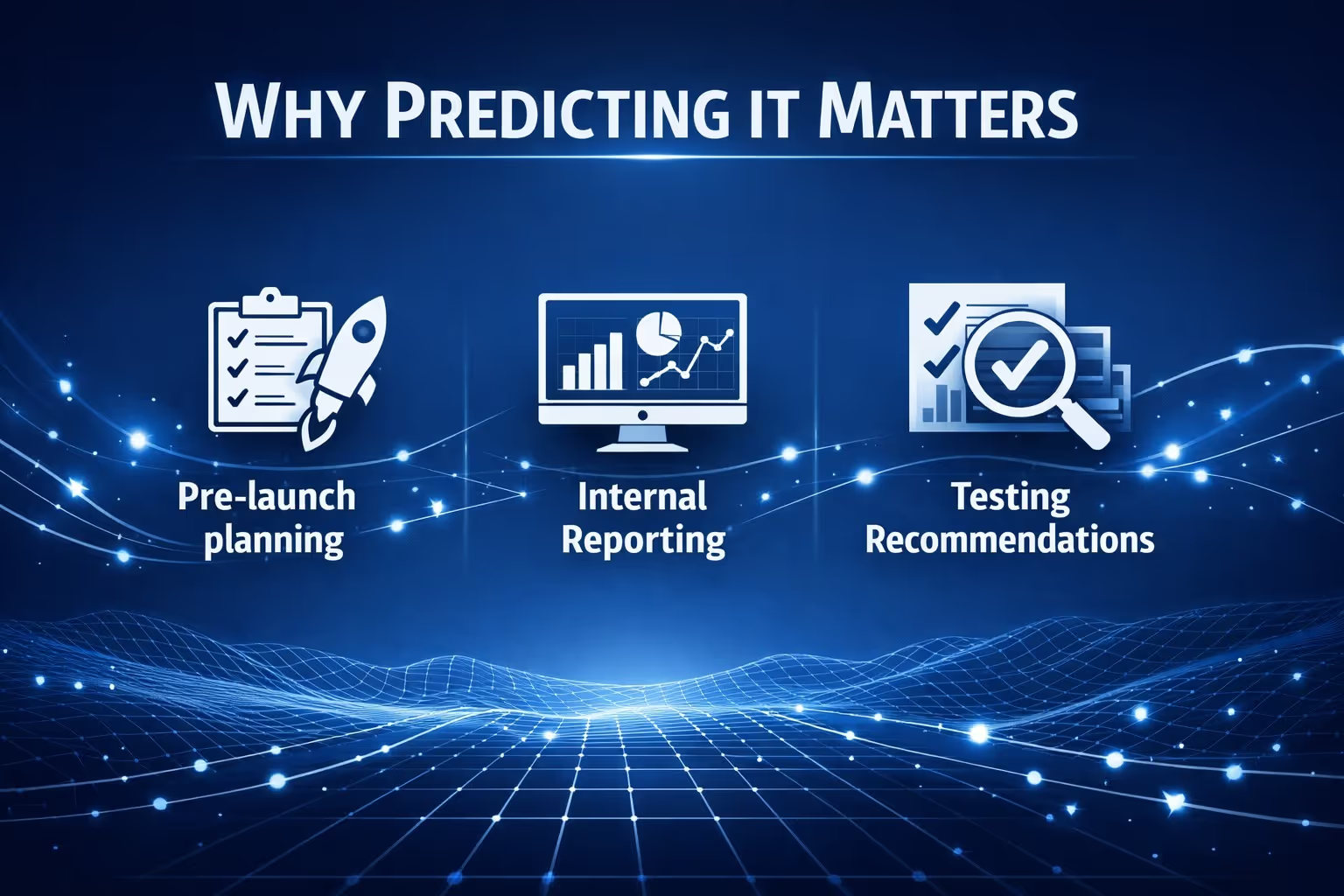
You might ask, “If it’s just a suggestion tool, why bother predicting it?” Good question.
There are a few practical reasons:
According to Google and multiple industry sources, your Optimization Score is built from dozens of signals. It changes dynamically based on your campaign’s setup, your bidding strategy, keyword use, and more.
Here are some common factors:
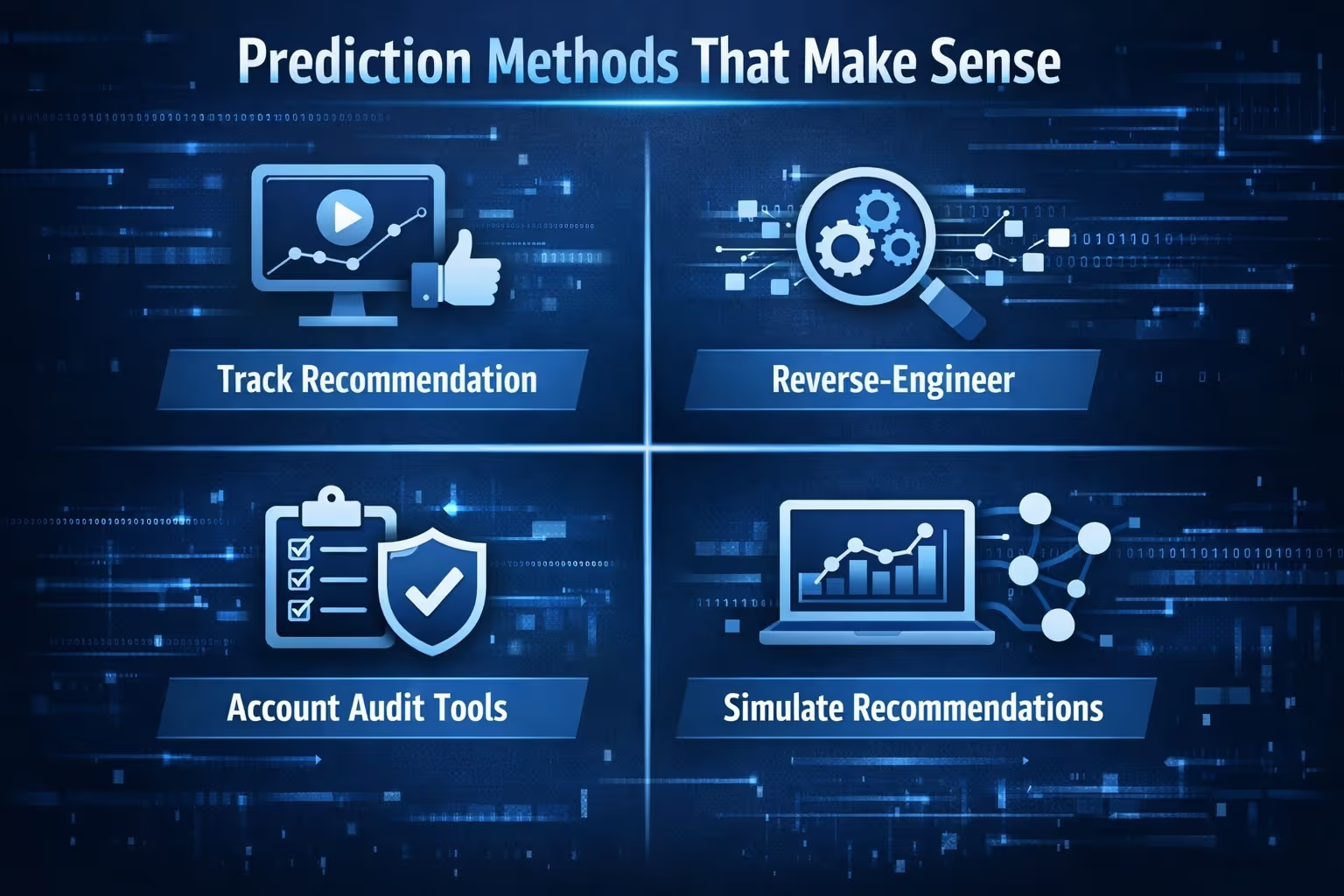
Now, let’s talk about the fun part – how to predict your Optimization Score, or at least anticipate its shifts. Here are a few realistic methods that won’t waste your time.
If you’ve been managing an account for a while, you can start to notice patterns. Each recommendation usually comes with a percentage increase – for example, “Apply Smart Bidding for +5%”. Keep track of these and build your own internal benchmark.
Create a simple spreadsheet. Log each recommendation and the associated score boost. Group them by type (bidding, ads, keywords, etc.). Over time, you’ll be able to estimate the effect of certain actions.
This isn’t perfect, but it’s a good directional tool.
Take a fully optimized account (one with a 100% score) and reverse-engineer what it includes. Then compare it with a less optimized account.
Look for differences in:
This side-by-side comparison helps you spot what’s missing and predict what would likely increase your score.
Some third-party PPC tools claim to estimate Optimization Score impacts. While they aren’t using Google’s exact algorithm (because that’s not public), they often have logic based on real accounts and historical data.
Just don’t take their numbers as gospel. Use them to spark ideas, not as guaranteed predictions.
Google gives you a preview of what will happen to your score if you apply a recommendation. You can use this to simulate different combinations without committing right away.
Again, this isn’t a true “prediction,” but it’s the closest real-time modeling available.

At Extuitive, we’ve built a platform that takes the guesswork out of ad performance – long before a campaign goes live. Instead of relying on historical metrics alone, we use behavioral AI models and real consumer profiles to help you validate ad creative and messaging upfront. That means you can predict engagement and purchase intent before a single dollar is spent.
For teams looking to improve or anticipate their Google Ads Optimization Score, this type of early validation makes a real difference. We don’t just generate creative assets – we simulate audience reactions using persona-based modeling. By plugging into your Shopify store, for example, we can tailor ad suggestions to your exact product catalog and target audience. It’s fast, affordable, and designed to support ad performance with insights that go deeper than clicks and impressions.
Not everything is useful, and some strategies just waste time. Here are a few to skip:
If you’re technically inclined, you might wonder if you can build an ML model to predict the score. In theory, yes. You’d need to feed it historical recommendation data, campaign configurations, and observed score shifts.
But in practice Google doesn’t give you all the underlying inputs, score changes are sometimes opaque or delayed, and the number of required data points for accuracy is quite high.
Unless you’re managing hundreds of accounts and want to spend weeks building a model, this approach is more academic than practical.

Instead of treating the Optimization Score like a final grade, use it as a guidepost. Here’s how to get the most out of it without overthinking:
Before diving into tools and assessments, it’s worth taking a minute to zoom out. This quick list keeps it simple, so you can stay focused and not overcomplicate the process.
Do:
Don’t:
There’s no magic formula to predicting your Google Ads Optimization Score. But with some experience, attention to Google’s cues, and practical tracking, you can get pretty good at anticipating what will move the needle.
Treat the score like what it is – a helpful, imperfect assistant. Not the boss.


