Instagram Ads Optimization Checklist That Actually Improves Results
A practical Instagram ads optimization checklist to fix targeting, creatives, budgets, and tracking before wasted spend shows up.
Feb 5, 2026



Launching a new Facebook ad campaign and seeing a high CPM right away can feel discouraging, especially when everything looks “set up correctly.” But a high CPM on the first run is more common than most advertisers admit. It usually doesn’t mean Facebook is broken or that your strategy failed. It means the system is still figuring out who should see your ads and how confident it is in your creative.
The first run is less about efficiency and more about signals. Facebook tests your ads cautiously, prices impressions higher, and waits to see how people react. The goal at this stage isn’t to force CPM down at all costs, but to avoid obvious mistakes that make the learning phase unnecessarily expensive. Once you understand why first-run CPM is high, you can make small, smart adjustments that reduce waste without rushing the algorithm or hurting long-term performance.

At Extuitive, we believe optimization should start before an ad ever enters the auction. Most Facebook ads get expensive on the first run because the platform is forced to learn in real time. You launch, Facebook tests, CPM spikes, and only then do teams react. That entire loop is costly by design.
We built Extuitive to remove guesswork from that first step.
Our predictive ad performance engine evaluates creatives before launch and estimates how likely they are to earn attention, engagement, and downstream results. Instead of relying on early spend to discover what works, teams can prioritize ads that already show strong performance signals.
This matters because early engagement is one of the strongest drivers of cost efficiency. Ads that attract clicks and interactions quickly give Facebook confidence. That confidence translates into smoother delivery, broader reach, and lower CPM pressure during the learning phase.
Predictive optimization changes the role of testing. Instead of spending to find signal, testing becomes confirmation. Campaigns enter the market with clearer direction, and optimization shifts from constant correction to controlled iteration.
When ads launch with confidence rather than hope, cost efficiency stops being reactive. That’s where real optimization begins.
A high CPM on the first run of Facebook ads usually feels like a warning sign. You launch a campaign, budgets are modest, targeting looks reasonable, creatives are clean, and yet the cost per thousand impressions is higher than expected. For many advertisers, the instinct is to panic and start changing everything at once.
In reality, first-run CPM is rarely a verdict. It is closer to an entry fee.
When a campaign is new, Facebook has no real performance history for your ads, your audience combination, or your creative angle. The platform enters a cautious testing mode. It shows your ads in smaller pockets of inventory, often in more competitive placements, while it measures early engagement signals. That uncertainty is priced in.
High CPM at this stage usually reflects one or more of the following realities:
Understanding this upfront changes how you approach optimization. The goal is not to force CPM down immediately. The goal is to avoid making the learning phase more expensive than it needs to be.
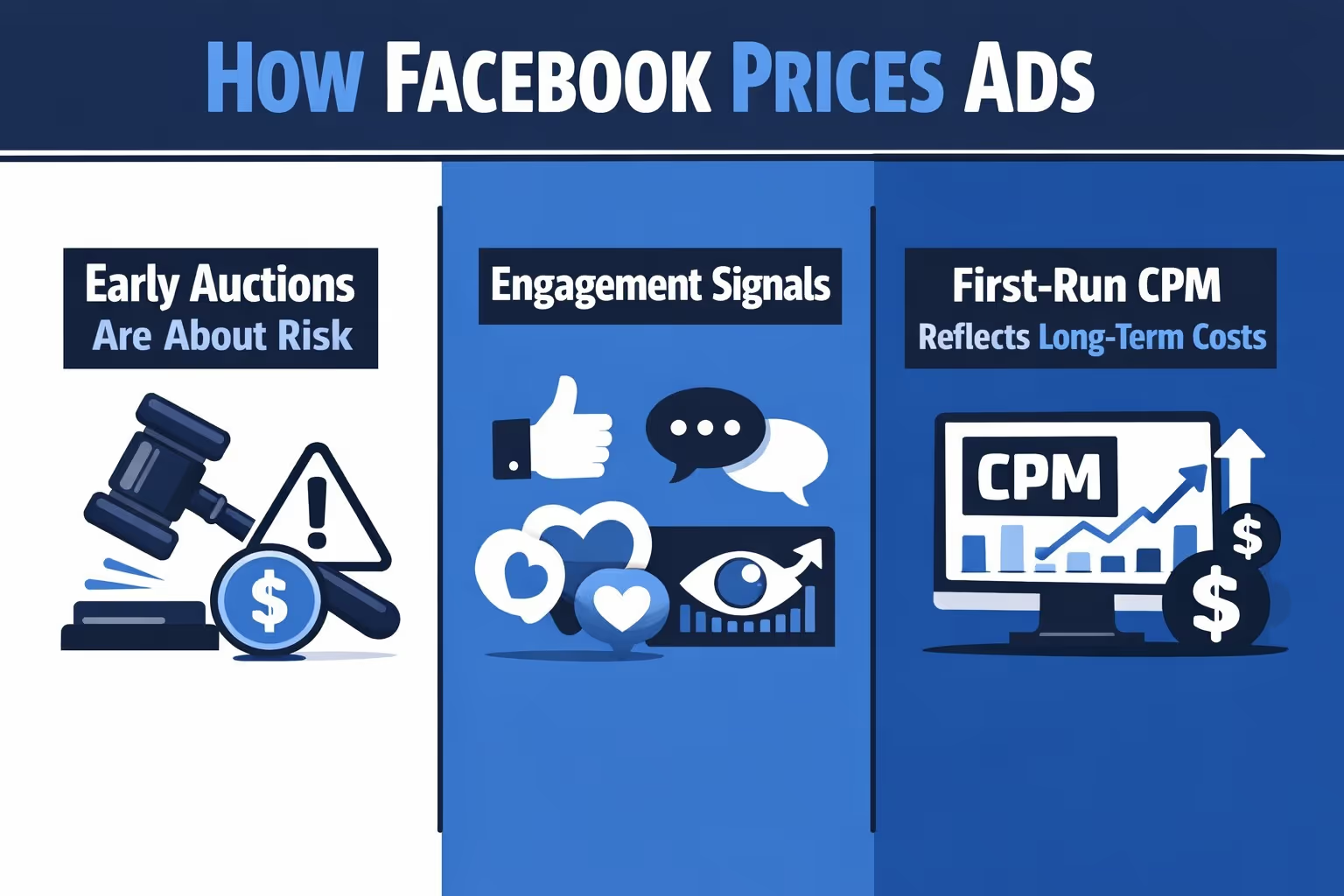
Facebook ads operate in a live auction, but not all auctions are equal. On the first run, your ads enter the system without any reputation. Facebook does not yet know whether people will engage, scroll past, or actively ignore what they see. That uncertainty is treated as risk, and risk is priced higher.
To protect the user experience, Facebook initially limits delivery to smaller segments of your audience and often tests ads in more competitive placements. This cautious approach almost always pushes CPM up during the first days.
As ads begin to collect data, Facebook watches for early signals. Clicks, reactions, video views, and other meaningful engagement tell the system that users find the ad relevant. When those signals appear, Facebook gains confidence and unlocks broader, cheaper inventory.
Ads that fail to earn attention follow the opposite path. They are shown less often and at higher cost, because Facebook has to work harder to justify showing them at all.
This is why early CPM is often disconnected from long-term efficiency. It is common to see CPM drop noticeably after the first few days once Facebook understands how users respond to the ad. What looks expensive at launch can stabilize quickly without any intervention.
The biggest mistake advertisers make here is reacting too early. Changing audiences, budgets, or creatives before the learning phase finishes often resets progress and keeps CPM high longer than necessary.
Not all CPM is created equal, and treating early results the same as mature performance is one of the most common optimization mistakes. The way Facebook prices impressions at launch is fundamentally different from how it prices them once a campaign has history. Understanding that difference helps you decide when to act and when to leave the system alone.
It helps to separate first-run CPM from ongoing CPM in your analysis. On the first run, CPM is shaped mostly by uncertainty. Facebook is testing where to place your ads, when to show them, and which parts of your audience respond best. During this phase, the platform acts cautiously, and caution costs money.
Higher CPM at this stage does not mean your campaign is inefficient. It means Facebook is still collecting information and limiting risk while it learns.
Ongoing CPM tells a different story. Once Facebook understands how your ad performs, it can deliver impressions more efficiently and more selectively. Ads that have proven engagement earn access to cheaper inventory, while delivery becomes smoother and more predictable.
This is why judging a campaign too early often leads to bad decisions. You end up optimizing against noise instead of real signal. A more useful question than “Why is my CPM high?” is “Am I giving the system clean signals to lower it?”
High CPM on a first run usually isn’t one “wrong setting”. It’s a stack of small factors that all influence how confidently Facebook can deliver your ads. In the early days, the platform is testing, limiting risk, and pricing that uncertainty into your CPM. Your job is to remove friction - so the system gets clean signals faster.
Your chosen objective has a direct impact on first-run CPM. Conversion-optimized campaigns often start higher than awareness or traffic campaigns. That doesn’t mean they’re failing - it means Facebook is being more selective about who sees them.
When you optimize for conversions, Facebook prioritizes people with a history of completing similar actions. That pool is smaller and more competitive, especially early on. On the first run, this often leads to:
If your pixel or conversion event has limited data, Facebook has even less confidence. The system gets conservative, bids harder, and CPM rises accordingly. For new accounts or new products, this is why some teams warm up with higher-funnel objectives before pushing aggressively into conversion campaigns.
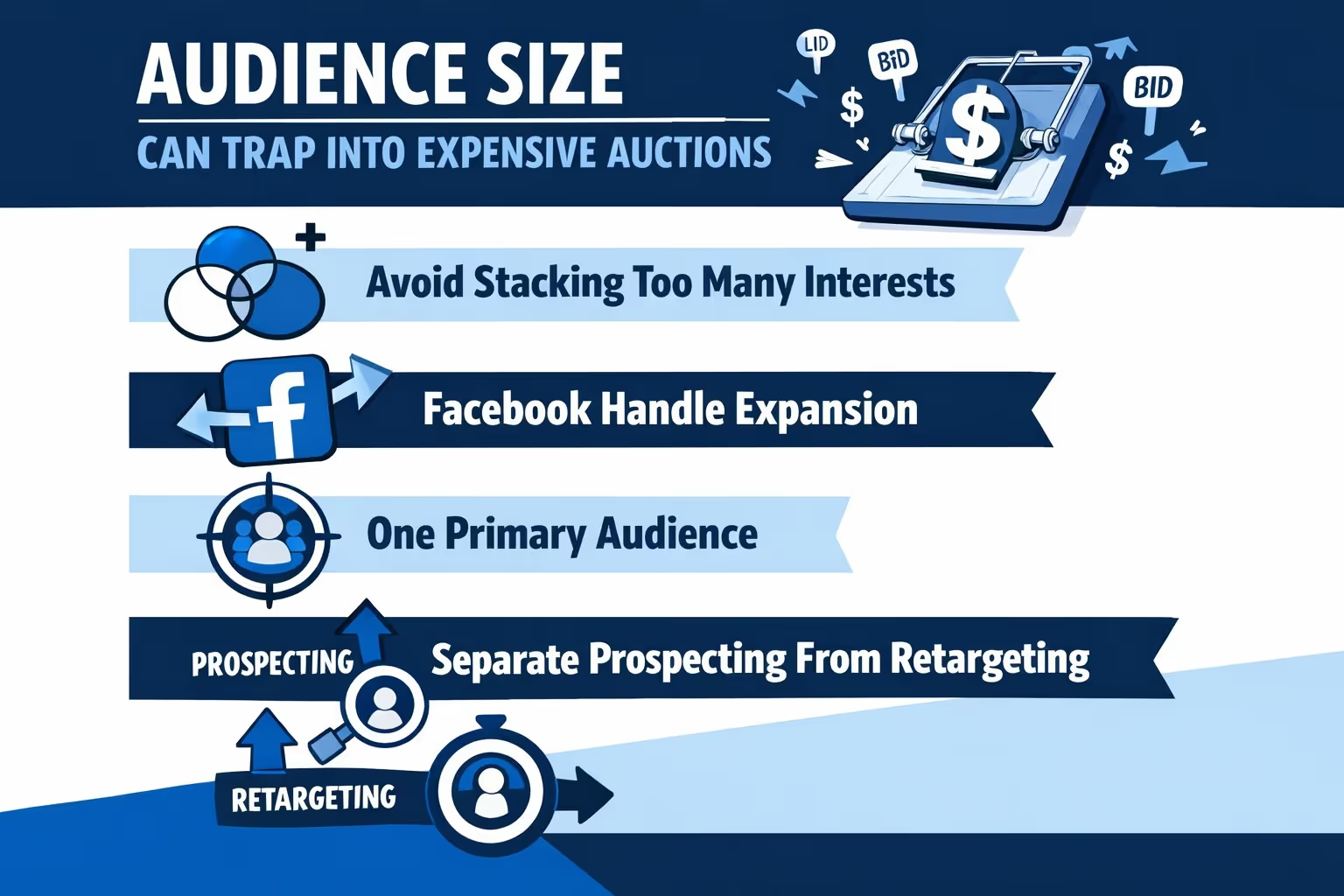
Audience definition is one of the most common reasons CPM looks inflated on day one. A very narrow audience might feel precise, but tight targeting reduces auction opportunities. When Facebook has fewer chances to win impressions cheaply, it bids more aggressively just to deliver.
On the first run, balance matters more than precision. The goal is not to identify the perfect audience immediately, but to give Facebook enough room to test delivery patterns, placement options, and engagement signals.
Layering multiple interests in a single audience often feels like precision, but it usually limits delivery. On a first run, heavy interest stacking shrinks the pool Facebook can test against, which pushes the system into more competitive auctions and raises CPM faster.
Audience expansion gives Facebook flexibility during the learning phase. When the system can move slightly beyond strict targeting rules, it has more chances to find users who respond early. That flexibility often leads to stronger engagement signals and smoother CPM stabilization.
Running multiple audiences inside the same ad set can blur performance signals early on. Using one clear audience per ad set makes it easier for Facebook to understand who the ad is meant for and reduces internal competition during delivery.
Prospecting and retargeting behave very differently in auctions. Mixing them creates uneven delivery and unpredictable CPM. Keeping them separate allows Facebook to optimize each group on its own terms, which leads to cleaner data and more controlled costs from the start.
Unlike conversions, creative performance is evaluated almost instantly. People react in seconds, and Facebook tracks those reactions closely. Early engagement has an outsized effect on first-run CPM.
Ads that feel overly promotional, generic, or mismatched to the audience often struggle early. Even if they might convert later, weak early engagement can push CPM up fast.
Strong first-run creatives usually share a few traits:
On new campaigns, Facebook often tests creatives in high-visibility inventory first. If users scroll past without engaging, CPM rises quickly. First impressions matter more on day one than on day thirty.
Automatic placements are usually recommended, but on a first run they deserve a bit more nuance. When you give Facebook full freedom with little or no performance history, the system may prioritize premium placements early. Those placements often cost more, which can temporarily inflate CPM.
This does not mean automatic placements are a mistake. It means placement data should be reviewed closely during the first few days. Looking at CPM by placement within the first 24 to 48 hours helps reveal where delivery is efficient and where it is not. If certain placements show consistently high cost with little engagement, small exclusions can be made to reduce waste without disrupting learning.
The key is restraint. Avoid locking your campaign into a narrow placement set too early. Heavy restrictions limit Facebook’s ability to test and learn, which can keep CPM elevated longer than necessary.
Under Meta’s 2026 Real-Time Signal Integration, the rules around early scaling have shifted. Budget adjustments of up to 50 percent within the first 48 hours no longer trigger a full learning phase reset. That gives advertisers more flexibility to scale early without automatically inflating CPM.
That said, budget pacing still matters. One of the fastest ways to push first-run CPM higher is forcing spend too aggressively before the system has established stable delivery patterns.
When a campaign launches, Meta needs time to test placements, audiences, and creative combinations. If budgets are pushed hard from day one, the system often compensates by bidding more competitively to spend the budget. The result is higher CPM, noisier signals, and less efficient early delivery.
A steadier approach usually performs better:
Speed often feels productive, especially when launching new campaigns. In practice, controlled pacing is usually cheaper, cleaner, and easier to scale once performance settles.
No amount of creative or audience work can fix broken tracking. If your pixel, conversion events, or domain verification are misconfigured, Facebook loses the feedback it relies on to optimize delivery. When that feedback is missing or unreliable, the system becomes cautious, bids more aggressively, and CPM rises.
On a first run, it is critical to confirm that the pixel is firing correctly, events are triggering only once per action, and conversion events are properly prioritized. Landing page performance also matters more than many advertisers expect. Slow load times, especially on mobile, interrupt the feedback loop and weaken early quality signals.
These technical issues can raise CPM before you ever see meaningful conversion data. If the goal is a cleaner and more cost-efficient first run, technical hygiene is not optional.
Not all high CPM is bad.
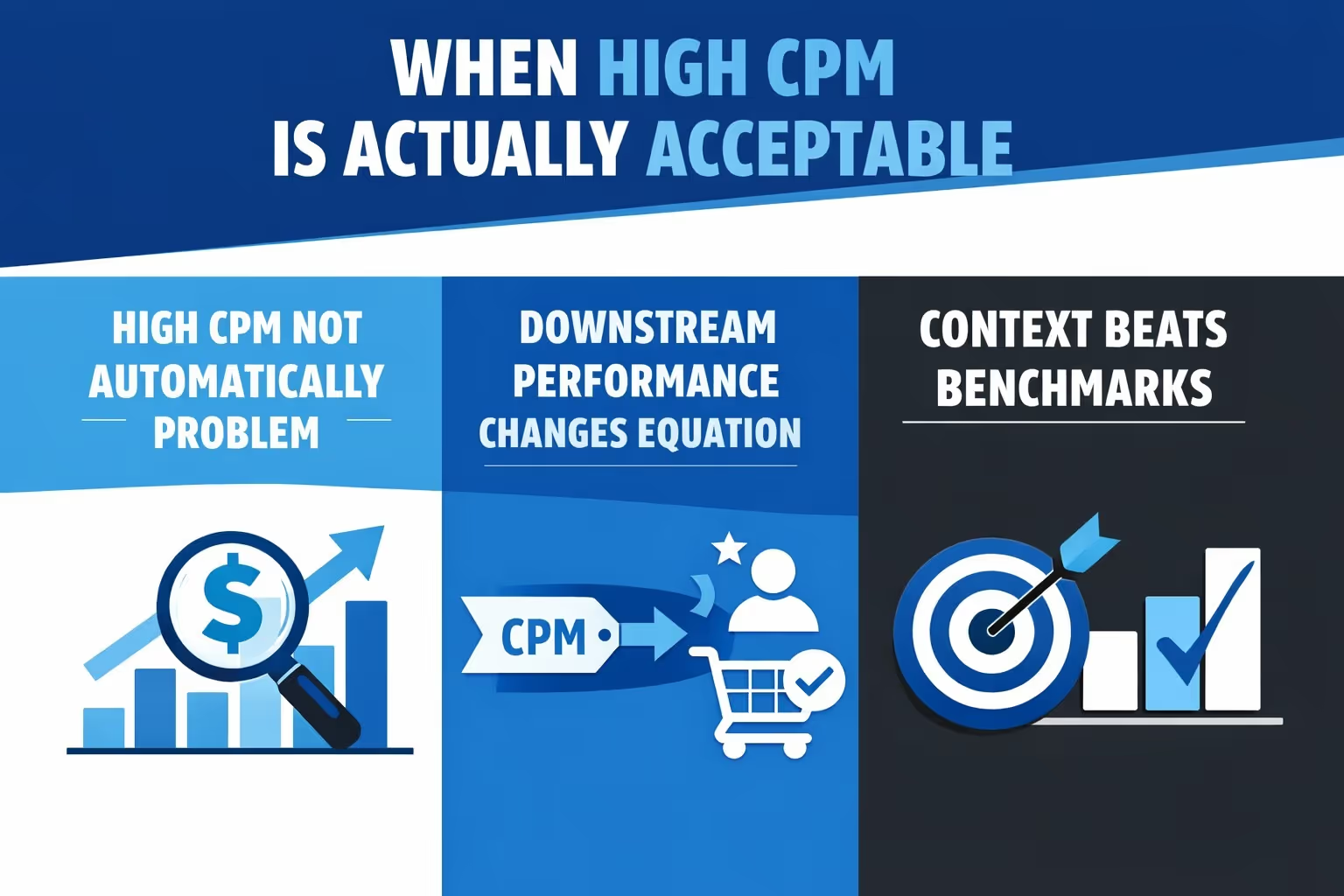
Not all high CPM is bad. In some cases, it is the expected cost of reaching valuable users in competitive environments. Industries with heavy competition, premium audiences, or high-value offers naturally operate at higher CPM levels. In those scenarios, focusing only on impression cost can be misleading.
What matters more is what happens after the impression.
A high CPM becomes far less important when downstream metrics are healthy. If people who see your ads are clicking, converting, and purchasing at strong rates, the cost of reaching them is often justified. In these cases, CPM is simply the price of access to demand, not a sign of inefficiency.
Campaigns with strong click-through rates and solid conversion performance often support higher CPM without hurting profitability. The same is true when average order value comfortably absorbs the acquisition cost or when retargeting campaigns consistently convert warm traffic.
Benchmarks are useful for orientation, but they should not dictate decisions in isolation. A CPM that looks high compared to averages may still be perfectly acceptable for your business model, audience quality, or growth stage.
The real question is not whether CPM is high, but whether it makes economic sense in context. When revenue, efficiency, and long-term value align, a higher CPM can be a rational and even healthy part of your advertising strategy.
Before changing anything, pause and run through a quick reality check. Early optimization mistakes usually come from reacting too fast, not from missing obvious fixes.
Ask yourself the following:
If most of these answers are yes, the best move is often to wait. Let the system finish learning before making adjustments that could do more harm than good.
The first run is not about winning. It is about teaching the system.
Ads that perform well long-term usually go through an awkward, expensive beginning. What separates strong campaigns from weak ones is not how low CPM starts, but how cleanly the learning phase is handled.
When you allow Facebook to learn without pressure, CPM often finds its natural level on its own.
That is when real optimization begins.
High CPM on the first run of Facebook ads is not a failure. It is a signal that the system is still learning how to price your message, your audience, and your offer.
The biggest cost mistakes happen when advertisers fight that process instead of guiding it. By focusing on clean setup, balanced audiences, patient budgeting, and strong early engagement, you give Facebook what it needs to reduce cost naturally.
Cost optimization starts before the first impression is served. The quieter and more deliberate that start is, the cheaper performance tends to become later.


