Can You Sell Food on Shopify? What’s Allowed, What’s Not, and What to Know First
Yes, you can sell food on Shopify. Learn what’s allowed, what regulations matter, and what to set up before launching your food store.
Feb 3, 2026



If you’re new to Shopify or thinking about making the switch, it’s natural to wonder: does Shopify take a cut of each sale? In short, yes, but the details are a bit more nuanced than that. Shopify charges different types of fees depending on your plan, your payment methods, and the tools you use. Don’t worry, this guide will explain everything, from transaction costs to payment processing fees, so you can make informed decisions without the guesswork.
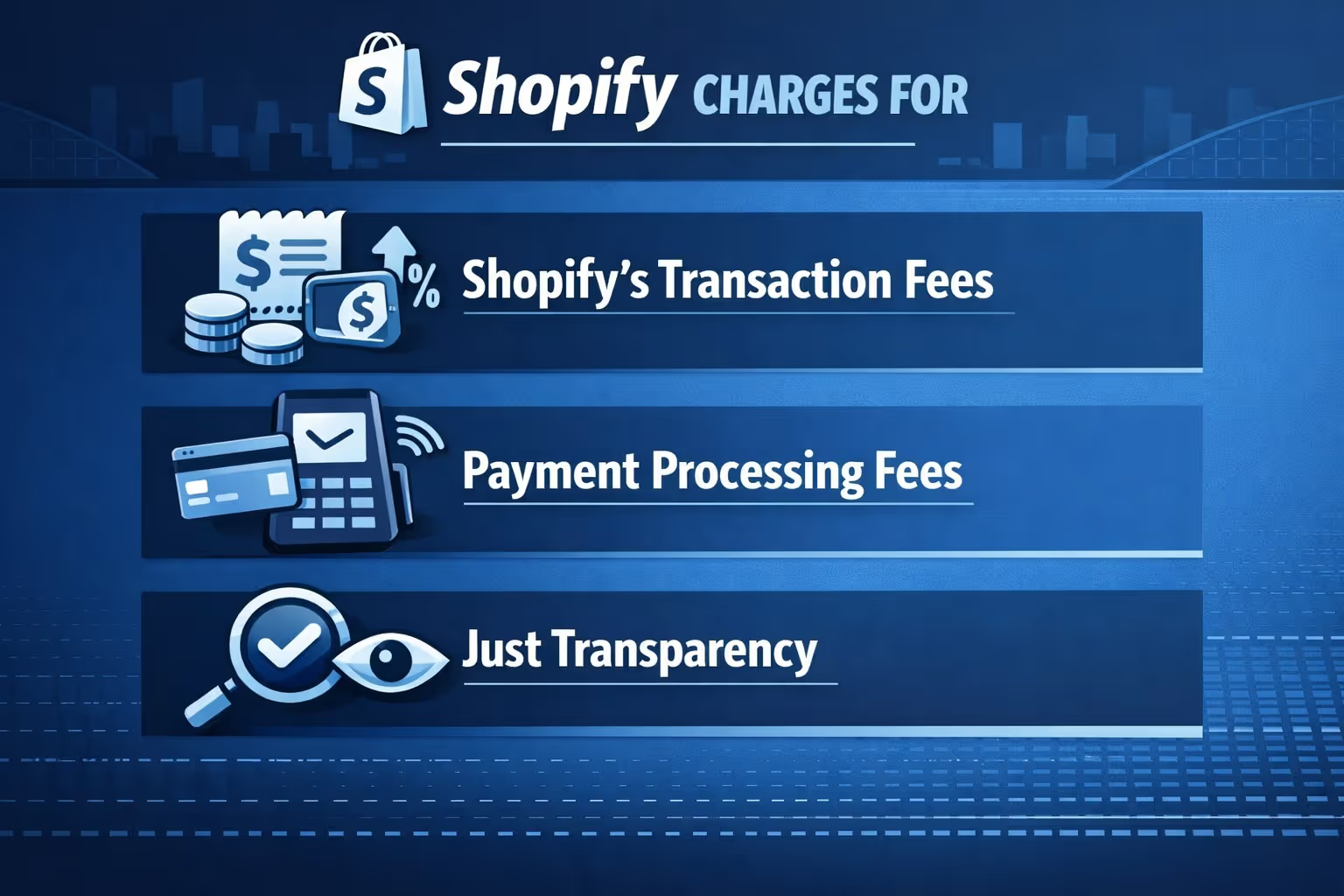
Shopify makes it easy to sell online by offering all-in-one solutions: web hosting, payment processing, store management, and more. So, when you sell a product on Shopify, you’re paying for the platform’s services, including security, payment processing, and customer support.
However, Shopify’s fees aren’t just about using the platform. They include different charges depending on the payment method and Shopify plan you select.
Every time you make a sale on Shopify, you'll encounter transaction fees, unless you use Shopify Payments, Shopify’s built-in payment processor. When you use Shopify Payments, these fees are waived, but if you opt for a third-party payment provider (like PayPal or Stripe), Shopify charges a transaction fee. The fee ranges from 0.5% to 2% depending on the plan you're on.
For example, if you’re using the Basic Shopify plan and a customer pays via a third-party payment provider, Shopify charges you a 2% transaction fee. On the Advanced Shopify plan, that fee drops to 0.6%. It's important to note that if you use Shopify Payments, this fee doesn’t apply, making it the most cost-effective payment method.
Payment processing fees are another cost you’ll incur with every sale. These fees cover the actual payment transaction, including credit card processing. Shopify Payments charges fees based on your plan, typically between 2.4% and 2.9% per transaction, plus a small fixed fee (usually around 30¢ per transaction).
The fee is slightly lower for in-person transactions if you’re using Shopify’s point-of-sale (POS) system. However, regardless of which plan you're on, the payment processing fee is consistent when using Shopify Payments. If you're using a third-party payment gateway, those processing fees will be charged by the gateway provider, not Shopify, though Shopify still takes its transaction fee on top of that.
One thing to note about Shopify’s fees is their transparency. Unlike other platforms that might throw in hidden charges or surprise fees, Shopify provides a clear breakdown of all costs upfront. You’ll know exactly what you're paying for and how much.
Shopify offers several plans tailored to businesses of different sizes and needs. The higher the plan, the more features you unlock, such as advanced reporting, increased staff accounts, and deeper integrations. A key benefit of upgrading to a higher plan is that your transaction fees decrease, which can be a big help for growing businesses. Here’s a breakdown of the main Shopify plans and how their fees compare:
The Basic Shopify plan is perfect for solo entrepreneurs or small businesses that are just starting their online stores. This entry-level plan offers everything you need to set up an online shop, including payment processing and the essential tools to manage your products and sales. However, it comes with higher transaction fees compared to more advanced plans.
The higher transaction fee means you’ll pay more per sale, but if you're just starting out and want to keep costs low, this plan is an affordable option to begin with.
Best for: Small businesses or startups just getting started
As your business grows, you'll need more advanced tools to help you scale. The Shopify plan is ideal for businesses that are beyond the startup phase but aren't yet at enterprise level. This plan gives you additional features like better reporting, up to 5 staff accounts, and more options for expanding your store’s functionality.
With the lower transaction fees and added features, this plan offers great value for growing businesses that want to optimize their e-commerce operations.
Best for: Growing businesses that need more features
For businesses that are scaling up rapidly and need more robust tools, the Advanced Shopify plan is an excellent choice. This plan offers the lowest transaction fees, enhanced reporting features, and the ability to manage larger product catalogs and inventory. It’s designed to meet the needs of businesses with high sales volumes.
With lower transaction fees, better shipping options, and more robust reporting, the Advanced Shopify plan helps businesses optimize their operations while reducing costs.
Best for: High-volume businesses that need advanced reporting and shipping options
The Shopify Plus plan is made for large enterprises that require custom pricing and high-level support. With Shopify Plus, you get access to the lowest transaction fees, advanced features, and priority support. This plan is suited for global brands and businesses with substantial sales volumes or complex e-commerce needs.
While the monthly fee for Shopify Plus is significantly higher than the other plans, it’s the best option for businesses that require enterprise-level support and custom solutions.
Best for: Large, high-volume enterprises with complex needs
As you move up the tiers, the transaction fees decrease, making it easier to keep more of your profits. For businesses that process a lot of transactions, upgrading to a higher plan could lead to significant savings in fees alone. Additionally, higher-tier plans come with better tools, customer support, and features that can help you scale your business more effectively.
Refunds are one of those details that often get overlooked until they happen. Shopify handles them in a fairly straightforward way, but it’s important to understand what you get back and what you don’t.
When you issue a refund, Shopify returns the order amount to the customer, but the payment processing fee is not refunded. This applies whether you use Shopify Payments or a third-party payment provider. The reason is simple: the card network and payment processor already did the work to process the original transaction, and those costs don’t get reversed.
The good news is that Shopify does not charge an extra transaction fee on refunds. You’re not penalized for issuing one. You just won’t recover the original processing cost.
In practical terms, this means refunds slightly reduce your margin, especially if you deal with a high return rate. Many merchants factor this into pricing or tighten return policies once their store grows. It’s not a Shopify-specific issue, but it’s something to keep in mind as part of running an online business.
If you sell internationally, currency conversion is another place where fees can quietly add up.
Whenever a customer pays in a currency that’s different from your store’s payout currency, Shopify applies a currency conversion fee. This happens automatically in the background. The exchange rate itself is the market rate, but Shopify adds a conversion fee on top to cover the cost of handling the exchange.
For stores based in the United States, the conversion fee is typically 1.5%. In many other regions, including France, the fee is 2%. If you’re using PayPal Wallet through Shopify Payments in certain regions, the conversion fee can be higher, often around 3%.
It’s also worth noting that currency conversion fees are not refunded if you issue a refund. The original conversion has already taken place, and that cost remains.
For merchants selling in multiple markets, this makes pricing strategy more important. Some stores build conversion costs into product pricing, while others limit the number of currencies they support to keep fees predictable.

If you're using Shopify to run your online store, you know that the platform offers all the essential tools for managing products, payments, and customer interactions. But what if you could take your marketing efforts to the next level without wasting time and money? That’s where Extuitive comes in.
Extuitive is a powerful AI-driven tool designed to help Shopify store owners create, test, and launch high-performing ads in a fraction of the time it typically takes. Whether you're looking to attract more customers, refine your product messaging, or optimize your ad creatives, Extuitive streamlines the entire process.
If you’re looking to generate ads that truly convert and want to streamline your marketing process, Extuitive is a great tool to add to your Shopify store’s toolkit.
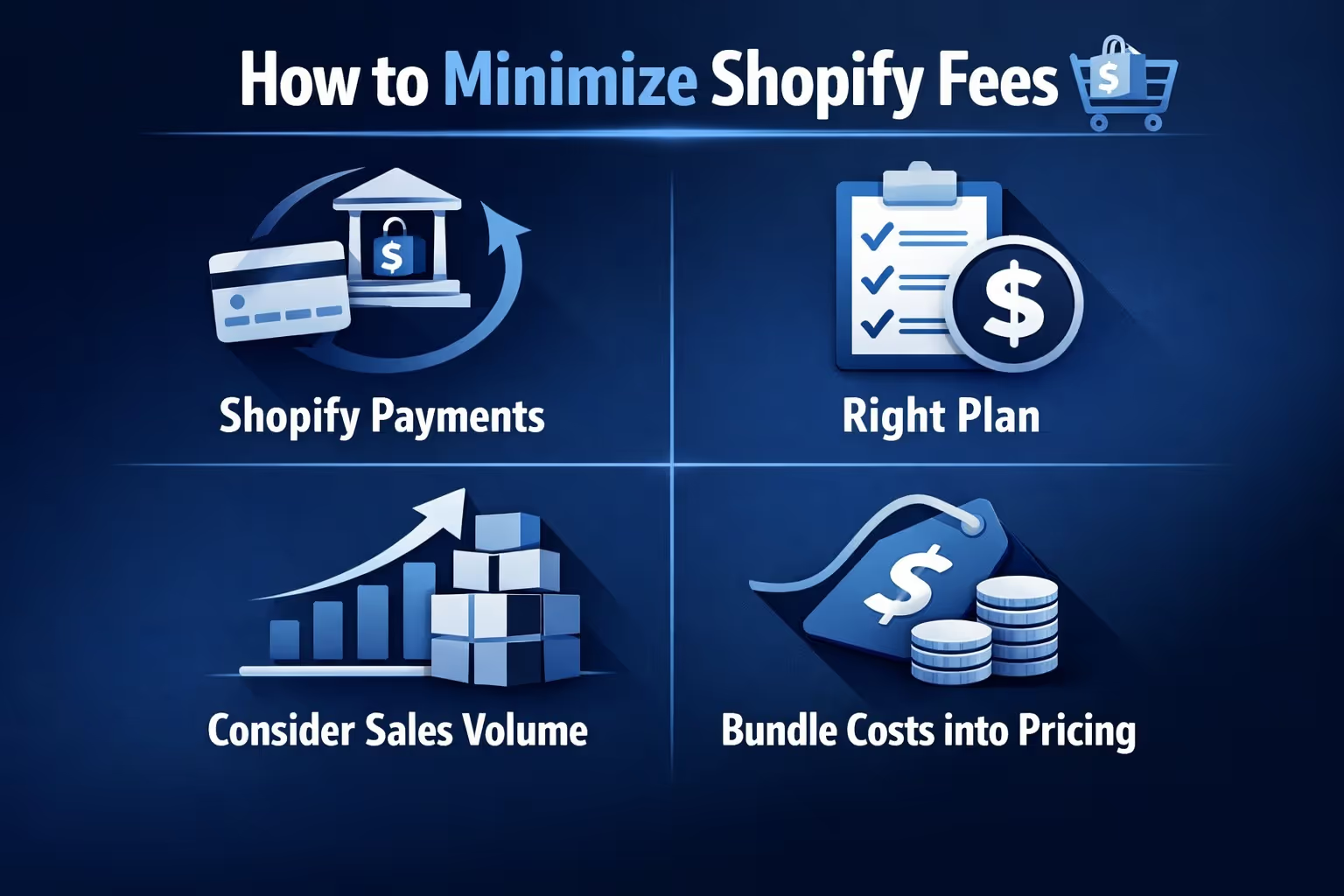
While fees are inevitable when running an online store, there are several strategies you can use to minimize their impact on your bottom line. By making a few smart choices, you can keep costs down and ensure that your margins stay healthy as you grow your business. Here’s how to do it:
Yes, Shopify does take a cut of every sale, but the way they structure their fees makes it easy to understand what you're paying for and why. Whether it's for payment processing or transaction fees, Shopify offers flexibility based on your store's needs and growth. By using Shopify Payments and choosing the right plan, you can minimize your costs and make the most out of the platform’s powerful features.
So, while Shopify’s fees are part of running an online store, they’re not unreasonable—and they’re often lower than you'd pay using a self-hosted platform with separate costs for payment processors and security. With Shopify, you're paying for a reliable, secure, and scalable e-commerce solution, all in one place.


