Marketing Ideas for Embroidery Business: 2026 Guide
Discover proven marketing ideas for embroidery business growth. From niche targeting to social media strategies—boost visibility and sales today.
Jun 7, 2026



Keeping people engaged on Shopify has become an entirely different game compared to even a few years ago. Shoppers jump between social posts, email offers, TikTok reviews, and product pages without a clear path. Brands that treat engagement as a one-time nudge often miss the bigger picture. Real engagement starts before someone buys and continues long after the checkout page.
If your store feels a bit like a revolving door, where visitors come through but rarely stay long enough to connect, you're not alone. Most Shopify stores are fighting the same battle. The good news is that engagement isn't magic. It's a mix of smart communication, experience design, and understanding what your customers respond to. And once you get the pieces right, everything else becomes easier: conversions, repeat sales, word-of-mouth, even ad performance.
Below is a breakdown of customer engagement strategies that actually work for Shopify stores today. Not fluffy theories. Not vague best practices. Real, actionable ideas grounded in how people shop online.
Before diving into tactics, it's worth setting the stage. Engagement isn't just replying to comments or sending sales reminders. It's how you build a relationship with someone who might be months away from buying. Strong engagement:
When engagement improves, so does every other metric that keeps a Shopify store healthy. That's why the best brands invest in it early instead of treating it as an afterthought when sales dip.
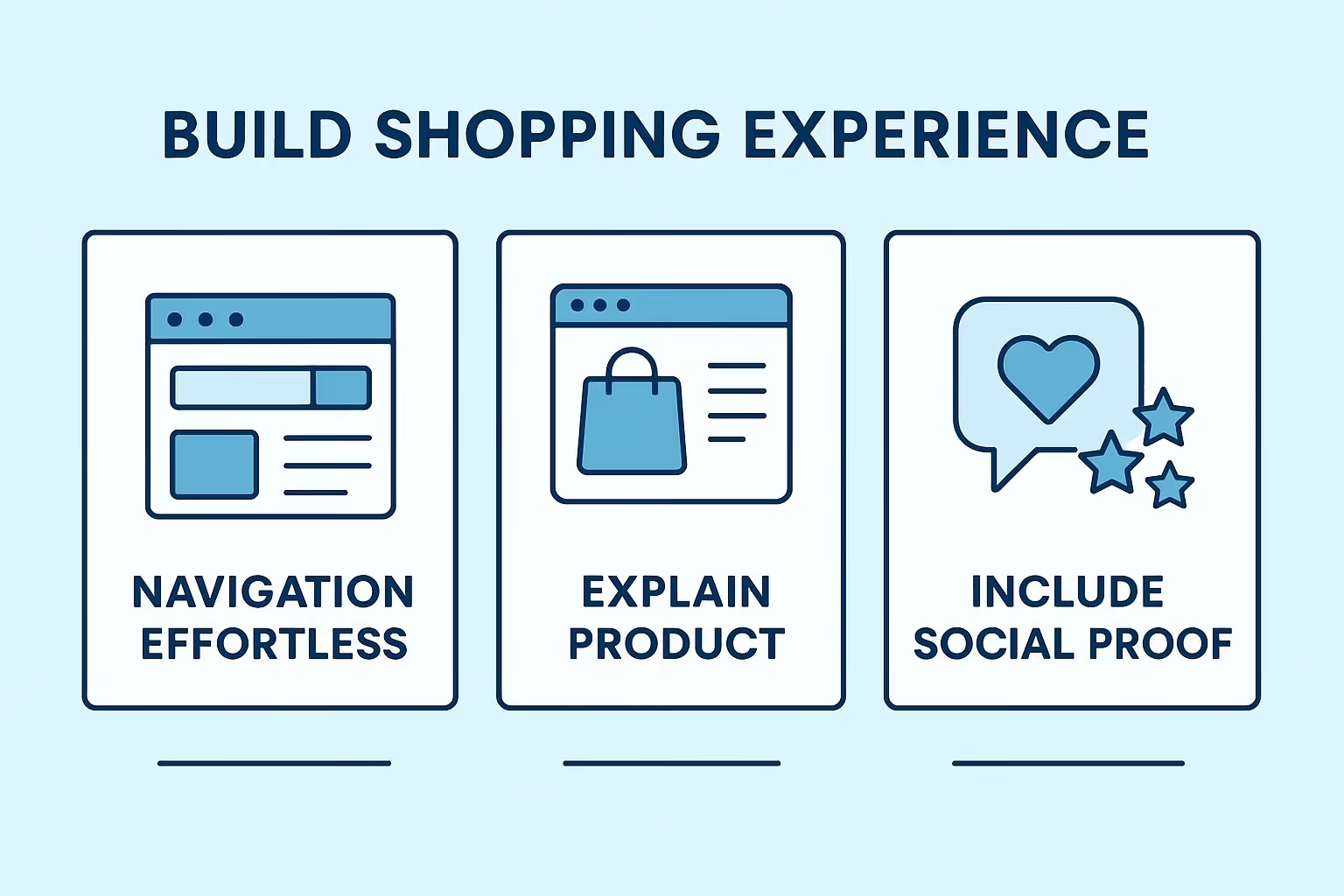
A lot of store owners jump straight to fancy marketing tricks and forget the basics. But engagement actually starts way before a customer signs up for an email list or clicks a button. It starts the moment they land on your site and think, "Okay, this feels easy." If your store is confusing, crowded, or slow, no strategy in the world can save the experience.
Most shoppers arrive with a purpose, even if it's a loose one. They already know whether they're looking for a hoodie or a home office lamp, and they expect your site to help them get there fast. When your layout creates friction, people bail.
A navigation setup that helps people move through your store naturally might include:
Think of navigation like customer service. If someone walked into a physical store and asked where something was, you wouldn't make them guess. Your website should work the same way.
Most people skim, not because they don't care, but because they're busy or comparing options. If your product pages feel like a textbook, shoppers will simply glance and move on.
You can make your product content feel more digestible by focusing on:
If a customer can understand what your product does and why it matters in under ten seconds, you're doing it right.
Reviews are powerful, but where you place them matters just as much as how many you have. Most stores bury feedback at the bottom of the page, almost like an afterthought.
Instead, try using social proof more intentionally:
Real customer stories often express value in a way brands can't replicate. That honesty creates trust, and trust is what keeps people scrolling instead of closing the tab.
Shoppers expect personalization now. Not the creepy kind where you know their dog’s name, but the useful kind where your store pays attention to their interests.
Shopify gives you plenty to work with: browsing behavior, past orders, location, frequency of visits. Use this gently. For example:
This approach feels natural, not intrusive.
One often overlooked part of personalization is understanding what resonates with different customer groups. Tools that allow you to test messaging against real audience segments can save you time and ad spend. Instead of guessing what people care about, you validate it before rolling it out.
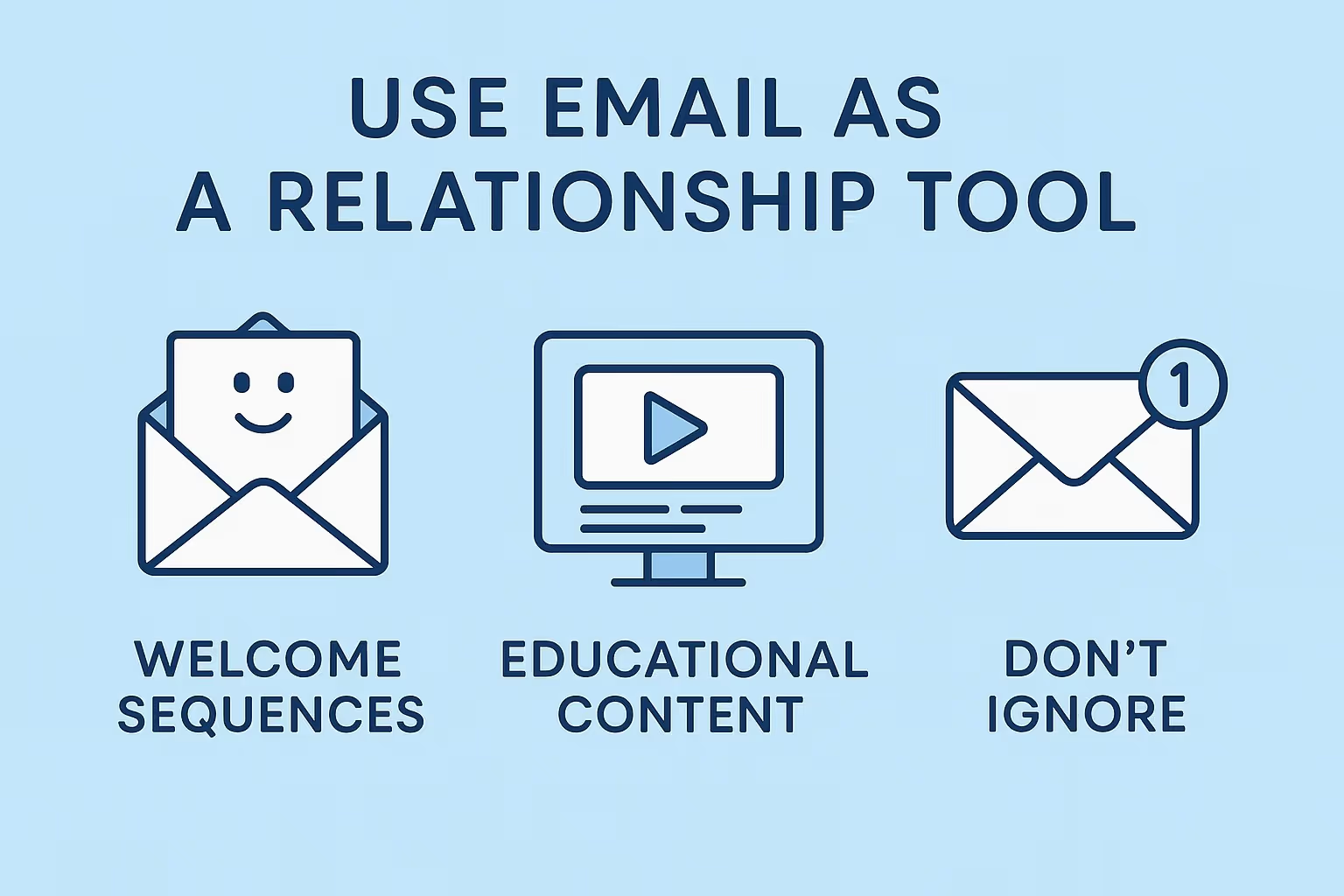
Email still works incredibly well for Shopify brands, but only when it feels like an actual human is writing it. The issue is that too many businesses treat email like a loudspeaker. Same subject lines, same discounts, same rushed tone. After a while, everything blends together and customers tune out. If you want your emails to matter, talk to people the way you would if you were speaking to them directly.
A welcome email is your first real moment with a new subscriber. It sets the tone for the entire relationship. Instead of sounding robotic or overly scripted, keep things simple and personal. A friendly opener works better than a long block of corporate language.
Try weaving in elements like:
Customers shouldn't feel like they're being pushed. They should feel invited.
Not every email needs to sell something. In fact, the emails people remember most are often the ones that teach them something useful. When you help someone get better at using your product or show them creative ways to enjoy it, you naturally build loyalty.
Helpful educational emails can cover things like:
These emails feel more like friendly guidance than a pitch, which makes people more likely to come back on their own.
A lot of stores put so much effort into getting a sale that they forget the customer still exists afterward. That silence creates a gap, and gaps are where churn happens. Post-purchase emails give you a chance to show that you care about the customer's experience, not just their money.
Meaningful post-purchase communication can include:
When customers feel supported after the sale, they stop seeing you as a store and start seeing you as a brand they trust. That's what keeps them around for the long haul.
On social media, engagement is emotional before it's transactional. People respond to brands that talk like people, not like polished marketing machines.
Show behind-the-scenes glimpses. Share small stories about why you made a product. Dive into how it's used by real customers. These posts give your brand character.
A quick thank you. A small joke. A helpful answer. These small responses turn passive scrollers into active fans. Every comment is an opportunity, not an interruption.
User-generated content is powerful because it feels like social proof disguised as entertainment. Encourage customers to share:
Reward them with reposts and occasional perks.
A loyalty program that only hands out points for purchases isn’t engaging. Customers forget about it instantly. A good loyalty system rewards more than spending.
You can diversify engagement by giving points or perks when someone:
People enjoy feeling appreciated for things beyond spending money.
A generic 5 percent off coupon rarely excites anyone. Consider:
When rewards feel thoughtful, participation skyrockets.
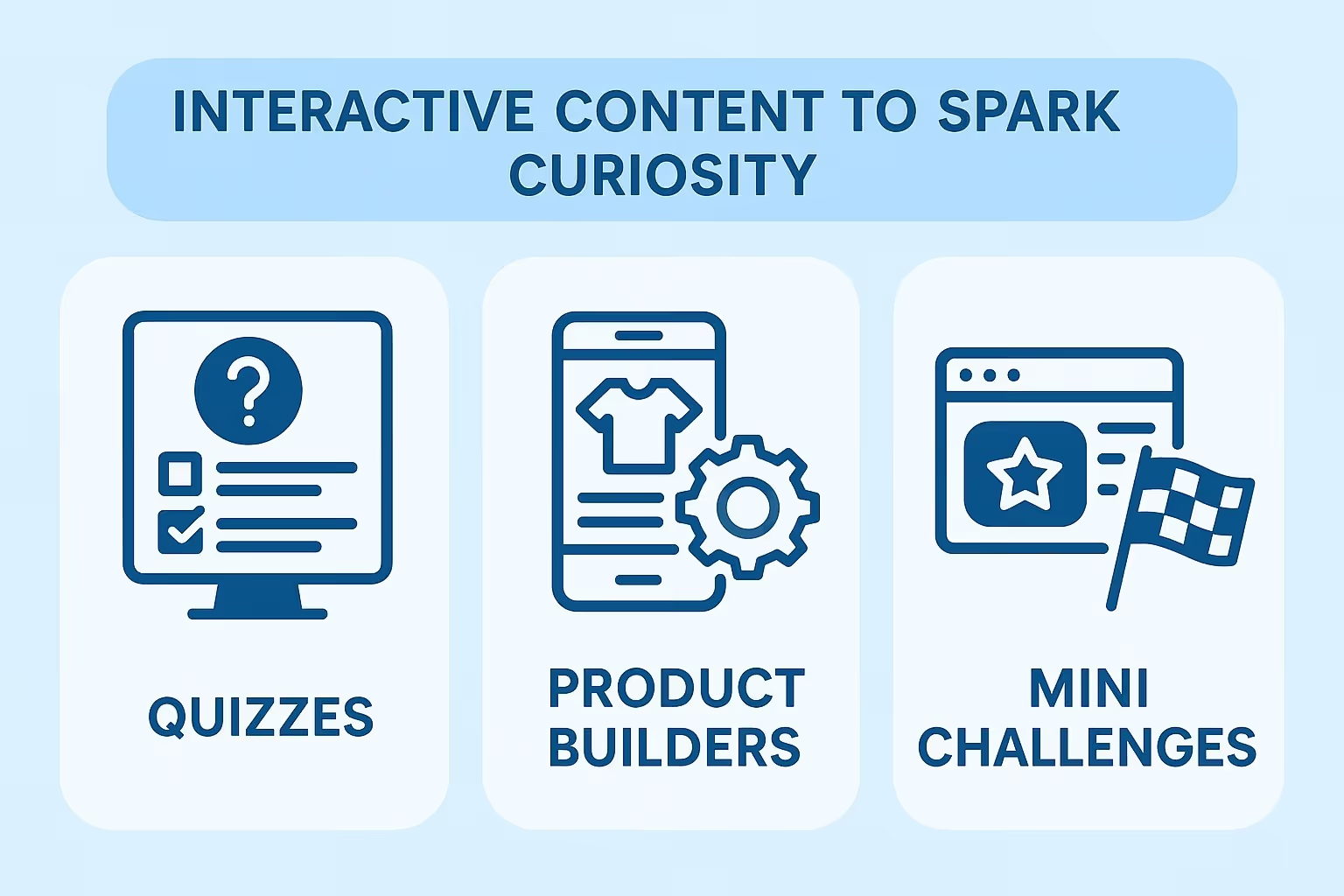
Customers stay longer when they have something to do. Interactive content for Shopify stores works incredibly well because it turns a passive shopper into an active participant.
A quiz is more than a novelty. It guides shoppers toward the right product while giving you deeper insight into their preferences. And customers love feeling like they picked something tailored for them.
If you sell customizable products, a simple builder keeps people clicking and exploring. This is one of the easiest ways to increase time on site and emotional connection.
Fitness brands, skincare lines, and wellness stores use mini challenges to keep engagement going. Customers track progress, share updates, and build routines around your products.
Nobody wants to talk to a chatbot that sounds like it's reading from a script. Good support is fast, friendly, and personalized.
Put a contact button in the header, not buried in a footer. Add live chat if you can. People trust stores that are easy to reach.
Some stores respond with cold, copy-paste answers. Others treat each message as a chance to create a good impression. You can guess which stores win.
A well-written FAQ saves both sides time. Make sure it answers the real questions customers ask, not just the ones you think they should ask.
A lot of Shopify brands struggle with engagement because they're operating on instincts instead of data. Teams brainstorm, debate, and eventually pick something that sounds good in the moment. Then they hope it works. Sometimes it does, sometimes it falls flat, and nobody really knows why. AI tools help break that cycle by showing you what your audience is drawn to before you invest time or money into the wrong direction.
One of the biggest advantages of using AI is the ability to test ideas early. You can run concepts through audience models that mimic real consumer behavior, giving you a clearer sense of what will resonate and what will be ignored. It makes marketing less of a gamble and more of a strategy.
AI can help validate things like:
Instead of launching twenty random variations and crossing your fingers, you get a shortlist of concepts that already have a strong chance of performing well. It cuts down on waste and gives you more confidence in your next move.
Creative work can be slow when you're staring at a blank page or trying to brainstorm something fresh. AI tools help speed up the early stages so you spend less time guessing and more time refining.
AI can help you:
Think of it as a sparring partner. It throws ideas at you so you can choose what fits your brand and discard what doesn't. Your voice stays intact. The AI just helps you sharpen it.
There is a worry that using AI will dilute a brand's personality, but that only happens when brands hand over the steering wheel. Used correctly, AI becomes a supporting tool, not the author. It helps you understand how your audience thinks, what they respond to, and how to express your message in a way that feels natural.

Many Shopify brands try to boost engagement by guessing what their audience wants, but that approach is slow and often expensive. Our platform Extuitive changes that by making it easy to create, test, and validate ad ideas using AI models built from hundreds of thousands of simulated consumer profiles. Instead of spending weeks researching or launching campaigns that may not perform, our platform predicts purchase intent, highlights winning messages, and helps shape creatives that resonate - all before any budget is spent. It speeds up decision-making and removes a huge amount of uncertainty from the marketing process.
Once brands begin launching campaigns informed by these predictions, engagement starts to shift quickly. Customers respond more, click more, and interact with offers because the messaging aligns with what truly motivates them. Our platform Extuitive gives Shopify merchants deeper audience insight, and that insight becomes the backbone of stronger engagement across ads, email, social content, and the online store as a whole.
Consumers stick with brands that feel like they stand for something meaningful. Community engagement doesn’t have to be huge or complicated. It can be simple and genuine.
A Q&A, a tutorial, or a seasonal live shopping session gives customers a way to interact with you directly.
Feature real people using your products. Comment on their journeys, not just the end result.
Ask customers what they want to see next. Let them vote on new flavors, colors, or designs. When customers feel involved, they're more invested long-term.
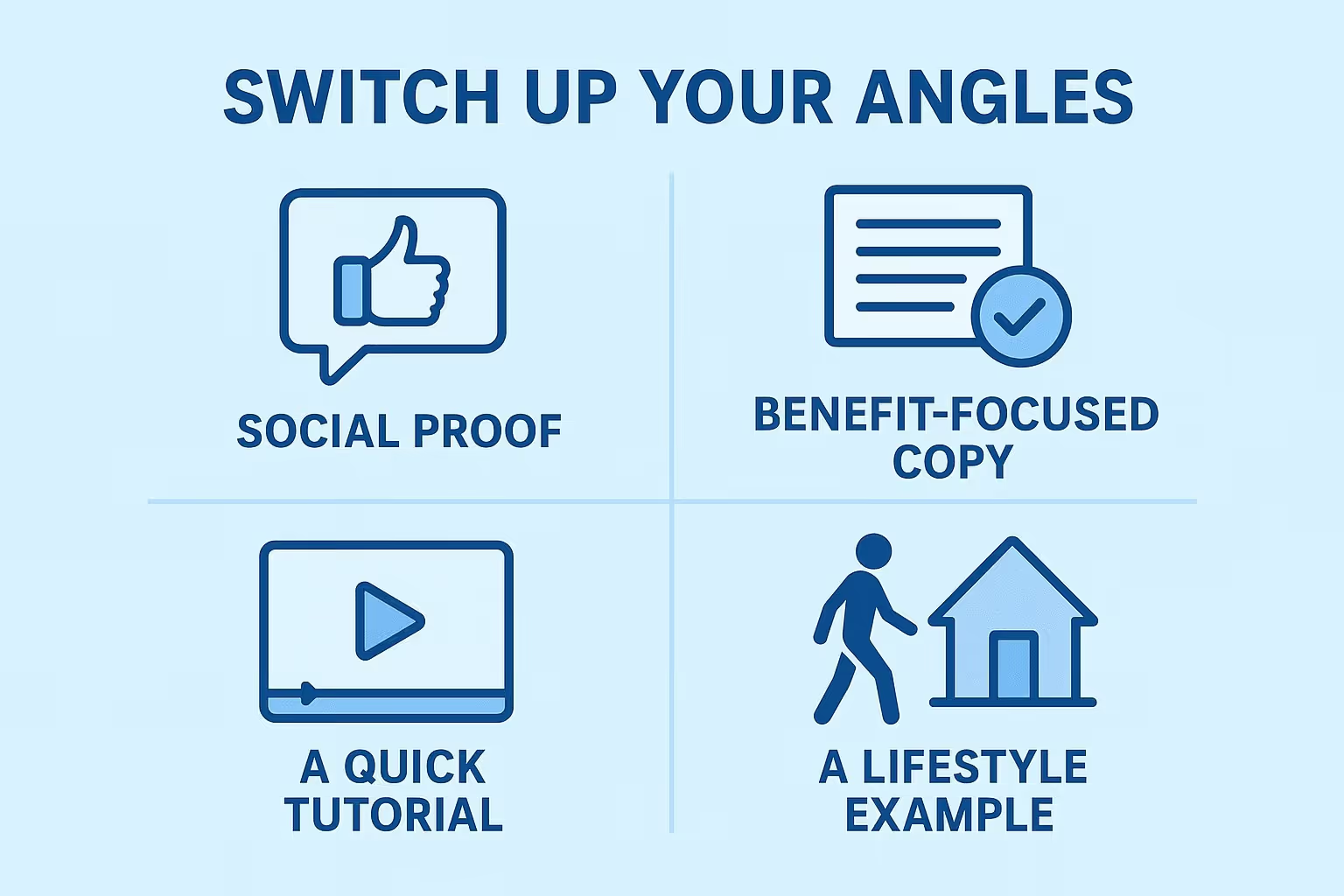
Retargeting ads can boost engagement, but only when they feel relevant, not repetitive. Nobody wants to see the same product follow them around the internet for two weeks.
If someone already saw your product once, try a different message in your retargeting:
Variety keeps people curious instead of annoyed.
Bombarding people ruins the experience. Use frequency caps to keep your ads as gentle reminders rather than digital shouting.
Engagement is not a set-and-forget project. It's ongoing. Customers evolve. Trends shift. What worked a year ago might feel stale now.
Look at:
These clues show where you can improve engagement.
A short survey can uncover insights you’d never think to ask about. People like being asked for their opinion, and their honesty helps you refine your experience.
Improvement doesn’t always require a big redesign. Sometimes a new headline, a fresh checkout prompt, or a more helpful product description can lift engagement significantly.
Engaging customers on Shopify isn’t about doing everything at once. It’s about choosing the moments that matter and showing up with clarity, personality, and a bit of intention. When the shopping experience feels easy, when emails feel like conversations, and when your marketing reflects what real people actually care about, engagement stops being a buzzword and becomes part of how your brand operates. Add in the right AI tools to guide your decisions, and you start building a store that feels genuinely thoughtful instead of reactive. Customers notice that kind of effort, and more importantly, they stick around for it.
How do I know which engagement strategy to start with?
Start with the part of your store that feels roughest or creates the most friction. For some brands it's the product pages, for others it's email, and sometimes it's the ads. Pick one area, improve it, and move step by step instead of trying to overhaul everything.
Are automated emails still effective, or do they feel too impersonal now?
Automated emails work well as long as the writing feels human. The tech running in the background doesn’t matter to customers, but the tone does. If the message sounds like an actual person wrote it, automation becomes invisible.
How often should I reach out to customers without overwhelming them?
There isn’t a universal number, but a good rule is to send something when you have value to offer. Helpful tips, a quick update, or a meaningful story lands better than constant promotions. Quality over frequency usually wins.
Does every Shopify store need AI tools?
Not necessarily, but they help. If you’re tired of guessing what will work or wasting money on weak creatives, AI gives you a faster way to test ideas. It doesn’t replace your instincts, but it makes them sharper.
What’s the easiest way to improve engagement quickly?
Look at your product pages. Small changes like clearer copy, stronger photos, and well placed reviews can lift engagement almost immediately. It’s one of the fastest areas to optimize because customers interact with it every day.


