How to Set Up Email Marketing on Shopify Without Overcomplicating It
Learn how to set up email marketing on Shopify, from collecting emails to sending campaigns and automations that actually drive sales.
Feb 3, 2026



Getting results from Instagram ads is rarely about one brilliant idea. It is usually about refining the small things most brands overlook. The image style, the first line of copy, the pace of a video, even the color contrast can change how people react in a split second. Creative optimization is the process of paying attention to those details and improving them step by step.
On a platform where people scroll fast and decide even faster, you do not get many chances to make an impression. Instead of guessing what might work, smart advertisers test different creative elements, watch how real people respond, and adjust based on that behavior. Over time, this turns random ad experiments into a more reliable system that helps you spend less on weak ideas and more on the ones that actually move the needle.
At Extuitive, we approach creative optimization from a different starting point. Instead of treating performance as something you discover after campaigns run, we focus on understanding likely outcomes before ads ever enter the auction. Most brands still optimize in reverse. They publish creatives, wait for platform data, then adjust based on what happened. That cycle consumes time, budget, and creative energy, and much of the spend goes toward ads that were never strong candidates in the first place.
As media costs rise and delivery systems become more complex, relying only on post-launch data puts teams in a constant catch-up mode. Insights get buried in reports, learning does not always transfer between campaigns, and each new set of ads often feels like another round of starting over. We built Extuitive to help teams move that learning forward and use it earlier in the process.
Our system analyzes how your brand’s visuals, messaging styles, creative structures, and angles have actually performed in the past. In practical terms, a predictive ad system helps teams filter out low-confidence ideas early, prioritize stronger concepts, and enter testing with clearer signals. Optimization becomes a decision process instead of a guessing game, and learning carries forward instead of resetting with every campaign.
When prediction becomes part of the workflow, creative optimization looks different:
Using predictive performance as an early filter turns optimization into a more deliberate process. Instead of launching everything and sorting it out later, teams move forward with clearer signals about where to focus. Over time, this builds a structured memory of how your brand performs, which helps make future decisions faster and more grounded.
For brands investing seriously in Instagram and paid social, adding prediction at the beginning creates a stronger base for all the testing, iteration, and scaling that follow.
On Instagram, especially in Reels and Stories, the opening moments carry most of the weight. If the first few seconds do not spark interest, people swipe without thinking.
Creative optimization often starts here.
Ask yourself:
Many ads fail because they build up too slowly. A polished intro or logo animation might look nice, but it costs attention. Optimized creatives usually lead with:
You are not telling the whole story at once. You are earning the right to tell more.
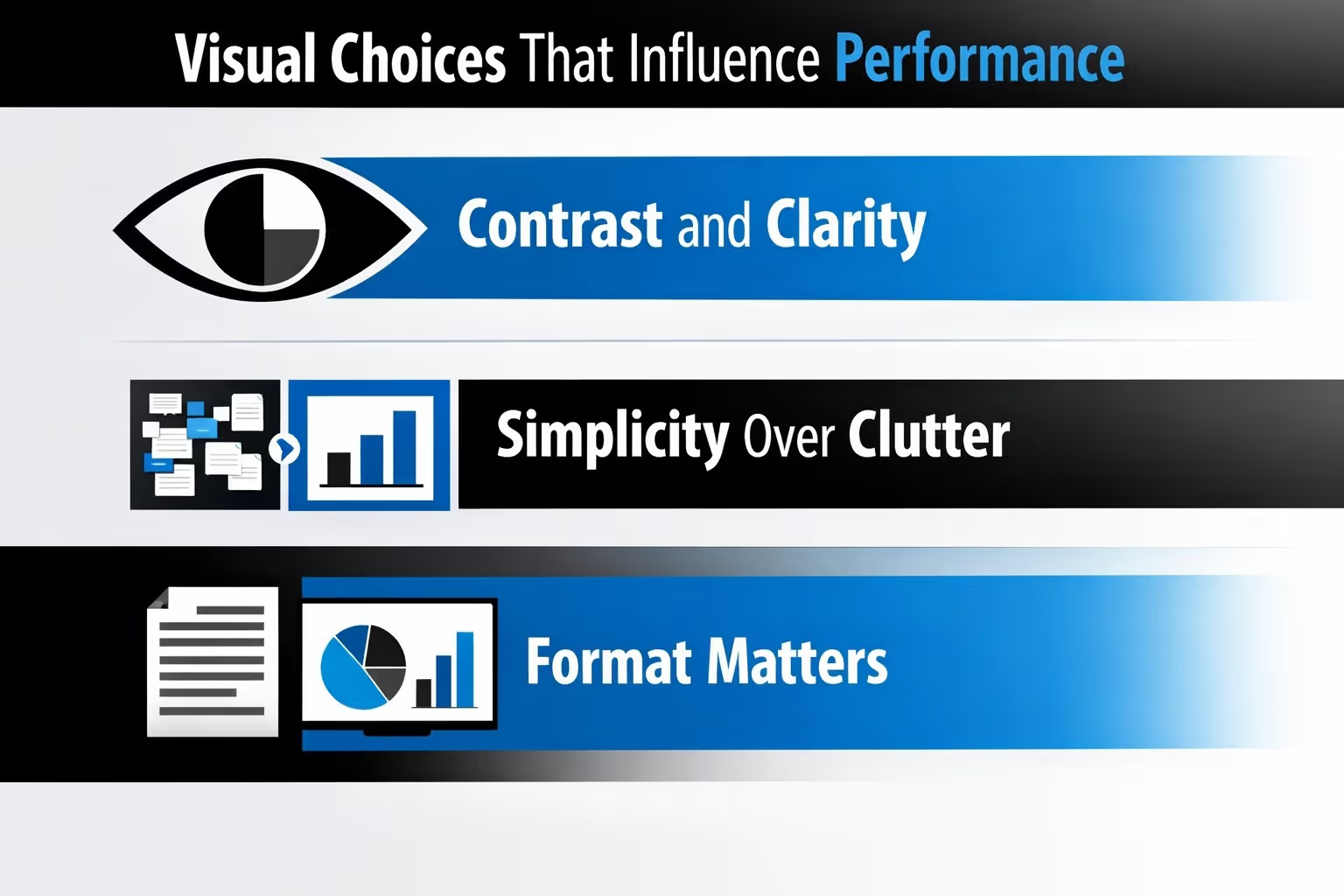
Instagram is crowded with color and motion. Your visuals need to stand out without looking chaotic. People make snap decisions based on what feels easy to process. If an ad looks busy or confusing, they move on before they even realize it.
If your product blends into the background, people will not register it. Strong contrast between the subject and the environment helps the eye focus quickly. This can come from color, lighting, framing, or even depth. When the main element is visually clear, viewers understand what they are looking at without effort, which increases the chance they will stay with the ad for another moment.
Too many visual elements compete for attention and create mental noise. Optimized ads usually center around one main subject and one clear message. Extra props, text blocks, and decorative elements can distract from what actually matters. When the layout is clean and focused, the message lands faster and feels more confident.
Not all formats behave the same way. Static images often perform well in feed placements where people pause briefly while scrolling. Stories and Reels, on the other hand, tend to favor vertical video with visible movement that fills the screen. Carousels can be effective when you need to show steps, features, or multiple angles. Creative optimization involves testing these formats instead of assuming one style will perform equally well everywhere.
On Instagram, visuals stop the scroll. Copy explains why the scroll should stay stopped. When text tries to dominate, it creates friction. When it supports the visual, it makes the ad easier to understand and act on.
People do not approach Instagram ads the way they approach articles. They glance, process quickly, and decide within seconds whether to stay or move on. That is why optimized copy tends to use:
Long explanations, abstract phrasing, or clever lines that need decoding usually slow people down. If the message takes effort to understand, attention drops.
High-performing Instagram ad copy usually revolves around three core ideas. These are not creative rules, but they show up again and again in optimized campaigns:
This keeps the message grounded in value instead of decoration. When viewers can quickly see themselves in the situation, engagement rises.
The call-to-action is often treated like a small detail, but it shapes how users move through the funnel. A slight wording shift can change intent and response.
Testing different CTA styles helps uncover what your audience responds to. For example:
Sometimes a small CTA change influences performance more than a visual tweak, because it clarifies what happens next. Creative optimization means paying attention to these details instead of assuming the standard option is always the best fit.
A creative that works for one audience segment may fail with another. That is not a flaw in the ad, it is a mismatch. Strong creative optimization means aligning visuals and messaging with who the audience is, what they care about, how they live, and where they are in the buying journey. Interests, age groups, lifestyle signals, and decision stage all shape how an ad is interpreted. When these elements are considered together, the same product can be presented in ways that feel more relevant and timely to different groups.
When creative fits the audience, performance becomes more predictable and less dependent on constant budget increases.
Testing is the engine behind optimization. Without it, creative decisions fall back on opinion, trends, or what “feels right.” Testing replaces that guesswork with real audience behavior. It is how creative turns from art alone into performance-driven work.
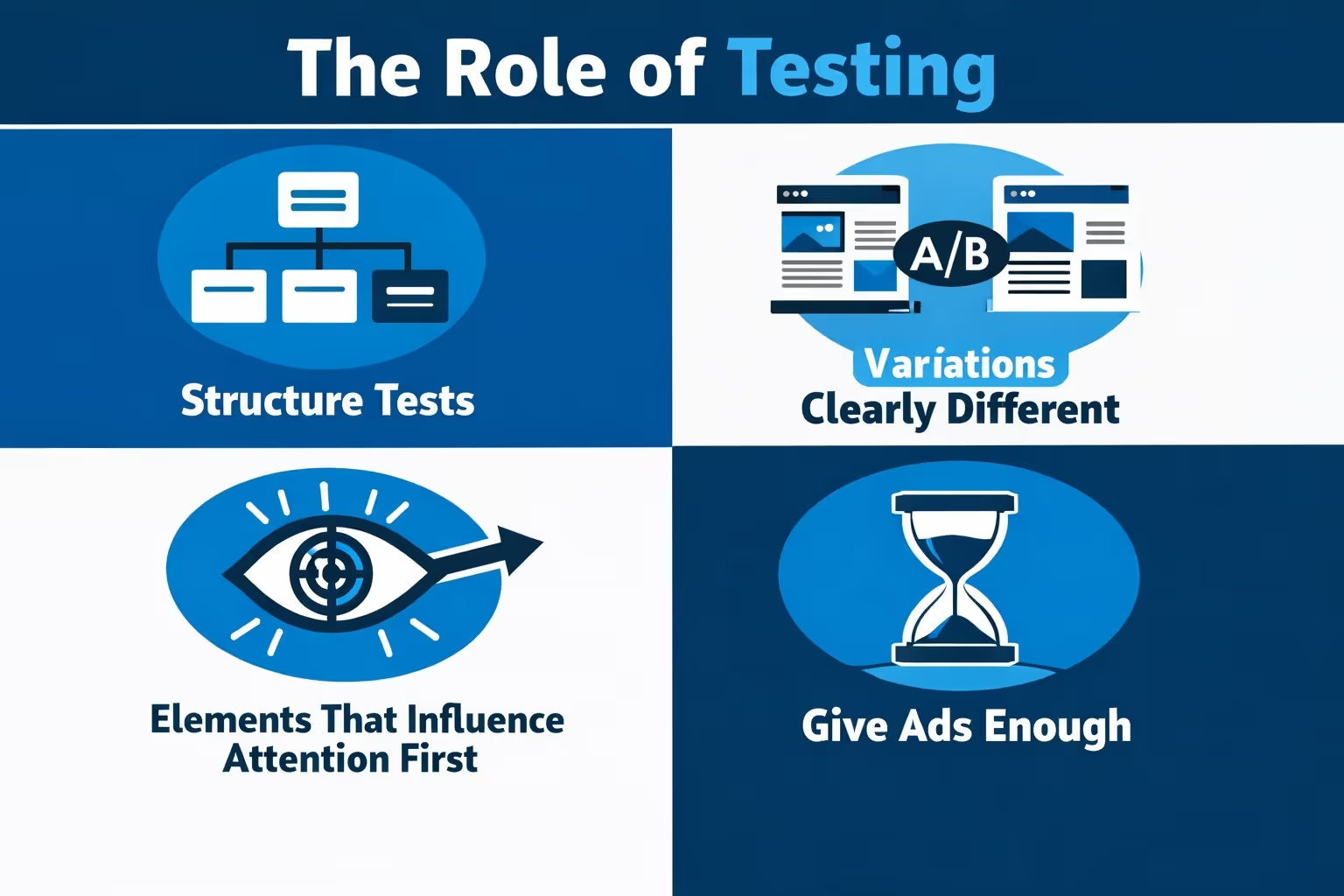
Effective testing is not about throwing many versions into the platform and hoping something sticks. It works best when there is intention behind the variations. That usually means changing one main element at a time, running multiple versions in parallel, and giving ads enough time to collect meaningful data.
When everything changes at once, you cannot tell what caused the result. Clear contrasts make learning possible.
Small tweaks often do not produce clear insights. Testing works better when the differences are noticeable. For example, instead of two almost identical headlines, try two very different angles. Instead of slightly different color tones, test a clean product shot against a lifestyle scene.
Distinct variations create clearer signals, which speeds up learning.
Not all creative parts have equal impact. Early on, focus testing on elements that shape the first impression. Hooks, opening visuals, and video pacing often influence performance more than minor design details.
If the first seconds do not work, later improvements rarely save the ad.
Performance can fluctuate from day to day. Pausing ads too quickly can lead to wrong conclusions. Let variations gather enough impressions and engagement before deciding what works. Consistency across time matters more than a short spike.
Testing is about patterns, not single moments.
The goal of testing is not just to find one top-performing ad. It is to understand why something worked. Over time, you begin to notice patterns that shape future creative decisions.
You may see that your audience responds more to real people than to product-only shots. Shorter videos might consistently outperform longer ones. Headlines that lead with benefits could beat those focused on features. These insights are more valuable than any one ad, because they influence everything you build next.
Testing should not feel like isolated experiments. Each round should inform the next. Winning elements can be reused in new formats. Strong hooks can be adapted to different visuals. High-performing messages can be tested with new audiences.
As these learnings stack up, campaigns start from a stronger baseline. Creative optimization becomes a cycle of refinement instead of a series of disconnected attempts.
Meta no longer treats creative optimization as a simple mix-and-match exercise. Today, the platform relies heavily on automated delivery, placement expansion, and creative enhancements that adapt ads across formats, surfaces, and audiences. This makes scaling easier, but it also raises the stakes for creative quality.
Automation does not decide what your ads say or how they feel. It decides how often and where they appear. That means the strength of the original creative inputs matters more than ever.
Modern delivery systems work by amplifying signals. When creatives are clear, distinct, and intentional, the platform can learn faster and distribute spend more efficiently. When creatives are vague or too similar, automation has very little to work with and performance stalls.
Automation accelerates whatever you give it. Strong inputs scale well. Weak ones scale waste.
Creative inputs should represent genuinely different ideas, not minor tweaks. That could mean different hooks, different visual contexts, or different ways of framing the problem. When concepts are meaningfully distinct, the system has real contrasts to evaluate.
Effective variation comes from strategy, not decoration. Testing lifestyle scenes against product-focused visuals, or problem-led messaging against benefit-led messaging, gives clearer insight into what actually resonates. Cosmetic changes alone rarely move performance.
Even as creatives vary, they should still feel like they come from the same brand. Visual identity, tone, and overall clarity should stay recognizable. This ensures performance differences reflect creative impact, not confusion or misalignment.
Automation can help distribute and optimize ads at scale, but it does not replace creative judgment. The system performs best when it is guided by strong inputs and clear intent. You are still setting direction. The platform is simply helping you move faster once that direction is clear.
The biggest shift happens when optimization becomes a habit, not a rescue effort. Instead of only reacting when performance drops, teams operate with a steady cycle of testing, learning, and refining.
A simple system might look like this:
Over time, your creative process becomes more informed. Fewer ideas are based on opinion alone. More are shaped by real audience behavior. That is when performance starts to stabilize instead of swinging wildly from campaign to campaign.
Even experienced teams run into these issues. They are not dramatic failures, but small missteps that quietly drag down performance. Creative optimization is often about noticing and correcting these patterns.
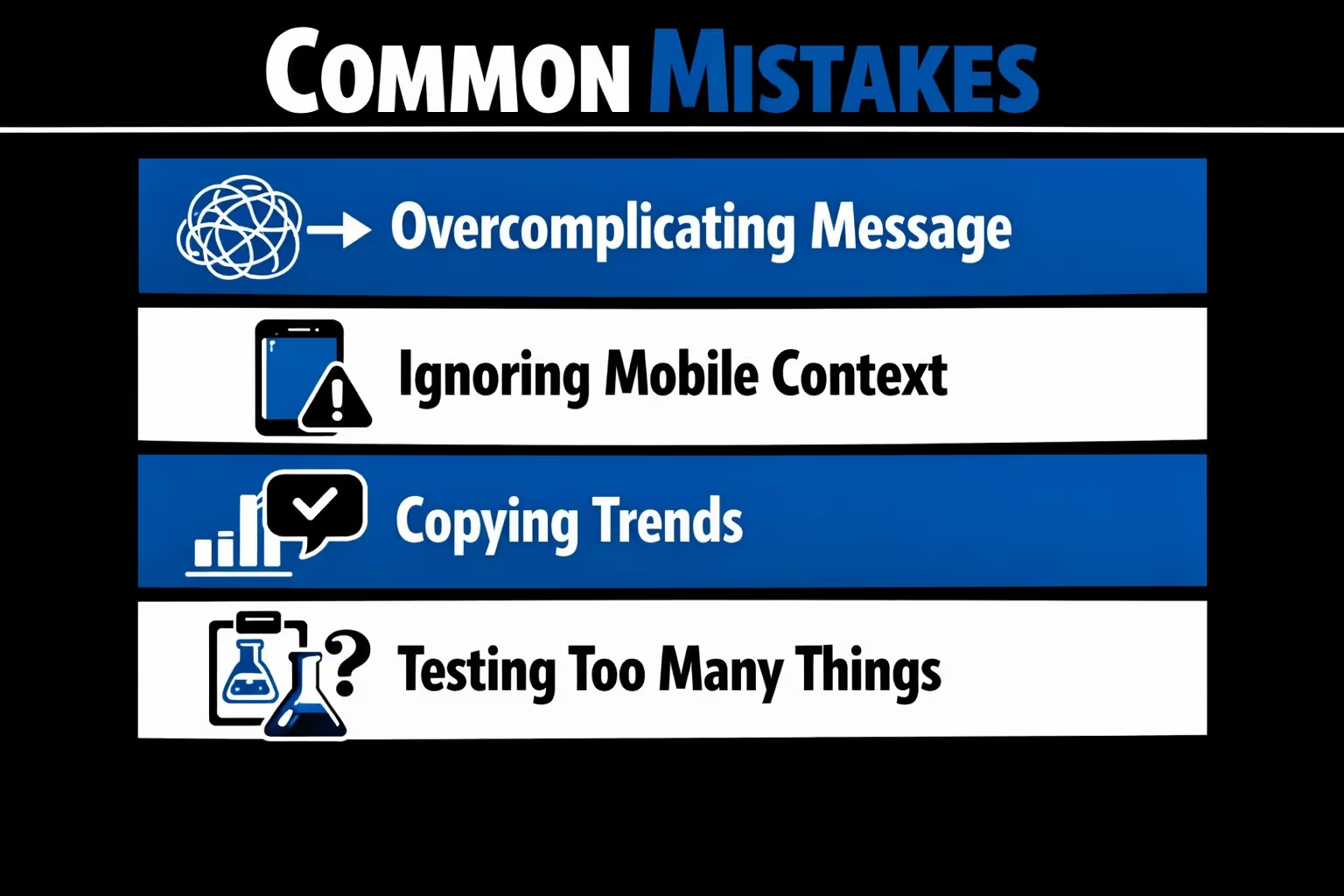
If viewers need to think too hard, they move on. Instagram is not a place for layered explanations or clever lines that require interpretation. When an ad tries to communicate multiple ideas at once, the main point gets lost. Strong creatives usually revolve around one clear promise or benefit. Simplicity makes the message easier to process in a fast-scrolling environment.
Most Instagram ads are viewed on small screens, often in less-than-ideal conditions. Tiny text, subtle color differences, or fine details can disappear. What looks sharp on a desktop design file may feel cramped or unclear on a phone. Creative optimization means checking how ads actually look in-feed and making sure the key elements are visible and legible without effort.
Trends can inspire ideas, but they are not strategies. A popular format or style does not automatically improve performance if it does not fit your product or brand voice. When trends are forced into a campaign, ads can feel disconnected or inauthentic. It is more effective to adapt inspiration to your context rather than copy it directly.
Changing visuals, copy, format, and audience all at the same time makes it difficult to understand what caused the result. This leads to confusion instead of insight. Focused testing, where one main element shifts at a time, makes learning clearer and more useful for future campaigns.
Creative optimization works best when it is deliberate. Clear messages, mobile-friendly design, relevant ideas, and structured testing all contribute to ads that are easier to understand and more likely to perform.
Creative optimization for Instagram ads is less about artistic perfection and more about practical performance. It is the discipline of adjusting creative based on how real people respond, not how we think they should respond.
The brands that win here are not always the ones with the biggest budgets. Often, they are the ones willing to test, learn, and refine consistently. Small creative changes, applied steadily, tend to outperform occasional big overhauls.
Instagram moves fast. Attention is short. But when creative is treated as something that can be improved, not just produced, ads start to work with the platform instead of fighting it.


