The Best AI Shopify Store Builders to Try in 2026
Discover the best AI Shopify store builders that help you launch faster, design smarter, and turn visitors into buyers - without the overwhelm.
Dec 29, 2025



Facebook ads don’t usually fail because of targeting anymore. Most of the time, they fail because the creative doesn’t hold up once it hits real people, real feeds, real placements. The algorithm has changed, the surfaces have multiplied, and what worked even a year ago can quietly lose traction today.
Creative optimization isn’t about finding one perfect ad. It’s about building ads that can adapt - to placements, formats, audiences, and the way Meta now assembles variations behind the scenes. That means thinking less like a designer polishing a single asset and more like an operator setting up a system that gives the algorithm room to work, without losing control of the message.
This guide breaks down creative optimization for Facebook ads in a practical way. No hacks, no recycled advice. Just what actually helps ads survive longer, scale cleaner, and waste less budget along the way.
At Extuitive, we built our platform around a simple belief: creative optimization works best when you know what is likely to perform before you spend money learning the hard way.
Most Meta advertisers still optimize in reverse. They launch ads, wait for delivery, collect early signals, and then decide what to cut or scale. By the time those decisions are made, budget has already been burned on low-performing creatives. Prediction allows us to flip that sequence.
Instead of guessing which ads might work, we forecast how creatives are likely to perform in the real auction environment before launch. That changes how teams approach optimization from the very first step.
Our prediction engine evaluates creatives using models trained on live campaign outcomes and brand-specific data. The goal is not to replace testing, but to make it more intentional.
With predictive ad performance, teams can:
Prediction does not eliminate creative optimization. It makes it smarter. Formats, placements, text variations, and branding still matter, but they perform better when guided by early signal instead of post-launch correction.
By predicting ad performance upfront, we help teams move from trial-and-error toward a system where creative optimization starts with intent, not guesswork.
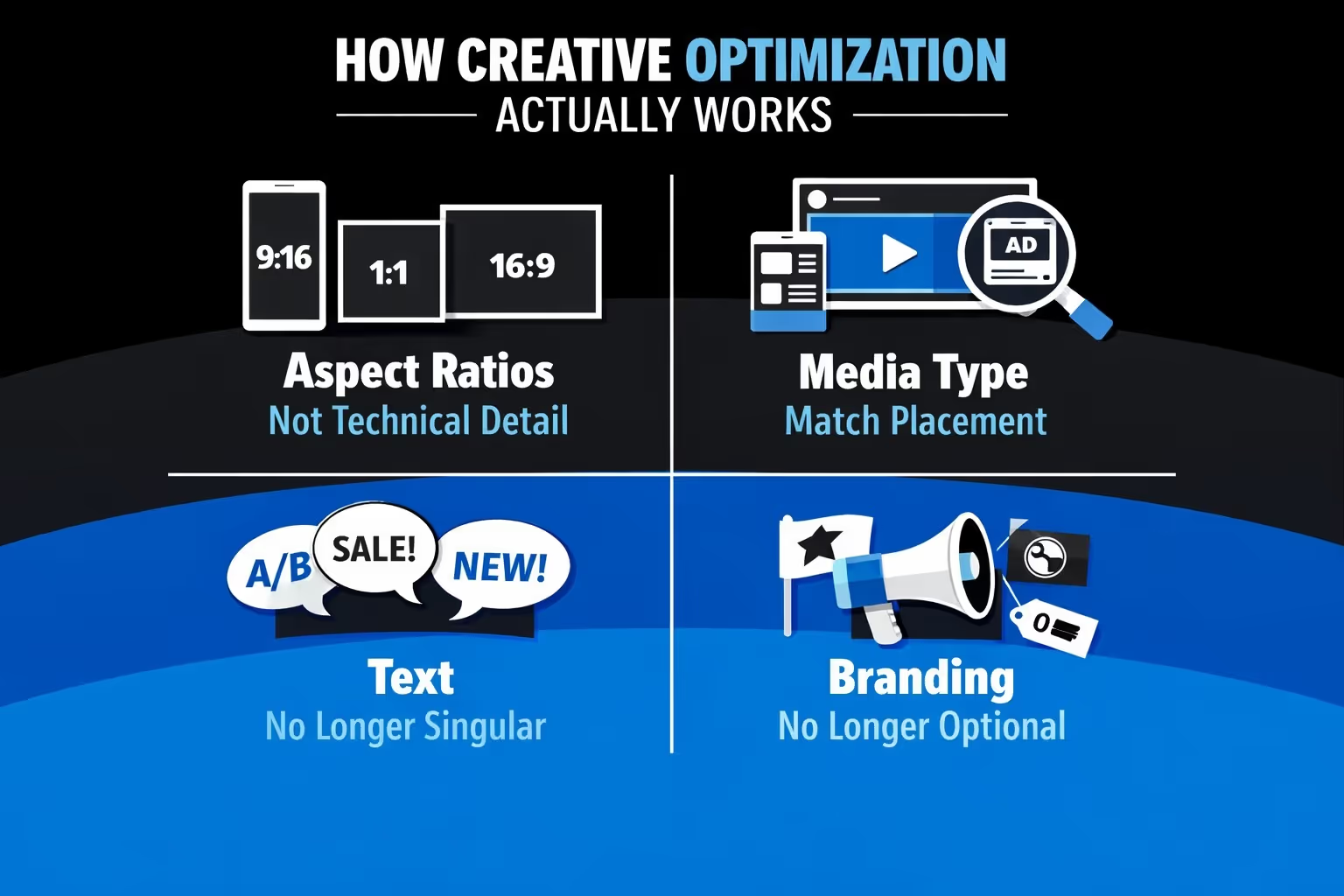
Creative optimization is no longer about making one strong ad and letting Meta handle the rest. Today, performance depends on how well your creative survives variation. Different placements, formats, surfaces, and automated adjustments all shape how an ad is experienced.
The sections below break down the creative decisions that matter most right now. Each one affects how Meta assembles, delivers, and scales your ads. None of them work in isolation. Together, they form the system that determines whether creative holds up or quietly fades.
Aspect ratio decisions shape performance more than most advertisers admit. Square images still work, but they no longer dominate. Vertical formats consistently win attention in mobile feeds, stories, and reels.
The issue is not just size. It is how information is distributed inside the frame. A creative that relies on text at the top edge or product details near the corners is asking to be cropped poorly. A creative that centers the message visually is far more resilient.
One practical approach is to start with a core composition that works in 4x5 or 9x16, then adapt downward rather than up. This forces discipline and makes you decide what truly matters in the first second of attention.
Creative optimization favors designs that lose gracefully rather than designs that only win in ideal conditions.
Some placements are image-first. Others are video-first. Treating them the same is a mistake and often leads to underperformance without an obvious cause.
Reels and stories reward motion, even subtle motion. Feeds can still support static images, but even there, movement tends to earn longer attention. This does not mean every ad needs to be a polished video. Simple animation, light movement, or format-native behavior often outperforms high production work.
The key is alignment. Use video where video is expected. Use images where images still hold attention. Avoid forcing one asset everywhere just because it is easier or faster to produce.
Creative optimization is not about uniformity. It is about relevance.
Every ad now contains multiple text combinations, whether you design for them or not. Primary text, headlines, descriptions, and callouts are mixed and matched by the system. If you only write one version of each, you limit what the algorithm can test.
Effective text variation supports creative optimization by giving Meta structured options to learn from:
Branding settings matter more now because automation depends on them.
Logos, fonts, colors, tone, and visual style guide how Meta modifies and enhances creative. Without those inputs, the system fills gaps with assumptions that rarely align with brand standards.
This does not mean automation must be feared. It means it must be guided.
When branding is clearly defined, enhancements like overlays, image adjustments, and text generation are far more likely to produce usable output. When branding is vague, automation becomes noise.
Creative optimization is not about turning everything on. It is about turning on the right tools with the right constraints.
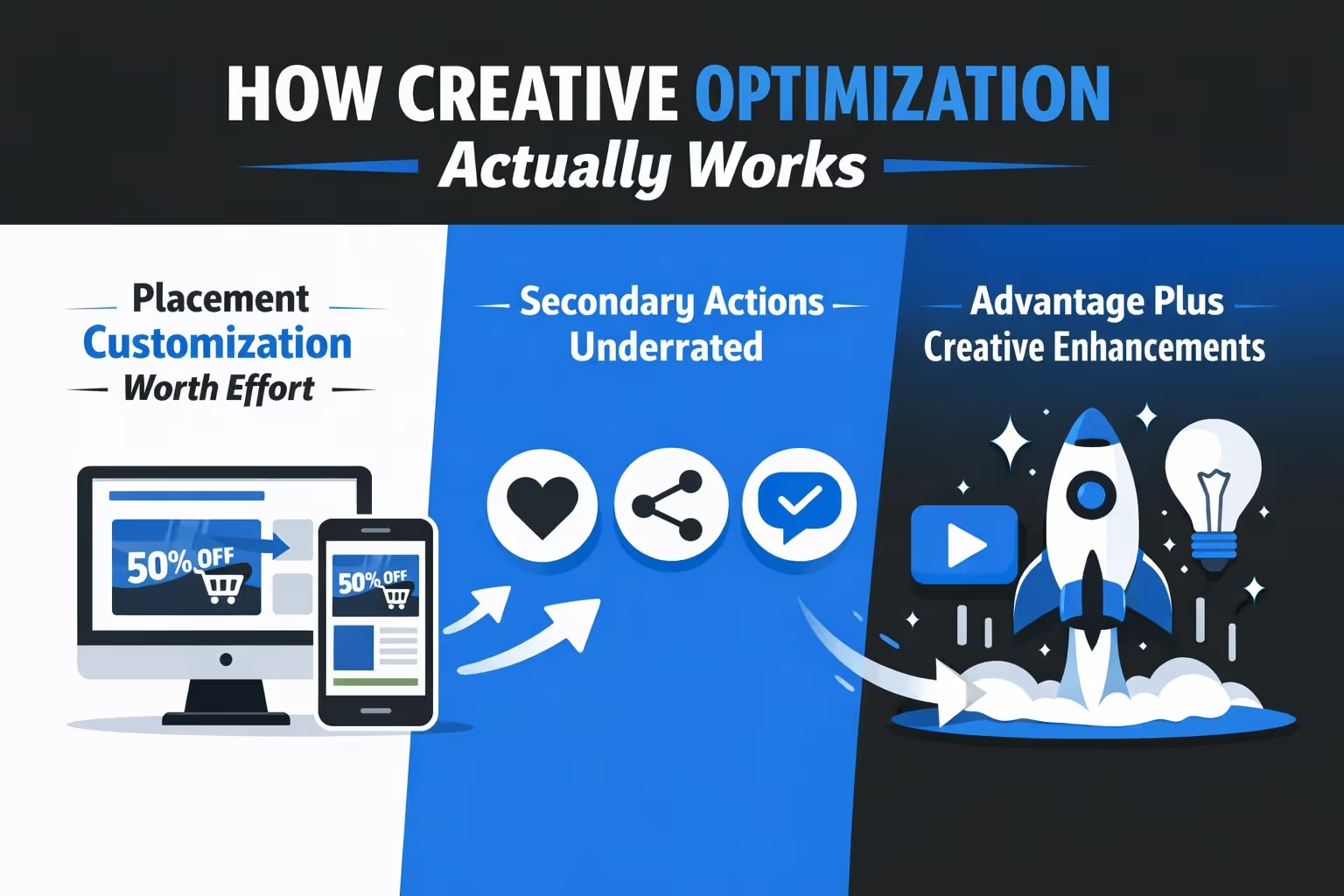
Automation does not eliminate the value of manual adjustments. It changes where effort is best spent.
Customizing creative by placement is still one of the highest leverage actions an advertiser can take. Small tweaks can prevent awkward crops, misplaced text, or broken visuals.
You do not need to customize every placement. Focus on the ones that receive volume. Feed, stories, and reels usually justify the effort. Others can be left flexible if the core creative holds up.
Optimization is about diminishing returns. Spend effort where it prevents obvious failure.
Many advertisers either ignore site links entirely or leave them on auto-generation. That is a missed opportunity. When left unmanaged, site links often reflect generic pages or visuals that do little to support the main message.
Used intentionally, they become an extension of the creative rather than an afterthought.
Site links give the system additional paths to engagement. They do not replace the primary message of the ad. They support it.
For product ads, site links can quietly address common questions like product details, pricing, delivery, or returns without cluttering the main creative. For content-driven ads, they can capture secondary curiosity, offering related reads or resources that keep users engaged instead of bouncing.
The key is intent. Site links should feel additive, not distracting. Each link should exist for a reason and support the same outcome as the main ad.
When used thoughtfully, site links increase total action volume while keeping the core message intact. They allow Meta to surface the most relevant option for each user without forcing a single path.
Creative optimization includes everything that shapes how the ad is experienced, not just the main image or video.
Advantage Plus creative tools have a reputation problem. Some of that reputation is deserved. Some of it is outdated.
Not all enhancements are equal. Some adjust presentation in subtle ways. Others fundamentally change how the ad looks or behaves. The mistake is treating them as a single switch.
Translate text, brightness adjustments, and subtle visual refinements often help more than they hurt. Aggressive animations or heavy text manipulation require more caution.
The best approach is selective adoption. Evaluate each enhancement individually. Preview it. Decide whether it aligns with your standards.
Creative optimization is not about control versus automation. It is about informed allowance.
The advanced preview is not optional. It is quality control. No amount of planning replaces seeing how an ad actually appears across real placements.
Ads behave differently across feeds, stories, reels, devices, and screen sizes. What looks fine in the editor can break once it is resized, cropped, or enhanced automatically. Assumptions fail quickly once money is involved.
Previewing exposes issues before users see them. This is where you catch awkward crops, broken overlays, unreadable text, or motion that feels unnatural for the placement. It is also where you notice when automation pushes an element further than intended.
Just as importantly, previewing builds confidence. When enhancements are applied correctly and creatives hold up across placements, you know the system is working with your inputs, not against them.
Optimization begins before launch. Fixing issues once spend has started is always more expensive and often means cutting ads that could have worked with small adjustments.
A few minutes spent in preview can save days of wasted budget and unnecessary creative rework.
Breakdowns by creative elements are useful, but they are not a scoreboard. You rarely get clean answers about which exact combination wins. What you get instead are directional signals.
Use measurement to guide decisions, not to chase perfection:
These signals should inform the next round of creative inputs. Avoid chasing micro-winners or over-optimizing tiny differences. Focus on removing obvious losers and giving the system stronger options to work with.
Creative optimization is iterative. It rewards consistency over cleverness.
If you reduce everything to one principle, it is this: Design for variation, not perfection.
Perfect ads are rare and short-lived. Resilient systems last longer and waste less.
Creative optimization for Facebook ads is no longer about taste or cleverness. It is about structure, adaptability, and informed collaboration with the algorithm.
The advertisers who win are not the ones with the flashiest creatives. They are the ones who build inputs that let the system learn efficiently, respect brand boundaries, and adapt without breaking.
That is what matters now.


