The Best Facebook Ads Reporting Tools Worth Checking Out in 2026
Discover top platforms for Facebook ads reporting that deliver clear insights, automate dashboards, and track ROAS for better campaign decisions now. (152 chars)
Mar 24, 2026



Creative ideas are risky by nature. Sometimes they land perfectly. Other times they disappear into the void with nothing but wasted budget behind them. That’s the difference between creating in a vacuum and testing your concept before it hits the real world.
Creative concept testing isn’t new, but the way brands approach it today has changed. It’s faster, more structured, and often the only thing standing between a good idea and a costly mistake. If you’ve got ad creatives, product designs, or messaging you’re about to launch, this guide will help you test those ideas smartly without slowing everything down.
At Extuitive, we believe creative concept testing should happen before production – not after launch, not during live spend. Traditional workflows ask teams to build first, run campaigns, and learn afterward. But in today’s ad environment, where costs rise and platform signals are delayed, that process is no longer sustainable.
We replace trial-and-error testing with predictive advertising. Our system combines your brand’s historical creative performance with modeled responses from over 150,000 AI agent consumers. Before a single ad is built or approved, we evaluate new concepts for their likelihood to drive strong CTR and ROAS and flag the weak ones early. Every idea is tested in context: your audience, your past, and your performance patterns.
This gives creative teams clarity from day one. Instead of debating what to try, you focus on what’s already validated. Creative decisions move faster, feedback becomes reusable, and no asset enters paid media without earning its place. With Extuitive, concept testing isn’t a risk – it’s the first confident step in the creative process.
At its core, creative concept testing is about getting honest feedback from the people you're trying to reach before you launch. You present an idea, maybe it’s an ad, a landing page, a tagline, or a packaging mockup, to a group of potential customers. Then you ask the right questions to figure out if it clicks.
The goal isn’t perfection. It’s clarity. You’re looking for signs that your concept is confusing, uninteresting, or off-mark before it goes live. That way, you can tweak it or trash it before committing real money.
Unlike usability testing, which focuses on how people interact with a product, creative concept testing is about their emotional and cognitive reactions. Does it make sense? Does it resonate? Is it worth their attention?

Skipping testing often seems like a time-saver, especially when deadlines are tight. But most teams that skip it end up paying more in the long run. Why? Because fixing creative mistakes after launch is expensive, especially if you’ve already spent money on ads, production, or development.
Here’s what good concept testing helps you avoid:
It also helps with internal alignment. When everyone on the team sees real feedback, it’s easier to rally around the right version instead of pushing for personal favorites.
Testing isn't just for big campaigns or high-budget launches. It’s useful in more moments than most teams realize.
Here are a few smart times to run a concept test:
If you’re building anything that will touch a customer, and it has multiple ways it could look or sound, testing is worth doing.
Creative testing isn’t limited to ads. You can test almost any idea that’s still in the works and has a clear goal.
Common examples include ad concepts (static, video, or interactive), landing pages or hero sections, product packaging or labels, brand messaging, slogans, or naming options, UX concepts or onboarding flows, and product mockups or feature descriptions.
If your team is asking “which one works better?” or “does this make sense?” then you’ve already got a concept worth testing.
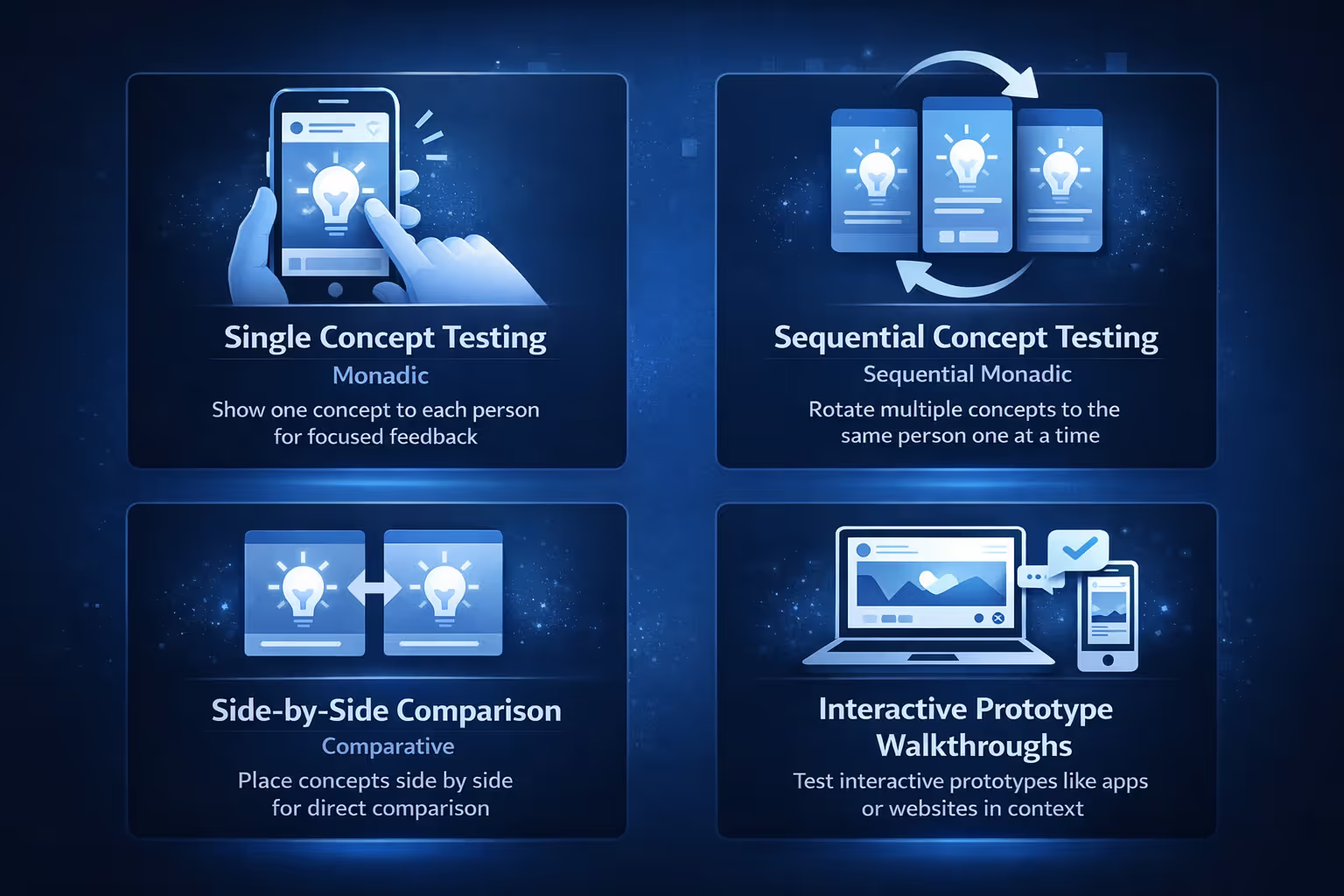
How you test depends on your goals, timeline, and resources. Some tests are quick and simple, others are deeper and more structured.
Here are a few practical approaches:
This method involves showing just one concept to each person. It’s a simple approach that removes comparison bias and helps you see how the idea holds up on its own. If you're evaluating a bold new direction or want unfiltered reactions to a single version, monadic testing gives you focused, detailed feedback.
In sequential monadic testing, you present multiple concepts to the same person, but one at a time. The sequence is rotated across participants to avoid order bias. This method strikes a balance between depth and comparison. It’s useful when you want thoughtful feedback on each idea, but still need to understand how they stack up.
This method puts all concepts in front of the person at once, allowing direct comparisons. It’s quick, efficient, and helpful when you're down to a few finalists. While it’s easier for participants to pick a favorite, you may get less depth on why. Still, it works well when visual or message differences are clear and you just need to make a confident call.
When you're testing something users can interact with, like a web app, mobile UI, or service flow, a walkthrough makes sense. You let people explore the prototype, then talk through what makes sense, what doesn’t, and where they hit friction. It’s ideal for testing usability, flow, and emotional response in context.
Each method has tradeoffs. Sequential testing helps compare without overwhelming people, but it can take longer. Comparative testing is fast but may lead people to make quick, surface-level judgments. Think about what you need to learn and choose accordingly.
Asking the right questions is the hardest part of testing. You want useful, honest answers, not polite approval.
Good questions focus on:
Avoid asking “Do you like this?” on its own. People might say yes just to be agreeable, and “like” isn’t always tied to effectiveness. Instead, look for behavior-driven questions. If it’s an ad, ask if they’d click. If it’s a product idea, ask if they’d pay for it.
You don’t need a big budget or hundreds of participants to learn something useful. But you do need to follow a few core principles:
Once you’ve run the test, it’s time to interpret what you got. Start by separating the what from the why.
Quantitative feedback helps you spot winners and losers fast. Look for patterns in scores or choices across the group.
Qualitative feedback helps you understand why something worked or didn’t. Read the comments carefully. Themes usually emerge.
Watch for emotional reactions. Words like “confusing,” “boring,” or “clear” can tell you more than just numerical scores. And don’t ignore when one concept polarizes your audience. That might mean it’s bold or just off.
Also, don’t cling to your favorite if the feedback disagrees. The point of testing is to learn, not prove a point.
If the test went well, you’ll probably know your next move. But here are a few solid paths forward.
Refine the strongest concept based on clear patterns in the feedback. Drop underperforming ideas that didn’t land, even if you liked them. Retest after changes if the concept evolved a lot from version 1. Share findings with your team so everyone stays aligned.
Testing isn’t a one-time box to check. It’s part of the process, just like ideation or design reviews.

Plenty of concept tests fail, not because the idea was bad, but because the research setup was.
Common missteps to watch for:
If the setup is weak, the insights will be too. That’s why it's worth taking the time to get it right.
Creative concept testing doesn’t have to be complicated. At its best, it’s just a structured way to ask, “Does this make sense to anyone outside this building?” And more often than not, the answer will surprise you.
The smartest teams don’t test because they doubt their creativity. They test because they want their ideas to work harder in the real world. If you’re serious about making things that resonate, concept testing isn’t a luxury. It’s just part of doing it right.


