The Top Free AI-Powered Platforms Every Digital Marketer Should Be Using
Discover the best free AI tools and platforms for digital marketing in 2026. Save time on content and SEO insights with these top-rated free options.
Mar 24, 2026



Yes, you can sell food on Shopify, and many businesses already do. From packaged snacks and coffee to sauces, baked goods, and subscription food products, Shopify supports a wide range of food sellers.
That said, selling food isn’t the same as selling t-shirts or phone cases. The platform itself is flexible, but food comes with extra rules: safety regulations, labeling requirements, shipping constraints, and payment considerations. None of this makes Shopify a bad choice. It just means you need to understand the boundaries before you start.
This article breaks down what’s actually allowed, what Shopify handles well, and what’s still your responsibility as a food seller. No hype, no shortcuts, just the real picture so you can decide if Shopify makes sense for your food business.
Short answer: yes.
Shopify does not restrict food sales by default. The platform does not review your recipes, inspect your kitchen, or pre-approve your product catalog. If your products are legal to sell in your region and you comply with Shopify’s general terms, you can sell food just like any other product.
That freedom is both an advantage and a responsibility.
Shopify acts as infrastructure, not a regulator. It gives you tools to sell, but it does not protect you from violating food laws or shipping something you shouldn’t. If a product is restricted or regulated, it’s on you to know that before listing it.
So when people ask whether food is “allowed on Shopify,” the more accurate answer is this: Shopify won’t stop you, but the law might.
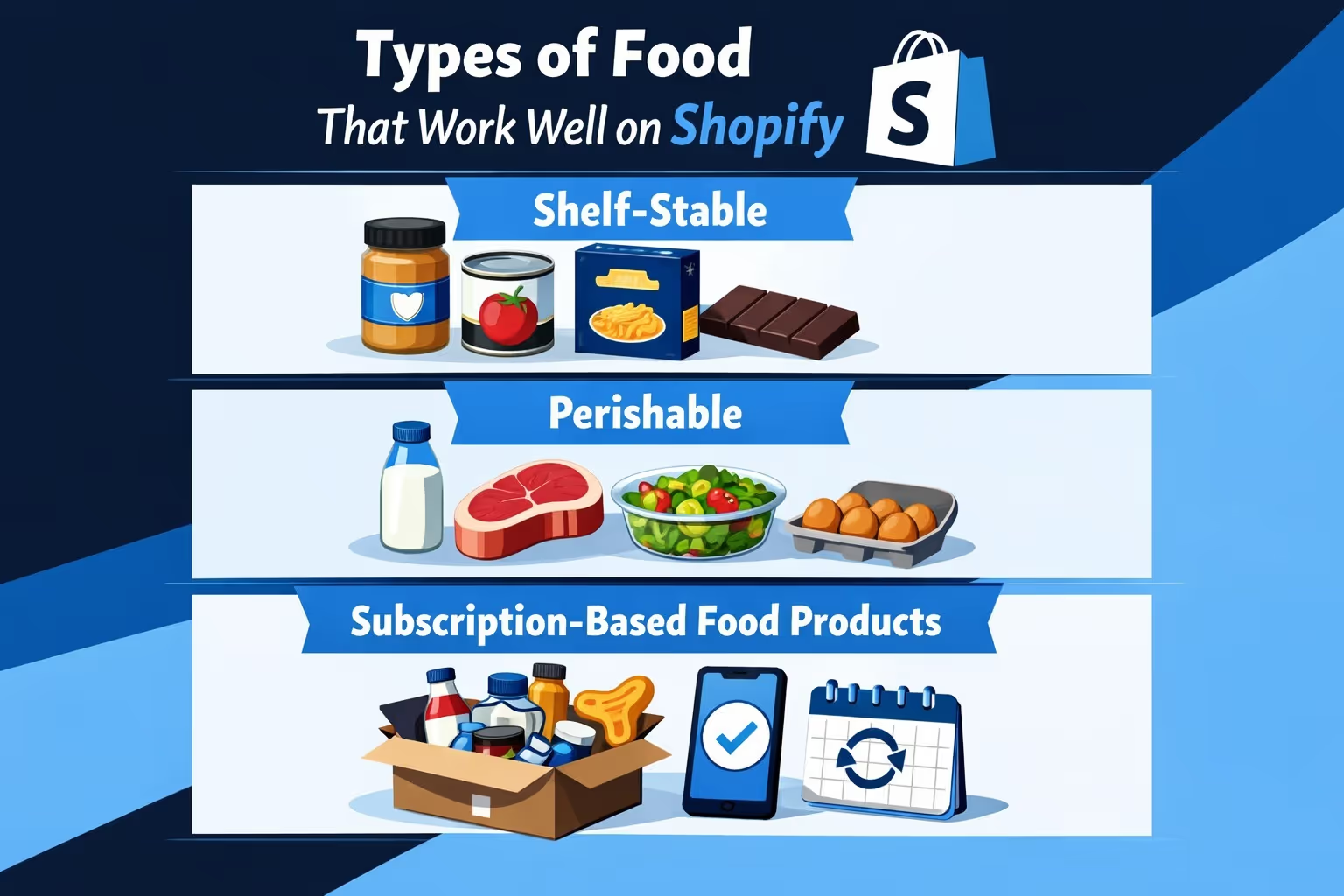
Not all food products behave the same online. Some categories are far easier to manage, especially for first-time sellers.
These products make up a large share of successful Shopify food stores. They’re easier to ship, easier to store, and less fragile from a regulatory standpoint.
Typical examples include sauces, spices, dry snacks, coffee, tea, candy, and canned or pickled goods. Longer shelf life means fewer returns, less waste, and more flexibility in fulfillment.
This category is often where new food businesses start, not because it’s glamorous, but because it’s forgiving.
Fresh food can be sold on Shopify, but it requires more discipline. Baked goods, meal prep, refrigerated products, and fresh ingredients all introduce timing and temperature constraints.
Many sellers in this category narrow their scope intentionally. They focus on local delivery, regional shipping, or pickup-only models to stay in control. Shopify supports this approach well, but the operational burden is real.
Subscriptions are common for food, especially for repeat purchases like coffee, snacks, or pantry staples. They can stabilize revenue, but they also amplify mistakes. If fulfillment slips or inventory planning is off, the impact compounds fast.
Subscriptions reward businesses that already have reliable operations. They are less forgiving for experiments.
Some food products fall into gray zones or heavily regulated areas. Selling them online isn’t always impossible, but it’s rarely simple.
This is where many first-time sellers get into trouble, not out of bad intent, but out of assumption.
Depending on your location, the following categories often require special licenses, approvals, or outright restrictions:
Regulations vary by country, state, and even city. A product that is legal to sell locally may not be legal to ship across borders.
Shopify does not verify this for you. If you sell something that violates local law, the liability is yours.
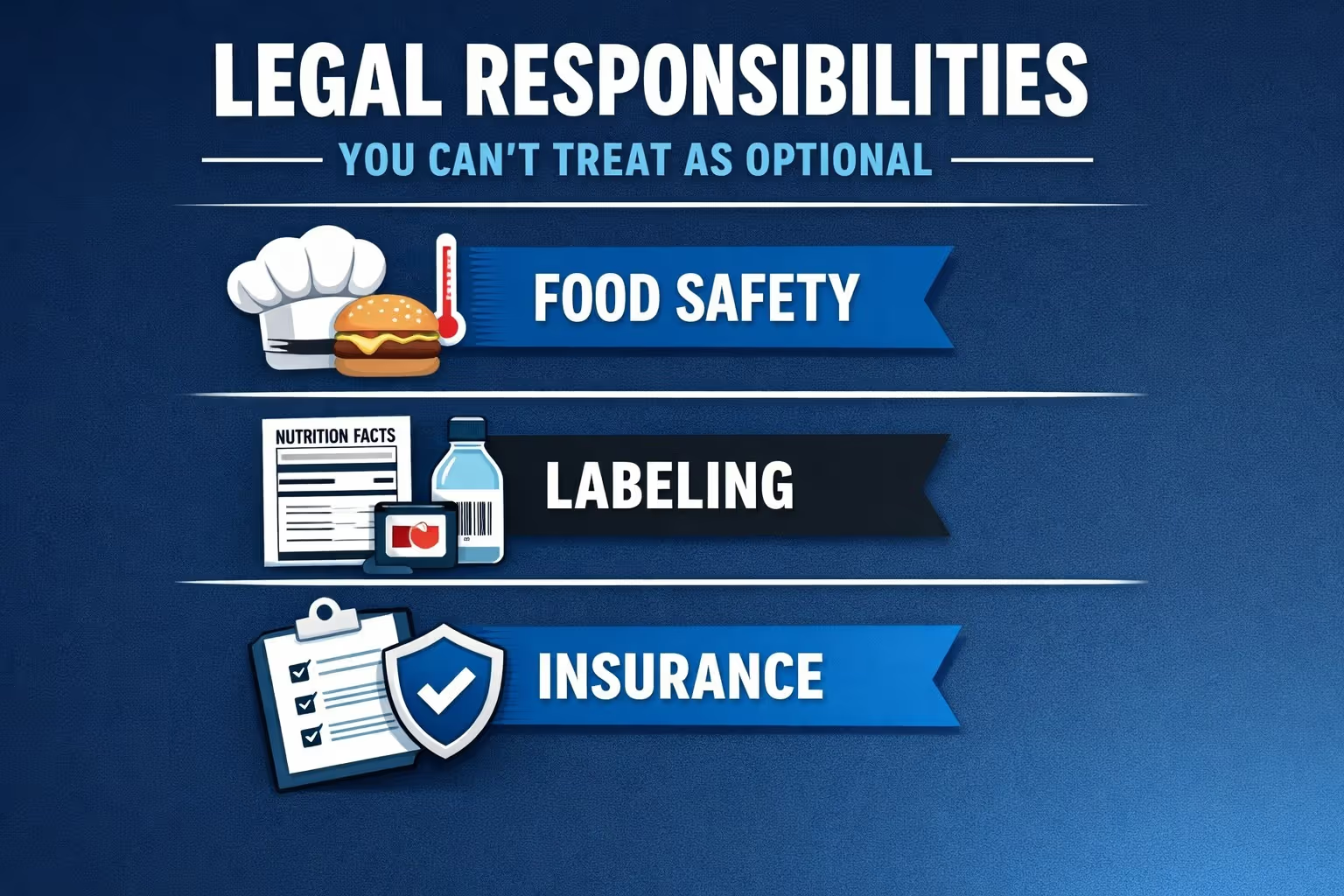
Food ecommerce looks simple on the front end. The legal side is where reality shows up.
Every region has its own food safety authority. Whether it’s the FDA in the US or equivalent bodies elsewhere, the expectation is the same: food must be produced, handled, and stored safely.
If you make food yourself, that responsibility extends to your kitchen, equipment, and process. If you work with suppliers or manufacturers, you are still responsible for ensuring they meet required standards.
This isn’t something Shopify mediates or enforces. It’s entirely between you and regulators.
Food labels are not branding elements. They are legal disclosures.
Depending on where you sell, you may be required to include ingredient lists, allergen warnings, nutritional information, net weight, and expiration details. In many cases, the same information should be visible on your product pages.
Mistakes here are common and expensive. Incorrect labels can lead to forced recalls or fines, even for small businesses.
Food carries inherent risk. People consume it. If something goes wrong, consequences escalate quickly.
Most serious food sellers carry product liability insurance. It’s not exciting, but it’s part of treating food as a business, not a hobby.
Shopify doesn’t specialize in food, but its flexibility is what makes it workable for food sellers.
Food relies heavily on imagery. Shopify’s themes make it easy to build clean, image-forward product pages that compensate for the lack of taste or smell.
Successful stores tend to invest time in presentation. Clear photos, honest descriptions, and visible ingredient information build trust faster than clever copy.
Food inventory is more sensitive than most. Expiration dates, batch tracking, and turnover matter.
Shopify’s core inventory tools handle the basics, and many sellers extend them with apps designed for subscriptions, local delivery, or pickup scheduling. The platform doesn’t dictate your workflow, which is both helpful and demanding.
Food businesses often sell within specific regions. Shopify supports local payment methods, manual payments, and region-specific gateways, which helps food sellers meet customers where they are.
Shipping is the point where many food businesses either stabilize or stall.
Shelf-stable products can ship with standard carriers, but packaging still matters. Broken jars, melted products, or delayed deliveries damage trust quickly.
Fresh and refrigerated items raise the bar. Insulated packaging, ice packs, expedited shipping, or limited delivery zones become part of the business model. Some sellers pivot to local delivery not as a limitation, but as a strategic choice.
Shopify supports all of these approaches. It doesn’t simplify them.
Food pricing is rarely straightforward. Ingredients fluctuate. Waste happens. Shipping costs change.
New sellers often make one of two mistakes: pricing too low to compete, or pricing without understanding full costs. Neither works for long.
Food businesses that last tend to price deliberately, even if that slows early growth. Sustainability matters more than short-term traction.
Selling food online is a translation problem. You’re asking someone to imagine flavor, texture, and quality without any physical reference point. That puts pressure on how clearly you present the product. Vague descriptions or clever slogans don’t help much here. What does help is being specific about what the food actually is, how it’s made, and how people usually use it in real life. When customers understand what they’re buying, hesitation drops.
This is where photography, tone, and consistency matter more than big marketing ideas. Clean product images, close-ups that show texture, and lifestyle shots that suggest context all do quiet work in the background. Reviews, repeat purchases, and word of mouth finish the job over time. Trends can bring attention, but long-term growth usually comes from products that stand on their own and communicate value without trying too hard.

When you sell food online, marketing is expensive to get wrong. You’re not just testing headlines or colors. You’re testing taste perception, trust, and purchase intent without sampling. That’s exactly the problem we built Extuitive to solve. Before you spend budget promoting a sauce, snack, or subscription box, we help you understand which creatives, messages, and visuals are most likely to perform in the real world.
Our platform predicts ad performance before launch using AI models trained on large-scale consumer behavior data. Instead of guessing whether a product photo, ingredient angle, or value proposition will resonate, you see forecasts tied to metrics like CTR and ROAS, benchmarked against your own historical performance. This is especially useful for food brands, where small changes in imagery or wording can dramatically change how a product is perceived.
We work with Shopify brands that want clarity before committing. Whether you’re launching a new product, testing seasonal packaging, or refining ads for an existing bestseller, we help you stop testing blindly and start prioritizing what’s most likely to convert. In food marketing, confidence comes from signal, not intuition. Extuitive gives you that signal before the money is spent.
Shopify itself scales easily. You can handle more traffic, more orders, and more products without rethinking the platform. What doesn’t scale as smoothly is everything behind the scenes. As volume grows, food businesses start to feel pressure from production limits, supplier reliability, storage constraints, and fulfillment speed. Small inefficiencies that didn’t matter at launch become daily problems once demand increases.
The brands that handle growth well tend to move in stages. They stabilize production before expanding distribution, refine logistics before adding new products, and test demand before committing to larger batches. Shopify supports that kind of measured growth, but it doesn’t replace operational planning. Scaling food is less about pushing harder and more about knowing where the system bends before it breaks.
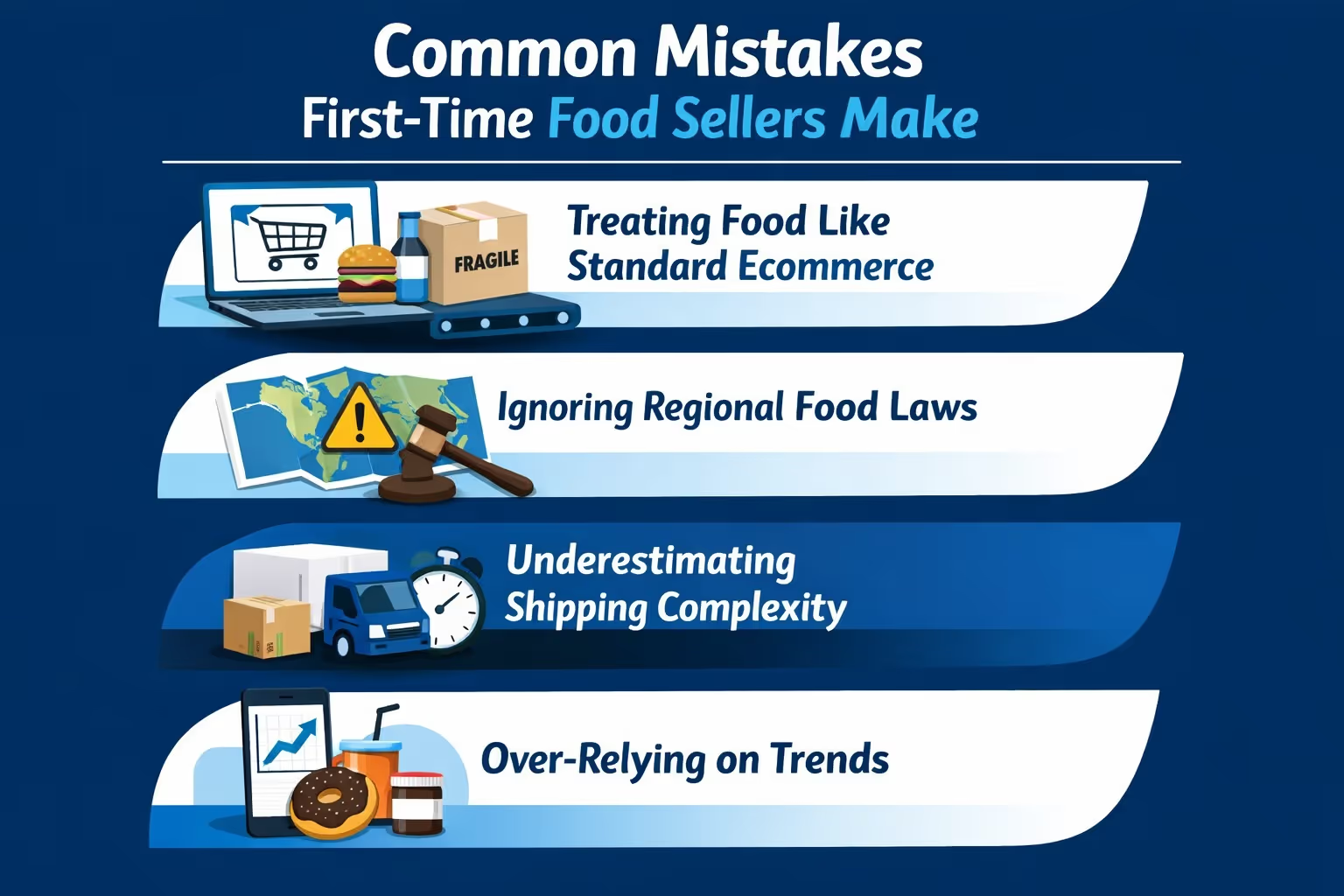
These issues show up again and again, even among well-intentioned founders who’ve done their homework in other areas:
None of these mistakes are rare, and none are fatal by default. Most are avoidable with slower decisions, clearer research, and a willingness to treat food as its own category, not just another product type.
Yes, Shopify is a strong platform for food businesses.
But it doesn’t simplify food itself. It doesn’t reduce regulatory responsibility or operational complexity. What it offers is flexibility and control, which are valuable if you know what you’re doing.
If you understand your legal obligations, choose products wisely, and plan fulfillment realistically, Shopify can support a serious food business. If you expect the platform to solve food-specific challenges for you, frustration comes quickly.
Food ecommerce rewards preparation more than speed. Shopify gives you the tools. The rest is on you.


