Shopify Store Optimization Strategies: A Technical Breakdown
Technical Shopify optimization strategies: site speed, checkout flow, SEO for AI search, and conversion fixes that actually increase your store revenue.
Mar 24, 2026



Testing a new market is like feeling your way through a dark room. You don't want to trip, but you also don't want to stand still forever. Facebook ads are one of the easiest ways to start exploring a new audience without blowing your entire marketing budget. The good news? You can get useful signals fast. The challenge? You have to know what to look for and how to set it up right.
In this guide, we’ll walk through how to use Facebook ads not just for awareness or sales, but for what they’re surprisingly good at market validation. Whether you’re launching in a new region, trying out a new product line, or just testing the waters with a new audience segment, this is a way to move forward with more clarity and fewer assumptions. Let's break it down.
Launching into a new market with Facebook ads often means spending first, learning later. It’s a slow, expensive way to test assumptions, and too often, results come after the window of opportunity has passed. At Extuitive, we change that. Instead of using budget to uncover insight, we use prediction advertising to surface it ahead of time.
Our platform analyzes your brand’s past performance and models future outcomes using simulated responses from over 150,000 AI consumer agents. Every creative is scored against expected CTR and ROAS within the context of the new audience. You see which ideas carry real potential and which don’t before the first campaign is built.
This isn’t just faster. It’s a shift in strategy. Extuitive allows you to validate messaging, creative fit, and market alignment while your competitors are still testing headlines. You move early, you move intentionally, and you move without wasting budget on what was never going to work.
Testing a market isn’t about guessing. It’s about getting signals. You want to know if a new audience will respond to your offer, if your messaging works, or if your product even makes sense for them. Facebook Ads offer one of the fastest ways to find that out.
Why Facebook? It’s simple. The platform has the reach, the targeting options, and, most importantly, the speed to deliver feedback fast. You can spend a small amount, run tests for just a few days, and still walk away with something valuable.
But diving into Facebook Ads without a plan is just noise. If you want to use them for market testing, you need structure.
If you’re using Facebook ads to test a new market, the last thing you want is to burn through your budget without learning anything. That’s why it’s important to treat this like a structured experiment, not a one-off campaign. Below are the steps I’ve seen work time and again when you need clear, fast answers about whether your product or offer is a fit.
You’re not running a brand campaign here. This isn’t about awareness. It’s about validation. So your goal isn’t to “look good”, your goal is to learn something. That mindset changes everything.
Here’s how to approach it:
It’s a testing campaign. Frame it that way from the start, and don’t get discouraged by early results.
Random experiments waste money. Useful ones start with a theory.
Let’s say you’re planning to launch in Singapore. You might start with: “I believe young professionals in Singapore will respond well to our smart home product if it’s positioned as energy-saving.”
From that, your test can focus on the location (Singapore), the audience (25-40, tech-savvy), the message (energy-efficiency), and the creative format (short video or static image).
Each element becomes something you can isolate and test. If the response is weak, you’ll know where to look.
This is your foundation. Facebook gives you tools to test both warm and cold audiences.
You can also create audiences based on engagement (e.g., people who watched your videos or clicked your previous ads). This lets you see how adjacent segments might perform in your new market.
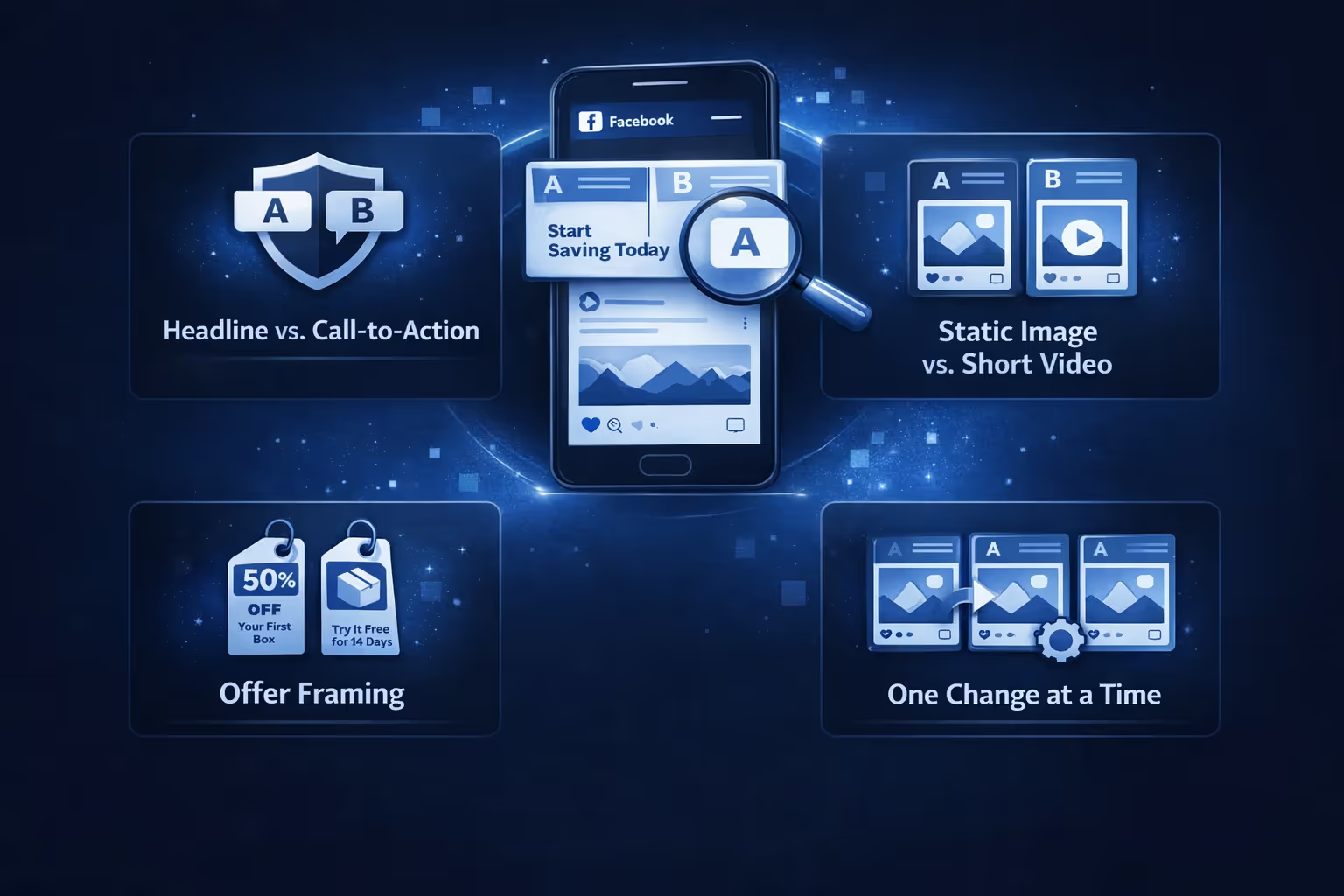
This is where a lot of people get tripped up. They change too many variables at once and can’t tell what made the difference. Was it the image? The headline? The offer?
The fix is simple: run controlled A/B tests. Facebook’s built-in split testing tools can help, but even manual tests work if done carefully.
What to test:
Always keep one variable consistent across a set of ads and test only one change at a time.
Not every test has to lead to a sale. In early market testing, you’re often just looking for engagement and early signs of fit.
Here’s what to watch.
If your CTR is low across every test variation, it might be the offer or the audience. If it’s high but conversions are low, your landing page or product might need work.
Sometimes marketers obsess over headlines and visuals, but forget to test what really matters – the offer.
You can run the same ad format with different propositions. For example, 15% off vs. buy 1 get 1 free, or free shipping vs. extended trial.
If one format consistently gets more traction, you’ve learned something fundamental about what that market values.
One mistake when testing new markets is assuming all “urban women aged 30-40” are the same everywhere. They're not.
Even within the same country, behavior shifts dramatically between cities and regions.
Let’s say you’re expanding from California to Texas. Run separate ad sets for Austin, Dallas, and Houston. See which one bites first.
If you’re international, you’ll want to localize the copy, maybe even test language variations. Cultural nuance matters more than you think.

Not ready to launch? That’s fine. Use Facebook ads to test for intent.
Here are two quick setups:
These kinds of campaigns help validate demand without needing full inventory or infrastructure in place.
Don’t throw your whole ad budget at testing. Use it like a temperature check. See where interest spikes, then double down.
A good approach is to start with $10-$50 per ad set per day. Run it for 3-5 days. That’s enough to get early data. If you’re not seeing any traction by then, your messaging or targeting needs a revisit.
Once something clicks, increase the budget slowly. Don’t scale too fast, or you risk burning out your audience before you’ve built real traction.
Sometimes, the most useful insights come from what people say, not what they click.
Scan the comments. Are people confused? Are they tagging friends? Are they arguing?
Facebook comments give you real-time qualitative feedback. For example:
This kind of feedback is gold. You’ll never get it from just looking at your dashboard.
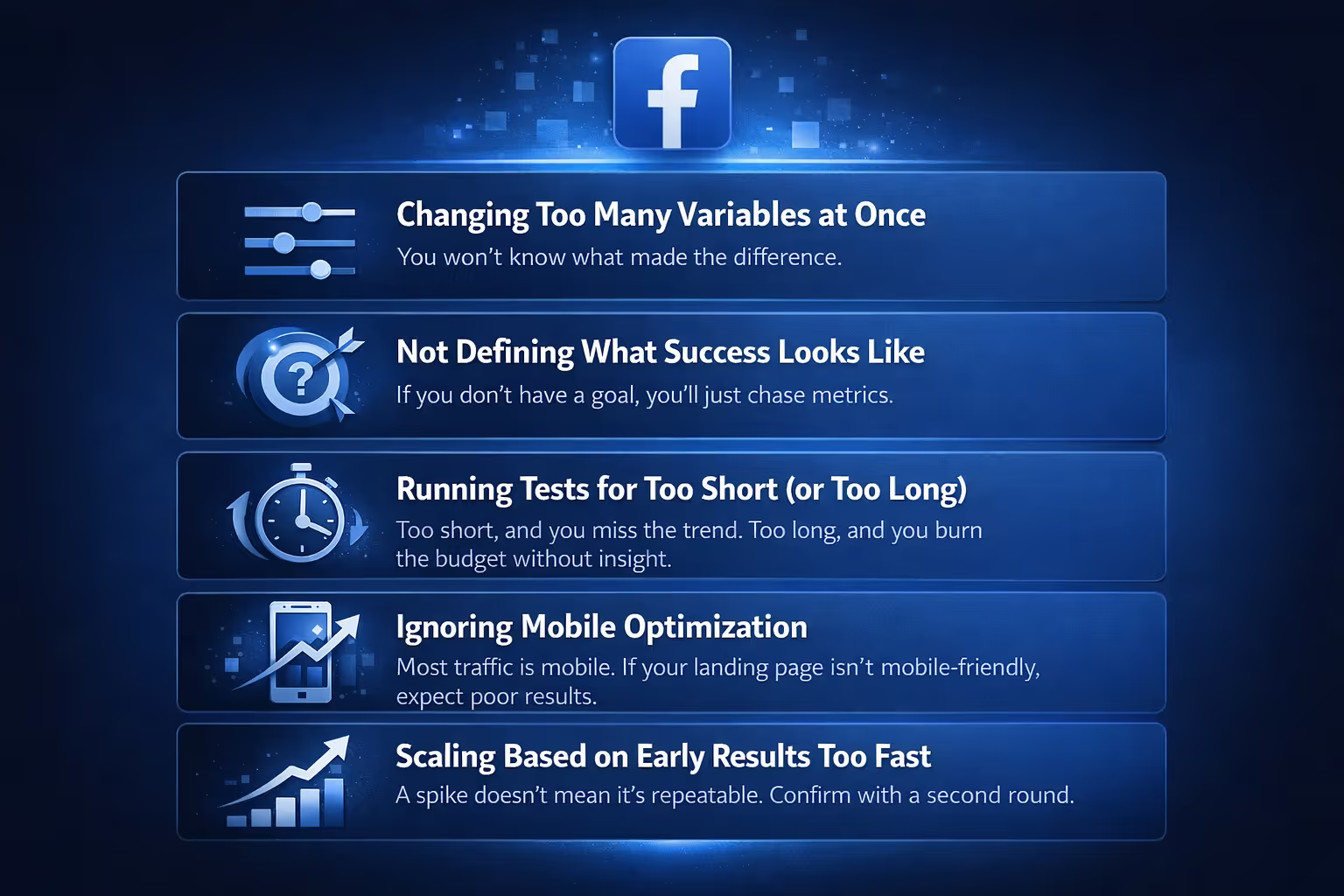
Testing with Facebook ads is powerful, but easy to misuse. Here’s what to watch out for:
Market testing with Facebook Ads isn’t just an ad strategy. It’s a product strategy, a messaging test, and a fast feedback loop rolled into one.
If you approach it with the right mindset, focused on learning, not just selling, you’ll uncover what your audience cares about, how they behave, and what it’ll take to win their attention.
Start small. Test methodically. Watch what people actually do. Then, adjust. That’s how you turn a test campaign into a real opportunity.


