Top AI Tools for Boosting ROAS on Meta Ads
Discover top AI platforms that optimize Meta ads for higher ROAS. Scale faster and more profitably with predictive testing and smart automation tools
Mar 24, 2026



Most ads don’t get clicked. That’s the hard truth. You can have eye-catching designs and clever copy, but if the wrong person sees it – or the timing is off – nothing happens. That’s where ad click prediction comes in. It’s not just a buzzword marketers throw around; it’s how platforms like Meta, Google, and even small ad tech startups decide what to show, when, and to whom.
At its core, ads click prediction is about stacking the odds in your favor. It uses data, lots of it, to figure out which users are most likely to tap on that “Shop Now” button. Whether you’re running Facebook ads for a protein powder or launching a new line of eco-friendly bedding, knowing who’s most likely to click can save you serious money and make your ad budget work harder. In this article, we’ll break down how it works, why it works, and what it means for the way you advertise.
Let’s start with the obvious: not every ad gets clicked. In fact, most don’t. That’s the reason click prediction exists in the first place.
Ad click prediction is the practice of estimating how likely someone is to click on a given ad before it’s even shown. It’s not about throwing money at more impressions or hoping for a viral hit. It’s about using data to understand patterns and make smarter decisions.
Whether you’re running performance campaigns, experimenting with new creatives, or managing ad budgets, click prediction helps you focus your resources on what’s most likely to work.
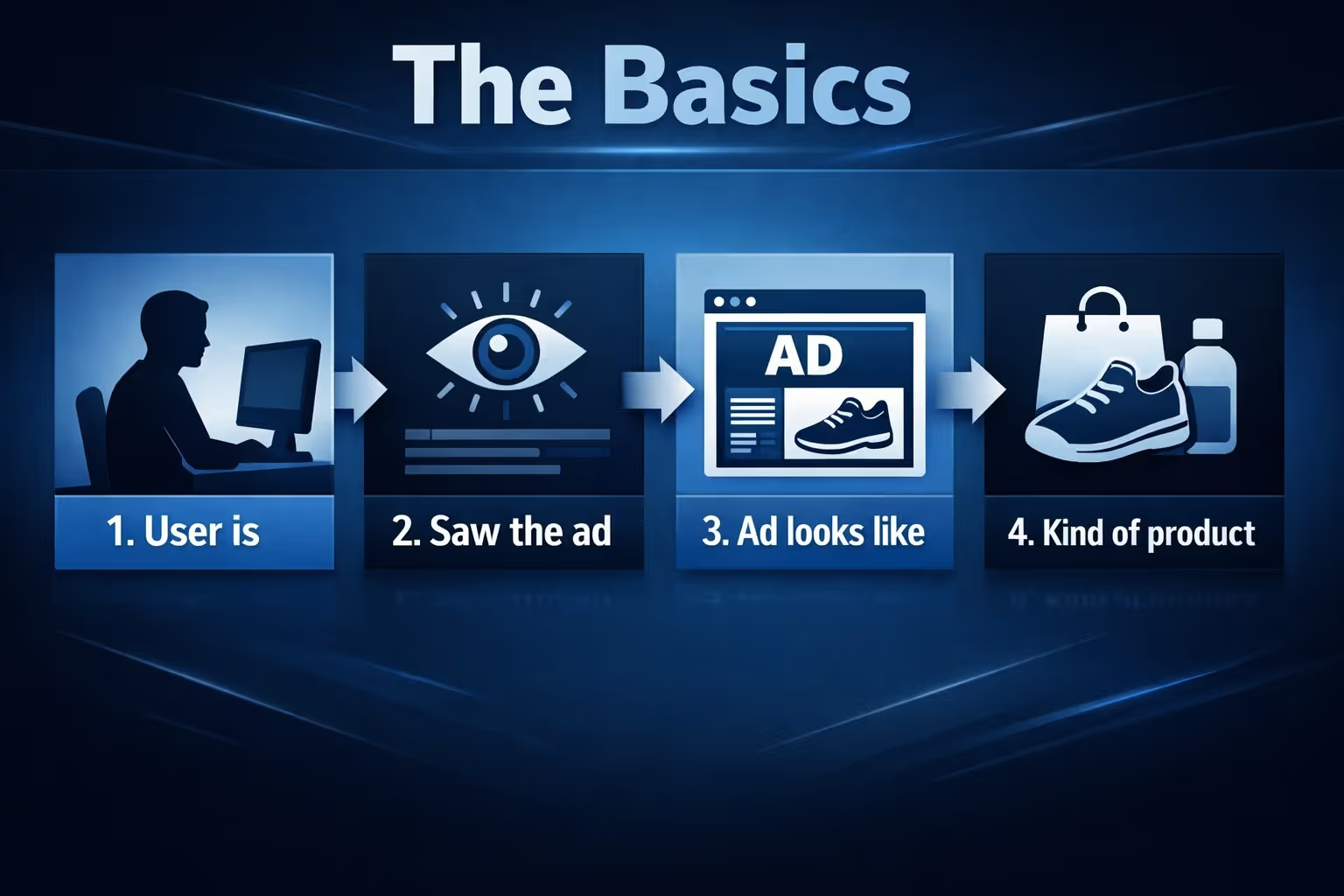
The goal is to forecast click-through rate (CTR) – the percentage of people who click on an ad out of those who saw it. On the surface, it’s a simple metric. But the prediction part gets complex quickly.
Click prediction isn’t just a guess. It’s a statistical estimate based on patterns found in past data. These patterns can include:
The result? A probability between 0 and 1 that tells you how likely someone is to click.
For years, advertisers relied on gut feeling and A/B testing. Then came basic models like logistic regression, which worked fine in low-complexity environments. But today’s ad systems are anything but simple.
In modern campaigns, you're dealing with:
In that kind of environment, manual tuning just doesn’t scale. Even basic models can only take you so far. They depend on manual input to select which variables to include and how they interact.
That’s where more advanced methods enter the picture.
Modern machine learning models don’t rely on assumptions. Instead, they analyze historical data to learn which patterns are predictive of clicks.
One commonly used approach is gradient boosting. This method builds a series of decision trees, each one learning from the mistakes of the previous. It’s fast, reliable, and well-suited to structured datasets.
More advanced scenarios turn to deep learning – particularly useful when datasets are large and include unstructured signals like images or free text.
Here’s a quick comparison:
If you're working with ad data, the model is only part of the story. What you feed it matters just as much. Here are some common types of features that improve CTR prediction accuracy:
User behavior:
Ad characteristics:
Contextual signals:
Historical performance:
The better your dataset, the better your model. Period.
Click prediction models are evaluated using several metrics, but one of the most reliable is AUC (Area Under the Curve). It measures how well the model can distinguish between clicks and non-clicks.
It might not sound like a huge difference, but even a small lift in AUC can translate to real gains. If your model becomes just 2% more accurate, that could mean thousands of additional clicks or conversions at the same budget.
At Extuitive, we’ve spent a lot of time thinking about what really drives someone to click on an ad. And what we’ve found is that it’s rarely just about the creative or headline alone. Click behavior is tied to how well the message resonates with the right person, in the right moment. That’s where our approach begins.
We don’t rely on guesswork or surface-level stats. Instead, we work with AI agents modeled after hundreds of thousands of real consumer personas. These agents allow us to simulate click behavior and predict purchase intent before a campaign even goes live. This lets brands validate ad concepts and creative decisions upfront – without burning through budget on trial-and-error testing.
For us, click prediction is a foundation, not an afterthought. It’s built into how we help brands create, test, and launch their ads. And by narrowing in on what real buyers are likely to respond to, we make it easier to produce ads that actually convert. Less waste, more clarity, and faster feedback – that’s the difference we aim to bring to every campaign we touch.
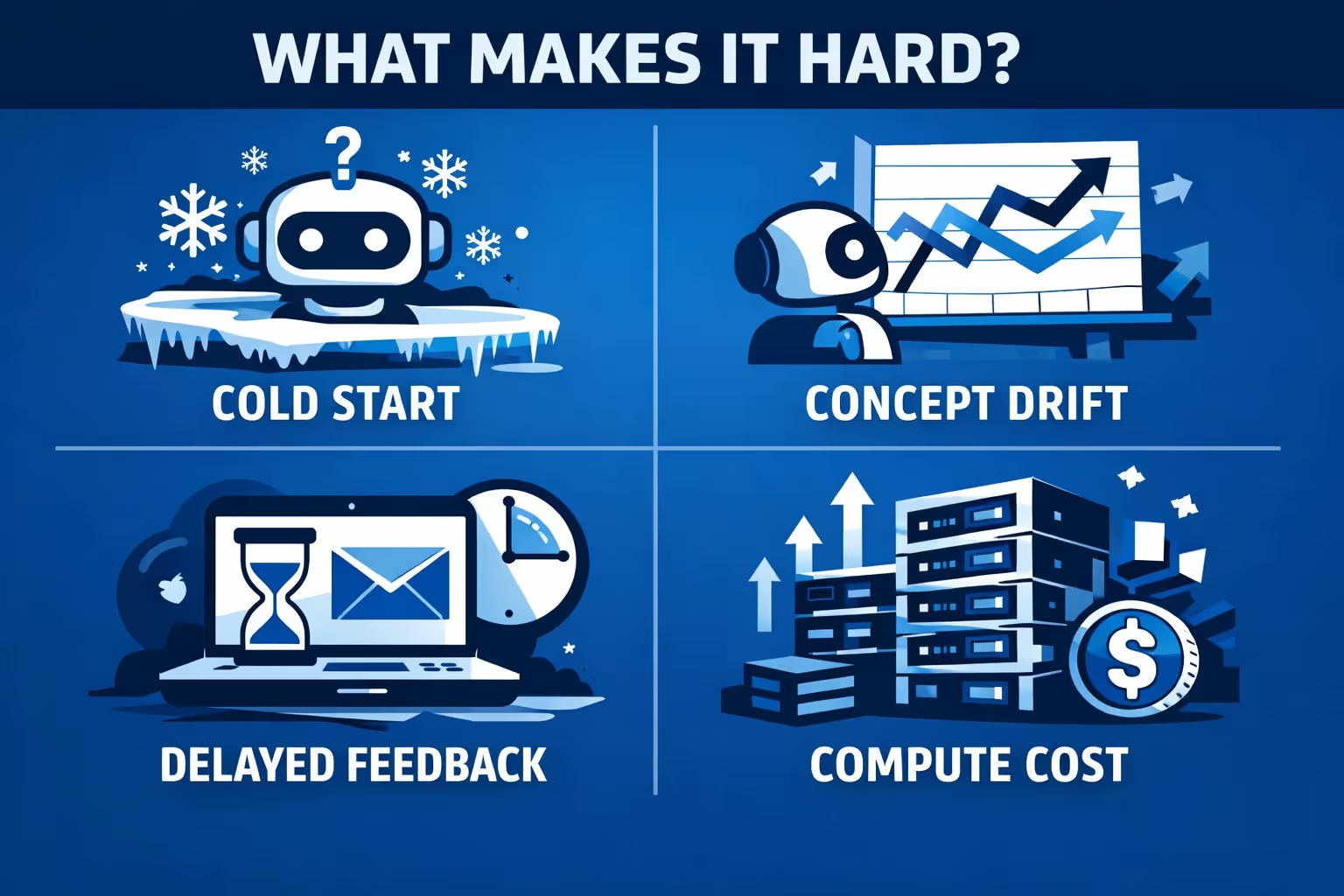
Theory is clean. Real campaigns are messy. Even great models face common challenges that need to be planned for.
When you launch a new ad or target a new audience, there’s no past data to work from. That makes predictions tough.
Solutions often involve using general content-based features (e.g. image similarity, text analysis) to make initial estimates before enough clicks come in.
User behavior changes all the time. A model trained last month might underperform today if trends or platforms shift.
Retraining frequently – weekly or even daily – helps keep predictions aligned with reality.
In some cases, clicks don’t register immediately. This delay can affect the model’s ability to learn quickly, especially in rapid A/B test cycles.
Careful handling of time-based features and rolling windows can reduce the impact.
Especially with deep learning, predictions can become slower and more resource-intensive. That matters if you’re scoring millions of ad impressions per day.
Many systems balance complexity with speed by using hybrid models or simplifying inputs.
A working click prediction system involves more than just the model. Here’s what a typical flow might look like:
You don’t need to be a machine learning engineer to make use of click prediction. Here are a few ways to apply it in everyday campaign planning:
Score new creatives or ad variants. Rank different copy versions based on predicted performance. Choose audiences that align with high click probability.
Adjust bids based on real-time predicted CTR. Pause low-performing ad sets early. Balance creative testing with known winners.
Analyze what patterns led to high engagement. Feed back data to improve the next round of models. Identify underperforming segments for retargeting.
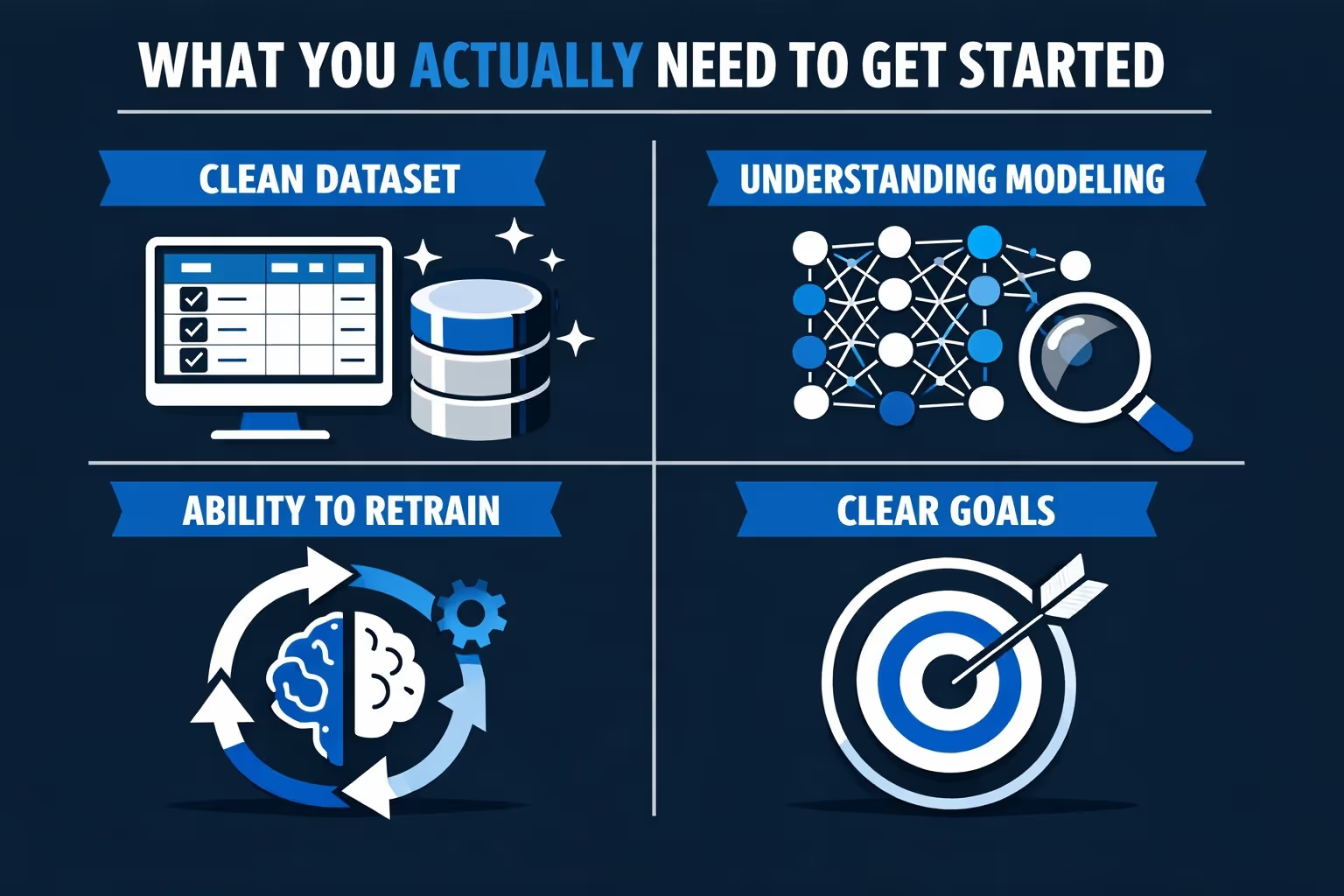
If you're considering building or using a CTR prediction setup, you’ll need:
Even if you’re not doing full-scale modeling, you can start by observing which user traits or content patterns consistently lead to better engagement. That alone can sharpen your campaign strategy.
Ad click prediction isn’t just a nice-to-have feature anymore. It’s quickly becoming a core part of how digital advertising works. As platforms become more automated and data-rich, being able to anticipate behavior at scale gives you a serious advantage.
Whether you're just exploring the concept or actively working with prediction models, the value is clear: better targeting, smarter creative testing, and fewer wasted impressions.
Click prediction doesn’t replace creativity. But it does help make sure that creativity lands where it counts.


