Facebook Advertising Agency in Fayetteville: Top Options for Local Businesses
Looking for a Facebook advertising agency in Fayetteville? Explore trusted local agencies that help businesses run smarter, more effective ad campaigns.
Mar 22, 2026



Meta ads aren’t just about clicks and flashy creatives – they’re one of the fastest ways to learn what actually works before burning through budget. But too many advertisers either skip A/B testing entirely or get stuck chasing statistical perfection. The truth is, you can run smart, fast, and focused A/B tests in Meta that give you actionable insights, without needing a data science degree or a six-figure ad budget.
In this guide, we’ll break down how A/B testing works inside Meta’s platform, when to use its built-in tools, and how to get clear answers from your creatives, audiences, offers, and landing pages, even if you're working with limited traffic.
At Extuitive, we’ve moved beyond testing ads after launch. Our approach replaces the old “run and learn” cycle with predictive calculation – before campaigns even begin. Rather than waiting days for Meta to reveal what worked, we help brands validate creative concepts at the moment of creation.
This is predictive advertising in practice. We analyze your brand’s past campaign performance, then evaluate new creatives using simulated feedback from AI agent consumers. Each asset is scored for expected CTR and ROAS, then ranked. Weak concepts are eliminated automatically. Only high-confidence ads move forward.
The result is structural. Instead of spending a budget to discover failure, you invest only in what’s already proven to perform. In real use, this approach can deliver up to 81% prediction accuracy and increase creative testing speed more than tenfold. Extuitive doesn’t just improve A/B testing – it renders it optional.
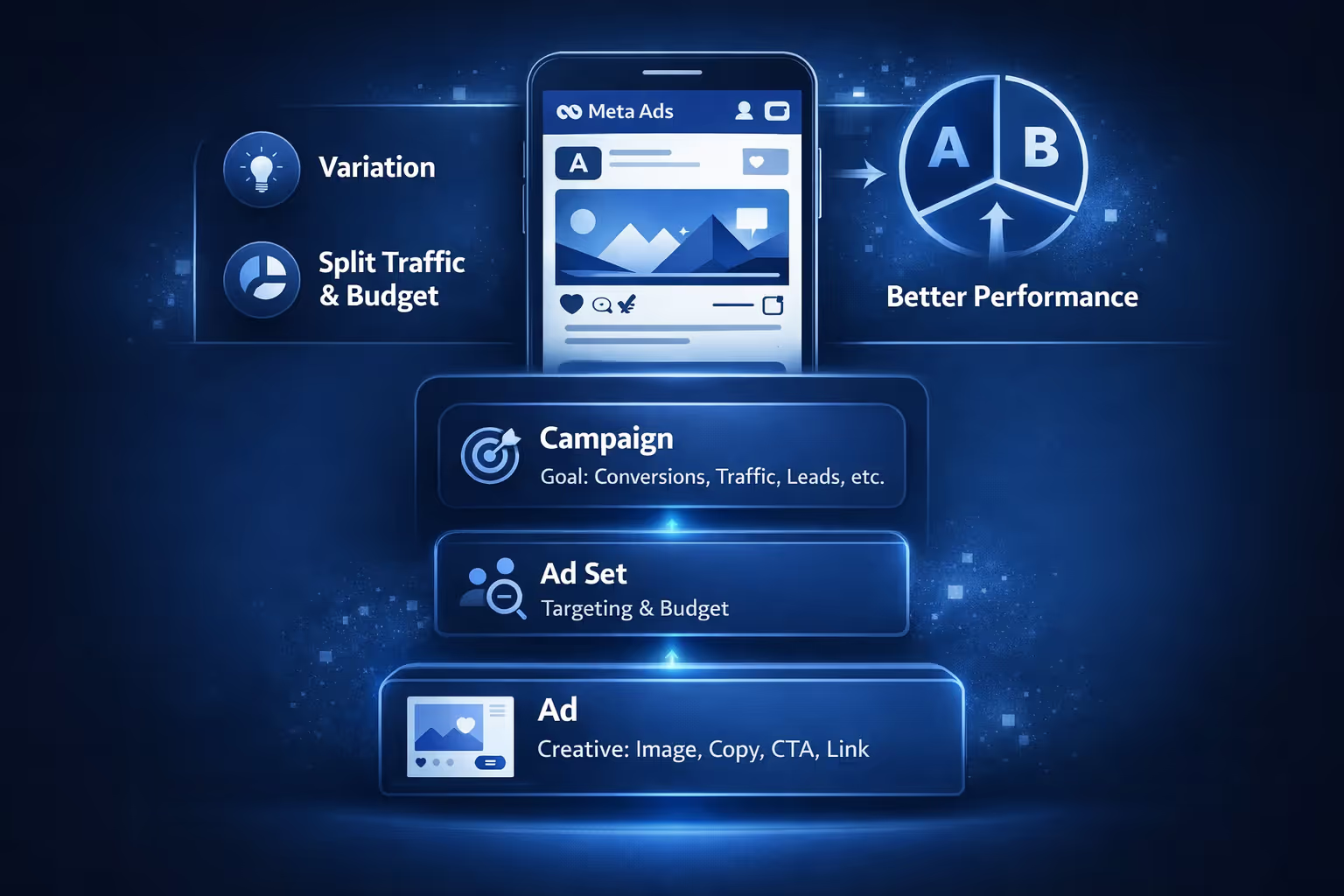
A/B testing in Meta Ads is the practice of comparing two or more ad variations to see which one performs better. You change one element at a time – maybe the headline, image, call-to-action, or even the landing page – and keep everything else consistent. Meta’s built-in Experiments tool then splits traffic and budget between the versions to help you determine which ad drives better results.
Unlike traditional website tests, Meta’s A/B testing feature is designed for speed and directional learning. It uses a default confidence level and isolates audiences to prevent overlap, meaning each user sees only one version of the ad. This allows advertisers to get faster insights, but it’s still important to structure tests cleanly to ensure valid comparisons.
To get testing right, you need to understand how Meta organizes its ads:
Each level plays a role in how your test works. If you test creatives, you usually do it at the ad level. If you’re comparing landing pages, the ad sets need to send traffic to different URLs. Keeping things clean and separate matters if you want trustworthy insights.
Meta Ads supports different approaches to budget allocation, each suited to a different type of campaign objective:
With ABO, you manually control how much budget each ad set receives. This setup is recommended for structured A/B tests, as it provides cleaner data and more consistent audience splits. While Meta doesn’t guarantee an exact 50/50 split due to auction dynamics, ABO gives you the highest level of control available.
Advantage+ is a separate campaign type optimized for performance at scale. Meta automatically allocates budget across ads based on early signals of success, aiming to maximize results quickly. This method is useful for creative exploration and identifying trends, but it is not part of the official A/B testing tool and does not support clean comparisons between variants.
If your goal is to test messaging, offers, or landing pages in a controlled way, use ABO with the built-in Experiments feature. Use Advantage+ when speed and scale matter more than strict testing conditions.
Meta has a built-in Experiments tool that lets you run proper A/B tests. It’s not perfect, but it gives you more control than manually duplicating ad sets. Here’s a simple walkthrough:
In the Experiments interface, the default confidence level is set to 90%, which reflects a focus on faster, directional insights rather than strict, academic-level certainty.
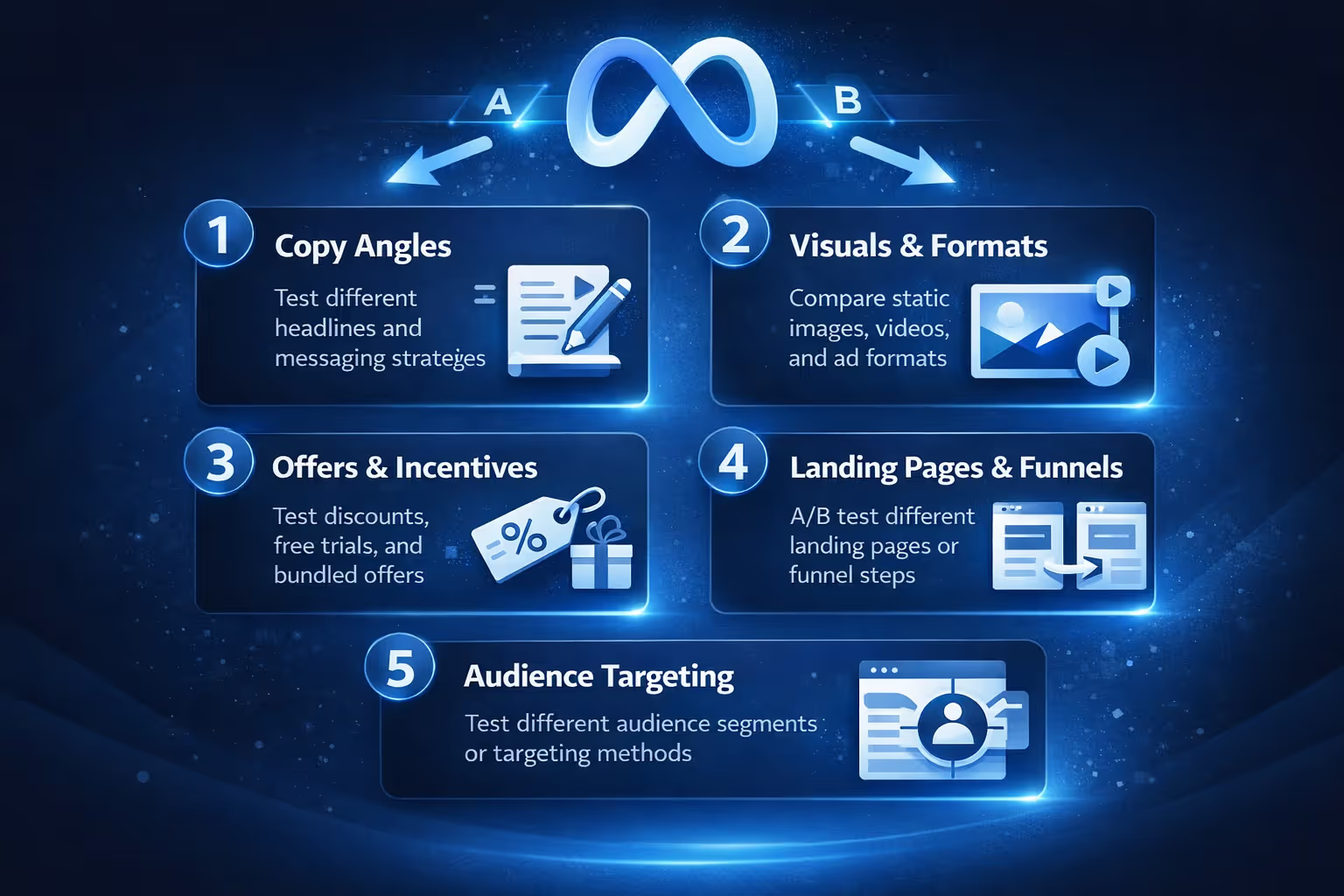
Testing doesn’t mean throwing spaghetti at the wall. You need to focus on changes that will actually give you useful feedback. Here are a few high-impact areas worth testing:
Sometimes the difference between a scroll and a click is just the way you phrase something. Testing different copy angles with the same image helps pinpoint which message actually lands. Maybe one version leans emotional while another keeps it strictly rational.
You might contrast pain-point driven headlines with ones that focus more on outcomes. Or you could test short, snappy lines against longer, storytelling copy. The key is keeping everything else consistent, especially the visual, so you’re isolating just the message. Click-through rate (CTR) is your best early signal here, since it reflects how well the copy grabs attention before any landing page friction kicks in.
Not all ad fatigue is about messaging – sometimes the visual itself is the issue. If you’re exploring visuals, try contrasting static images with short videos, or testing clean product shots against lifestyle scenes. Even color choices and framing styles can shift performance more than people expect.
But if you're testing creative formats, don’t swap out the copy at the same time. That muddles your results. Stick to one change at a time unless you're exploring entirely new concepts that bundle everything together.
Creative might hook them, but the offer often seals the deal. Changing the structure of your promotion, like testing a discount versus a free trial, can shift behavior fast. Some audiences respond better to bundles, while others want a simple, clear single-product deal.
You can also test urgency by comparing limited-time offers with evergreen value. Just make sure your creative stays consistent, and reflect the change in the landing page or CTA. The goal is to see how the offer affects action, not how people react to an entirely different ad.
Sometimes two pages tell the same story in different ways, and only one converts. Meta’s built-in A/B testing makes it easier to route the same ad creative to different landing pages without risking UTM issues.
This is especially helpful if you’re testing radically different experiences, like a quiz versus a direct product page, or a long-form explainer versus a quick-hit layout. You might also try leading with narrative first versus jumping straight into features. As long as the ad itself stays the same, you’ll get a clean read on what happens after the click.
Creative isn’t the only thing that shapes performance – who sees it matters just as much. You can use A/B testing to pit different targeting setups against each other. Maybe you want to see how a broad audience compares to something more narrow, or test interest-based targeting versus a lookalike audience. It’s also smart to split out new customers from returning ones.
The trick is to keep the ads identical so that you’re truly testing the audience, not the message. When done right, this kind of testing helps you scale more confidently without wasting impressions on the wrong segments.
While Meta is a great tool for directional testing, it’s not built for micro-optimizations. If you're trying to see whether a button should be red or blue, this isn’t your platform.
Avoid testing:
Those are better tested on your actual website or product funnel.
Not every number inside Meta Ads Manager is useful. Focus on metrics that align with the intent of your test.
If you're testing copy or visuals, pay attention to CTR (click-through rate), CPC (cost per click), and thumbstop rate (for videos).
If you're testing offers or landing pages, watch conversion rate, cost per result, and ROAS (return on ad spend).
For audience tests, look at CPM (cost per thousand impressions), CTR, and CPA (cost per acquisition).
Avoid getting distracted by vanity metrics like impressions or reach unless you're running awareness campaigns.

If you’re short on time, traffic, or budget, here are a few ways to stay efficient:
A/B testing in Meta Ads doesn’t have to be complicated, but it does need to be intentional. The platform moves fast, which means you can learn fast – as long as you build tests that are structured, focused, and aligned with your actual goals.
Whether you’re testing copy angles, ad visuals, offers, or landing pages, Meta gives you a powerful space to experiment before you go all in on spend. And in a world where attention is expensive, even small testing wins can unlock big returns.


